

What if I said your decision to listen in on today’s episode will determine your success or failure as a creator?
In a split second, you’re making up your mind on whether this session is worth your time or not. That’s also the exact thought process your audience members go through every time they come across your content. In 2026, this is why your hooks make or break your reach and engagement online!
Not optimizing the first moments you have with a potential viewer, reader, or listener is a major disadvantage in the age of distraction. With scrolling away as the almost instant default, it’s ruthless out there!
That’s why I want to walk you through my powerful HOOKS formula today. This is the step-by-step process I use to fix my content and give myself the best shot at going viral. The best part is you can apply this system to every platform to design openings that create curiosity, trigger emotion, and connect with the right people.
I have plenty of examples to inspire you and elevate your posts, so don’t miss out. Enjoy!
You’ll Learn
- What decides if people see your content or scroll away
- How to avoid getting drowned out online as a new creator
- The HOOKS formula to level up to your reach and engagement
- How to open a curiosity gap in two or three seconds
- Leveraging contrast and emotion to stop people in their tracks
- Why hooks matter for podcasts, videos, emails, and social posts
Resources
- Subscribe to Unstuck—my weekly newsletter on what’s working in business right now, delivered free, straight to your inbox
- Connect with me on X and Instagram
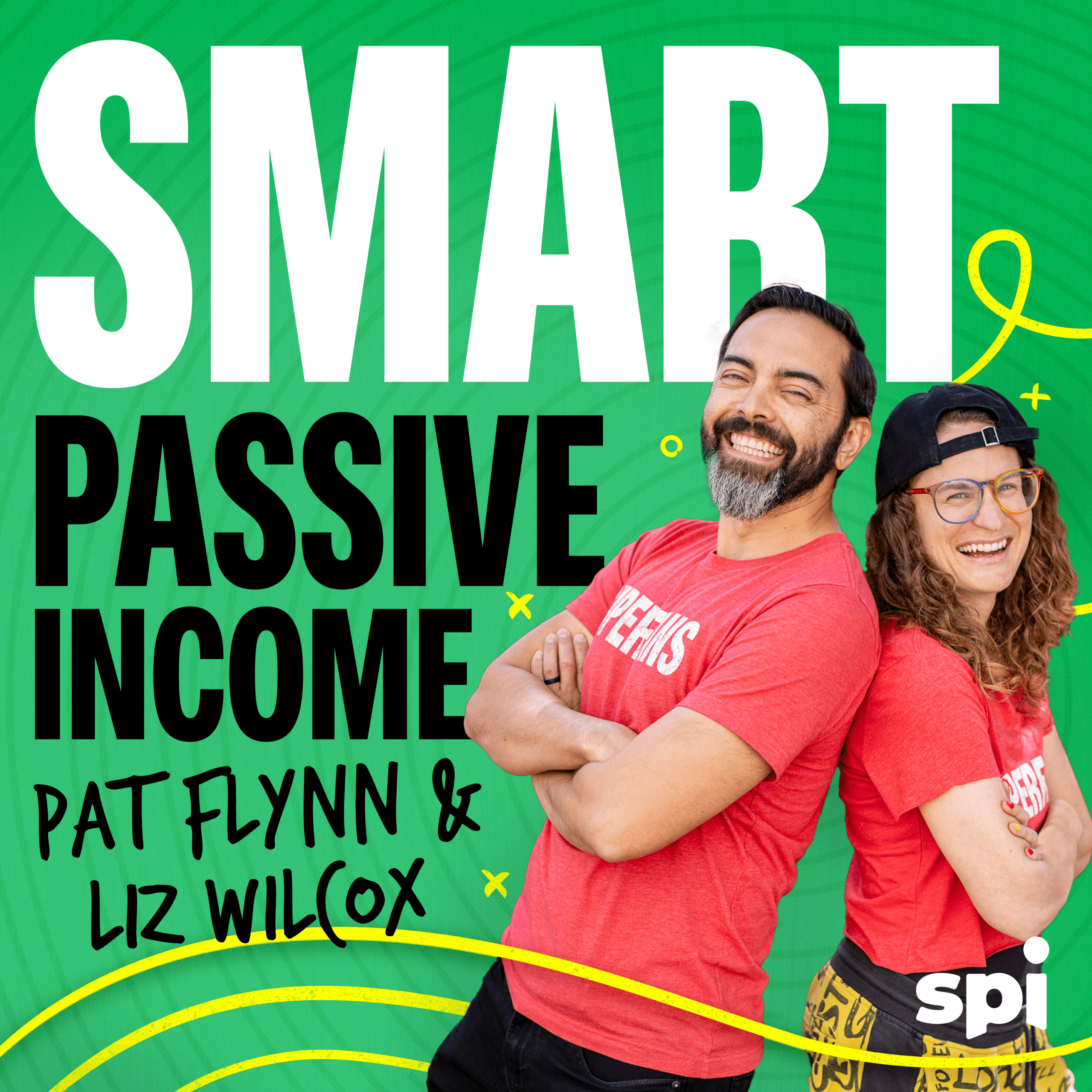
SPI 910: My HOOKS Formula Will Fix Your Reach
Pat Flynn: What if I told you that the next 10 seconds could decide whether you succeed or fail as a creator in 2026? Seriously, right now, as you’re listening, your brain is making a split second decision. Is this worth my time? Should I keep listening or should I move away? And here’s the wild part. That’s exactly what your audience is doing every single time they see, hear, or read your content.
If you don’t hook them immediately, you will lose them. And they might never come back. It doesn’t matter how good your story is, how valuable your tips are, how much you care, how wonderful your video production is. If you don’t win the first two to three seconds, you don’t win at all. So today, I’m going to give you the ultimate advantage.
I’m going to give you the science, the psychology, and the step by step system for creating hooks that stop people in their tracks. Hooks that make them say, I have to see what happens next. Whether you are on day one or day two. Day 15, day 30 of your 30 day video challenge, or if you’re just starting to create content for your business, this episode is for you.
So let’s dive in. Let’s start with the hard truth. We are living in the most distracted era in human history. I don’t think I have to argue that, right? We know it, we feel it, we ourselves are distracted. The other day I was going onto Instagram to do some research, and I found myself 30 minutes later in a Pokemon rabbit hole.
I didn’t mean to go down a Pokemon rabbit hole, I do that on purpose other times, but this time I went there for research and immediately the hook on the first video got me and then I just got lost. We are living in the most distracted era in human history, and your audience is bombarded with content.
They are scrolling, swiping, tapping, and moving on in milliseconds. In the average attention span, what do people say, it’s 6 seconds? 6, 7, you see how messed up this is? It’s not even 3 seconds, it’s 1 second. 1 second to make them stop, 3 seconds to make them stay. And here’s the kicker. It doesn’t matter if you are on YouTube, Reels, if you are on Shorts, long form, short form, podcast, email, blog post, social media, X, the hook is everything.
I’ve seen creators put their heart and soul into a video only to watch it flop because the first 5 seconds didn’t grab anyone. I was speaking with a new creator the other day who was sharing with me his video. He said, Pat, I want to get your quick opinion on something. I know you’re busy. I had the time.
So I connected with him on Instagram and he shared with me his link to his latest video. And he’s I put so much time and effort into this and nobody’s watching it. Can you tell me why? I click on the video. The first five seconds are some really fancy graphics with the name of this channel. And then it goes, after five seconds, into the part of the story that the title is about.
It’s so obvious, thinking about it now, as a content creator, a YouTuber now, for so many years, but I know, and I forget sometimes, that it’s completely not obvious. You might think that you might want to decorate your video with the brand name and some really fancy editing, and that might be impressive, but that’s not today what people care about, and I don’t think that’s what anybody ever cared about.
We are just optimizing for attention these days, and when it comes to somebody who’s brand new to your videos, brand new to your blog posts, brand new to your podcast, you have to remember, these people don’t care about anything other than getting what they came there for, or the curiosity that you’ve opened up for them in the title and or thumbnail.
Or in the first, whatever, one second, but if you don’t do that, they’re out. At the same time, I’ve also seen average videos, sometimes even poor videos, with a killer hook go viral. They rack up millions of views, and many times they can change a person’s business overnight. So if you want to win this year, you need to master the art of the hook.
So let’s get nerdy for a second. Why do hooks work? What is happening psychologically, in the brain? It all comes down to something called the curiosity gap. The curiosity gap. Here’s how it works. Your brain hates incomplete information. Just, we as humans, we do not like knowing part of something. We want to finish it.
We want all of it. And when you see or hear something that opens up a question, but doesn’t answer it, you feel a little itch. There’s a little tension there, a need to resolve the gap, and that’s why cliffhangers work in movies. That’s why you can’t help but click on headlines like you’ll never believe what happened next.
The best hooks create a curiosity gap. They make you lean in. They make you need to know the answer, but there’s more to it than just curiosity, right? Great hooks also use contrast, surprise, and emotion. They break patterns. They challenge assumptions. They make you feel something right away. This is the exact exercise I used when coming up with the title of my most recent book, my best selling book, Lean Learning.
How to achieve more by learning less. It challenges the assumption that the more you learn, the better. It breaks a pattern. It’s contrast. It’s surprising. And people are very emotional about learning, and that’s why, hopefully, it has caught a lot of people’s attention, and I’m grateful that it became a New York Times bestseller.
Thank you, for those of you who’ve supported it.
Here’s the science. When your brain encounters something unexpected, it releases this little thing called dopamine. That’s the pay attention chemical. It’s your brain’s way of saying, hey, this is important, don’t miss it. So if you want to hook your audience, you need to trigger that dopamine.
You need to create curiosity, contrast, and emotion. All within the first few seconds. And let me just say, this is not easy. This is something that takes time. It is, in many ways, an art. And for many of us, it is only something that we can learn by trying, by experimenting, by seeing what works and what doesn’t.
But also by getting inspired by others. A very common thing to do in the world of short form video is to get inspired by others. In fact, it’s even encouraged because you can stitch videos together. You can take someone else’s video, a part of it, and then stitch your own parts on top of it, and continue it, or contrast it, or counter it, or show your own example of it.
This is why a lot of videos that go pretty viral on a lot of these social media platforms are ones that seem to open up a question from a proven hook that somebody’s already created and then lean into their own personality and answer for that. Sometimes it’s contrasty, right? Like one of the hooks that I remember, it’s very classic, it’s have you ever had a girl hit you up on Snapchat?
That’s the hook. And it’s like some girl saying this to the camera. Hey, have you ever had a girl reach out to you on Snapchat? Here’s what you, and then the people who do this really well, they take that immediate cut from there, they stitch on their own answer. And the ones that I’ve seen go viral are the ones that say, have you ever had a girl reach out to you on Snapchat?
And they go, no, but here’s some music. Brrrah nah, whatever. It’s. Using somebody else’s hook. And that’s the cool thing about social. That kind of stuff is encouraged. Now you don’t want to just steal somebody else’s video, but if you add your own spin, personality twist, whatever it might be, those hooks can become things that open up people to you and who you are and your personality.
So I want to give you a system here in this episode, a formula that you can use every time you want to create content. And here’s the cool acronym for this, HOOKS. That’s right, H O K S. And here is what HOOKS stands for. Headline clarity, Open a curiosity gap, Offer contrast, Kickstart emotion, Show don’t just tell.
You don’t need to do all of these in every single one. That can be quite difficult, although if you can do that, great. But sometimes you just need one, right? Having a visual show. Don’t just tell. We’ll get into that, but let’s start at the H, letter by letter here.
The first H here in Hook is for headline clarity. Your audience needs to know instantly what this is about. No rambling. No, hey guys, welcome back to my channel. Get to the point. Example. Instead of today, I want to talk to you about productivity. Instead of just saying that, say, if you’re wasting two hours a day, this is why.
Notice how clear and direct that second example is. It tells the audience exactly what is at stake. It opens up a curiosity gap because it also asks why. And you want to double check to see if you are doing those things, right? Headline clarity is about making your topic obvious, but not giving away the answer.
And that’s the trick, that’s the art in this. So that’s H, headline clarity.
O, open a curiosity gap. The first O is for this. Ask a question, make a bold claim, start a story, but don’t finish it right at the beginning. You wanna finish it by the end. You definitely wanna close these gaps, these curiosity gaps that we’re creating, of course.
Here are some examples. I tried this for 30 days, and the results shocked me. This is where a lot of the work that we’re doing inside of the 30 day challenge, by the way, a lot of the pre work and the things that many of you are doing right now, if you’re participating, involve this repeated format that is an open curiosity gap.
Thirty days of trying to do this, or I’m on day two of this, and open I’m already curious. In what it is you’re trying to do and how well you’re doing with it. Here’s another example. Most people get this wrong, but here’s the truth, and already I know what you’re thinking. What is the thing they do wrong and what is the truth?
That’s just an example headline that creates an open gap and it already shows you and it demonstrates how powerful it is. What happens if you quit social media for a month? It’s another question. Now you wanna know what happens. You’re not giving away the answer. You’re making them need to know. The second O, so H O, Headline clarity, Open a curiosity gap, the next O is Offer Contrast.
Contrast is the difference between what your audience expects and what you deliver. For example, you think you need to work harder, but actually you need to do less. Everyone says you need a big audience but I built a six figure business with just 100 true fans. This looks like a failure, but it’s actually my biggest win.
That is an amazing hook, especially if you visually show something that looks like a fail or a miss. How is that a win? I need to know. Contrast creates surprise, and it makes people stop and pay attention. So we add headline clarity, Open a curiosity gap, offer contrast, and now we’re on to K. Kickstart emotion.
People don’t just remember facts. They remember feelings. If you can make someone feel something in the first few seconds, you’ve won. Here’s some examples of other hooks that you can use to inspire you. I was terrified to share this, but here’s what happened. This mistake that I made today cost me $10,000. I almost quit, but here’s why I didn’t.
Now, it’s very hard to just read those out because those aren’t real, real things. These are made up hooks related to things that are emotional. But again, like I mentioned in the last episode, the more that you can show up as a real person, the more that you can connect and again, share your stories, be vulnerable, bring some emotion.
That emotion could be timidness and being scared to do something. Like the people who are doing those challenges that are 30 days of trying to, or showing up every day until I can speak for 60 seconds without filler words. There’s emotion there, especially in the beginning, because you’re scared.
You’re, you don’t want to sound stupid, but you are doing this anyway, and that’s inspirational. That’s relatable. Kickstart emotion. It could be anger. Who was it? I think it was Patrick Bet David, who told a story about how angry he was going to a Walgreens, and how the clerk at the counter was so rude, and he was telling the story, but then he later found out that this clerk’s mother had recently passed away, and he felt really bad about that, and the lesson being, you don’t know what a person’s going through, so if a person’s being mean to you, don’t just automatically assume that they’re a jerk. And I remember that story, because there was a lot of emotion. It was real. It almost got me to root for him, but then immediately root against him, once I understood the truth of that story. I put myself in that situation too, and this is the power of story. Stories are great for kickstarting emotion.
That is the K. So we had H to start, headline, clarity, then the first O, open a curiosity gap, the second O, offer contrast, K, kickstart emotion, and now we are on to S, show don’t just tell. Visuals matter. And they matter so much. If you are on video, use a powerful image, a surprising action, movement, something, a bold visual statement to go along with it as well.
This is where that fishing channel I follow on Instagram, they start their videos by taking a chef’s knife, the camera really close up on a cutting board, and there’s a rubber worm on there. And in the very beginning of their video, bam! They cut that worm. And it gets you to stop. It’s a visual.
Those things matter. And you might feel silly sometimes doing things like that. Whether they actually relate to the thing or not, it’s still a way to stop people so that you can actually get their attention for the next three seconds and then hopefully hold their attention. It might sound silly, but people don’t even remember that first part after you’ve told them the rest of the story or you’ve filled that curiosity gap.
They’re not going to be upset at you if you deliver on those promises. If you’re on audio podcast like this, paint a picture with your words. So here’s some examples. Picture this. It’s 2am. You’re staring at your phone. And you’ve just realized you’ve wasted your entire day. In fact, you should be sleeping, but you can’t because the blue light’s just on your face and it’s messing with your mind.
Or here’s another example. Again, this is audio only, obviously, but if you imagine the visual, see if you can actually include that as well in a video. Right here, I’m holding a check for zero dollars. Because that is what my first launch earned me. A zero dollar check. And imagine just showing that. How much of a connection that would make.
Show, don’t just tell. Make it real, make it vivid, make it connect. Okay, so let’s go over some real world examples. We’re gonna break them down too for the HOOKS system, right? So here is an example of a type of creator who might do a fortune teller hook. Here’s the hook and we’ll break it down. This is the future of home design.
That’s it. Clear headline. Home design. That’s what it’s about. Curiosity. What’s the future? Contrast. Future versus present. The K. Which is the kickstarting emotion. Excited. Getting exciting about what’s coming. Or maybe the opposite. Maybe scared. If the future is not looking good. And then a visual of something that relates to that.
A visual of a futuristic home. Again. Amazing. Big. Grandiose. If we’re excited about it. Or if the opposite’s true. That’s it. Looking not great. All right, here’s the next one. The contrarian hook. You’re doing your branding wrong or this brand did it wrong. What brand? What was wrong? What’s the right way?
Clear topic, right? Branding, curiosity. What am I doing wrong? What is the wrong thing here? Contrast. What you think versus what is true and then a slight fear. As far as the emotion or challenge related to that, and of course, if possible, a visual of the brand that looks wrong. Here’s one that is a personal story hook.
I failed 17 times before I made my first sale. And I would follow that up with, and this is what finally worked. The clear headline, making a sale, trying something. Curiosity, why did we fail so often and what was the thing that actually worked? The contrast failure versus success? Empathy, hope as the feelings, and then a visual of a, I don’t know, a stack of rejection emails.
It could be b roll, better if it’s real life. If you have rejection letters or maybe it’s a part of an email that says, sorry, we don’t want to work with you. Just write in the first few seconds. Example four, the experimenter hook. I tried waking up at 4am for a month, and here is what happened. I tried waking up at 4am every single day for a month. Here’s what happened. I created a video every single day on Instagram, and here’s what happened. We’re clear about what the headline is. We want to know what happens. Normal versus new routine or experiment. The anticipation is the emotion there. It was just a waste of time. Was this worth it? That is the should I open it or should I keep it sealed structure.
And then maybe a visual in the case of I tried waking up at 4 a. m. every day. The clock showing 4 a. m. or switching from 3. 59 to 4 a. m. and then the alarm clock going off. Example number five, the investigator hook. Here is the headline. This is the secret Japanese city nobody talks about. The clarity here is very clear, it’s Japanese city, it’s secret nobody knows about this?
There’s contrast, the known versus unknown, there’s intrigue, I want to see what this is if it’s a secret, I want to know, and then I want to tell everybody else about it. And then a visual of something mysterious to go with it, right? Cityscaper, maybe it’s blurred, because now it creates that curiosity gap.
Example six, the magician hook. Check this out. I’m recording this video with glasses, not a camera, right? Curiosity there. How? How are you doing this? Glasses versus camera? Should I use this? Is this better? Is this not? It looks pretty good. The visual of the glass is in action. It’s surprising.
Pretty cool. More examples and things to share with you. I want to share with you some other common hook formats. Again, I’m just giving this all of you to inspire you because you might need one for tomorrow and the next day. One of them could be the hook that you use every single day. Maybe you switch it up.
I don’t know. But here is a question hook. What if you could double your income in 30 days? The statistic hook, did you know 80 percent of businesses fail in the first year? The teaser hook, something happened yesterday that changed everything for me. The negative hook, stop making this mistake with your content.
The transformation hook, before I started this I was broke. But now, I’m debt free. Number six, the call out hook. If you’re a creator struggling to grow listen up, or else you might stay stuck where you are. Number seven, the hot take hook. Unpopular opinion, you don’t need a website to start a business.
Although, that’s, I think, becoming a more popular opinion. The visual hook, right? If you have video, start with a action item or dramatic action of some kind. Throwing a stack of papers, smashing a piggy bank, walking into a no location. We did this with a friend of ours, who we were helping in the Pokemon space, who was doing videos where he was going to Target, and he was just showing the pack that he already picked up at Target, versus, instead, starting the videos by quickly and visually looking at the entire stack of all the different cards and collectibles they could choose from, and then, boom, landing on the Pokemon cards that happened to be there that day.
Just that quick change in visual hook changed the trajectory of this person’s brand. And here’s a secret from the pros. Don’t just write one hook for a single video. If you’re still struggling, if you haven’t had that repeatable formula yet, try three to five different hooks for every video. I don’t mean actually film three to five.
But maybe, just so you can see which one feels right, or opens the biggest curiosity gap. You might, especially if you’re doing daily, experiment with different hooks every single day until you land on one. Or you might write them out, say them out loud, maybe even record all three to five of them until you determine, based on that, which one you like best, and then you run with that one.
If you’re on audio, you could try recording two or three different intros, see which one feels the most compelling. It just makes sense to do that. And it’s funny because we scoff at that. We go, oh, that’s just going to take too much time. But don’t you want more people to listen to your podcast? Don’t you want more people to stick around?
Or are you just hoping that you could just create it once and Not optimize it and just it’ll work. You have to treat your hook like it’s the most important part of your content because it is. So here’s my challenge for you today. Let’s put this all together. Before you record your next video, your next podcast, write out your next email, whatever it might be, write out three different hooks using the HOOKS system, right?
Make it clear, open a curiosity gap, offer contrast, kickstart emotion and show, don’t tell. Then pick the one. That makes you feel something, the one that makes you stop scrolling and run with that. And if you’re not sure, maybe test it out. Ask a friend or better yet, try all three on a social media platform.
See which one works best, and then that’s you on your roll with your main piece of content. Because remember, the hook isn’t just the start of your content, it’s the start of your relationship with your audience. Let me leave you with this to finish up here. Because I think you know what I’ve been trying to say this whole time.
Focus on your hooks. Every creator you admire, every business you look up to, masters the hook or tries to master the hook. It’s not something that anybody could ever master either, but you can get better at it each time. Mr. Beast spends weeks testing thumbnails and hooks before he ever films a video.
Top podcasters script and re script their intros until they’re perfect. The best writers spend more time on their headlines then on their articles. Why? Because they know if you don’t win the first three seconds, you don’t win at all. But here’s the good news. Out of all of this, hooks are a skill. You can learn them, you hopefully will practice them, and you will get better every single time.
And when you do, you will see your engagement go up, your audience will grow, the algorithms will love you for it, and your impact will multiply. So as you go through your 30 day challenge, if you are going through it, if you’re not familiar with a 30 day challenge, you can go to 30videos.com and you can start or catch up if you’d like.
30videos.com. But it’s not just videos, it’s any piece of content. How are people first? Being introduced to it. If it’s an email, it’s a subject line in the first sentence. If it’s a podcast, it’s exactly what you say in the beginning, just like in the beginning of this one. If it’s a blog post, it’s the first paragraph.
So don’t just start your content, hook your audience. Thanks again for listening to the podcast. My name is Pat Flynn. Hit that subscribe button if you haven’t already, cause we got a lot more content that’s just very direct this year to help you and good luck on your 30 day challenge. You just started.
If you are listening to this at the time it came out, or again, you can go to 30videos.com and let’s focus on the hooks on each of your future videos and make it happen. I look forward to watching them because I am watching them. Best of luck.