

If you’re still running your business like it’s 2025, you’re missing out on massive opportunities. Nano niches, live stream shopping, and zero-click marketing are part of the next wave of strategies powering online growth.
You’re still ahead of the curve if you tune in today, though. That’s because, by the end of this episode, you’ll know exactly where to focus your efforts, what you need to stop doing right now, and how to position yourself for big wins!
This all starts with understanding why online audiences behave so differently now. AI is dominating search results, while our sites are nowhere to be found on Google. With people feeling like they have less time than ever, convenient solutions stand out. That’s why you have to offer value wherever your followers are.
Today, I’ll dive into the key steps of building a comprehensive social media strategy that serves and scales on the spot. And you don’t need to wait until you have something like 10,000 followers to start monetizing, either. In fact, sponsors are going all-in on working with niche influencers, and now’s the best time to get a head start on the live stream selling tactic that’s about to blow up.
From dos and don’ts to developing premium skills, I cover it all in this session. Join me to beat the crowd and master digital marketing in 2026!
You’ll Learn
- The zero-click marketing strategy changing how we get discovered
- Why convenience is at a premium in today’s online landscape
- How live stream shopping is becoming the next big sales hack
- The rise of nano influencers and high-engagement audiences
- Using your premium skills to stop creating generic content
- How I use AI and where I draw the line on generated content
- Your 2026 action plan to stay relevant and ahead of the curve
Resources
- Find out more about building your own community with Circle [affiliate link]
- Subscribe to Unstuck—my weekly newsletter on what’s working in business right now, delivered free, straight to your inbox
- Connect with me on X and Instagram
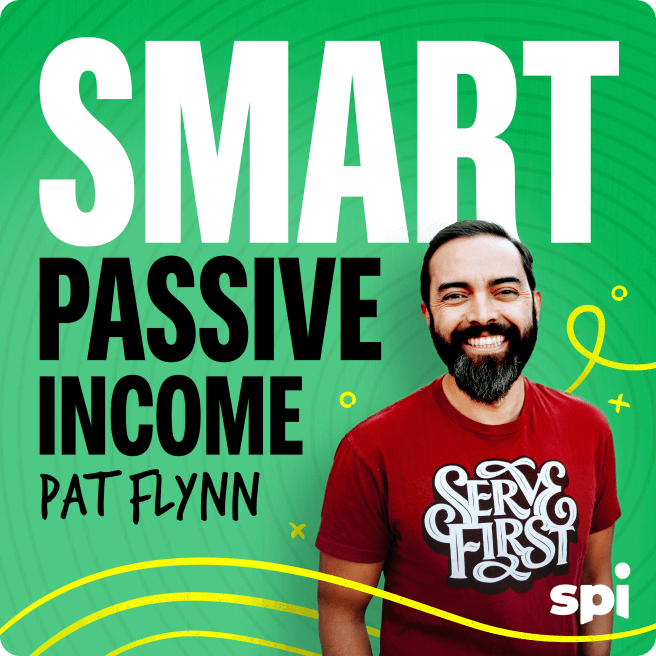
SPI 915: 2026 Marketing Trends You Better Not Miss
Pat Flynn: We need to talk about 2026, because if you’re still marketing and running your business like it’s 2024, well, you’re already behind. And I don’t say that to scare you. I say that to wake you up to some incredible opportunities that are right in front of us. And here’s what’s happening right now. This might blow your mind.
26 percent of searches end without a single click, that’s crazy. And you might think about your own search behavior and agree with that. And I agree with that too. A lot of times Google will tell us exactly what we’re looking for without us even having to click on any links, which is great for us searching, but not great for us who are hoping to show up in search.
And this is why we’re talking about this. That’s just one thing. Instagram is seeing over 6.5 billion searches every single day. And things like live commerce. People buying stuff while watching live streams is about to explode. If you’ve caught up or have seen anything from Gary Vaynerchuk lately, you will know this to be true or at least something that he’s talking very loudly about.
And he’s hit or miss, but he’s hit more than he’s missed. And I do agree with this. Live streaming and people buying stuff while watching live streams, businesses aren’t prepared for this. So, today I’m going to walk you through some of the trends that are likely to define business in 2026. Not just what’s coming, but the psychology, the economics behind why these shifts are happening.
Because when you understand the why, you can get ahead of the what. So I’m hoping that by the end of this episode, you’ll know exactly where to focus your efforts, what you need to stop doing immediately, and how to position yourself and your business ahead of the curve. So let’s dive in first by talking about how the attention economy has completely shifted.
So this is gonna blow your mind. The way people consume information has fundamentally changed and most businesses are still playing by the old rules. Think about this, it used to be like when somebody searched for something on Google, they’d click through to a website. They’d read an article, maybe sign up for an email list.
And that whole journey, well, it’s disappearing. The email list part of it is still very important, but now Google gives you the answer right at the top. ChatGPT tells you exactly what you need to know. Always double check, because sometimes it hallucinates. TikTok shows you a 60 second video that solves your problem.
People are getting what they need without ever leaving the platform they’re on. And this is what I like to call zero click marketing. I’ve heard a few people say this before, and I like that. Zero click marketing. If you’re not optimizing for zero click marketing, you’re missing out on massive opportunities.
So here is what this means for you. Instead of trying to drive people to your website, you need to become the source that these platforms are pulling from. You need to create content that serves people immediately right where they are, and if you’ve been participating or had participated in our 30 day video challenge, short form video challenge, where you’re publishing videos every day on YouTube and Instagram daily, it was really, really great.
Again, I cannot say this enough. I am proud of every single one of you who has participated in that. Whether you finished the 30 days or not, you did stuff that you didn’t before, you took action, many people seeing results, a few people I know seeing videos go over a million views, and they, before that, hadn’t even seen anything, or had just gotten started.
It’s amazing what happens when you have a certain amount of time set aside to do a certain thing and you just kind of rinse and repeat and you get better and you get those reps in so super proud of each and every one of you just we’re going to do more of those throughout the year whether they’re short form video or maybe live video we’ll see but just make sure you subscribe so you don’t miss out.
But the whole idea here is that you’re creating content that serves people immediately where they are. You’re not asking them to leave unless they’re getting something specific that they would offer an email address for, but you could serve them. You can build a relationship with them. You could show up where they are already. For example, instead of writing a blog post titled how podcast and Hoping people click through, you create a TikTok that shows the exact three steps in 60 seconds.
You become the answer and not the destination. Of course, you can’t teach fully what you want to teach within those 60 seconds, but we’re talking about getting attention here. And after you get that attention and you have that attention, you can now bring them into your ecosystem, right? Hey, this is how you get started. If you want more, go here.
And this isn’t a trend. This is just the new reality. ChatGPT is handling over a billion searches every week right now. That is a billion with a B. Social commerce is growing 30 percent year over year. And the psychology here is simple, right? Convenience beats discovery. People don’t want to go on a journey to find answers anymore, they want solutions and they want them now.
And when you understand these algorithms on TikTok, Instagram, YouTube, short form, long form, and you understand how you show up in front of people, you could get their attention from there. Titles and thumbnails on long form videos, the hook, literally the visual and the question, or what it is you’re showing or talking about in the first one or two seconds in short form video.
That’s how you could show up and be there where they are and then stop them from scrolling forward. So what does this mean you should stop doing? Stop obsessing over traditional SEO and link building. I’m not saying it’s completely dead, it’s definitely not. But the old playbook of create content, get backlinks.
Rank on Google is becoming less and less effective. Instead, focus on becoming the source that AI sites create comprehensive authoritative content that platforms can pull from and reference. And think of yourself as feeding the machine, not fighting it. It’s not going to be something everybody will enjoy or love that we’re in this situation, but this is just where we are.
Now let’s talk about somehting that will be huge in 20226. Live commerce. This is where live streaming meets shopping, and it’s creating a perfect storm for sales. I can speak to this because I have been a part of this already. Selling things like Pokemon cards live in front of a live audience on various platforms. I’ve sold merch live on various platforms. I go live every single week on my YouTube channel, Deep Pocket Monster, and last week at the time of this recording, we had 16,000 people watching concurrently, now it was a milestone livestream, we had just crossed 2 million subscribers, so there was a lot of hype and excitement and marketing leading into this, and it was awesome, 16,000 people watching live, many watching live on their mobile device, many watching live at home on their televisions, there is a lot to discover and think about here.
So picture this, you’re watching someone on TikTok demonstrate a product in real time. Not a video that you search for, but it shows up because you have at some point shown interest in this product or your search history has shown that. And now there’s a video popping up. They’re answering questions in the chat.
They’re showing you exactly how it works. In fact, you could even ask a question and they answer it and they show you. And you can buy it with literally one tap without ever leaving the stream. That is live commerce, and that is happening as we speak. Even on YouTube, we have merch for Deep Pocket Monster, and whenever I mention that merch, there’s something we can do on the back end during that live stream to have a popover or a slider come out with that product when I talk about it. And we’ve seen hundreds of clicks and purchases as a result of this. Live commerce. It’s happening. It’s not just happening on TikTok. It’s Instagram live shopping, YouTube, like I just said, and a bunch of emerging platforms are all jumping on this.
There is a product out there, an app called WhatNot, where people are selling everything from collectibles to shoes and other things, that has been around for a while, and there are hundreds of people who watch these live streams, eBay Live is a thing now, and here’s why this works so well. Why these companies are spending millions of dollars to set themselves up like this.
Psychologically, it combines FOMO, right, the fear of missing out, with social proof and immediate gratification. You’re watching other people in the chat get excited about the product. You can see it working in real time, and you can buy it now before the stream ends. Maybe with a deal that will go away as soon as the stream closes.
And from a macroeconomic perspective, this makes total sense too, right? Younger consumers, especially Gen Z and younger millennials, they prefer experience based shopping over traditional e commerce. They don’t want to read the product descriptions and reviews. I definitely don’t. You want to see it in action.
There’s also a trust crisis happening right now in the world, right? People are skeptical of Super polished ads and perfect product photos. But when they see someone using a product live, answering real questions, showing the good and the bad, that builds trust real fast. So how might you implement this?
Start small. The cool thing is the barrier to entry is very low, but you want to start small. Do a weekly livestream where you demonstrate your product or services, right? It doesn’t have to be a physical product, and it doesn’t have to be fancy. Just turn on your phone, go live, show people what you’re working on.
Show people what you’ve done for others. Show people how it works. Show people the back end of the membership that they might be getting access to. All that stuff. If you don’t have your own products, you could also partner with brands as an affiliate and do live demonstrations. I’ve done that before as well.
Create exclusive live only offers. Give people a reason to show up and buy in the moment. And here is what’s not working anymore, just to kind of contrast this, and what we need to stop doing. Static product pages without video, right? Traditional influencer posts that are way too polished. And that should be good news because that often would come with a budget.
Long sales funnels where you’re trying to nurture people for weeks before they buy. That still works. We find that to work. But adding a live component on top of that during that nurture sequence so people can go, wait, let me see this in real time, in action. I have a question. Maybe I can get that question answered now instead of waiting for the next email a week from now.
People want to make decisions quickly now. They want to see. And they want to buy. I mean, think of QVC, right? QVC was around, and I think still is around, but it’s kind of taken different forms and shapes. QVC worked so well because it was live shopping on a television, and people had to phone in. But you’d see the product being demonstrated, and that is something we can all do today.
You don’t need a QVC account or anything like that to do it. And if you don’t know what QVC is, You’re probably pretty young.
Let’s talk about how all of us have grown up a bit, and how the creator economy is growing up alongside us. It’s maturing, and for years the advice was always go big, or go home, right, get millions of followers, become a mega influencer, land those huge brand deals, and that is actually something that we’ve always kind of wanted, and I think we’ve always known that that was going to be very difficult to achieve, and there are riches in the niches, but still, that’s what we wanted, right, we wanted to grow and go big.
But actually, I would advise against that. What’s working and what’s getting people paid is going smaller, going more niche, nano niche. What’s working right now are nano influencers, creators with 5,000 to 50,000 followers who have incredibly engaged communities. And these smaller creators are actually outperforming the mega ones in terms of things like engagement and conversion rates.
There’s just a much better relationship that’s able to be built. With a brand that’s like that and its followers, right? The parasocial relationship, the feeling of knowing someone personally, even though you’ve never met. These are stronger in smaller communities. When you have 10,000 followers and you respond to comments personally, people feel like they know you.
But when you have 10 million followers, you’re more like a celebrity, right? You’re admired, but you’re not relatable. That is the struggle for larger creators is to be relatable. I have found ways to solve that problem through live video and long form video. That has been really helpful for even though I’m technically now a celebrity in the Pokemon space with a channel with 2 million, another channel with 2.5 million. I get invited to these events as a celebrity. These longer form videos, storytelling, this kind of stuff does help with helping me stay more connected, even though I’ve grown quite large, but you have an advantage being smaller, having a smaller following. You can build a much stronger relationship faster.
And from an economic standpoint, this makes perfect sense for brands too, right? Higher engagement means better ROI. It’s cheaper to work with 10 nano influencers than one mega influencer, and you often get better results. So if you can position yourself as the nano influencer in a space, especially as an affiliate or a partner with another company, and you could show that you have this loyalty with your brand, a lot of these companies who are paying for sponsorships are actually looking for people just like you.
Goldman Sachs just released a report saying that the creator economy is expected to double by 2027. But here is the key, it’s not going to be driven by mega influencers anymore, it’s going to be driven by more people finding their specific niche, And serving it really, really well. And hopefully that’s you.
There’s also been a shift from building audience first. I mean, we still believe in that, but you do that. Not by setting up your systems, not by showing up, but by solving problems immediately. I’ve talked about this before. I’ve written about it in my book, Superfans. Small, quick wins, right? You don’t have to wait until you have 10,000 or 100,000 followers to start making money.
You can create tools, templates, microcourses, offer consultation calls. You can start monetizing with 500 or even just 100 engaged followers if you’re solving the right problems. What is dead now, completely dead, is generic content creation. Because, like I’ve written about in Lean Learning, there’s just so much information out there.
Not to mention the fact that AI can create it faster and cheaper than you can. And if that’s the case, then don’t create it. How can you create something that AI cannot? Tips, tools, little generic listicles, top 5 tips for better productivity. Like that just is a waste of time now, a waste of time to create, but also a waste of time to read.
But here’s the thing, AI can’t share your personal story of how you overcome burnout. AI cannot give your unique, Y-O-U-nique perspective on industry trends. The new rule is simple. If AI can replicate it, don’t create it. Focus on only what you can do. I mean, that has always been the strategy, but it’s so, so important now, more than ever.
Now, speaking of AI, let’s talk about how to actually use it without losing your humanity. There’s a lot of debate around AI with relation to AI video and AI audio and AI artwork. I’m very, very strong on not using that kind of stuff because it takes from people without credit. But AI as an assistant, oh man, yes.
A creative partner, oh absolutely. For ideation, 100%. The smart approach is to use AI as an assistant, not a replacement. Use AI for ideation, for first drafts, for research. But always include your own and others human oversight and refinement. I mean, I can’t tell you how often I find mistakes in a lot of the answers at AI tools, not just ChatGPT, but others as well, that I find in there.
Right, you get to decide which of the output aligns with your brand and your audience’s needs. There was recently a study that found that 55 employers who laid off workers to replace them now with AI, now regret that decision. Why? Because they realize that AI can handle information, but humans handle decisions.
AI can process data, but humans provide context and judgment. As AI seems to handle more routine type of tasks, human skills become more valuable, right? Not less. Storytelling, emotional intelligence, creativity, the ability to connect with other people. These are now our premium skills. Let me say all of that one more time, and I’ve, it’s just amazing because I’ve been talking about this for years now.
Storytelling, emotional intelligence, creativity, the ability to connect with people, these are now premium skills. Now I’ve seen creators try to use AI to write their entire email newsletters, and the results, I mean they’re fine, right? They’re grammatically correct. But they’re soulless. There’s no personality, no unique perspective.
No reason for people to care. This is why I love creators like, immediately, my mind goes to a good friend of mine, Liz Wilcox. She’s been on the show before. She was actually formerly on the show Survivor. But she helps people with building out their email funnels and helping people convert people from fans to customers and loyal, engaged followers.
And her personality just absolutely shines in everything she does. Even when I see her on video, right? She’s got that nineties headband on and she’s got an NSYNC poster behind her. And she’s always been like that. So I love that. Shout out to Liz. And using AI to enhance your creativity, not replace it, let it help you research, brainstorm, create first drafts, but always add your voice, your perspective, your humanity.
Now, let’s talk about platforms because the strategy here is changing too. What’s working is multi platform native content. That means taking one core idea and packaging it specifically for each platform. So, you might write a LinkedIn article, create a TikTok video, and record a YouTube short, all based on the same core concept, but tailored to how people specifically consume content on each platform.
This is why I like Shorts, because TikToks, YouTube Shorts, Facebook Reels, instagram Reels, these are all things that could be using literally the same piece of content just uploaded natively. But then you can expand on it in a podcast. You can expand on it in a long form video. You can write about it and post it on LinkedIn.
The psychology here is that people consume differently depending on where they are. Now we don’t want to say, Hey, I have this YouTube video. So if you’re on LinkedIn, come away from LinkedIn and go over to the YouTube video. No, you’re creating something in the way that they want to consume it. Cause they’re on that platform already.
And on LinkedIn, people want more professional insights on TikTok. They want some more entertainment around it on YouTube. They want deeper education. Same message, different packaging. What’s also working is a community first approach. Instead of just broadcasting to your audience, you’re kind of in a way, facilitating conversations between your audience members.
You’re creating spaces where your people can connect with each other. We. Here at SPI, I have been on the forefront of that and an example of that for six years now. 2020 is when we started building community because we knew this is where this was headed and this is where we are now. Now, it doesn’t have to be a Circle community like what we have, although we do recommend creating a Circle community for the ultimate form of engagement and community building with the options to serve them in many different ways, but it might simply be a Facebook group or a Discord server.
Right, the platform doesn’t matter much here with the community as much as the intention. You’re not just building an audience, you’re building a community. And this matters economically because community members have, in general, five times higher lifetime value than regular followers. We’ve seen this in our data.
People spending years with us in the community versus just paying one time for a course, which we don’t sell those courses individually anymore. They’re inside of our community. And when people feel connected to each other through your brand, they stick around longer and ultimately, yes, we’ll spend more money with you.
So that’s platform and community, but let’s dive into the psychology of the 2026 consumer in general, what’s happening in your customer’s heads, because understanding this is crucial for your strategy. And it doesn’t really matter where you’re publishing or what you’re doing. The psychology of the 2026 consumer is important to know.
So we are now in the what we call the trust economy. Buying cycles are longer. People are doing more research. They’re more skeptical than ever. Now there’s some things you can do to fast forward that, like we were talking about earlier, live shopping. That trust fast forwards really fast when they see the thing, when they see it in real time.
There’s no fake ads or anything. They’re literally there and seeing a person use this thing. Then great, quick trust. There’s data showing that 73 percent of consumers say, they’re basically financial worse off this year than last year. Cost of living pressures are real, there’s uncertainty in the air. But here’s the interesting thing, people are still spending money.
Especially Americans. There’s just more money circulating now, more than ever. And the difference is how they’re spending it. They’re not impulse buying as much. They’re not clicking buy now just because something looks cool. They’re buying from people they trust, not just people they discover. So this is why I was saying earlier, a live stream, a live e commerce platform, having that be a part of a nurture sequence versus just like showing up and selling to random people.
No, you’re showing up now to people who have already begun to build a relationship with you. That is where these things sort of cross over. So, your marketing needs to focus on relationship building over just quick conversations or generic content, right? You need to show up consistently, provide value, and build trust over time.
Now, value has changed as well. Value is not just the information anymore, right? It’s connection, it’s relatability, it’s entertainment. And those three C’s are always showing up, right? Consistency, clarity, and confidence. Especially as a personal brand, you need to be confident in what it is that you are saying.
And sometimes that comes with reps, repetition, showing up, putting yourself out there, going live, and learning how to do this, just by doing it. Not by reading about it or consuming a ton of information, but actually taking action. We’ve seen this. What happens when you take action? You start to see results.
You don’t have to be perfect. In fact, again, as I was saying, perfect is out, real is in. There’s also Something that I like to call the experience premium. People who are willing to pay more for experiences and conveniences. We’re seeing this in the Pokemon space. People showing up to a live event, spending money and money on a plane ride, money on hotel, money on tickets to go and be with each other as a community.
We’re seeing this in our space within our brand, within a specific sub segment of our email list, we have sold a live experience that’s happening in March in San Diego to some people. People are paying extra for done for you solutions and for personalization, for personalized services, for live events, like I was saying, and workshops.
And the psychology here is time scarcity. People feel like they have less time than ever. So convenience becomes incredibly valuable. And if you could save somebody time or make their life easier, that is something that is worth paying for. So let’s wrap this up with your action plan for this year. I know we are just here at the start of the year, so this is perfect timing.
Here’s what you need to focus on in 2026. First, master one platform deeply. Yes, you can republish everywhere, but have one or two platforms, call that your home and learn about that. Dive into it. Experiment with it. Play with it. Have the ability for you to become the go to expert there, because if you do spend a majority of your time everywhere, then you are really nowhere.
That’s number one. So what would you call your home platform where you can show up and get in front of people there? Not where can you pull people from, but where can you show up and become the go to expert, right? That’s number one. Second, experiment with live commerce. Even if it’s just a monthly live Q& A where you mention your products and services, just start getting comfortable with a real time interaction and sending people elsewhere, whether it’s a product, an affiliate product, a lead magnet, if you will, if you are promoting to people who are more public facing.
So, live, you’re going to hear me talk about live quite a bit from this point forward because that is something that we need to start getting comfortable with. Because again, the real time aspect, the fast forward of the trust building that can happen is so key. Third, build community, not just audience.
I’d much rather have a tight community of 1,000 people than an audience of 10 million people. Truly. Create spaces for your people to connect with each other, facilitate conversations, be the person who brings people together. Fourth, use AI as your assistant, but never let it replace your human judgment and creativity.
Let it help you work faster and smarter, but always add your unique perspective. And fifth, quadruple down on storytelling. It’s the one thing that AI cannot replace authentically. Your stories, your experiences, your perspective. That is your competitive advantage. Stop chasing every new platform. Stop creating generic stuff.
Stop creating AI replicable content. Stop focusing on vanity metrics like follower count over actual engagement. And stop trying to be everything to everyone. Let me say that one more time. Stop trying to be everything to everyone. Because 2026 is not about having the newest technology or the biggest following.
It’s about being the most human, the most helpful, and the most connected to your community. How might you get it so that when people talk about a particular topic within your community, your name is the one that pops up? Your name, your brand is the one that’s recommended. The businesses that win, the brands that win, will be the ones that use technology to enhance human connection, not replace it.
They’ll be the ones that understand that in a world full of artificial intelligence, authentic intelligence becomes incredibly valuable. So my challenge to you today is this, pick one thing from today’s episode and implement it this week. Maybe it’s going live for the first time, starting a small community, or just being more authentic in your content.
Take action. Because the future belongs to people who are willing to be real, to be helpful, and to show up consistently for their people. Thank you for listening. Make sure you hit that subscribe button. We got more great episodes of the podcast coming your way. Until then, keep rocking it.