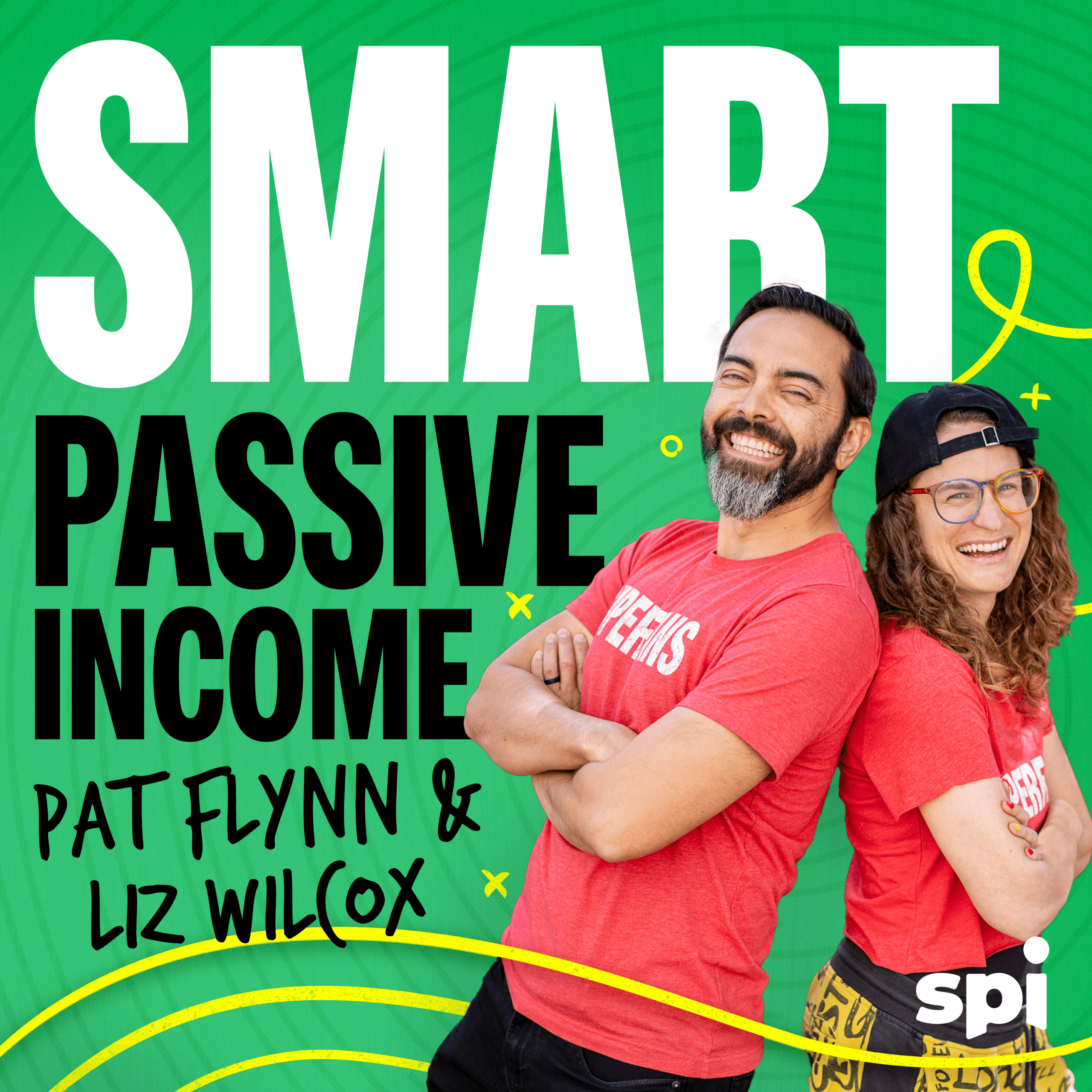


If you’re growing an audience of superfans, it’s important to give them a place of belonging. And here’s the thing. They belong together!
That’s why live events are such a powerful way to serve your people. You see, bringing them together is not about the connection they have with you as a founder. It’s the relationships they can build with people like themselves that can change lives on the spot!
Liz and I are diving straight into this topic in today’s episode!
Our recent trip to Kit’s Craft + Commerce conference was a new reminder of just how much in-person events can do for a brand and its followers. And of course, I have my growing Card Party events that are now attracting something like ten thousand attendees each!
But that’s not where your mind should be at to start!
Liz and I want to help you find the minimum viable and valuable live event for your audience. That can be something as low-lift as a coffee shop meetup or co-working space hangout.
No matter the size of your get-together, you can still change lives and uplevel your brand. Listen in to hear our best tips!
You’ll Learn
- Attending Kit’s Craft + Commerce conference in Boise
- Why your superfans belong together at an in-person event
- How becoming a fan of your fans strengthens your business
- Rediscovering your why by meeting your superfans face-to-face
- Finding the minimum viable and valuable live event for your audience
Resources
- Find out more about Kit, our favorite email marketing platform [affiliate link]
- Subscribe to Superfans Secrets—our weekly newsletter on the strategies behind building real relationships with your audience, delivered free, straight to your inbox
- Connect with me on X and Instagram
- Connect with Liz on Instagram
SPI 941: Your Next Big Move Should Be In-Person Events
Pat Flynn: Hey, Liz and I were both in Boise recently for an amazing event. Do you wanna talk about that event really quick, Liz?
Liz Wilcox: It’s a little event called Craft and Commerce, put on by Kit, if you’ve heard of that email service provider. We love it. And it was… I go to this event every year because of the people.
I just love the community there, and before I even went to the event, I didn’t even know Kit really had a community, and now I’m so tapped in. It’s, it’s one of my favorite places to be.
Pat Flynn: Yes, and this is what to do in Boise when you’re there for Craft and Commerce. So definitely sign up for the next one.
Liz and I both spoke on stage a couple years ago, and we did a little workshop a month ago there, and it’s always exactly what I’m hoping it is. It’s, it’s not just, like, downloading information and then taking that home with you, although that is great. It’s the people. It’s the, the connections that are made there, and we’ll talk a little bit later in this podcast, uh, on a future date about partnerships and brands and, and brand partnerships and things like that because that’s actually what our workshop was about.
But I think it would be important for us to talk about just the idea of hosting a live event today and how important that is. Of course, Kit is a company that has tens of thousands of customers, and the event only has, you know, 500 to 600 people, but it’s so important for so many different reasons, not just for those 600 people, but for the whole company.
And so I think we’re gonna talk today about the importance of hosting a live event, and it could be as small as a little quick meetup in your coffee shop, your local coffee shop, but also big events, like the ones I throw for Card Party, which has up to 10,000 people now and is growing. So w- we’ll talk about the whole thing, but, you know, you’ve touched on it even already a little bit, Liz, but why would a person even want to think about putting on a live event?
Like, what inherently does it do that just doing things online cannot?
Liz Wilcox: So something that I love that Pat teaches is superfans, right? He literally wrote the book on it. And if you want superfans, it’s really important to give them a place of belonging, and they belong together, right? And so having an event, hosting, whether, like Pat said, it’s just this meetup or it’s this giant thing, is really important because it’s important for people that connect to you to connect to each other.
That really strengthens your brand beyond belief.
Pat Flynn: Yeah. I mean, you– Thank you for queuing up Superfans, by the way. It’s something that I talk about quite a bit inside of the book, and it’s how you bring an active audience that you have and connect them, because it’s not just about the connection to you, the creator or the founder, it’s about the connection that people have with other people like them, right?
Where, where when you go to a space and you say, “Oh, the– like, I found my people.” And I remember one of the first times I hosted a community event for fans. I was in St. Louis, twenty thirteen at the Financial Blogger Conference at FinCon, and I already knew how important it was to bring people together. So I rented out a little pizza joint, and we had pizza and drinks, and I just invited people who were fans of SPI into this space.
And there was about thirty or forty people. We were sharing pizzas and, and having conversations, and I was going around kinda like a– It felt to me like a wedding a little bit ’cause I was like, “Oh, I wanna make sure I say hi to everybody,” because in my head, I was like, “Oh, well, they’re here because of me, and they’re here for me.”
That was my mindset going into it. But when I was leaving, I saw a woman that I hadn’t seen all night, and I felt bad. I was like, “Oh, no, I haven’t talked to her. Like, she might be mad or something. Let me go,” as we’re all walking back to the hotel after the restaurant closed. Like, “Let me go say hi to her and, and see if I can make up for not saying hi to her at the event.”
And so I go to her, and I’m like, “Hey, I’m so sorry. Like, I didn’t get to see you all day, and, um, I just wanted to apologize.” And she’s like, “Pat, don’t apologize, and also, don’t take offense to when I say this. I didn’t come here for you.” And at first, I was like, “Whoa, coming in hot.” Like, that’s… I don’t- I didn’t know how to respond to that.
But then she was like, “No, no, no, I listen to your podcast every day. I follow all your stuff. I never get a chance to find my people, and you’ve given us that space today to find my people. So I wanted to go around and meet everybody else because I hear from you all the time, and I’ve already formed some partnerships and friendships, and I’m having lunch with somebody tomorrow who I met here tonight. Thank you so much for bringing us together.”
And that’s really the first time I remember the idea of bringing people together and, and, and what that actually means. It’s not about you. It’s about your people.
Liz Wilcox: Yeah, I love that. I’m reminded of, you know, they say like, “Oh, don’t be a sage on the stage. Be a guide on the side.”
And when you think about building a community, it’s not that, you know, Pat is the leader of this Deep Pocket Monster Pokemon thing, right, phenomenon at this point, right? It– He’s just a facilitator of people that are superfans of Pokemon, right? Just like in SPI, he was just this facilitator of people that wanted to go from idea to income, right?
And so as the facilitator, giving your people that have this thing in common, this common goal or this common love of something, giving them an opportunity to indulge in that goal or, you know, that thing and meet each other, meet other people that are into it as well, is so much more important than, you know- Getting a stage, crafting the perfect talk, going around making sure you meet everyone.
Like Pat said, it’s not a wedding. Yeah, sure, you might be the reason that they’re drawn in initially, but they’re staying because of that commonality.
Pat Flynn: Right. Exactly. That being said, there are a ton of benefits for you to do this as well because when you interface with who it is that is there in your brand, your podcast listener, your YouTube viewer, your email subscriber, it really puts a person to those numbers that we’re looking at all the time, the number of email subscribers, the number of viewers, all those kinds of things.
It humanizes what you do and who you are doing it for, ’cause that’s… I mean, it should be, and this is what we teach. You are building a business to serve others, so when you get to meet those other people, your people, you really start to build an even stronger connection to your why. Like, why are you doing this, and who are you doing it for?
And you can even start to really dive into, as much as people wanna be fans of, of you because you’re the creator, like, I find that I wanna become fans of my fans. I wanna learn about them and learn about their families and what they’re up to. And the more I dive deeper into that, the more that information and those experiences come back in turn to my emails, my courses, the things that I do, how I show up, and why I’m showing up.
It is so important, and this is why even meeting with one or two people can be just as valuable as, you know, bringing tens of thousands of people together. In fact, it’s probably more valuable to do it that way versus bringing a ton of people in, wouldn’t you say?
Liz Wilcox: Yes. So speaking of Craft and Commerce and all, you know, wanting to be a fan of someone who’s a fan of you, at Craft and Commerce, there was this woman who I don’t know how she got on my calendar.
I wasn’t sure who she was, but she was on my calendar, and we were set to, you know, meet at a certain time. And I went thinking… And it- I have my calendar is color-coded, right? So certain colors mean certain things. Like Pat and I, we have this. This is dark green. That means podcasting, okay? And purple means coaching, and this was purple.
And so I was like, “Okay, maybe she won a one-on-one with me in person,” right? I can’t remember all the stuff I give away, guys. I get excited sometimes. And so I go to meet, Wendy was her name, and, you know, I start saying like, “Oh, where are you at right now? Where are you trying to go?” You know, I’m trying to give her a roadmap, right?
I’m trying to coach her ’cause that’s what the color it was. And she interrupted me, similar to the story Pat just said, and she, you know, she sorta grabbed my hand. She said, “Liz, this is not what I thought it was gonna be.” And I said, “Oh my gosh, I’m s- I’m so sorry.” Like, you know, “I wanna give you what you thought this would be. You know, what’s up?”
And she looked me right in the eye, and she said, “I just wanna thank you. I just wanna thank you for the business that you have built. It’s so obvious to me how much you care. You know, you’re even taking time out of a schedule at a conference you’re speaking at to, you know, meet me at this random location.”
And she was just so sincere. And, you know, I said, “Oh. Oh my gosh, thank you. Yes,” you know. Uh, and I started talking about my why that Pat just mentioned, you know. “Oh, I… This helps my family. I… You know, I love to serve,” blah, blah, blah, blah, blah. And I thought we were gonna have lunch, you know. I s- I, I picked up my menu.
“Oh, well, let’s order. You know, I’d love to treat you.” And she said, “No, I just, I just wanted to thank you.” And sh- and she left And it’s, it’s what Pat said. Wow. It did so much for me. To be honest with you, listening, I cried. I… It, it hit me so differently than it could have, you know, on a Zoom call, right? I could feel her sincerity, her genuine nature, and it made me realize, like, yes.
You know, I was feeling a little guilty. You know, I have two kids. I, I just adopted a child earlier last year. You know, they need me. It’s been a tough school year adjusting, you know, to two kids in the house, and- Mm-hmm … you know, am I doing the right thing coming here, right? And there’s, there’s that little bit of guilt, but in that moment, it was like, okay, Liz, your work matters.
It’s important to… more than just bills, more than just, oh, I’m good at this. I’m gonna do it. It makes me feel good. Like, this work matters. Yeah. And that’s what I, I’ve loved about hosting events big and small, and even going to events, is you can meet those people. You can face-to-face see the impact so that, like Pat said, you get so rooted in the why, you become kind of unstoppable.
Pat Flynn: Yeah. Oh, for sure.
Liz Wilcox: In the best way. In the best way.
Pat Flynn: For sure. I mean, I’ve seen the same thing happen on the Deep Pocket Monster side of things. I’ve thrown live events locally at card shops, and that was kind of my first time interfacing with my audience and realizing that, you know, it’s not just… I thought I had two audiences, the 35 to 40-year-old sort of millennial who grew up with Pokemon who now has more than an allowance to spend on it kind of person, you know, coming back into the hobby, the older gentleman who’s, like, coming back into the collecting world, and the super young kid, right?
And I thought those were my avatars kind of separately. But what I found was at these live events is that it’s families. It’s father, it’s mother, sons, and daughters coming and doing this thing together, and, and it’s become so important to realize that, that it’s actually, uh, now a part of our value statements and mission.
It’s to create content that brings people together, not just to watch together, but to do and collect together, and it’s been such a neat thing to see. And so I’m getting responses from the community now saying, like, you know, uh, emails, people at Card Party coming up to me saying, like, “You are the reason why my son and I have bonded so well with each other over the last year.”
And I just like- Oh my God, it just makes me cry to think about that impact. I, like, I had no idea it was that kind of impact. And it was very similar to, to the early days of SPI when nobody else was really talking so openly about business and revenue and passive income, how people started to realize that they could do this and started generating enough revenue to quit their job.
And if they didn’t do that, they had enough revenue to at least go on that vacation they’ve always wanted to go to and bring their families closer together. It’s like that times 100 that I’m seeing in the Pokémon space. So it’s, it’s quite wild to see, and it was only because I was able to kind of interface with, with that audience in, in person.
And now that’s why I scaled up the whole thing to 10,000 people coming now to Card Parties. We, we now host three a year, and I’ve done my part to try and get this similar feeling with other creators to meet their fans too. So we actually celebrate the other creators who are there, and they get the spotlight.
It’s not about me, Deep Pocket Monster. It’s about the 50 other creators who never get recognized and who never get to meet their fans. Let’s all create a space for that. And this is, again, part of the benefit of facilitating this. It’s something where everybody can win, and, and even the sponsors and the people coming in who pay their way to get in as companies, they’re interfacing with the audiences and, you know, people are becoming fans of those companies too.
I like how you said, though, that you don’t need to host the event to still have these kinds of things. You can go to events as well, and that’s something that, of course, you and I both do and have done for a very long time. But th- there’s just something about being the person who facilitates these interactions that does so much for, for you and your why and, and your people.
So yeah, there’s just so much to it.
Liz Wilcox: So Pat, being a guy who has gone, like you said, scaled it up. You know, you’ve been in the coffee shop, and now you’re hosting, you know, three times a year 10,000 people at a time. You know, that’s wild. What are some of the lessons that you’ve learned in moving from small to medium, large, and now XL? We’re supersizing it.
Pat Flynn: Yeah. Yeah, I mean, it’s a great question. In the beginning, whether it’s small or, or medium or large, like, you have to try to find your minimum viable event, and this is something that I’ve struggled with a lot with everything that I do. I try to put everything and anything into it for the first go. But quickly, especially with the larger events, you could see on the Excel sheet just how expensive putting everything in at the start becomes, right?
And at the smaller events, it’s much easier to include a little bit more, but that’s where you get what they call feature creep. You know, you might host a one-day event and have 15 ideas of different activities you wanna do, and then you try to fit them all in, and things are either rushed or they’re not thought through all the way.
What if you just had two or three things that you did with that crew for a couple hours at the coffee shop or for a half day at your co-working space? What are just the minimum viable and valuable things that you can do? That’s the one thing about viable, th-this whole MVP thing, like I th- I always thought the V stood for valuable.
What’s the minimum valuable product? Hmm. Right? Versus viable. Because viable is just like, “Oh, yeah, it kinda works.” I always thought about it as the minimum valuable product because it still has to provide value, but it doesn’t have to have everything under the sun. And truthfully, if you put too much, it’s actually
It, it degrades the value of it. So- Right … the, the biggest mistake is trying to … Like, you’re doing too much. You’re … That, that, that’s kind of the first thing I wanna talk about.
Liz Wilcox: Yeah, I wanna touch on that because I think I am the opposite of Pat. Like, to me, like- Done is good and good is great. Like I’m very much-
Pat Flynn: I wish I was you sometimes.
Liz Wilcox: Yeah, I mean, I’m just, um, I’m very much a minimalist in my life anyway, and so I’m always looking to subtract. Mm-hmm. And also, like, I have a background in education, and I know what it’s like to stuff a curriculum so that the student is so overwhelmed and overloaded that it’s not good. Yeah. And so when we’re talking about that MVP, you know, value can be that it’s just viable, right?
And so I even did an event earlier this year where I just tagged it on to an event that was already happening. So that’s another way to, like, make it just like that MVP. I know Jay Clouse does this with Craft and Commerce. He has his, like- Creator Lab … lab days or something- Yeah … like that, right? And so I, I was promoting this event that was basically happening in my backyard, and I said, “Hey, anybody that comes, you know, buys a ticket with me, we’ll do like a mastermind day the day after.”
And I had, I think, three people get tickets, and literally, y’all, I hosted the event the next day. It was at my house at my kitchen table. I had almost no curriculum. The whole point was just to learn what they needed and to give them my time. I can’t think of anything smaller than that. Like, I didn’t even get catering.
You know, I said, “Hey, are you guys hungry?” We drove to the local taco stand on my golf cart, and they were happy. And-
Pat Flynn: That’s cool …
Liz Wilcox: you know, I… It was so fun, and this is, was in 2026. You know, you would think, oh, Liz has thousands and thousands of subscribers. I make a decent, more than decent living. You know, I could have done what Pat said, you know, like, really just went all in and…
But I, I just, my objective was to give them what they needed. What they needed was my time. I knew that, right? ‘Cause that’s what they told me. They said, “Oh, I’m so excited I get, you know, you all to myself,” or, you know, like, “I can’t believe, you know, we’re gonna have this day together ’cause I don’t do that very often.”
And it was great, and those people have now gone into my virtual community. I just did, like, a live Q&A, and they were talking about it in the chat. “Oh, you’ve gotta, you know, you’ve gotta… If you ever can spend an afternoon with Liz, it’s gonna be great. It helped me-” That’s cool. “… this and that.” And yeah, I mean, there was no set curriculum or anything.
It really was, like- The MVP of the MVP. You know, there wasn’t even a lunch schedule, guys.
Pat Flynn: I love that story. I mean, that’s exactly where you can start. And when it’s small like that, it’s likely gonna be a little bit more direct, right? They were talking to you. They were asking you specific questions. I’m sure there was some, you know, cross-pollination between your people there, too, e- even though it was a small group.
But when you start to get into sort of medium-sized numbers, I’m talking, you know, anywhere between six to, you know, 50 people, this is where you wanna start building some curriculum around the networking piece of this or having people get into small groups. Similar to, like, a Zoom call, right? It’s one thing for, you know, 100 people to be on a Zoom call and get value from listening to you, but honestly, the most value that I’ve found when in a Zoom call is when you break out into different rooms, and you actually get a chance to talk to people and ask questions.
We did this in person when we were together, and we did our workshop about brand partnerships and people partnerships, which we’ll talk about in an upcoming episode here. We had 15 minutes of sort of workshop time where people broke into groups. And I had– While you were kind of facilitating that with everybody, I had a person there who was kind of managing the room all day with all the workshops.
He came up to me, Liz, and he was like, “This is the most active I’ve seen any of the audiences in here today. They’re getting so much value from just having time with each other.” And I was like, “Yeah, this was Liz’s idea. It’s perfect.” And so again, the, the idea of, like, small groups connecting with each other and you, again, facilitating that, giving them something to talk about, a prompt or a question, that can go a very long way.
And then what’s awesome about that is, like, then it’s not even about you having to talk the whole time. It’s about asking the right questions or prompting the right prompts to then get people to talk to each other, and that’s where value can be exchanged in those sort of medium-sized groups.
Liz Wilcox: I love that so much.
It’s so… Again, this is w- the why behind hosting an event is to get these people together, right? Mm-hmm. Whether you’re, you have a business like SPI where, you know, we’re teaching online money-making basically, right? Or, you know, even if you… Like, let’s say you’re a crochet blogger, you know, getting all of these other people who love to crochet together and letting them give the tips.
Like, “Oh, if you move your hand like this,” “Oh, you know, oh, this is the project I created.” You know, getting them to share. Like, I always say it doesn’t have to be my idea. It has to be the best idea, and when you can get people into a room together, the best ideas always surface.
Pat Flynn: Yes. Yes. Absolutely. Now, when growing into a little bit bigger of an event, it’s not something I would recommend for everybody, obviously, and it’s something to grow into.
Deep Pocket Monster just has such a wide reach that I knew we were gonna get, you know, a good amount of people on that first event in 2023, and that was about, I think we had about 2,000 people, nearly 2,000 people in that first event. Like I said earlier, now we’re up to 10,000 people, but it started with two, and I relied on relationships that I had built over the past couple years, relationships with other creators, relationships with other brands, brands who I had built trust with so that they could show up and provide value at the event as sponsors and, and who were kind of trusting me to, to put on an event.
And then really taking the experience that I’ve had in the business world at events that were well organized and trying to bring that organization to a Pokémon event, and that was something that was kind of new. You know, instead of keynotes, we have, like, a late-night show. Uh, and that late-night show over the year has now evolved into game show Right?
So now there’s like a group of people who are sitting about in a theater watching a show happen and, and that was like, “Okay, well, I’ve done that in the business world, but it’s not like a show, it’s a keynote. So let’s take this boring business event and make it fun with Pokémon on top of it, but let’s structure it the same way.”
Instead of breakouts and little panels, we have creators opening packs and doing what they do best, and opening cards and interacting with their audience live, having the audience ask questions, but they’re not business questions, they’re questions about how a person collects their cards or all that kind of stuff.
So it’s pretty much the same structure as business events that I’ve been to from years past, but now with just the Pokémon element on top of it. But like I said, a lot of it was a result of the relationships that I had built with, with the other creators, with the audience, and, and of course, with these other brands and sponsors that, that showed up.
And we had about two thousand people there, and it grew to thirty-five hundred the next year in Florida, and then five thousand in Florida in Tampa the year after, about seven thousand in Seattle after that, and then we had San Diego recently at nine thousand people, and we’re doing Florida, Fort Lauderdale, at the end of July for ten thousand people.
And what’s really cool is it’s getting easier and easier every time. You might think it’s getting harder and harder because there’s more people, but actually it’s getting easier and easier because we know what works. We have the structure. We can just rinse and repeat, but iterate and make better. You know, and every time we, we systematize something, it gives us more brain space to kind of optimize and add something new.
And the latest sort of iterations have had these moments on stage that were in partnership with sponsors, like eBay Live sponsored the last one, and we played Deal or No Deal, but we called it instead Trade or No Trade. We brought somebody in from the audience. They had to select from a number of briefcases, and they’d open these briefcases for eliminating them and, you know, it would change the price of what, what the offer was for the briefcase, if you’ve ever seen Deal or No Deal.
And the cool thing is every item that was eliminated, it wasn’t just cash, it was a, it was a Pokémon card with a certain price tag on it. Everyone that was eliminated was then auctioned off on the eBay Live platform and given away– the, the money was given away to charity. And so it was really cool to have this sort of fun, interactive event.
And the cool thing about that was eBay Live was the one that came up with that idea because they saw the event. They attended it the first year, and we worked with them to be creative together, so they even have a little bit of a say in the creativity of how their brand gets featured, and it’s not just like a logo plastered on a wall somewhere.
So, you know, that and, and, and listening to the audience, listening to the attendees, getting their feedback on what they loved, and then getting their feedback on what they wish was there but wasn’t. For example, after the first year, we had a number of, of attendees who had brought in their kids who were autistic or neurodivergent, and they just kind of were feeling a little overwhelmed with everything So the second year in Florida, we said, “You know what?
We’re gonna create a space for them.” We talked to a lot of them, and we even had some members on our team who had some kids who are n- neurodivergent. And we created a space, a neurodivergent room, where you can kind of escape, and there were things that you could do that were sort of away from all the noise and away from all the people.
And we continue to get comments from people saying this is probably the most epic thing they’ve ever seen at any event, let alone a card event, because they were being thought of and they were being considered, which in the community is a very important thing. You wanna have people feel like they’re recognized and that their voice is important.
So I’ll stop there, ’cause I’ve been talking a lot. I just get super stoked, and I could go for hours and hours about what we’re doing and trying to do there. But yeah, it’s so, it’s so much fun.
Liz Wilcox: That’s awesome. And I’m … Y’all, side note, I’m glad that Pat was talking so much, ’cause my internet went out, and it came back, and it’s great.
Did it?
Pat Flynn: So- I didn’t even know.
Liz Wilcox: It did. Yeah, so that’s just a little, you know, if you’re thinking about starting a podcast, if you feel like you need more resources, I promise you, you can get it done. You can get it done. If we can get it done, you can get it done. But I want … So Pat said two things. Number one, have fun.
Yes. And I think this is a great way to wrap up. I think these are, like, some really good lessons that as you listen, like, I want you to sit with these Number one, like have fun. When you think of creating an event, and event planners and people that have thrown events, they will tell you it’s a lot of work.
Pat told you it’s a lot of work. Start small. But don’t forget to have fun, right? Like, you’ve got to make this an event, right? Event means fun, means memorable. So have fun. I love that so much, and then listen to the audience. Again, when you’re planning this event, it’s not, it’s not about you. You’re not the sage on the stage, right?
You are just the facilitator, so listen to your people or even, you know, if, if you’re not at that point where you’re getting a lot of audience feedback or this is your first event, just, you know, put yourself in their shoes. What do they need? What do they want? What would be fun for them? Take the ego out of it ’cause otherwise it’s gonna be really overwhelming, like, “Oh gosh, I have to da, da, da, da, da,” right?
Mm-hmm. But really you just have to think about your audience and what would be fun, what would be memorable for them, and you’re gonna create an amazing event.
Pat Flynn: Yes. Amen. For sure. Have fun for sure. When I approached this event, Card Party, I said I want to design event, an event that I would wanna go to and that I would totally be stoked to bring my kids to.
That was the, like initial approach. ‘Cause there wasn’t. I actually went to a couple events in the Pokemon space, and I had brought my kids, and I was like, “This feels very, like investor bro.” It’s just like a bunch of people throwing money at each other and selling cards to each other, and that part of the hobby is important, but it didn’t feel like it was something that I was like, “Oh, I could bring my kids here to have fun,” because they’re not that into it, and they’re not investor people in the space and, and that part of it I’m just not a huge fan of.
I like the collecting. I like the adventure. I like the connection and the networking. So I was like, I’m gonna build an event that doesn’t exist because I think it, it… I mean, I, I would wanna bring my kids to it. And my kids do come into it, and fun fact, at the next one that’s happening in Florida, they’re gonna get even more involved.
They’ve been loving it and being a part of the business themselves. They’re actually employees of my Pokemon business, in fact, and there are some tax advantages to that, and that is a legit thing. But more than that, they’re getting time on stage. They’re getting to meet people. They’re getting presentation and communication opportunities in there, and so another benefit of hosting an event is if you have kids, it’s a good opportunity to allow them to have some time to speak up and to kind of learn these skills that, you know, I only learned in my late 20s and 30s because I was kind of forced into it after getting laid off.
I wish they taught these things in school. Honestly, I’ve, I’ve mentioned that before here, Liz, before you came on as community director. For a very long time, I had been telling the audience, like, “I want a way to affect kids in a positive way. I’m gonna do what I can to bring entrepreneurship and teach these lessons I’m learning into school curriculum.”
And that became a huge goal of mine for a couple of years until I got hit with brick wall after brick wall after brick wall, and red tape and politics and all this stuff that was just, like, sickening to me because I… It was so obvious that this stuff is needed, but it was so hard to make any sort of difference.
We were able to do it locally at, uh, just one school a little bit, but beyond that, it was just, it was just like pulling teeth. And so to know that I have now this ability in the Pokémon space to, you know, bring these lessons kind of Mr. Rogers style, if you will, it’s been pretty neat. It reminds me of, um, a long time ago, Noah Kagan came on the podcast from OKDork.
And he said for his first event, he just… He said that exact same thing. He’s like, “Oh, I just…” You know, his first business event was just built around, “Well, I just wanted to make an event that I would wanna go to.” So shout out to, to Noah ’cause he was inspirational for that, bringing that now into the Pokémon space.
And to see the impact that I’m able to make in there now, it’s just, it’s just wild. And, and, and to be… It’s kind of a workaround way, Liz, to help the kids in a completely different space, not even with SPI, but I’m so grateful for it. And yeah, thank you for your support here, and, and thank you everybody who’s listening for, you know, helping me be able to do that.
It’s so cool.
Liz Wilcox: Yeah, I think that’s one of the reasons we love Pat, right? He thinks outside the box and, you know, he’s got a goal, and maybe he couldn’t do it in the traditional sense, right? But now look at him, right? That’s why we love Pat so much. So thanks for sharing that.
Pat Flynn: Thank you. We gotta catch ’em all.
Anyway, um- … thanks everybody. Appreciate you. Liz and I will be back in an upcoming episode. We have some amazing interviews coming up as well that you’re not gonna wanna miss. And so thanks for being here and listening to the SPI Podcast with us.