

Learning comes from the action you take, not the research you do!
That’s the theme of today’s special episode, where I answer your questions on everything from content creation to live events. If you’ve been struggling to post consistently, been wondering if selling merch is right for your brand, or want to know when it’s time for your first hire, listen in!
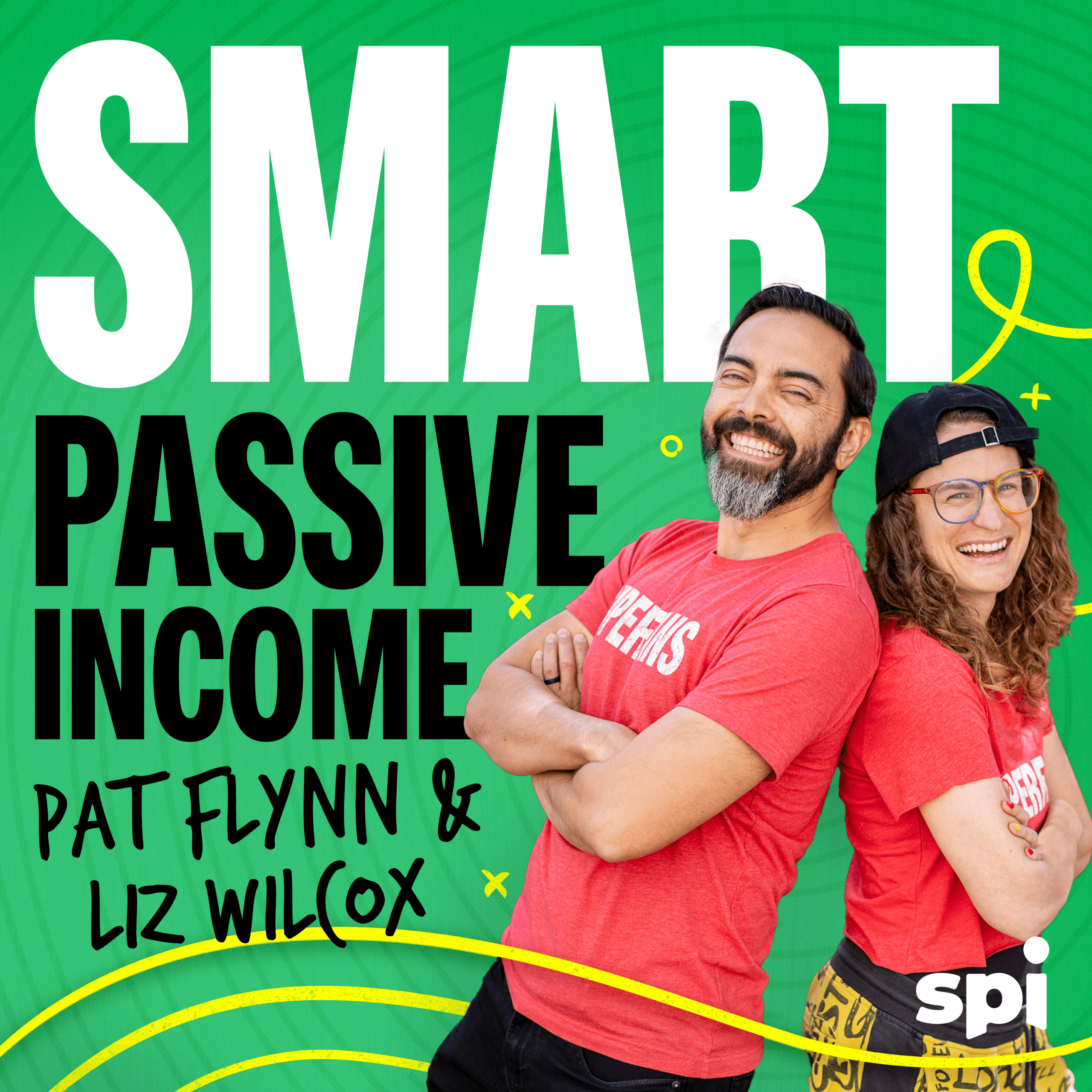
Our incredible Director of Community, Liz Wilcox, is joining me for this throwback to the AskPat days. And that’s exactly where we start. I’ll share why I couldn’t be more excited to have Liz coming on as my co-host after flying solo for so many years, and why partnerships are one of the top ways to uplevel your business!
But there’s much more to take away from this session, so don’t miss out!
I discuss finding and focusing on an MVPC, your minimum viable piece of content, to beat perfectionism and procrastination. Trust me, this is the key to taking action and posting daily!
To top it off, I also share a look at the massive growth of my Card Party conventions in the Pokémon space. You’re going to want to listen in because bringing your people together live is, hands down, the most rewarding thing you can do as a creator.
Enjoy!
You’ll Learn
- Why Liz is coming on as a co-host on the SPI podcast
- Creating separate channels for Shorts and long-form videos
- How I built consistency to post every day for two years
- Why learning comes from taking action, not doing research
- Finding and focusing on your minimum viable piece of content
- Deciding if selling branded merchandise is right for your business
- The moment you know it’s time to start hiring and building a team
- The lessons I’ve learned from three years of live Card Party events
Resources
- Find out more about our YouTube From Scratch course
- Check out Ecamm Live, my favorite streaming tool [affiliate link]
- Launch your Shopify-powered online store in five days
- Get your very own Steve plushie
- Subscribe to Superfans Secrets—our weekly newsletter on the strategies behind building real relationships with your audience, delivered free, straight to your inbox
- Connect with me on X and Instagram
- Connect with Liz on Instagram
SPI 938: Ask Pat Is Back! (For a Moment)
Pat Flynn: Hey, it’s Pat here.
Liz Wilcox: And Liz.
Pat Flynn: What’s cool about this episode is Liz is actually gonna quick-fire a number of questions from you, the audience, back to me. So this is sort of like a, Liz is calling it, like, an AskPat is back for a day kinda thing, right?
Liz Wilcox: Yeah, like a throwback. Why not? That’s h-
Pat Flynn: A throwpat …
Liz Wilcox: That’s hot right now, right?
A throwpat. Don’t throw Pat, guys. If you see him.
Pat Flynn: Don’t throw me. Throw me a hello or a wave or something, but, but don’t literally throw me. Anyway, yeah, we’re gonna dive right in.
Liz Wilcox: We’ve been doing these AskLiz things, and I was like, “Wait, people still ask Pat a lot of stuff, and if we’re co-hosting, why not do it together?
Why not ask Pat these questions you guys have?”
Pat Flynn: Yeah, this is great. Uh, by the way, the AskLiz’s have been amazing. Thank you for adding that on top of what is already being published on the podcast. People have been enjoying them. I’ve been getting a ton of messages just personally, Liz. I don’t even know if I told you this, but a lot of people in the community and audience members are like, “I love the fact that you have Liz here on the show or in the community.”
They’re loving your energy, and I’m just so grateful for you for that.
Liz Wilcox: Aww. Well, I’m loving being here. It feels like an absolute honor. Let’s get into it. On that note, the first question we’re gonna ask Pat is why have a co-host in the first place? You’ve been at this for what? 15, 16, 18 years, really? A long time.
Why a co-host? Why now?
Pat Flynn: Yeah. I mean, there’s a number of layers to this, right? I mean, having a co-host on a podcast is great for just revitalize the energy and to mix things up, and for a while I’ve been recording just solo and with these interviews, and I’ve always looked for ways to put and inject new energy into everything that I do, and one way to do that with a podcast is to have a co-host.
Obviously, I haven’t had one before until you, so that speaks to you, Liz. Finding somebody who perfectly aligns with the audience and who shares the same values as, as me, shares the same mission with your business. The knowledge that you have that fills in a lot of gaps that I don’t have is perfect for the show, too.
Plus, when you have a co-host, if it’s the right one, the energy and, and the conversation just takes the knowledge and the excitement to a whole new level. So I’ve already seen that with the interviews that we’ve done together and the co-hosted episodes that we’ve done together. And, you know, having you come in as community director has been amazing for specifically the community, and the energy that you’ve brought there, the 400% increase in activity in the space, the increase in the memberships that we’ve had since you’ve come on.
You’ve done so amazing. I wanted to bring you into the public face here on the podcast to do the same thing as well. Plus, it really helps me, too, with my focus partly in the Pokémon space now as well, and a lot of things happening in that realm. You are able to help, you know, bring and, and make sure that there’s still greatness here on the show, if not even more than just me alone.
So thank you.
Liz Wilcox: Thank you. That, that makes me feel so good. I really appreciate it, and I’m hoping that the audience is liking it, too, and you get, you know, two brains for the price of one, so-
Pat Flynn: Yeah, two for one.
Liz Wilcox: Yeah. So speaking of YouTube, you know, you’ve got these two Deep Pocket Monster channels over at YouTube.
And by the way, guys, all of these questions are coming from our SPI Community, so shout out to the community there.
Pat Flynn: Yes. Thank you.
Liz Wilcox: So somebody’s saying, like, you have two YouTube channels, Pat, like, one for Shorts, one for your long form. Do you recommend that?
Pat Flynn: Actually, I don’t. I would recommend if you are publishing content for the same audience to have them on the same channel. That’s what YouTube wants. But it wasn’t always like that. When Shorts initially came out, Shorts were actually competing with longs. If you published a Short, it would actually get in front of the long-form videos, and the long-form videos are the bread and butter of Deep Pocket Monster. We currently have 2.3 million subscribers there on the long-form channel, and 2.9 million subscribers.
We’re about to hit three million. In fact, by the time people listen to this, we might even be at three million on Short Pocket Monster. But I separated them because at the time that we started the Shorts, they were competing against each other, but that is no longer the case. And so, you know, do I regret starting it in that way?
I don’t, because part of the other reason was to actually silo the Shorts channel to show people, as a case study, both for the Pokémon space and for all of us here at SPI, that I could start or you could start a separate channel, have it be all Shorts. My face isn’t on there. I didn’t link to it from anything else.
It could be completely separate, and we were still able to find a way to make the algorithm work in our favor. And now, as you can see, it’s even outgrown the long-form channel, and if you were to combine the two, obviously it’s, like, 5.5 million subscribers, although there is some overlap. But there are people who don’t even know the other one exists, and again, this is a great opportunity for me to say that, like, Shorts can be successful and longs can be successful.
But in general, one channel for both works, especially if you’re talking about the same thing, especially if you have something like a long-form podcast or something where you can take clips. Those clips should live on the same channel so that they actually push people to the long version of that. But there are some people who will only watch the Shorts and would never watch the longs, and vice versa.
There are some people who watch the longs who are just not into the short-form version of the stuff that I do. So yeah, I’m able to hit both, and as you can see, it kind… It can kinda work either way. But yeah, I’d recommend just making it easy for yourself and just having one channel.
Liz Wilcox: I was gonna say, it’s probably a little bit more time-consuming to have the two channels.
Would you say that?
Pat Flynn: It is, because it’s just a, a separate group of analytics. It’s another login, all the sort of administrative stuff that goes into that. But of course, I’ve built systems, and I have it, you know, locked down now, where I can sit down and film myself opening a pack of Pokémon, and 15 minutes later it’s scheduled and ready to go, even after editing.
I have all the systems in place, the bank of sound effects that I have. I just drag and drop, and I have a master template file. All… ‘Cause it’s the same structure. That’s, again, what we teach in our training at SPI is, like, build the structure built… Especially for Shorts or TikToks or Reels, find a framework so that it’s kind of the same every time, but a little bit different, right?
Where the audience might not know exactly what the end or outcome is gonna be, but it’s the same framework with the same intro, with the same, you know, just brandable stuff, and that’s what’s made the production a little bit easier. I wouldn’t have been able to create 700 straight days of Shorts without having that structure.
Liz Wilcox: Wow, 700. Yeah. That’s … Y’all, I just, when I hear that, it’s so wild to me because how many times in your life have you done something for, like, 700 times or 700 days in a row? Like, that is true consistency. That is true dedication. So, you know, Pat, that’s just so inspirational, honestly. Like, that’s-
Pat Flynn: Thank you.
Liz Wilcox: My aside, nobody told me to tell you that. Like, I’m just thinking, 700 times. Wow. And so we’ve, we actually just got over 150 new students into your YouTube From Scratch. And so we have a lot of YouTube, like, potential YouTube stars out there, right? And I just love that you’re teaching this process and teaching people, you know, how to make a series, what the series is gonna be, how to set up the long-term and the short-form, ’cause you have Short Form Formula as well, which we had 120 students in May join.
It’s absolutely incredible. So I love that we have so many creators. So- Yeah … on that, with YouTube, what would you say to someone, and this person exposed themselves, but they, they really wanna know. They said, “You know, Pat, what would you say to me? I’ve studied YouTube for 18 months, but I only have five videos. I really get stuck in my head.”
Pat Flynn: Yeah, I saw this come through.
Liz Wilcox: Yeah, they wanna be that guy that, you know, 700 videos, right? Right. So what advice do you have?
Pat Flynn: Yeah, I mean, I understand why a person would take 18 months to create five videos, ’cause I was in that place before. I’m worried about perfection. I want to have the production be good.
I don’t want people to make fun of me for the stuff I’m doing, or I don’t wanna do anything wrong, so I’m going to make sure it’s perfect before I publish it out there. But the truth is, and I wrote about this all in Lean Learning, like, the learning comes from the action that you take, not from the research that you do.
The research is important to a point, just so you know how to get started, but the learning comes from the doing. I always reference this, but I interviewed MKBHD a number of years back, Marques Brownlee, the world’s most prolific tech reviewer on YouTube now with about 20 million subscribers. He said in that interview that his first 100 videos were for less than 100 subscribers.
And when I heard that, I was like, “Oh my gosh, so you just were creating because you wanted to create and see what worked.” And eventually, he found a rhythm and something that worked to a point now where he’s this prolific creator and, of course, doing very well because of that. So this is why our challenges are really important, trying to create a video every day for 30 days just to kinda get that motion, get it going.
And if you treat it like, you know, you had mentioned earlier, it’s like, ah, 700 times, what else have we done in our lives like that often every single day? You know, brushing our teeth, right? It’s like brushing my te- I treat creating these short-form videos like I’m brushing my teeth. It’s just something I gotta do every day, right?
And I wanna do it well and efficiently. Some days I don’t wanna do it, but I do it because if I don’t, I’m gonna have stank breath the next day, and April’s gonna be upset, right? ‘Cause I’m breathing next to her in the bed. So I got, I gotta make sure I brush my teeth, just like how I have to make sure that I publish my daily video It could get very easy to be lost in the process, which is why, again, the systems and the sort of workflow is very important in trying to find that series to make it easy.
But, I mean, it’s a shame when I hear about somebody like that who has waited so long to get to those learning points. Every one of those five videos within that 18 months probably taught you something, but imagine if you did a video every day for just one month. That’s 30 learning moments. That’s 30 opportunities to grow.
That’s 30 opportunities to get data and to understand what’s working, and 30 opportunities for one of those videos to take off. That’s where I think starting with short-form video works really well because you can kind of get into that without having to worry about being perfect, ’cause you always have the next day, and the next day after that, and the next day after that.
And it’s just like fishing. If I went on a lake, and I got a boat, rented a boat, got all the equipment that I needed, right? The best rod and reel and the best bait. Imagine I only cast it out five times, and then I packed it up and went home. That’d be insane. I’m gonna cast as many times as possible ’cause every cast could be the one that catches the big fish, and that’s why we have a problem as fishermen when we’re like, “One more cast, one more cast,” and we say that 50 times till we finally go home, and it’s dark.
So anyway, that consistency and showing up, whether it’s daily or at least a few times a week to get those things moving for you, the momentum built, is really important. Momentum is key with a lot of this, and when you can build it into your daily process, then it just becomes another thing you do and another opportunity to grow.
Liz Wilcox: I love that so much. Yeah. When I started my YouTube channel, you know, I had all these aspirations of, “Oh, I’m gonna start this live streaming show, and I’m gonna have guests, and it’s gonna be like late night for entrepreneurs.” And I just realized that was such a huge production, and even- Mm-hmm … I had won this contest with Ecamm.
Shout out Ecamm. They’re awesome. Yeah, shout out Ecamm. And y’all, they came to my house. They built me a podcast studio. They gave me all of their systems and processes, and I mean, I had, you know, the, the YouTube channel on a platter, and I still was overthinking. And I’m a person that, you know, I like to think I have a bias for action, and I still couldn’t get out of my head.
And then I just realized I had to simplify, right? It was like, “Okay, maybe we’re not gonna do that-” live stream show, but maybe Liz, you could start a daily podcast that’s just five to 10 minutes, right? And I did that. I, I did I think like 200 episodes or something every day. I, I would record on Fridays for the next week.
You know, I never got much beyond that. You know, I tried to batch more than five at a time, but that was about my max, and I got into a great groove. And are those the best, most amazing, you know, Deep Pocket Monster move over type of videos? Absolutely not. But they’re done, and now I have this library of content that people find every day on YouTube, and I can say to my current customers, you know, when I do Q&As and things, “Oh, I actually have a podcast episode on that.
You know, here’s the 30-second version. But I go way deeper over here.” You know, and my, uh, assistant is always in the chat, so I’m like, “Oh, Patricia, send them the link. Send them the link.” And, you know, now she even knows the episode numbers better than me. So I never would have had that library of content and had that discoverability if I had stuck with my original plan of, “Oh, I’m gonna have this giant, you know, email sound booth live stream thing,” you know?
Pat Flynn: Yeah. I mean, making it easy for yourself. I mean, if this were easy, what would it look like? That’s the question from Tim Ferriss that I talk about all the time. If this were easy, what would it look like? Start there. You can always add more things in later. But what is the MVPC, the most minimum viable piece of content?
MVPC. I’m gonna, I’m gonna coin that.
Liz Wilcox: Oh, he’s good, guys. He j- I think you just… Did you just come up with that?
Pat Flynn: I did. I did.
Liz Wilcox: He’s so good, guys. Leave a five-star review. Pause the podcast, leave a review. This is great. I love that so much. That’s gonna, that’s gonna be our next subject line- MVPC … for the email list.
That’s so good. Yeah. That’s so good. Okay, let’s, let’s keep moving. So again, we have so many new students in the YouTube From Scratch. We’ve got a lot of questions over there.
Pat Flynn: Sure.
Liz Wilcox: So somebody said, you know, “I’ve noticed in your Deep Pocket Monster you sell merchandise.”
Pat Flynn: I do.
Liz Wilcox: “So that must mean you have an ecommerce shop.
What platform are you using? Do you like it? What do you like about it?”
Pat Flynn: Yeah. So absolutely merch. You know, it’s funny ’cause with SPI, I was always like, “Oh, I’m not a big fan of merch,” right? I don’t wanna just be a T-shirt company and put and slap a logo on things. But when Deep Pocket Monster came out and I saw just how ravenous that fan base was, they were begging for it, right?
And this is when you build a brand, especially when you connect and you have some shared thing that other people on the outside don’t really understand. This is where a person wants to represent that and those values and that mission and what they, what they care for, right? It’s why we buy baseball caps with our favorite team on it.
It’s why we rep shirts from our favorite companies or whatever the case may be. I didn’t understand that at first until Deep Pocket Monster came out. So yes, we absolutely have merch, and we have the usual things, right? Like T-shirts and hats and things with our logo on it, right? And we use Shopify to do all of that, and that makes it very, very simple.
Shopify, shout out to them, by the way. They sponsor us here and there, by the way, uh, every once in a while, and they’ve done very well with supporting SPI. But yeah, you can set up a Shopify store very quickly. In fact, we have a five-day Evergreen Challenge if you wanted to go to smartpassiveincome.com/store.
That’ll walk you through in five emails in five days how to set up your shop really easily. So go there, smartpassiveincome.com/store, and again, shout out to Shopify. But there’s a few things about merch that I am now understanding. In fact, physical products are coming back. You know, it’s al- it was always digital everything for a while because it’s just easier.
But I think now, especially with AI and everything like that and the slop that’s out there, people want physical, tangible things that they can feel. And what I also love about physical products, and I learned this with the SwitchPod, the, the invention that Caleb and I built and then recently sold. We sold that company recently. There is something beautiful about selling something that when a person receives it and starts using it immediately, like from their doorstep or it’s in their hand, when they see value immediately coming from that.
There’s just something special about that, right? ‘Cause with digital things, as great as they are, a person might still have to consume all that stuff or be involved in the community in order to get that value, right? Which I’m very grateful at SPI that people, when they, they see that very quickly, that value comes through when they start getting involved, ’cause we just attract the best people.
But with the SwitchPod, it was like, oh, a person uses this and they’re… It’s like a utility. That’s one type of physical product you could promote. And whether you sell it on Shopify or some other platform, things like that work really well. We know a number of other creators in our friend group, right?
Like John Lee Dumas and Michael Hyatt, they each have these, like, journals that they sell, The Mastery Journal or The Full Focus Journal. These are utility things, and that can work really well with physical products because you don’t need a connection to the brand or the creator in order to see the value in that because there’s utility.
But then when you start building fans, and for superfans especially, that’s where you can slap your logo on something and sell T-shirts, a mug, a backpack, things like that. But there’s one more level of merch that works really well, and this is for the, for the superfan. This is the stuff that is within the brand only relevant to those who know.
Like if you know, you know kind of things. And I, for Deep Pocket Monster, we have a character that shows up in our videos. His name is Steve. We needed a way to represent time in our timed challenges, so we bought a– I bought this kitchen timer off of Amazon, and I put googly eyes on it and then foam eyebrows, and we made Steve.
I’m showing him on camera to Liz right now. This is Steve. He’s missing an eyebrow, by the way, ’cause I lost it, and I have to find it. But you can move the eyebrows. He’s sad, he’s angry, whatever. It’s just a stupid little kitchen timer with googly eyes. But he kept showing up in these videos. And because we gave it a name like Steve, and Steve is like a name that you can get angry at, right?
Like Steve, it has that, like, very piercing sound. People started to go, “Where’s Steve?” Like, “W- Is Steve with you today?” Like, people started talking about this kitchen timer as if it’s a real person. So we’re creating this universe in our brand, right? This little, this little, like, Marvel universe in our own way, to a point where now I’m getting, like, drawings from kids and families of Steve, and, like, Steve is showing up in my mail now.
So what we decided to do was get a plushie Steve created. Here is plushie Steve. I’m showing Liz now. This is a, a, a plushie s- version of the kitchen timer.
Liz Wilcox: He’s cute. Google plushie Steve Pat Flynn- … and I’m sure it’ll pop up.
Pat Flynn: It’s on deeppocketmonster.com if you wanna check it out. And we sold out 500 of them in a day. As our first- Wow, our first batch test. And, and we only sold that to, um, the YouTube members. Like, the public didn’t even know about it. So we ordered a second wave, and those are available now at deeppocketmonster.com. And yes, the eyebrows do move on the plushie Steve. But it’s like people have them in their homes now, and, like, this thing that we made up because they’re fans of the channel and the culture and the brand that we’re creating, that becomes a thing that people are connected to.
It’s just like I watch this YouTube channel called How Ridiculous with these guys from Australia who just, like, blow things up. They throw things off of ledges, and w- y- th- they’re just ridiculous. Uh, they have a foam dinosaur they call Rexy who’s always in their videos ’cause they’re, like, using him as, like, a dummy to just be a part of all the shenanigans that they’re doing.
And, and Rex, like I even bought one. I have a foam dinosaur named Rexy with the How Ridiculous logo on it because I watch their channel, and I love what they’re doing, and I want one too, right? Like, you can get to that level when you create superfans for your brand, which is why I love the Superfan System and what we teach here because you can get to that level such that you can create your own IP and make your own merch without having to worry about, you know, copyright and/or just, like, what to sell because your audience will tell you.
Liz Wilcox: Yeah. It’s, y’all, the power of the superfan is real.
Pat Flynn: Yes.
Liz Wilcox: Like, even it doesn’t, you know, maybe you’re not creating your own merch yet, right? But even I’ve been h- carrying around the same mug for years, and it’s got all these stickers on it. Y’all, I have not purchased one of these stickers. These come from superfans.
Like, “Oh, Liz, I saw you had a little spot on your mug. I found this small, you know, sticker of an avocado,” or, “You mentioned you like turtles one day, and, you know, you’re always arguing with people about, you know, don’t dig holes at the beach ’cause you gotta save the turtles, so I got you this turtle sticker,” right?
And it’s so amazing to see, like, what stands out with people. And yeah, I love the Superfan System because it teaches you to go through all of that audience building to get to that level, and it’s, it’s just really, it’s an amazing thing when you get it. It’s a, and it’s a beautiful thing for me, you know, to know that I’m making an impact in that way.
Like, Pat is so much a part of people’s lives that they, they want a Steve, you know? And, and they probably-
Pat Flynn: It’s crazy. It’s a kitchen timer.
Liz Wilcox: Right. But it’s, with eyebrows, Pat. Yeah. Like, you don’t understand, you know? Like, I’m just picturing families having that, like, in their living room as, like, a little pillow and, you know, I’m picturing maybe, you know, “How was your day today?
You know, make Steve’s eyebrows tell me how your day was,” like, to their kid.
Pat Flynn: Ooh, that’s cool. Yeah.
Liz Wilcox: You know? Like, that’s just what I’m picturing, the possibilities. So yes, if you’re interested in merch or having some kind of ecommerce or some kind of, you know, tangible item in your business, it can really change things for a lot of people.
The last thing I’ll say, and we’ll get to the next question, is I started giving away koozies with, like, a cartoon face of Liz on it. And on the other side, ’cause I teach email marketing, it says, “Today I email.” And I have, you know, I give them away as gifts when somebody does something really awesome in the membership, and people will tell me, like, “Oh, I’m drinking out of this koozie because I don’t wanna send my email, but, you know, Liz, seeing your silly little face and- and the affirmation- I love that … you know, I sent the email today.” So it’s, it’s, the power of branding and the power of the superfan, they are real. They are real.
Pat Flynn: Yeah. Really quick, ’cause I know people like numbers. Yeah. Last year, 2025, we did 60K In merch sales, shirts, hats, et cetera. This year, and we’re recording this in June right now, we’ve already done over $100,000 in merch sales, and we hadn’t even really pushed it out any harder.
It’s just the brand that we’re creating is reaching more people, and now we’re getting a little bit more. We’re like, “Okay, we should probably promote this stuff now.” So we’re hoping that in the next couple years we could probably see upwards of, of, you know, quarter million to half a million dollars in merch sales, which means that many more of our logos out there, or many more Steves in people’s houses to start a conversation with people, and they go, “What’s that?”
“Oh, this, this is Steve. You don’t, you, you don’t know Deep Pocket Monster? Here, let me show you a video.” Like, that’s the power of merch, too, is it can be a conversation piece for people as well.
Liz Wilcox: Absolutely. Okay. So when you said how much money you were making with the merch, when you said 60, I thought, “Oh, well, that’s, you know, a salary for a VA.”
You said 100K. Right. You know, that’s a marketing director. That’s a this, that’s a that. And so someone was asking in our community, they said, “You know, I am starting to make some decent cash. Uh, revenue is predictable. How do I know when I’m ready to hire someone?”
Pat Flynn: Ooh. Yes. This is a great question, and it’s one of the biggest questions you can ask yourself because it’s one of the biggest steps you could take.
And I know a lot of people who are on one side like, “Oh, I always want to do everything myself because I can do everything myself.” But that’s a dangerous place to be because then you’re gonna do everything and get overwhelmed and, you know, be overworked. And I’ve seen people hospitalized because they’ve just tried to do literally everything themselves.
And when you’re starting out, that is gonna be you for a while. You’re gonna wear all the hats. But it’s important to ask yourself every once in a while, like, especially once money starts coming in, like, where can I afford to invest in some help so that you can get time back, but also just so you can alleviate some of the stuff that maybe you shouldn’t do anymore.
Even though you might be great at it, maybe you shouldn’t be doing that because there are some higher level things that only you can do because somebody else can actually do those things for you, if not even better. And I remember when… This is funny that we’re talking about this because when the AskPat podcast came out where I did a daily podcast of a question every day that I was answering.
This was 2014. I was sitting at Starbucks with John Lee Dumas, who has a daily podcast, and I asked him, “How in the world are you able to do a daily show? Because I can’t ev- I have this idea for another show, but I’m already doing one. I’m already at the end of my time available. How are you doing that?” He was like, “Pat, are you kidding me?”
Like, “I have somebody do all the work for me. I just record the episodes and send them off and they’re done.” And I was like Well, duh, that makes total sense now, and it would absolutely behoove me to invest in somebody to edit this new podcast so I can get it done, or else it wouldn’t happen. And so what to ask yourself when you are considering, okay, should I invest in some help, is…
Well, before you do that, you need to ask yourself, like, what might a person you hire do for you? And you can hire on different kinds of ways. You can hire an employee, which is, like, all the way, or you can hire a person, like an assistant, a VA even, somebody from maybe even the Philippines who can come at a much cheaper price to do a lot of great work for you.
And I had worked with a VA in the Philippines for quite a while and, and that was amazing, and then started bringing people in-house. But you wanna still do an audit of all the things that you do for the work that you, you’re doing online, and then look at all that. I would recommend Post-it Notes because you can put one thing that you do per Post-it Note, and then you’re gonna see this giant sea of all the things you do.
And then you can start looking at every individual Post-it Note and going, “Is this something I still have to do or still needed to be done?” Because you might be able to crumple it up and throw it away and already get time back without even hiring somebody because you might be seeing everything now and going, “Oh, well, like, that doesn’t do anything for me anymore, but I’m still doing it,” just ’cause you, Frankenstein, put everything together in the way that we do when we’re just starting out.
So you can already save time without even hiring just from doing an audit. That’s, that’s, like, step one. Step two is finding those Post-it Notes, those things that you’re doing that maybe you hate doing, right? That’s kind of where you start next. Like, what do I hate doing that I– that still has to be done?
Let me put these in a pile. Maybe I can find somebody that can help me with that. And if there isn’t anything in that pile, well, good for you, but that’s probably unlikely. And then there’s the final pile, which is, here are the things that I actually like doing, am good at doing, but probably shouldn’t do anymore.
That is where you can probably get the most bang for your buck because that’s probably where you’re putting time in where you could probably put it somewhere else. So that’s kind of where I would start. There’s some great books out there related to this as well. Virtual Freedom by Chris Ducker is one that I recommend and you can listen to.
And then the more recent one that a lot of people have been passing around is from Dan Martell, Buy Back Your Time. That’s a great book as well to help wrap your head around doing this. But that, that’s kinda where I would start. I would start with literally an audit of all the things you do, and then you can go from there.
Liz Wilcox: Awesome. That’s super, super insightful. All right, we’ve got a couple more questions.
Pat Flynn: Sure.
Liz Wilcox: Let’s do it. What, going back to the Deep Pocket Monster thing, what have you learned from running your live events? I know you’ve been doing it, what, is it two or three years now?
Pat Flynn: Since 2023, so three years now. We’ve moved up to two per year last year, and then now we’re doing three per year this year and next year.
So we’re coming into our seventh event here very soon- Wow … which is really cool this year.
Liz Wilcox: What are some lessons you’ve learned?
Pat Flynn: There is nothing like in person, I gotta say. So if you have a brand, if you can find any way, shape, or form, whether it’s big like a convention like we do, which is, trust me, very expensive and a lot, and not where I would recommend you start.
But actually, I didn’t start there because with SPI, I started out pre-COVID with coffee meetups and little fun little meetups like that. There’s nothing like the in-person connection. Even live streaming virtual stuff, that is great ‘Cause it’s real, it’s in real time, it’s a real human being on the other end.
Um, there’s nothing like the in-person stuff. So if you can, as a creator, facilitate moments where you can meet your fans and have your fans, this is more important, have your fans meet each other, I mean, this is where things start to just get really exciting for your brand. Like, there is a renewed energy every time I go to one of my events that I put together because I’m just seeing the people that I’m creating videos for.
I’m seeing the people that I’m creating content for, and I’m seeing the communities that are being formed as a result in person with my eyeballs, and that brings so much energy back to the content that, that I create. It’s the same kinda energy that I had after FlynnCon back in 2019. We had 500 entrepreneurs fly to San Diego.
My family and I, we hosted an event there for, for our people, and I was just so excited for more FlynnCons, but of course 2020 and the COVID thing happened, and we weren’t able to meet in person anymore. So that’s where the birth of the SPI Community came because we still wanted the community to find each other, especially in that moment, and the community’s been thriving, and even more so now that you’re in it, Liz, and doing your magic in there, too.
So thank you. But yeah, the in-person stuff, there’s nothing like it. So that’s sort of lesson number one. I’ll share a couple more here, but any response to that part of it?
Liz Wilcox: Yeah. I agree with the in-person, and one of the things Pat and I have been talking about behind the scenes is how can we, and maybe we start with the coffee meetups, but how can we get the SPI community to meet each other again?
Yeah. Like when Pat was just talking about, you know, his stuff, y’all, it’s like 9,500, 10,000 people. And I just, for some reason, I had this vision of people meeting, like a couple meeting at your event and getting married one day, and I just think that’s so cute. I’m sure that… Uh, has that happened yet?
Pat Flynn: Uh, there have been two Card Party proposals on stage-
Liz Wilcox: Oh my gosh. That’s so adorable. Yes. And so, you know, like, how can we take that excitement, maybe not romance, right? Yeah, yeah. But how can we take that excitement- We’re not, like, a dating service. Right, and bring it to the SPI community? Like, you know, how can we find, you know, a different kind of partner, right?
Somebody to partner like, “Hey, will you be my co-host? Will you come into my community?” Things like that, right? And so that’s something that we’re working on behind the scenes for the SPI community that I think we’re gonna be able to implement before the end of the year, so I’m really excited about that.
Pat Flynn: Yeah. We even tested this in Boise when we were together at Craft and Commerce recently. We h- held, like, an SPI m- meetup, and it was great. I mean, it was just a couple dozen people, but just to, again, see people in person, not because it’s, like, fans meeting their favorite creator, which is largely what Card Party is about.
We bring a bunch of other creators in there. We feature them. It’s not about me. It’s about the community. But even at SPI, it’s like- I can help a person immediately there, right there in real time. And that person gets that experience that they can’t get from anybody else because they’re there, and they’re also meeting other people who are in the same boat as them.
And that’s great, too, seeing that they’re not alone, especially in the Pokémon space where a lot of people, especially who grew up with Pokémon, they were bullied because of it. And now it’s like, “Ah, I found my people.” So it’s just so special to create that space. The other lesson Is that you don’t have to have everything that you want in an event on your first event.
I wanted everything, right? Because I- that’s how I am. I’m like, we, it needs to be, again, whenever you create any- anything new, even if you’ve done a bunch of new things over the years like I have, that perfectionism always creeps through, and, you know, you wanna try to find that minimum viable, you know, event.
What would be a great first version of this? ‘Cause every next event we have what’s called … A- after every event, we do what’s called, like, a postmortem, which I hate that term. It’s like, w- no, this thing didn’t die. It’s like, it’s not a postmortem, but sure. That’s just the formal way to say it. We have a meeting about, like, what went well, and it’s important to talk about what went well.
Most people will just talk about what didn’t go well, but I think it’s important to celebrate the wins and the things that did go well so you can continue to do them. But also, where did we fall short? Where might there be room for growth? And that’s where we can continue to expand and grow over time and make it better and better.
Especially for the big, big events, like what we do, 10,000-person events, you’re not gonna make money on those on the first few. It took us a few years to finally see us not in the red, and even then, it’s not about the money that it can make. You know, we’re selling tickets and we’re, you know, getting sponsors, sure, but we’re putting that money back into the experience because that ultimately just helps ourself as a brand and all the creators there, too, and just the community on whole.
‘Cause, you know, the money comes from elsewhere, from, we talked about merch sales earlier, but, you know, YouTube ad revenue, brand deal sponsorships on the channel. This event is for the community.
Liz Wilcox: I love that so much, and y’all, if you’re thinking, like Pat said, oh, the, the big one, you know, 5,000, 10,000 people.
But I was floored when he said 500 for FlynnCon. And so if you’re thinking, like, what is that minimum viable, like, event? So coffee meetups for sure, things like that, just getting each other together. But I wanna share, I used to be an RV travel blogger, and we used to do this online virtual event called Full-Time Freedom Week.
It was actually my second business, and I had some partners with it. And we thought, well, what if we took this in person, right? It’s always been this virtual event. We had, you know, 6,000 to 10,000 people sign up every year for this virtual. You know, some people, they wanna meet us. They wanna meet each other, right?
You know, they wanna learn how to hit the road in an RV. And y’all, when I tell you the event we had, we just got everyone to book at the same RV campground. We called the campground and said, “Hey, you know, we’re, you know, we’d like to reserve,” it was, like, 30 or 40 slots. And they said, “Okay, well, we can reserve those, but only for the next 30 days, and then we’re gonna start selling.”
You know, like, put your money where your mouth is type of attitude. And so we told everyone, “Okay, well, you know, make your reservation, make your reservation And then when people started actually saying, “Okay, yes, we’re all gonna meet,” I think it was Galveston, Texas. And then we were like, “Oh, well, how much should we charge for a ticket?”
And honestly, you guys, I can’t even remember how much the ticket cost. I think it was super low, you know, $100 or less. The way that we went there and we just put– like, we just recorded live what we were going to do online, and the people that were there got to come and watch live and then interact with us in between the, quote-unquote, sessions.
Y’all, I had my child at the time, who I think was two or three years old. She was strapped to my back the whole time. I think I was the only person under the age of 40, uh, minus my daughter, who was, like, three years old. But it was just this great, I don’t know, celebration of the thing we were doing online, right?
It, it was- Yeah … very grassroots. Did we make money? Probably, because we didn’t spend any money. Like, we just went to the campground, and we’re like, “Well, we’ll figure it out when we get there.” So, you know, maybe we made $100, and, you know, we all got to go out to dinner that night or something, right? But it was, it was just this way of just getting it done that I know Pat talks about a lot.
But, you know, Pat started 18 years ago, and maybe you’re like, “Well, what does this look like today?” And so you can do things like that. Just meet up and tell- Yeah … those early adopters when you’re first starting out, like, “Hey, we’re just gonna try this.” You know, the very low/no expectations, and those early adopters, those are your first superfans.
They are. And they will- Oh, yeah … totally be into it, totally be into it.
Pat Flynn: Oh, we have people who have been to every Card Party, and, and we recognize them, right? It’s important to do that, and they were there from day one and have seen it evolve, to go with the Pokemon theme, over time, and it’s gonna continue to evolve.
So anyway, that’s– I love that we’re talking about this. It’s– I love the opportunities that are out there. It’s interesting because it’s so different than when you and I started, Liz, which was, like, all digital. Like, online courses, let’s get as much information in front of people’s faces as possible. It’s, it’s almost like going the opposite direction now.
It’s like, how can we create real moments? How can we have tangible things? How can we– And that’s not to say courses don’t still work. That’s not to say that online stuff is dead. No, not at all. In fact, there are so many more tools now to connect us, but I think when you can think about these other layers on top of it, that’s where your brand will stand out amongst the noise and, and all the AI slop that’s out there.
Liz Wilcox: For sure, absolutely. All right, last question.
Pat Flynn: Okay.
Liz Wilcox: I think I know the answer. Well, I know my answer, and I think it has to do with, you know, like, what is working now. Pat, why are partnerships such a big deal right now? I keep hearing partner, partner, partner.
Pat Flynn: I mean, there’s many ways I could go about this. I mean, you are, you’re, you’re a partner here at SPI-
Liz Wilcox: Right
Pat Flynn: Liz, right now, and you’ve added so much value. You’ve grown the membership. You have brought in your expertise in email, and it has already helped SPI. That’s why we’re here, and we have you as community director, and there’s so much more that we can utilize from, from you because you’re not me, and I’m not you, and this is the beauty of partnerships.
It, it’s a one plus one equals three kind of situation, I think, in many cases. Partnerships are key as well because, yes, there’s the sort of logical part of it. It’s like, “Hey, let’s share our audiences together. I’ll do this for you if you do this for me,” and that can work really well, especially when there’s more campaigns and other things and revenue and subscribers and followers behind it, right?
We– I know this was a strategy you shared not too long ago, Liz, with email, which is like, “Hey, let’s start asking our audience, like, how they might be able to do email collaborations with another person in their space, where we do an email swap,” right? That’s, like, so easy, and that’s a form of partnership.
It’s not a fully long-term commitment. It can just be a one-time thing. But what I’ve found a lot of times with those one-time commitments, especially when it is with a person who seems to jive with me and m- and my mission and the values, it’s like, “Hey, let’s do other things together. Let’s find ways that we can create things that we couldn’t create on our own.”
And I think that’s where a lot of amazing opportunities happen. I mean, I would not be where I am today if it wasn’t for the people that I’ve surrounded myself with, both in mastermind groups, as just support systems, and help and, and mentors and coaches, but also especially partners. You know, I feel like, and I– and this is a Zig Ziglar quote.
Every time I share this quote with my kids, they roll their eyes ’cause I’ve said it so much, but I totally believe in it. “You can have anything in life that you want, so long as you help other people get what they want.” And that, to me, is the definition of partnership, right? It’s like we’re, we’re here to help each other and do something.
This is… You know, I think about Matt, you know, Matt Gartland, who partnered with me in the early twenty twenties when we combined forces. I bought out his Winning Edits company to absorb the team and, and, and have his expertise come in, and then Caleb coming on as, as CEO for a bit. Now you’re coming in as community director.
I mean, this– these are all different forms of partnerships. Our partnership with other companies, Ecamm and Shopify, right? And ManyChat. I mean, these are partnerships that are, that are fairly new but have seen value exchanged for both parties in both ways. So I think, uh, again, I think the way to sum it up would be it’s a one plus one equals three situation.
Now, not every person that you connect with will turn into a one plus one equals three situation. I think it’s important to vet the right people. It’s important to start building these relationships first before you need them, and that’s where you wanna dig your well before you’re thirsty, as they say.
But I think, again, the more people that you can connect with, the more companies that you connect with, the more opportunities you’re giving yourself and the more opportunities they will have working with you as well.
Liz Wilcox: Thank you, Pat. I would like to add that partnerships have always been a big deal. It’s, you know, maybe that’s just the trend.
People are talking about it because, you know, AI, what’s the opposite of AI? Humans, right? So maybe that’s why it’s front and center right this second. But partnerships- Mm-hmm … have always been important. I just shared, you know, that event I did was with three other partners. There were four of us. That was a decade ago.
So I think partnerships have always been important. They’ve always been a big deal. In my book, there’s no such thing as a solopreneur. We’re all in this together, and- Yeah … I’m so s- super jazzed and stoked and psyched that, you know, I get to do this with Pat and be the co-host here, and, you know, be able to partner so that we can better serve you, the listener.
So thank you so much for listening. Thank you, Pat, for being-
Pat Flynn: Thank you. This is great …
Liz Wilcox: Bringing back AskPat. This was so super fun. I, I learned a lot. I was taking notes.
Pat Flynn: Yeah. It, it… Listen, kinda like you hosted and I was the guest on this one.
Liz Wilcox: Yeah. Wow. How the tables have turned. All right.
Well, that’s the episode, my friends. Thank you for listening.
Pat Flynn: Thank you. See you in the community.