



Action, action, action. That’s really all it takes to build a business you’re passionate about.
Because here’s the thing. Action gets results. Whether you win or lose, you’ll gain new insights to inform your next steps.
And if you make failure part of your success plan, minor setbacks will stop bringing you to a grinding halt!
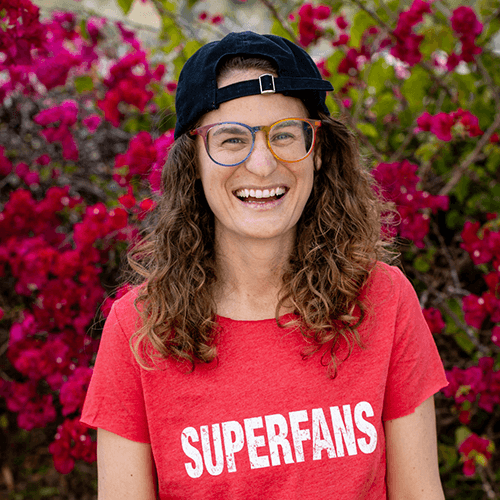
That’s how Gala Russ, my incredible guest, built full-time income as a novel writing coach in just two short years. Hear all about it in today’s awesome Member Monday episode!
This is a great chat on overcoming the marketing learning curve, snowballing your way to success, uncovering the purpose that drives you, and always trending upward.
Gala also shares how starting with community fast-tracked her growth and why newsletters are where it’s at for real audience building!
I’m so impressed by her mindset and consistency and can’t wait for you to listen in on this conversation. Enjoy!
Today’s Guest
Gala Russ
Gala Russ is an author and a novel-writing coach who helps new writers turn their ideas into finished novels. With nine published books and a background in education, project management, and marketing, she combines practical tools with an understanding of the creative process.
Through her Write Your Novel classes, workshops, and individual coaching, she helps writers untangle their stories, strengthen their craft, and make progress without waiting for life to get less busy.
She lives in the San Francisco Bay Area.
- Find out more at GalaRussAuthor.com
- Connect with Gala on Substack, YouTube, Instagram, and TikTok
- Use Gala’s Book Math calculator to plan your writing
You’ll Learn
- Why starting with community helps you grow faster
- How to overcome the big marketing learning curve
- Why newsletters are the most important part of your marketing
- Finding the motivation to keep taking action on your dreams
- Why failure should be part of your success plan from the start
- How to rest, restore, and refill instead of chasing balance
Resources
- Subscribe to Superfans Secrets—our weekly newsletter on the strategies behind building real relationships with your audience, delivered free, straight to your inbox
- Connect with me on Instagram
MM 008: Building a Full-Time Business in Two Years with Gala Russ
Liz Wilcox: All right, all right. You just went through all those ads. I’m going to get to the episode really quick, but first I just feel obligated and I got to intro this thing, right? So number one, thanks for listening. Number two, we are interviewing Gala Russ today. That’s who we’re tuning into. She’s a book author, obviously.
What other kind of author is there? She’s a, she’s a book author and coach. And what I really love about her and what I want you to hear is like action, action, action. Action breeds results. Results can tell you your next step. This lady is only two years into her coaching business. She’s already making that income, making that full-time income doing this.
And what she said, she said something that… Let’s just spoil it for you. She said, “Failure is part of learning,” and that has helped her take action.
So I want you to walk into this episode, or maybe you’re walking, maybe you’re doing the dishes, maybe you’re driving, I don’t know. Anyway, I want you to listen to this episode through that lens and hear how, because she’s been able to sort of integrate herself with failing, she’s not afraid.
Maybe she’s afraid of it, but she’s not so afraid that she’s not doing it, and how that’s helped her get so far so fast in her coaching business. Gala, like, your level of commitment to what it is you want to do and your students, it is unmatched. Like, I am so blessed to have you in my universe, and I just love seeing you show up and try things.
And yeah, what I’ve noticed about you, especially when we first met, was you seemed nervous to send the emails, but then I saw you like 30 days later, and you’re like, “I did it.” I’m like, “Oh my gosh.” Because I meet a lot of people, and this is no shade, but a lot of people, they’ll come to that first call for the membership and ask advice, and then I never see them again, or they come to the next call, “No, I didn’t.”
So I just, like, round of freaking applause, baby. I am so thrilled to see you doing the freaking thing. So tell us, I guess, I guess we’re just getting into this. Like- … what, what is the thing? What is the thing? Right. What is the thing? Tell us what you do and sort of, I, I know you’ve had like a, a windy path and how, how you got there.
Gala Russ: Correct. I am a novel writing coach, so I help people who either have an idea for a book and never even started or maybe started but it didn’t really go anywhere to write their first book. A lot of times, a lot of my clientele is that, and I do it through teaching creative writing. So I teach locally in my community, in my city, and I teach online.
And I also work as an actual novel writing coach, which basically means I usually have online courses with a small group or one-on-one where I read what the person is writing or help them plan and help them figure out their writing routine. Imagine a coach, uh, in the gym, right? You go there and you say, “My goal is to recovery from, to recover from the injury,” or, “My goal is to make my, both of my legs equally strong,” or whatever it is that your problem is, the, the, the trainer, the coach is going to help you.
So I’m there to help different people. And then I also help people who want to write a romantic subplot or anything that has a romantic plot in it, because a lot of people who write genre fiction, they’re like, “I want to put a romantic subplot,” but I’m like, “I’m not sure how to insert it.” So yeah, I help people figure out their romantic subplots, and I have written a bunch of romantic romances myself, so I’m like an expert in that, and I love helping people who are not experts become experts and do that.
That’s what I do.
Liz Wilcox: That’s amazing. So I also know that you have published nine books. Okay? Mm-hmm. So first, why? And also, like, what, when you publish them, because you know me, I- I’m trying to put the I back in SPI. I stands for income, okay? Like, how did you go… When you published them, and maybe what was the journey of, like, selling them from, like, the first to the ninth?
I would love to know that.
Gala Russ: I started writing on Wattpad for free under this pen name because there were, like, a lot of different things that were happening in my life. One of the biggest things was my mom died a couple years prior to it, and that year, I actually… She was a writer, so I opened a bunch of her notebooks she was writing by hand, and I was reading it, and I was translating some of her poetry, and then I had some stories in my head, and I’m like, “I’m just gonna, I’m just gonna try. I’m just gonna write something.” And I started writing, and I’m a person of community. That’s why working with you has been so great for me. Being in community helps me both with accountability, and there’s so much encouragement, sharing, and meeting other people who are doing the same thing as you are has always been something that helps me not give up.
Otherwise, if I’m on my own, I will probably give up much faster. So I was looking around for places, and I ended up on Wattpad, which is originally was kind of like a fanfic website, similar to AO3, but at that point developed into you can post your own fiction, whatever you want to write. No quality control.
It’s just kind of like on Facebook, you know, you can go, it’s self-like, you can go and you write, you can write whatever you want, so quality really varies, but there’s a community. And I met a bunch of people, and I learned a bunch of things, and I kind of got oriented in the whole writing craft world.
Eventually, that became my first income. I first was paid by Wattpad because they hired me to write for them, and they… I don’t remember what it was called at that point, but they basically would pay you a monthly stipend, and you had to publish a certain number of words a month. And that’s where I was first introduced to the fact that I can be paid for writing.
‘Cause at that point before then, I never came into writing with the goal of, “I’m going to be a published author,” or, “I’m going to be earning money from it.” To me, it was more of getting my story out of my head, and then at that point, I was hooked, and I just wanted to learn more and figure out more, and the community was great.
So it was very interesting. I w- they, they’re like, “Okay, we’re going to pay you money.”
Liz Wilcox: Okay.
Gala Russ: That’s how I started.
Liz Wilcox: I am obsessed with this. I didn’t know Wattpad ever paid people either. I mean, I’ve heard of it. It’s been around the block for a while. As, in, in internet years, it’s ancient, I feel. Can we go back to they offered you that stipend?
Gala Russ: Mm-hmm.
Liz Wilcox: And like you said… Like, I’m getting so excited. Like, I, gosh, I just love this. You said, “I had no dream or thought that I could make money this way.” What was that feeling like? ‘Cause I’m excited. I’m feeling, like, I’m feeling like you just got that first paycheck. I’m like, “Yeah, girl, let’s go.” You know, what was that feeling for you to be making money writing?
That’s insane.
Gala Russ: I think it was scary because up to that point, I was, “Well, if I don’t want to write this week, I’m not going to write this week,” or, “If I’m tired…” And I, I was my own boss. And here, I had a very specific requirement, which was good because I love deadlines, I love external pressure, but it was also scary.
There was also, weirdly, a lot of imposter syndrome because a bunch of other people who were in that program were people who, at least on Wattpad, were, like, significant entities and known names, and I, at that point, had, I don’t know, like, 1,000 followers. And not, not that I have that many now. I took my stuff off Wattpad anyways.
But at that point, I, I didn’t win any awards. I have applied for a bunch of awards. Not awards, like, they have competitions, yearly competitions, so I applied for a bunch of competitions, and I’ve submitted my work. So clearly, somebody somewhere read something of mine, even though I never won anything or was on any lists.
So I, I, it was a… And this is, this still kind of, like, is a problem for me, but imposter syndrome because, like, they ask those people to write for them and me, like, who even read my stuff? How is this going? And then worried if I can deliver. Can I be good enough? Are they gonna just, like, kick me out of the program?
But at the same time… And it was a commitment. Like, it was… I don’t remember right now, but it was, it wasn’t like a month to month. It was you had to commit to a certain duration or certain length. I don’t remember right now. And I’m like, “Oh my God, can I do it?” Is it some… Because I had two little elementary school kids, I had a full-time job, and this was, like, on top of that.
So I think a lot of it was fear. It was also excitement because I felt like, “I’m gonna get paid for this.” But I think, weirdly, a lot of it was- Can I handle this? Did they make a mistake?
Liz Wilcox: Oh my gosh. I am so glad that you’re sharing this because y’all, I, I feel like I was sort of blessed in that my mother, she was not perfect.
But she believed in me, for better or worse, right? She said, “You’re the one, Liz. You’re gonna bring us out of poverty.”
And so whenever I actually started doing it, it was like nothing but excitement. I mean, I heard gala and I’m like, “Oh my gosh, yes, let’s go,” you know? But I, I sometimes forget, yeah, it is scary too.
For me, it was like my lot in life, and so it’s, it’s really exciting, and it’s not until I started making a lot more money and re- honestly, taking over SPI, I’m like, “Oh, what?” Right? Like, did they make a mistake? I’ve been thinking that. So, but I feel like that’s so relatable to so many people that maybe your mom didn’t blow smoke up your butt every other day of like, “You’re gonna make it.”
My mom used to tell me, “You’re the smartest person I’ve ever met. Anything you put your mind to, you can do.” So I know I have that privilege, self-conscious, you know, or whatever, however you pronounce it. That’s probably why I’m, I am the way I am. So I, I really appreciate you sharing. Yeah, it is scary. Am I the right person?
And also the deadline, right? Especially as creatives. Oh my gosh. I told somebody the other day, now I have a team at SPI, and I was talking and I was like, “Yeah, I don’t get it. They’re working so hard. I would never work that hard for somebody else.” You know, now that I’ve discovered I can work that hard and grow my own thing and create my own security- Mm-hmm
I, I just, I’m unemployable. And so not, not that Wattpad was like- I’m in
Gala Russ: the same boat with you there.
Liz Wilcox: Right, right.
Gala Russ: I, I so relate to that.
Liz Wilcox: Right. And so from that perspective, yeah, you know, now we’ve got a sponsor, so to speak. It’s like, “Oh, they’re paying me.” You know, “Oh, I have this deadline. Oh, but today I just feel like laying in bed.”
You know, today, now that I have SPI, today I, I went and worked out, I took the kid to school, I came home, I showered. I was like, “Well, my meeting’s not for another 90. I could take a quick cat nap.” I had to really talk myself out of it like, “Liz, there are people depending on you.” So-
Gala Russ: Sometimes a nap is exactly what you need though.
Liz Wilcox: I did take the nap. I’m not gonna lie. I took the nap, y’all.
Gala Russ: Yeah, I do that too. ‘Cause sometimes I work at night in the middle of the night, or like I get up early in the morning at 5:00 AM and I’m up and I’m awake, I’m like working. Like, I think that’s the good part about being an entrepreneur and setting your own schedule is that you can take a nap in the middle of the day.
Liz Wilcox: Right. So we made money with Wattpad with just 1,000 followers. I love this though. It just goes to show you, like, you just never know what opportunities are gonna knock on your door, so just get going. But then you published nine books.
Gala Russ: Mm-hmm.
Liz Wilcox: All right, did you publish them on Amazon? How were you marketing them, or how did you, how did you discover how to market them in the first place?
Gala Russ: Marketing is such a wonderful topic. So after Wattpad, I was not ready to publish, and- Partially because it takes a lot of time and effort and money to self-publish. You basically become a publishing house, so you need to hire editors, you need to hire cover designers, whatever marketing effort, everything has to come out of somewhere.
Because I was paid by Wattpad and afterwards I was also writing on Kindle Vella, they kind of opened, that was a brand new venture for Amazon. They opened Kindle Vella, which is serialized fiction, and they reached out to a bunch of people before they opened, and I was one of the people. And I came onto there as a first at the opening person, which allowed me to earn money there, because it kind of, like the earning opportunities by the end of Kindle Vella before they canceled it kind of were hit or miss.
But at the beginning, you could actually make money there. So I was actually earning money, and that was the point where I said, “Well, I can save up enough money to self-publish.” And I ended up publishing with my co-author, and the first book that we published was actually something that we wrote together on for Wattpad, and we basically kind of published it as, “Let’s test it.
Let’s see what it is.” It was a little novella because there was just so much to learn, and the learning curve is so high. I didn’t want to have like the first debut book be the one that I’m learning everything on. So we published a novella, and we figured out things that… We made so many mistakes. Oh my God, so many mistakes were made.
But it was good because we figured out all the basic steps, and then the second book that we published was a series that we actually wrote for Kindle Vella as a serialized fiction, and then we hired an editor, and we condensed it. So we got paid by Kindle Vella for it first, and then we condensed it into a trilogy and edited it so it was more book format rather than serialized fiction format.
Those are different. And then we started releasing those. And marketing was as big of a learning curve in the book world as learning how to actually write. And I think that in general, book marketing also changed hugely with BookTok, which was right around the time where I was doing all of this. So it like threw a huge curveball.
So it was like drinking out of a fire hose and trying at a lot of things and failing at a lot of things and keep trying. And I think that prepared me for being an entrepreneur so much because a lot of it is trying different things, finding the thing that works, doubling down on the thing that works, dropping the things that doesn’t work anymore, and pivoting.
And we changed covers. We tried all sorts of… We tried advertising. We tried so many different avenues, and that is also where I learned that you better have a newsletter. That was the first time I understood that newsletter is the most important part in your marketing. If you have a viral Reel, it’s amazing, or viral TikTok, it’s amazing, but find a way to convert people into your newsletter, because that is not the golden goose, but, you know, as close to it as you can get.
Liz Wilcox: Right. You own your audience. Even today, the time of this recording, we were scheduled to do a YouTube live stream with Ecamm, and we couldn’t do it because YouTube was down. The whole site was down. So I want to explain, so Gala mentioned BookTok, which I think is just like a section of TikTok where everybody is talking about books and creating book content and stuff like that, right?
Gala Russ: Yes.
Liz Wilcox: Correct. Okay.
Gala Russ: Sorry, jargon here. Book jargon.
Liz Wilcox: No, it’s all good. It’s all good. Check it out if you’re a reader, uh, and you want to read more. So you’re mentioning a lot of steps. You’re mentioning a lot of learning. And you also mentioned community is really important to you, deadlines, external pressure.
But what is it about Gala that makes you do these things? Like, what is not only motivating you, but what, what might be activating you? Because a lot of people have dreams to write books and to make money from their writing and even just, just start a creator business, but not everybody takes on those learning curves.
And you, you know, I mean, thousands, at this point, tens of thousands of people. You know, I invited you on here because you stand out. So, like, what, what is that motivation?
Gala Russ: I think I like to learn, and over the years, I’ve learned that failing is part of learning. I think a lot of people are afraid of failure in all the different ways, in private failing, in public failing, and that is a big stopping point.
And English is not my native language, and I write in English. I was born in the USSR, and I had to claw my way through an educational system. I have never paid for my education in college or in university. I went to do my master’s degree in France, and I applied to a bunch of scholarships, and I want as– won a scholarship, and the French government paid for my master’s degree in France.
So, like, I am always one of those people who is gonna apply and is gonna try. I got so many nos. I applied to so many different scholarships. I did entry exams to so many different universities in the US, in France, and it was hard hearing no and failing and feeling like everything that I try is not working.
But then something works, and it’s not always exactly what you wanted, but something works. All the– Sometimes, like, you’re trying all of these doors, and they all close in your face, and then there’s that one other door that you tried, and that opens, and that leads you somewhere. Like, the life path is not where you exactly wanna go, that’s exactly where you’re gonna arrive, but I feel like if you keep going forward and keep trying and keep failing and keep trying and keep failing, you are going to move ahead.
I always talk about the trending up, like, you know, when you’re in stock market or whatever, it’s never like a curve that goes up straight in a smooth line. It’s always like up and down, up and down, up and down, down. But we’re trending up. So as long as you’re trending up in the direction that you’re gonna go- You just have to understand that failure is part of the picture and not, not allow failure to stop you.
And I think that’s where community comes because I always, I tell this to my students, when I was a first-time mom, I thought I was an awful mother. My kid was crying. I had… She wasn’t sleeping through the night. Breastfeeding was a disaster. I was, like, constantly tired. My house was a mess, and I’m like, “Everybody seems to have it easy.”
And I’m like, “Oh my God, how are they doing this? I have one child, and I’m on maternity leave. I don’t even have a job, and I’m failing at everything. I can’t cook really. I can’t sleep. I cannot do anything.” And then when my daughter was, I don’t remember, like six or eight weeks, I went to a local community center where they had Mommy and Me classes, and there were like 12 other moms, and they’re all, like, haggard, and they’re like, “Oh my God, I can’t…
My, my child is not breastfeeding. My…” And I’m like, “Oh my God, we’re all failing. This is amazing. This is so good.” Like, it was not like we’re all succeeding. My realization was like, “We all suck. Nobody is doing a perfect job at it, and that is okay.” And kind of like normalizing not doing a perfect job was super helpful, and I feel like a lot of time in community, especially close community, you see that people are trying and people are failing, but they keep trying, and there is a certain boost of energy as a result, even when, and especially when it’s not going so well.
Liz Wilcox: I think this is so funny. It’s so, it’s so true. Like they say, misery loves company. But it’s, it’s the thing that I want to be with people that are trying. That’s what Gala said. And there’s this upward trend, like, yeah, we’re down in the dumps, but then we’re up and down and up and down, and it’s so true.
And that’s something that I try to do in my business and with my community, is I’m not going to sit here and whine and complain to you guys about whatever, whatever, but I will say, you know, “Hey, on the other side of this door, there’s two kids fighting, and there’s nothing I can do about it right now because you guys pay me to be on this call.”
And, you know, they’re old enough, they’re old enough to work it out, you know. If I hear any pushing, there will be a pause, but you know. And even right before this recording, I was on my office hours for SPI Community, and somebody asked me about my money mindset, and I said, “You know, I’m still in this kind of loophole where I make the money and I spend it.
I spend as much as I can, and I don’t know if it’s because I’m buying assets or if it’s because I’m in a pattern of not having money, and I just don’t know how to act with cash.” Mm-hmm. You know, I bought- It used to be, “Oh, let me buy my dream car. Oh, now I’m going to buy a house. Oh, now I’m going to buy a second house. Oh, now I’m going to buy smartpassiveincome.com.” And all my cash, for better or worse, is going into that right now. And I just saw what Gala was seeing. There was this relief in the room suddenly. Like, I literally saw somebody’s shoulders unclench. I saw somebody smile, and they were like, “Oh, well, if this lady is still struggling, I guess I’m all right. I guess I’m in the right room.”
You mentioned community a couple times. What about… You’ve been in my membership for a while, and what would you say has been- one of the most helpful things in that community.
Gala Russ: So many things. I have been recommending you right and left because I’m like, “Oh my God, you are so good.”
Liz Wilcox: If I can selfishly ask.
Y’all, I’m always open for feedback. Yes, yes. I want to know what I’m doing right so I can double down on it. I want to know what could be improved so we can work on that. It’s a village. It’s a village.
Gala Russ: I like the open hour. So the first time I think I met you in person, you know, quote, unquote, was during the Q&A, and I came to the first Q&A not at the very beginning, because I think I was a member for several months before I joined the Q&A.
Because I think when you just start, I was looking at the website, and I was just like trying to figure out and try to go through just understanding how to send emails on a weekly basis, because I was not in the habit of that for my business at that point. So there was a little bit of, okay, my first goal is let’s understand how the system works, what are the all of the things that she has, and let’s try and get into the routine of sending a weekly email.
And it felt super hard at the beginning when you’re not in that routine. It, it took me, I don’t know, like a day to write one newsletter and just to like get on the website, figure it out. I don’t know. It just was hard. It was, it was hard. And then at some point, I kind of leveled out, and I’m like, “Okay, I think I have an understanding of how this works.”
So she has this live meetings. I feel like I have a bandwidth, and I have enough questions that are not questions that I can figure out my, on my own. Let me go and see what that is about. So I joined the first Q&A. I don’t remember it now, when in the spring sometime probably. And then I saw how you really, truly, honestly were helping the people with whatever it is that they were doing.
And I’m like, “Oh my God, this is an amazing resource.” I can go to a person who actually knows this stuff and ask a question, and she will give me a real answer and not just like, “Oh, go to my course.” And like, like you actually listened and gave me a real answer. I’m like, “Okay, that is becoming a permanent thing on my calendar.”
I am putting whenever the Q&A is on my calendar, and I am, unless like, you know, an emergency is like, I’m not scheduling anything else on that thing. That becomes my every month, I’m going to go there because that’s a great resource, because you are answering questions for me and also because what, of what I could learn from other people.
That’s one of the reasons why I run small group class, classes, because you’re going to learn stuff on my feedback to your work, but also on the feedback to other people’s work. And then you were advertising a lifetime membership, and you were putting all of those like co-working things and show and tell and a bunch of other things.
And at that point through Q&A, one of the things I like about your Q&A is that people are very active in the chat. And I have made so many connections, and I hung out and did co-working with other people, and I just had informal chats, and I had interviews on my Substack. I run Substack live interviews with people. Because I met them in the comment of your Q&A. So everybody’s very open and gives suggestions and, like, openly and freely shares resources, information, and know-how. And you know when that kind of vibe is real and when people are truly supportive of each other versus are there to just, like, benefit from something, right, when the networking is going both ways.
So yeah, that kind of sucked me in, and now I have all of the different events that you have and I think done a lot of your trainings, like the pre-sell and the launch training and the sales page you shared with me. I worked through that. So I still have a ton of stuff that you already have and a ton of workshops that you already have that I haven’t gone through, but I always feel like, okay, I’m gonna go and consume whatever is ne- necessary for my current business need rather than go and just, like, listen to the entire thing that doesn’t necessarily relate to my current situation, ’cause I love learning and I- In my writing, in my writing, with my writing students, we call it procraftination because they end up going and learning writing craft instead of doing the thing.
And I’m like, “Yes, learning craft is absolutely great. I encourage you, but there is a boundary where you are learning writing craft to avoid writing versus when you’re learning writing craft to support your writing.” So I try to avoid and not just go and, like, sit and watch your videos when I know that that’s a way to procrastinate from, you know, going and writing that newsletter that I actually need to send, and it will bring me real results and will move the needle forward on my business.
Liz Wilcox: I love hearing that perspective. And, you know, of course, one of my goals is to grow our membership to 10,000. So I want to hear, like, what’s working, and I want to highlight what you enjoy so that maybe somebody listening is like, “Oh, that’s what I need too. Oh, I’m, I’m just like that. That would work for me.”
Or, “Oh, that’s… I don’t work like that at all,” you know? And they don’t waste their money because I only want the right people. Like Gala said, you know, there’s a certain energy or vibe or whatever the word of the year is, and you’re either in or you’re out, and I love that. But you, you talked about your students, and w- again, seeing you in the membership and on these calls, you’re obviously a creative person, like super creative.
Even your background is like, you know, she’s got… If you’re not watching the video, she’s got a bookshelf. There’s lots of different things to look at. It’s so fun. So I see you taking these major steps. I see you, and just like you said, “Oh, I watched the sales page training. I wrote the sales page.” And you’re working really hard.
You’re following instructions. You are selling your services. But how, how do you balance that? How do you balance the creativity side with the actually, “I need to grow my business, and I need to put my business hat on”?
Gala Russ: I hate the word balance, personally.
Liz Wilcox: Okay.
Gala Russ: I don’t think that there is such a thing as balance.
Liz Wilcox: Fair.
Gala Russ: I think juggling of a bazillion balls, and depending on what’s going on, some balls are more important in that particular period of your life, and some balls have to be put down and have to be handled later. I think for me, what I know is that when I am not creative, I get depressed. So I use, for example, the same thing with if I don’t sleep, I get depressed.
If I don’t work out, I get depressed. So for me, I teach my students the three Rs, the RRR, which is rest, restore, refill. And rest is like, yeah, you need to sleep or, you know, whatever, whatever way you’re resting. Sometimes lying down on the couch and watching TV is you need to rest. Your body just needs to be in the horizontal position and not do anything, because I do a lot of things, and that’s something that I ha– Sometimes, like, I take a bath because that constricts me, and like, I cannot go anywhere.
I cannot do anything. I’m constricted to the space. So whatever, whatever way that you can do rest. Then the other one is restore. That’s usually, like for me, that’s going to the gym or that’s going hanging out with my friends. So kind of like lower level activity, but that gets me moving, gets me, my body, my mind moving.
And then refill is what feeds my creative side. And right now, I’m taking drawing lessons. I’ve never drawn in my life. I’m taking drawing lessons. I go there three hours a week, and I am exercising my beginner mindset because I’ve never done drawing. I have no freaking clue what I’m doing, but I’m listening to instructions.
I’m trying my best. I’m erasing a bunch of things because I made a mess, and it helps me because I teach a lot of beginner writers. It helps me remember what it is like to be a beginner at something. And then I like it because it’s not for a reason, because a lot of things that I do in my life are for something, right?
It’s to earn money. It’s to make sure my kids do not, you know, end up in a bad situation. Like, they’re, they’re all s- high stakes for everything that I do. So it’s nice to have an activity that is relaxing, that is for nothing, that I’m doing just because I’m enjoying it, and there’s no consequence, no requirement, no outcome apart from me enjoying it.
So I try to hit these three buckets, and I can see when I’m not hitting a particular bucket that I start, yeah, I’m like, I start getting depressed or I start feeling like extremely tired or like I just don’t want to do anything as a result. And I do a quarterly, I call it self-compassionate planning thing, where it’s like a free thing that I do for my students, and we come together, and we plan the next quarter, and that is the principles that I want them to use.
I’m like, “You need to be nice to yourself, and you need to feel these things,” because it’s kind of like with a car. If you don’t put gas or you don’t charge your electric car, and then you expect it to go, like, how is it going to go? So whenever I am trying to figure out how much time am I going to spend on my business versus on my creative side versus on my children, because to me, spending time with my kids while they’re still teenagers and I, they’re not out of the house, and I get a chance to spend time with them, right?
I, I enjoy my children. I want to spend time with them. Not like 100% of my entire day, but like, I look at each month, each week, each season, and now during the summer, I’m going to work less. And I’m going to spend more time with my kids because they’re at home, we can spend more time together. And then, for example, during September, October, November, I can focus more on my work, and I can spend more hours there because they’re at school, and I have 8:00 to 3:00 available to me without any interruption, so I’m going to put more time in that.
November, I use– There, there used to be a November writing month, NaNoWriMo, that’s now defunct, but I usually use November as my writing challenge. I write every day. I try to write 50K a month, which was the thing that NaNoWriMo kind of promoted, and it’s kind of like part of my calendar. I want to kind of have this boost of my creativity, and I usually do those three times a year, kind of just like to make sure that I’m spending time on my creativity.
So, it, it varies. Like, I’m about to have a surgery in December, and I know, like, I have to unload a bunch of things, and I’m not going to do a lot of stuff in my business as a result because I’m going to be, like, lying in bed, not feeling great. So to me, it’s about realizing that not every week, not every season, not every month, not every year is the same, and looking at what is your higher priority and just spending more time on that thing and being okay on not spending time on the thing on other times.
The– I, I, I’m– Hopefully that answers the question.
Liz Wilcox: Yes. I, I love the rest. I literally wrote it down. Rest, restore, refill. And thinking of it, yeah, maybe less like a balance, but just- There’s three buckets and noticing when one is going low, “Oh, let me fill that up.” I think that even sort of takes the pressure off balance.
Something like, okay, y’all, y’all know I was on this show called Survivor. They do a lot of balancing challenges and, oh my gosh, it is so much harder than it looks. And we’re all just… Even my therapist, she was like, “Well, you have to find the balance.” I said, “Shereen, is that a thing? I, is that really a thing?”
And she was like, “Well…” I said, “Isn’t it like a pendulum swing?” She was like, “Okay, maybe wrong, wrong word, wrong word.” She said, “But you got to stop being 0 or 100, Liz. That’s what I’m trying to tell you. Find the middle.” Mm-hmm. I said, “All right, all right.” But yeah, on Survivor, we have these balancing challenges, and you look at it and you think, “Oh, I can handle that.”
It’s two sides. It’s me on this thing. If I’m just still, I won’t move. But then suddenly you’re moving, you f- you fall off, you lose the million dollars. So I love this, this visualization of just, actually, I have different buckets and I need to just make sure they’re all filled. And sometimes they are going to go down, but it’s my job to just pay attention.
Paying attention is so much easier than balancing. So, oh, I feel, I feel calmer already. So I love that you keep mentioning your students. I, I just love a successful business that has students. I love it. But I… You cannot have students, I truly believe, without first building some trust. Like Gala mentioned earlier, “Oh, Liz, you know, I like the membership for XYZ reasons, and I tell people about it too.”
You know, that’s because she’s coming to not only log into the membership, but she’s coming to the office hours, et cetera. “Oh my gosh, this is great. I got to tell my friends.” So I know you’ve, you’ve been in business how long now?
Gala Russ: Officially two years-
Liz Wilcox: Okay …
Gala Russ: In this book coaching business, but in the writing business, and like I was a project manager before, and I was an instructional supervisor before, and I was like…
I mean, it, it all builds to it. Like, one of the things that I believe is that everything that you’ve done before is helping you do whatever you’re doing right now. It… All of those skills you’re utilizing. But my… I started my book coaching business two years ago.
Liz Wilcox: Two years ago. Okay. And you’ve got students, and it’s like, I think of it, what you just said of like when you’re at the optometrist and getting your eyes checked and they’re like, “One or two, one or two.”
It’s like each one, it gets clearer and clearer. So clearly, you have learned a lot about building trust and connecting with people, especially in the coaching business. I’m not purchasing a package, especially a high-ticket package, unless I really trust not only you, but that you can deliver me the result that I need.
So talk to us about what you’ve learned about building trust. How do you do it in your business, and what do you think people need to know about it?
Gala Russ: Mm-hmm. First of all, in my experience, things take time. I think there are those cases both in the book world and in the coaching world and in any like social media world where you become an overnight success, but I think about it more like winning a lottery.
That’s just not the common thing. That’s an outlier. vast majority of people who have been building businesses, it just, it just takes time. So for me, when I started, I started with basically teaching locally through people who I knew. I said, “Oh, I’m gonna do this,” and people recommended me, and I started just teaching locally one-on-one with a handful of students.
And that was good because that allowed me to develop my Story Layers framework. So as I was teaching them, I was, after the lesson, recording, okay, what did I do? What worked for them? What didn’t work? So I was spending time with them, but afterwards, I was spending, like, another hour trying to see what are the things that people are responding to, what didn’t respond, what order of things is working or not, and I was just basically putting this together.
I have an advantage going back to what you’ve done before comes with you. So A, I have a bachelor’s degree in linguistics, and I have a master’s degree in marketing and communications. So with a bachelor’s degree in linguistics, I taught multiple foreign languages, and then I taught other teachers how to design curriculum.
So when I was teaching my own students, I was at the same time designing the curriculum, and then several months of that gave me my foundational 12 steps of my Story Layers framework. And then through my local book club that I’m part of, talk about community, I was talking to them, and I’m like, “Oh, guys, where else can I find students locally?”
‘Cause at that time, I wasn’t doing anything online yet. And one of the people works at the local city offices, and she’s like, “Oh, there is– The city actually hires people to run classes for them. Why don’t you go and apply?” And I’m like, “Okay, let’s go and apply.” So I found out how to apply, went, and I applied.
I had an interview with them, and they said, “We haven’t had a creative writing program since before COVID, so we have no students exist in existence. You’re gonna build this from zero, so don’t expect anything. You might have nobody. There are no expectations.” And I’m like- Okay, we’re gonna start from zero.
So in my very first course, I had three students, but I already had my curriculum built. So I’m like, “Okay, I’m gonna take the curriculum that I built on the one-on-one students, and I’m going to apply it to a group of three, and I’m going to record myself on, uh, the video, and I’m going to kind of see what I’m doing, how they’re reacting.”
And then I ran that, and that taught me a bunch of things. And then the next one, nobody signed up. The next run, not a single person signed up. It was a winter, and they said, “You know, winter is the slowest season.” And they’re like, “Are you gonna do another one in spring?” I’m like, “Yeah, I’m gonna do another in spring.”
And then in spring, I had 13 people sign up for my group. And from there, it became so that people started doing this, like, “Oh, I took a class. My friend wants to take a class,” or, “My mom is gonna take a class.”
And then they featured me in their newsletter, and then they, like, they put a giant picture of me in their hallway so people who come there in person see me and see what I do.
And, and, and, and it starts snowballing as a result. And with every one of the iteration of that class, I was doing something new, like, okay, I created a workbook, I created slides, I create… Now, now I’m creating a digital course. So I’m using, even though I’m teaching the same material, I’m using it to iterate and to create a new and new and new version of things.
And it does s- like, it’s a, it was a tiny little, not even a snowball, a snowflake, and now it’s kind of becoming a thing. And then with online community, I met my mentor, Beth Barany. She is the one who introduced me to you. She was already in your community, and she said, I showed, I told her how much I struggle with newsletter, and she’s like, “I have an answer for you.”
And you had that a dollar a month introductory thing or something like that. Yeah. And I’m like, “For a dollar a month, I’m gonna go try that thing.” And I tried, and then I got hooked, and then I bought the yearly membership, and then I bought the lifetime membership. You did the same thing to me because I saw value in what you do, and I re-enrolled.
And she introduced me to an online community of, like, a mastermind of other book coaches, and they have a monthly meeting, and I started attending every month, and they started inviting me places. I started learning from them. They started inviting me to summits, online summits. I started growing my newsletter list through that.
I decided to offer an online course, because before, the only online things I was doing were, like, workshops for other people. So everything kind of was coming together, even though I was doing things in person and online. In the end, it all grows, and I’m still, again, I’m still in early stages. I consider myself kind of still at the beginner stage.
But yeah, that, that, that, that’s the path so far.
Liz Wilcox: Okay. Well, I love that, Gala. It’s really about, and I’ve been really pushing this here at SPI, like, winning, focusing on your win. What’s important now? And that’s how you create the snowball. And something that I’ve really been thinking about a lot, honestly, like, in the last 48 hours, is what feels urgent isn’t always the most important thing.
Ev- everything was an emergency, right? Oh, well, I’ve got to answer emails. I’ve got to do this. I got to be on social media, da, da, da, da. Like, what I really admire about Gala is her ability to focus on that win, to focus on, oh, what’s important now? Okay, I need to create something from nothing. Now I need to take this snowflake and make it the size of my thumbnail.
Now I need to make it a snowball. Now I need to put it at the top of the mountain so it will roll down and be gigantic. And so I think, especially when it comes to connecting with your audience, a lot of people might think, “Oh, you know, this, it’s not moving fast enough. It’s not moving fast enough.” But y’all, I’ve been at this 10 years.
There was somebody that emailed, replied to something I wrote for SPI, and they said, “Liz, I have been with you…” I know her name, Gwyn Goudreau G-W-Y-N. You know, she said, “I’ve been following you since your RV days.” And I said, “I know. I know. I know who you are.” You know, you’ve been on whatever email list I was writing, you’ve been on it, babe, and now I see you over here.” What the heck, you know? And it- it’s, it’s just so small. It’s… Or it starts so small. I never would’ve realized Gwyn would follow me all the way here, right? But because I had built trust with her, she shared with her friends. She’s likely shared in my RV space and days. Now she’s sharing now, and especially as I bought SPI, I found a lot of the trust that I had built with people like Gala, they’re, “Oh my gosh, I told my friend, I can’t believe you bought it. I, I told everyone. It’s, it’s crazy.” I’m like, “Thank you.” I’m like, “That’s great.” But it’s like one plus one equals two, but at a certain point, one plus one equals three, five, 10. So just starting really slowly and not being afraid, like she just mentioned, “Oh, I’m in the early stages,” and reminding yourself of that.
And I, when I purchased SPI, I told everyone on the team, I said, “Today is day one, and tomorrow will be day one.” We are, you know, it is alwa- it is always just building and building and starting fresh, starting fresh, starting fresh. Yeah. Okay. I love this so, so much. I’m trying to think if there was anything else.
Oh, I, I do want to mention, I’ve, I’ve mentioned it a bunch, but I think it’s so important. You said, “I am the type of person that loves deadlines and external pressure.”
Gala Russ: Mm-hmm.
Liz Wilcox: It is so important to understand what mo- motivates you, to know, “I need to be in community.” I, and y’all, I told… When I joined a gym, I told the trainer, I said, “Hey, I need you to kick my butt. I am not paying you to be nice to me. I don’t know what your relationship is with these other people, but I’m paying you to, like, be on my you-know-what.” And she was like, she’s from Louisiana, “Are you sure?” I said, “Oh, I’m sure, ba- I’m sure, baby.” She said, “All right.” And a couple weeks later, I was like, “This lady is not on my butt. This lady is not on my butt.” And I’m, and I am slacking off because I know myself, if nobody’s watching, similar to you, if nobody’s watching, I’m not maximizing that opportunity, right? I’m not maximizing my dollar. And gosh, I hate to waste money. I hate waste of any kind. And so I, I went up to her and I told her, I said, “Hey, you could be a lot meaner to me.”
And she laughed. I said, “I’m being serious. I am not up at 4:00 in the morning,” because I go at 5:00 AM, so I work for like 30 minutes, and then I go and work out, and then I come home and do the kid thing. I’m like, “I’m not getting up for this.” Like, for you to be like, “Well, if you want to modify…” Babe, no. I mean, I- I’ll tell you about my injuries so you can be aware, but…
And I’ll tell you, I’ll come in and tell you, you know, “I’m 8 out of 10 today. I’m 2 out of 10.” And you can adjust, but baby, I need you. If I didn’t want you, I would be at Planet Fitness. So, so she has been… I, it’s, I think she gets a real kick out of it nowadays. But it’s so important to know yourself. So I’m glad that you shared that, and I hope that you listening can spend some time after this episode really thinking about, yeah, what does motivate me?
And not only motivate, but, like, what activates me to make great change, especially in my business? What about it in my personal life, and how can I apply that to my business? ‘Cause that’s… Gala said she’s in the early stages, but y’all, she wrote nine books. She’s… I know because she’s coming and she’s telling me she’s writing campaigns, she’s making sales.
Each month she’s like, “Okay, this is my new, this is my new coaching thing I’m gonna do. This is what I’m gonna try next.” And she’s selling. Oh, tell us about, really quickly, we’ve got, like, two minutes. You came to the call, right? Am I remembering correctly? And you were like, “Uh-” Mm-hmm. “… people aren’t buying. I don’t know,” whatever.
And I said, “Don’t give up. Keep sending emails. Don’t judge the launch until it’s over.” What happened on that last day?
Gala Russ: So that was my very first online group course, and I had no clue what I was doing, and I basically decided I’m just gonna spend seven days before it sending the emails, the sales la- the launch emails that you have.
And I needed six people, so it was not, like, a huge number. And I think I had four at that point, and it was two days were left until the class is starting, and I’m like, “I failed. I needed six people. I only got four, and there are two days left.” And there’s just, like, I’m not gonna have a full group, and I kind of, like, I understand, I did it last minute.
I, I learned from this. I’m gonna do differently next time, but I was disappointed. And that was, like, a Thursdays when you have the Q&A, and the class was starting on Saturday morning. And you and a bunch of other people said, “Last day is exactly when people are buying. Keep sending stuff. Keep sending stuff.”
So I send more emails on Thursday and on Friday, and yes, I got either… I remember I gathered six or seven people in the end because people bought last minute. And, like, one person literally bought, like, on Friday night, uh, for the class on Saturday morning, which I shouldn’t have been surprised because with the drawing class, the drawing class was starting at 1:00 on Friday, and I bought it, like, at 10:00 AM that Friday.
So I’m like, “I’m one of those people too.” You know, why was I so surprised?
Liz Wilcox: Yeah. She already knew, folks. I love that. Thank you so much for sharing that. I think that’s a great way to end, like, on a high note of don’t give up on yourself and don’t give up on your potential students just yet. Work through that emotion, push through to the very end, and then you can look back.
And I think that’s been a theme Gala has told us. “I did this, and then I assessed it, and so then I took the next move.” Gala, if we want to learn more from you, if we need some book coaching, we want to check out your books, all of that, where can we find you on the internet?
Gala Russ: I am Gala Russ Author, which is G-A-L-A-R-U-S-S Author, however you spell author.
It’s too much for me to spell. You’d be surprised, as a writer, spelling is not the best for me. So Gala Russ Author, it’s galarussauthor.com. It is @GalaRussAuthor on TikTok and on Instagram. I mostly hang out on Instagram, and I also have a Substack, which is Gala Russ Author , and I do live interviews there once and sometimes twice a week with all sorts of people in the writing world, which I think are super interesting, called Writing Conversations, and those are free, so you can just come and hear me talking to other people in the industry and learn of our secrets.
Normally, those are the conversations we have behind the scenes. Now you get to hear them. And I post both my Instagram stuff and my Substack on YouTube. And I think my YouTube handle, I didn’t do it right, but I think it’s actually @WritingConversations. But if you go to Gala Russ Author, it’ll gonna, it’s gonna reroute you.
So Galaruss Author everywhere. Come and talk to me, and I can help you wherever you are in your book journey. And if I can’t help you, I have a great community of people who I can refer you to.
Liz Wilcox: I love that so much, and we will have all those links in the description for you. Thank you so much, Gala.
Gala Russ: Thank you.