Big vanity numbers don't always build big businesses. That's why going viral should never be our main goal online. Instead, it's all about fostering superfans and redirecting the attention we […]
The post SPI 918: Going Live to Supercharge Your Audience Growth (with Mariane Cresp) appeared first on Smart Passive Income.
]]>Big vanity numbers don't always build big businesses. That's why going viral should never be our main goal online. Instead, it's all about fostering superfans and redirecting the attention we get toward meaningful interactions!
That's why I'm chatting with Mariane Cresp today. She's an absolute expert at using her reach to inspire a deep sense of community among her followers. I'm especially impressed by how she leverages live streaming and tools like Ecamm Live for next-level connection with her niche audience, all while being authentic and relatable. [affiliate link]
Listen in on this episode because Mariane shares an insightful look at her social media strategy. She explains each step of her process, from getting targeted views to bringing people into her product ecosystem.
As it always is, showing up consistently and honestly is the key to Mariane's success. She shares how to avoid getting overwhelmed as a beginner, how to keep going on the boring days, the importance of taking imperfect action, and why you shouldn't get stuck in the learning phase.
From handling trolls to building on-camera confidence, there's a lot more we cover today. Tune in for my incredible chat with Mariane!
Today's Guest
Mariane Cresp
Mariane Cresp is a content creator who has grown a multi-platform audience of over 136,000 people by sharing simple, real-life planning and creative routines. Through videos, livestreams, and behind-the-scenes content, she invites her audience into her everyday planning process while keeping things honest, imperfect, and relatable. Mariane creates digital planner tools used by thousands worldwide and hosts the podcast Between the Pages, with Mariane, where she explores gentle productivity, creativity, and building sustainable everyday routines.
- Find out more at MarianeCresp.com
- Connect with Mariane on YouTube, Instagram, and LinkedIn
- Listen in on the Between the Pages, with Mariane podcast
You'll Learn
- Why large vanity numbers are becoming a problem for creators
- How to nurture a community of followers instead of chasing viral moments
- The funnel from social media discovery to superfan and customer
- Leveraging DM automation to collect email addresses on Instagram
- How to supercharge your audience building with live streaming
- Being consistent and taking action, even on the boring days
- Why you should take imperfect action and learn as you go
Resources
- Check out Ecamm Live to start live streaming like a pro [affiliate link]
- Subscribe to Unstuck—my weekly newsletter on what's working in business right now, delivered free, straight to your inbox
- Connect with me on X and Instagram
SPI 918: Going Live to Supercharge Your Audience Growth (with Mariane Cresp)
Mariane Cresp: It's a wonderful feeling to have the virality get the views, but at the same time, it's important to know why did it get so many views and then take the essence of that and not think that, yeah, you've made it, because unfortunately viral videos, as it's proven for me, doesn't always equate to a return on your investment and on your time. But It's the top of the funnel you got eyeballs. Now, what do you do with it? because we've seen it, that people have millions of followers, but they don't have the community that will carry you throughout the years So it's nice to have, but it's not the end all and be all. And you have to know how to use that information.
Pat Flynn: There's a big problem I'm seeing in the creator space. And this is a problem that's always been here, but I think it's becoming more and more prominent. It's the problem of large numbers. You feel like you need large numbers to succeed. And of course, all of these platforms are built so that we have more followers, more subscribers, more engagement, that of course helps the algorithm.
And that's what we see as success. The bigger the numbers, the more successful we are. But that's actually not true. What if I told you actual success wasn't about the size of your following, but rather the loyalty within that following that you have? And I think inherently we all know that's the case, but we still get jaded and faded over the numbers.
Well, I have an incredible success story to share with you today. Mariane Cresp, who is a organizer, a planner, who uses social media. She doesn't have a giant following. She goes live. She just does these things that has built an incredible fan base. She has superfans lining up for her products, her PDF, little organizer inserts, and she's built an entire business around it.
And I'm happy to share Mariane and her story with you today. And we get right into it, the tips and the strategies to help you grow and not have to worry about growing to millions. But what if you just had those thousand true fans? That's what this is about, and here's Mariane.
Mariane, welcome to the show. Thank you so much for being here.
Mariane Cresp: Thank you, Pat. Thank you so much for having me. Really, really honored and appreciate you spending time with me today.
Pat Flynn: Oh, my pleasure. I'm excited to dive into your story. I know you are in Australia and you are doing some amazing things on Instagram. You've recently started a podcast.
What is most exciting to you today? What's got your energy flowing these days?
Mariane Cresp: I think what's exciting for me is building my community. I shouldn't really say I've been dabbling in content creation because I have been doing it for a few years, but it's, I think 2026 is building that relationship that I have created for the last couple of years and knowing the impact I have.
In my head, I still think I'm, you know, small and little content creator, but when you get comments saying this is what I needed to hear today. Thank you so much. And knowing my audience is similar to my own journey, knowing that you've been heard and you've been seen and that it's your turning up and showing up is enough.
That's what I'm excited about. And so I'm nurturing a nice little community that I hope will become a bigger community.
Pat Flynn: I love that. Before we get into your origin story, which I'm curious about, I want to continue off of what you just said. So, 2026 being about community, you've been on Instagram since 2012, I see.
You've been in the game for a while as a creator, but what is now different to you when you create, when you think about the community? What's different than before?
Mariane Cresp: I think what it is, is through the years where I've shown up through the challenges that happened as a content creator, as well as a mom, a wife, I have two boys, a younger one, 17 year old, is on the autism spectrum.
So trying to juggle all of that, what I've found is by showing up, I'm learning lots of new things along the way. And so, I have data now, and so, which means I can go back and have a look through my own experience of, they're not really failures, are they? Because I can learn from them. And so what's worked, what hasn't worked.
And so now I can actually go, ah, okay, I tried that, that didn't work. And so let's go and focus on this side of things where I am gathering those views, those engagement. So even though I've been. Doing it for a couple of years, it is only now, and I think the opportunity is there for me to really grab it and run with it and see, and I'm excited to see where it'll take me.
So through my own learning along the way, I'm discovering that I do have the tenacity to make a big go of this, even through the challenges that one faces as a content creator.
Pat Flynn: I love that you said that. I think that's a really important lesson for everybody listening, especially those who have recently participated in the 30 Day Video Challenge.
It's their first time kind of being consistent, and they're not, you know, a lot of people aren't really seeing explosive views. I mean, there's some people who are, but others will have to realize that over time you build this, like you said, a data set of what works and what doesn't, and, you know, certain videos all of a sudden start to grasp attention.
Do you have any recollection of videos that during your journey just like exploded and when you analyze them, what do you decipher from that?
Mariane Cresp: So I have had a few viral for me reels on Instagram, as well as a few videos on demands on YouTube. Again, you know, viral for me. What I've seen from those and what I've learned from those is it's wonderful feeling to have the virality get the views, but at the same time, it's important to know why did it get so many views and then take the essence of that and not think that, yeah, you've made it, because unfortunately viral videos, as it's proven for me, doesn't always equate to a return on your investment and on your time. But for those ones that I've seen that have come through for me is It's the top of the funnel for me, so it's not the thing that might nurture your audience or convert your audience if you know, and those of us who have products or services that sell, but have a look at those and take that for what it is, is you got eyeballs.
Now, what do you do with it? So, don't just sit on there and go, hooray, I've, you know, I've made it, I'm viral. So, because I know a lot of content creators want the million views or the thousands and hundreds of thousands of views, but it's what you do with it that's really important because we've seen it, that people have millions of followers, but they don't have the community that will, as you say, you know, your true fans that will carry you throughout the years that will be there who are hanging on. What are you offering next, Mariane? Where are you going to be next? I'll be there. So it's nice to have, but it's not the end all and be all. And for me, as you said, I just, I've been doing the, your 30 day short form video challenge. And for me, it's a little bit outside of what I show on my platforms that I'm on.
So it's skipping 100 skips a day. So they are not getting the thousands of views. However, the people that are watching are. Becoming true fans, because then I'm inspiring them. I'm seeing that it's, it is doable, whatever their goals are, or, and then they can replace the skipping with movement or being consistent with their journaling or meditating or whatever wellness and self care that they have the goals for 2026, a lot of us new year's resolution.
So it is wonderful to have, but you have to know how to use that information.
Pat Flynn: I think this is such an important lesson because most of us get so jaded by the bigger numbers and that's kind of what we want. We see other people do it and we get jealous very easily, but I would much rather have a thousand true fans than tens of millions of people who find a video, then leave and never come back.
And this is where we see the example of the creator who has, like you said, millions of followers and they can't even sell a t shirt, you know, they sell like 30 of them and then they're upset and they're like, why did this happen? Versus the other creator who has just hundreds of followers who are doing extremely well because each of those followers care and they're superfans and they are dedicated and they are providing feedback, they're in the community like you said, and I love that even though you're skipping videos that you're doing for your challenge aren't getting the views, it's getting the relationship stronger between you and your audience. And that's really what really matters in the end. And I think that's a huge lesson. I also love how you're already using a lot of business talk here. And I want to dive into that even more. You had mentioned top of funnel, which is what social media is great for.
But tell me about your middle of funnel and bottom of funnel. What is that journey like ideally for somebody who finds you initially on social media?
Mariane Cresp: So I use Instagram, well, I went on Instagram and YouTube, I think at the same time, you know, just showcasing, I actually didn't start my content creation journey or entrepreneurship journey as a business.
It was just really showcasing my planners, my planning system as a homeschooling mom, you know, managing the household. And so I already started somewhere where I enjoyed the process. So we always talk about, you know, make sure you have the passion for what you're doing or creating, because there's going to be middle, boring bits that you go, Oh, I have to create another content.
I have to, you know, study my analytics. And they're not the sexiest of things to do, but it's part of the process. So start with something that you're already going to enjoy, even if no one is watching, and sometimes no one does when you post something and you get the zero views or, you know, seven views.
So Instagram is where aesthetically pleasing flat lays of my planner spread, my desk, the beautifully embellished planner pages and the stationery I use. They're the eye candy. So that's my top of the funnel. People go on there. Now people can go on there and then follow you and then that's it. That's as far as they go.
But then it's important that the next set of content that I make is nurturing. How do I use what I have brought you in with the eye candy? How do I use that in my real life that will relate to you? Because we always talk about what's in it for them, what's in it for our viewer, what's in it for our customer.
I don't care that you plan, Mariane, what do I, what value do I get out of it? And so the nurture part of the funnel also as we go down is giving them those tips, those values, things that can walk away with now and not feel like, oh, I can only get value from her by when I buy something, or I sign up for something.
So they stay for those. And then I convert them, make sure that I'm giving my freebies, my lead magnet, get their email. So everyone talks about making sure you get started on your email list so you can take them off the rented space of Instagram and YouTube because we don't own our viewers email list.
And then that's where I, again, further the relationship. I show up, you know, every week, most weeks, sometimes we're humans, we miss weeks, sometimes here and there. And then that's when I talk further of, Hey, if you're enjoying what I do, I also have this, and did you know about this? And then tell them as well, where I'm going to be at.
And so it's like an invitation to, you've signed up, which means, you know, you're interested in what I'm talking about, and so then that's where the conversion happens along the way. But it's not just, you know, you'll get your one offs, but it's the, the building of the relationship that, and to be trusted, that, you know, they say that it takes seven to eleven touch points for someone to trust you.
And so, and sometimes it'd be more, sometimes it's less, but it's really, and I guess that's where the community and what I'm excited about for 2026 is. Knowing what I know and sort of like dabbling in it here and there and not being as strategic as I should have been, you know, the lessons learned is what can I do now? Because that's what we're going to do is like, okay, let's start from now. We've made mistakes. We'll learn from them. But how can we move forward from here?
Pat Flynn: For sure. I love the Top of Funnel. You on Instagram. It's eye candy. Let's grab their attention. That's like job of the Top of Funnel.
Like let's just get their attention. Then you can keep them into your ecosystem with the value. It's like, oh, Mariane has something here for me. This, this matters. This is relatable. Now it's not just the millions of views on this amazing post it note strategy that you have, but it's the, here's how it applies to my life.
And now I'm in, and now I'm curious, and now I'm seeing other people like me here as well. And then when you say you bring people into an email list using a lead magnet. Can you share some specifics on what kinds of lead magnets are working really well for you and how you get them from Instagram or other platforms to an email list?
Mariane Cresp: Yeah, so I've created through my own planning journey, planner inserts, PDFs and downloadable that I created for myself. You know, not even thinking that anyone would use them because there's of course, so many different planners, books, notebooks, diaries, journals, that's already out there. So I just created what was working for me.
And so of course, when I showed it, would you get that, and that's how really the business side of the content creation came into. And so, throughout that, I would make things along the way that I think others might find this useful and from my own learning, that it is important to have a value system. You give me your email, I'll give you something back.
So I've given what I call the Calm and Clear Starter Kit, where it's just a guide to how to do a brain dump, how to categorize your thoughts into a way that, we'll look at things that matter right now. So there's value in it. I mean, of course, others create lists and all that, but there's something that they can use.
And the thing is, I have videos on YouTube that show you how to use it. So then there's that synergy between, it's not just a, here you go on your own. Now, work it out yourself. It's use this, come over to my monthly brain dump session where we will go through it and then that way, it's not just what's in front of them, but it's also seeing other people in the chat and the community learning as we go and having a good old time.
I like in my live streams as if we're just in front of each other in my dining table or a cafe, just chinwagging Did you guys use that in the US? You know, chinwagging is chatting, chatting away.
Pat Flynn: Oh, no, we, we don't use that phrase, but I like it though.
Mariane Cresp: Yeah. Chinwagging. So I've narrowed it down to that one hero lead magnet.
And so there's a couple of things in there. Self care, bingo card that, you know, for ideas on what to do to help look after yourself. And through that, I do a nice welcome email sequence. So again, it's not just the, here you go, goodbye, or come over to my live stream is then. I carry them up through a little bit of a journey to reduce the gap, as they say, or if they're all cluttered right now, how can I make sure and how can you help yourself to ease that clutter?
And it's not just a one off value is I move them through a welcome. Hey, I'm over here as well. You can buy my other printables, join me on YouTube or, you know, join me on Instagram. And so, continuing the relationship, not just the one off give and take, is really important for my email.
Pat Flynn: Are you on social media telling people to click a link in the bio?
Like, technically, how are you getting them to give you their email address?
Mariane Cresp: So now I have a automatic DM, so I use Content Creator Machine, which is, I think, they use GoHighLevel. It's their own branding. So from Anthony Gallo, Content Creator Machine, but yeah, they use the GoHighLevel, I think you've mentioned that in the past.
So yeah, so there is an information DM there. So comment the word this and I'll send it to you, the link or the email, which I also use for affiliate links on the stationery that I showcase on my Instagram.
Pat Flynn: That's wonderful. I love the fact that you kind of just naturally talk about these things and then people who are curious can more easily get involved with them.
Is the live strategy for people who are on your email list and it's a way to connect with them more or are those lives just for customers only and how often are you doing that?
Mariane Cresp: So I am happy to say that I went live in 2025, 154 times.
Pat Flynn: Wow.
Mariane Cresp: So I have a weekly plan with me session. So while I'm setting up my beautiful panner spread, come along.
So I get new followers through there. Of course I ask them, you know, the call to action, like and share any other. I call my community members plannerettes, so whether we're seasoned planners, new to planning or stuck in a rut, we're all learning from each other. And so through my live stream, it's not just for those who've already followed me because they find me, of course, you know, we find it there too.
Pat Flynn: So is this on YouTube or Instagram? Where are you streaming to?
Mariane Cresp: YouTube. So YouTube. And then once a month I have my first Sunday, my Sunday here in Sydney, Australia, brain dump session where it's an hour and a half. I go through how I do my brain dump, and then of course, let them know if this is something I get value from.
I'm always here every month, and then I've just started YouTube membership as well. So that's part of the strategy for 2026 in growing more income stream.
Pat Flynn: Yeah. Amazing.
What tools are you using to go live and was that hard for you at first to kind of muster up the courage to do that?
Mariane Cresp: Yes, I think I am a natural performer anyway. I mean a lot of Filipinos sing.
Pat Flynn: Oh, yeah.
Mariane Cresp: And so in my heyday, you know, at school, school choir, singing, karaoke. And so I already have the ability to be in front.
But when you're talking to a camera, it is still nerve wracking. I'm always have the butterflies each and every time that's always going to be there. And I use that, yeah, I, but I use that as not nerves, more excitement. Like I'm excited. I wonder how this will go. Cause we will know with live happens, uh, you know, the things will happen.
If it'll go wrong, it will go wrong. First time I did it. I didn't know about echo cancellation so I heard myself loop and I was like, it was getting louder and louder. My hair was stuck to my forehead because I was like sweating. That live is still on YouTube. I haven't taken it down because it's a mark of me doing it even though I did it scared, I did everything wrong.
I ended the live, I went back quickly, you know, set up another broadcast. And I went and did it and my voice was so shaky. It's one of those things you've got to pull the band aid. So if you're scared, do it scared. And a lot of the times no one's probably watching for that first few live streams of yours anyway.
That's true. But yeah, so I've used two different live stream platforms. So originally it was StreamYard. And then when I upgraded my computer to a Mac, the Ecamm live software, which has really been really helpful because. You set it up, set up the beautiful background and, and the community as well there is pretty good to help as well.
Pat Flynn: Yeah, the Ecamm team is great. I've used Ecamm, gosh, every week for the last five years for my live streams. One of the big challenges I had with lives at first was there's all the tech stuff and you're live and it's like what to say, but then there's also the audience there. And like, if you don't reference them it might not seem like there's a connection there.
Mariane Cresp: So I say to them, look, help me feel like I'm not alone. If you're here live, don't be shy. Let me know where you're tuning in from. From then I tell them, I'm here in Sydney, Australia. So your normal opening banter, where you from? What's the weather like? What are your winds this week? How are you going? Because that's the thing of, you know, a lot of them will go, oh, I needed this today.
I've had a hard week. And then the beautiful thing is while I'm doing my planning, the other members, you know, members as in not paying members, but just part of the community that show up, help lift them up so they feel seen and they feel heard. And so I'm always thinking, Oh, thank you, Stephanie, for welcoming everyone.
You see, everyone's really a warm bunch. So don't be shy type, even a simple, yes. Are we ready? Yes. And yes, it's the calling out, which is so important because I know I've been in live streams before and it's like, Oh, my, my comment is next. My chat is next. And then I get skipped and it was like, Oh, why didn't I get mentioned?
And so just seeing your name pop up on the screen, it's that being seen again. It's, you know, that I'm important enough for you to pop my comment on the screen. Some people are like fangirling, and I'm like, oh me? I'm just a small channel. But it's like, oh my God, Mariane mentioned my name. It's not about that a big, you know, YouTuber has mentioned your name.
I think it's just a lot of us, especially my audience. You know, I can feel isolated. We think we're doing it alone. Whatever challenges we have in, cause I have, you know, different women in different journeys of their life. It's just being seen. It's just like, I think it takes you back to your high school days, you know, that Oh, the popular person, you know, said hello to me.
And I'm not just a fly on the wall. That's how I engage those in the live community. And of course, as well, the, you know, I say those of you watching the replay, you know, I love reading your comments as well. So it keeps me company throughout the week when I'm not on. And so people are going, team replay, watching on replay.
I was busy this week, but I'm here watching it now. So. It makes you feel like you are part of a team and a community.
Pat Flynn: I love that. It's everything you said you're excited about and you're doing it, which is wonderful. Now, I know that as somebody who also goes live quite a bit, that you can get some trolls and some not so nice people in there.
Have you experienced that? And what are the kinds of things you've done to get over those tough feelings of people saying nasty things? Or, mods? What's your setup like for combating that kind of stuff?
Mariane Cresp: It's so funny. Sometimes I go aren't I important enough or big enough for trolls to troll me? I'll have one or two, you know, one time it'll be a race comment.
And so I went ban, you know, cause on Ecamm you can ban or time out people. I know even on Instagram, not so much trolls. It's more like things like, Why would you do that? And it was like, well, you don't have to, I'm showing others who want to do it. I think I don't allow it. So I don't entertain it because, so I'll either just delete or if it's a constructive criticism, I'll say, well, thank you for your point of view.
But I think what I've learned from the beginning is because I think my own mental, I have to nurture and keep my own mental wellbeing safe is if it angers me, I have straight away, I'll delete it. And I think what that has done is you don't see it in my comments. You don't see it in the content. So there's no room for it. And so if anyone does troll and some of them, sometimes I will just let it sit there, my community backs me up even before I have a chance, because I'm on a different time zone. And it's just like, well, if you don't like it, you can ignore this video. So I have people who are cheering me on, but it's like I say to people, because of course I have content creator friends who are sometimes afraid to go live or post, what if they don't like me?
It's like, you can delete it. You would not allow. Someone in your house with muddy shoes. So you would either say, can you please take off your muddy shoes at the door or. No, I don't allow that in my house.
Pat Flynn: Or if you're Filipino, like us, just no shoes.
Mariane Cresp: No shoes. That's right. Yeah, exactly. But yeah, I don't allow it.
And if it is in there, one of the things is I've done this before. So now I'm making, I'm trying to learn from it is don't reply angry or don't reply in that moment when you know your blood is boiling, you know, it reaches to you and your ears start to burn because you're ready to reply. Well, don't do that.
Let it sit there or as I said, just delete it or look at it a little bit later. You sort of got to, yeah, have to build a backbone for that. I know it's because the more you grow, which means your content are going to get shown to people who aren't your followers at the beginning. So it'll get shown to someone who does not like planning or who doesn't like, you know, whatever you're showing.
It's a good thing, but it also welcomes, as you said, comments that may not be positive or desirable. There are accounts that entertain it. That's their content, which is people do, we go straight to the comments. Ooh, what's the gloss in the comments, right? So, but for my channel, I don't allow it probably cause I am mentally, I'm not ready for that kind of thing and I don't want it.
I talk about positivity and looking for the wins and being grateful. So I try and keep my space safe for myself and others.
Pat Flynn: Yeah, it's almost like how you are planning and organizing your time, you have to plan and organize your mental bandwidth and where your attention goes, and you're kind of exemplifying that in those actions.
I once was told that every second you waste on a hater or a troll is a second you're taking away from the community of people who care for you, who support you, and it's not fair to them for you to focus your time and energy on something that is somebody you would never want to serve anyway or doesn't want to be served by you.
So that is what. has helped me. And before we finish up here, Miriam, I do want to go back into if you were to Think about your content journey and at the very, very start, what was that like for you? What was your motivation to begin going down this road and what was your mindset like as you were leaning into that?
Mariane Cresp: As I said from the beginning, make sure you are sharing something that either you know a lot about, so you can either be an expert, you can be someone who just enjoys the things that you're going to share, so have a passion for it and have something that you can maintain. Even on the hard days, so that you, something you can, well, not easily do, but there's something that can carry you forward.
So if you're going to talk about something that you have no passion about, it is going to be a chore. There's already going to be lots of things that you're going to do, either just as a side hustle content creator, or if you're building a business out of it. That's going to be the normal, boring day to day.
Business stuff, content creation stuff, you know how they talk about, you got to put in the reps, you're not going to get a nice ab only after doing 100 sit ups. You've got to keep doing it and it's not the sexiest or glamorous of things to be doing things, the same things over and over again. So make sure you have that, that, you know, it lights you up.
Because then that will resonate to someone who's watching you and then they will feel it. And then the thing is, one of the lessons I've learned is I had paralysis analysis at the beginning when I was trying to grow it as a business. I had to learn everything. How do we do this? I want to have the nice font colors and a branding and all this stuff.
And then now I want to open, you know, my own website. And then I also want to be able to do this and an email. And then so it's just overload, do one little thing at a time and do it imperfect. So it doesn't have to be perfect right now. The good thing when you take action is actually you learn from the things that you make and not being paid for this everybody, but I do have your book, you know.
Pat Flynn: Let's go.
Thank you.
Mariane Cresp: The Lean Learning where I have learned that. What do I need to learn now? Okay. At the moment, I have a problem with something. Okay. Mic, camera, you know, why aren't I getting views? Why didn't this work? Learn that and then take action and then learn again and then take action. So I love using analogies in my content.
It's like the, all you can eat. I think back in the nineties, did you guys have Sizzler? We had Sizzler. Yeah. And you just like, I remember, you know, my, my dad, he was like, I would put everything on one plate. And I said, dad. You can go back. You can come back again and again. You don't have, it's not just a whatever you fit on your plate that's it. And then that's my thinking now is, if you do this, go there, take a bite, eat it. Oh, I like that. Can we go again? Or I don't like that. Let's try something else. So learn as you go. But the most important thing is take action. You'll see a lot of big content creators that went, it took me 10 years to get started.
I wish I started sooner. And so for those, anyone new, up and coming, that's why the old 30 day short form video is good. Cause it's just like, just start. No, one's probably watching, but you don't know what if that next video. is the one that will like hit the right audience or get sent at the right time to the right people.
You won't know until you do it and take action. Small, actionable, doable action.
Pat Flynn: Imperfect action. I love that. That's such an important message as a lot of people here who are inspired to get started, whether it's through the challenge or through our example here on the podcast, just get going. I mean, what's the worst that can happen?
My phrase is I'd rather live a wells than a life full of what ifs. Because what if you're 20 years down the road, you wonder what would have happened if you started your short form video 20 years ago? What could have happened? You'll never know if you don't try.
Mariane Cresp: And the people you meet as well and the opportunities that open up, you know, not every avenue that you go to will, you know, be fruitful, but at least you know, okay, well that way didn't work for now.
Cause I've created cohorts, courses, opened, you know, memberships and communities that didn't work, but not that it didn't work, you know, because I'm not good at it, but at the time. So timing is also important, but you won't know unless you try. So next time you'll go, that didn't work last year. But I'm in a better position this year, or I have now the skills to do it better.
And so let me try again, but you're not starting from scratch. You've starting from what you've learned last time you tried it. And maybe it wasn't as fruitful.
Pat Flynn: Amazing. Well, thank you so much, Mariane. I appreciate you. Where can people go to follow your work and find your stuff?
Mariane Cresp: Well, my name's Mariane Cresp and so my handle at @MarianeCresp on Instagram, on YouTube.
I do have my shop MarianeCresp.com for my planner insert printables. Really you can just find me in the comments and in the DMs or just say hello anytime you see me pop up anywhere nowadays. And then of course I do have slow started my Between the Pages with Mariane podcast. They're only short stints, but that's the thing again, it doesn't have to be what everyone else is doing.
They're five, eight minutes and little blurbs that you, what, what is it you might need right in that moment. So Between the Pages on YouTube and Spotify and Apple podcast as well on there.
Pat Flynn: Amazing. We'll put all the links in the show notes for everybody, but Mariane, thank you again so much. You are an inspiration.
Keep up the great work and keep doing what you're doing. Thank you.
Mariane Cresp: So much for that.
Pat Flynn: All right. Wasn't that awesome? I hope you enjoyed that interview with Mariane Cresp, M A R I A N E C R E S P. Find her on Instagram, YouTube, join her on lives. And you could see how she does it. Thank you to Mariane. Thank you for watching and, or listening to this and make sure you hit that subscribe and follow button so you can get more interviews like this coming your way very soon.
And again, a special shout out to Ecamm Live tool that I use every week. Mariane uses it as well. SmartPassiveIncome.com/ecammlive. If you want to get involved with that, the easiest tool to use to stream wherever you want to stream. So go check it out.
The post SPI 918: Going Live to Supercharge Your Audience Growth (with Mariane Cresp) appeared first on Smart Passive Income.
]]>Everything has changed. That's my answer to the question of how the world of online business is today versus how it was when I started. Of course, that was in […]
The post SPI 914: Why Online Business Is So Different Now appeared first on Smart Passive Income.
]]>Everything has changed. That's my answer to the question of how the world of online business is today versus how it was when I started. Of course, that was in 2008. But my answer is actually the same if I were to compare right now to this time last year.
That's why we have a big change coming at SPI!
Listen in on today's session because I need to address the “passive income” elephant in the room. Don't get me wrong, not trading your time for money is still a valid goal to shoot for in business. That said, certain terms associated with this concept have developed a scammy connotation.
Again, everything has changed since I landed on Smart Passive Income as an SEO-optimized brand name. In fact, the very idea of generating traffic from search engines is a thing of the past.
The truth is also that, for some time, I've been focused less on helping you create passive income and more on giving you the tools to build a following of superfans. That's where it all begins, and that's your insurance against all the changes and trends to come.
So tune it to get a sneak peek at what's next!
You'll Learn
- Why everything has changed in online business
- How real connection has become a rare commodity
- Turning overwhelm into action with challenges
- Why most creators chase instant gratification
- Shifting beyond the passive income messaging
- An audience of superfans as business insurance
- Creating loyalty through community experiences
Resources
- Grab your copy of my book, Superfans, if you haven't already
- Subscribe to Unstuck—my weekly newsletter on what's working in business right now, delivered free, straight to your inbox
- Connect with me on X and Instagram
SPI 914: Say Goodbye to Passive Income in 2026
Pat Flynn: Everything has changed. Everything has changed. That is my answer to how is the world of online business today versus how it was when you got started. Well, that was 2008 and definitely things have changed. But I could say the same answer, everything has changed, if I were to compare today, 2026, to 2016, 10 years ago.
I could have the same answer for that same question comparing this year to last year. Things are changing very fast. There are concerns and a lot of discussions happening around AI, of course, and where that is headed. And I'm not going to spend a lot of time today talking about that and my thoughts on that.
I have pros and cons and there's of course pluses and minuses and things to weigh against each other when it comes to AI. I've always said that nothing will compete with the human stuff that we need more than ever, which is community, connection, we need relatability, we need proximity. And these are all things that matter when it comes to Not just online business, but just general happiness in life.
I feel like the state of the world is more of a unrest right now, and whether it's political, whether it's AI, whether it's just finances, things are definitely feeling a little uneasy. In and around the world, it seems. In the world, specifically of online business, there have been a lot of things that have been happening, a lot of news and headlines related to people that you and I know.
There've been some concerns and things brought up about my good friend and our good friend here on the channel or on the podcast, Amy Porterfield. There has been a little bit of content creator slash entrepreneur drama, which was really interesting. I haven't seen that in a very long time. That was something that I remember recognizing early on in the entrepreneurial space, there was a lot of finger pointing, there was a lot of drama, and that sort of went away.
Everybody kind of holed up and did their own thing. And more recently, this was especially after the announcement of Amy Porterfield closing down her course to then coach women. There were some people who were not very happy about that, or at least the way she went about doing that. I'm good friends with Amy.
I I haven't spoken to her since, but she's an amazing person, and we all make mistakes, I need to dig in a little bit deeper on exactly what's happening, and I'd love to chat with her as well, but that is just, again, supporting the idea that change is about us, change is happening, and there is some unrest here and there.
And I will eventually speak to what this means for us here at SPI, and me, and some of the things that we're thinking about to stay ahead of the curve, to better provide value to you, and that word value has changed over time. It used to mean giving you all the information you needed about everything, so that you could have access to whatever you need, and we found that that over time has become now overwhelming.
There is an analysis paralysis because of so much choice out there. So whittling down what is actually necessary has been very, very key to our continued success. We've demonstrated this with the podcast and the kinds of content. You've heard me tease about what the podcast is going to be like in the near future related to interviewing people about how they've grown their followings.
We have always been, I think on the forefront here at SPI about where things are going and we made that transition from just selling online courses and online courses only to then repositioning them and packaging them in a way where people could go through them together through our accelerators and with each other.
In cohort style programs inside of our SPI community. And there've been some incredibly loyal people in there who've been there ever since we launched that in 2020 and have continued to show up, have continued to take action. And it's been amazing to see their progress and success and see them grow.
Over time, some of our more recent courses, Short Form Video Formula inside of the community, the YouTube From Scratch course, some reshoots of other courses that were older that we wanted to bring to the new age, like the podcasting course, we thought about these in ways where we're like, what is the least amount of information we can share within them in order for people to get really incredible results? It's exactly why the YouTube course, YouTube From Scratch, is recorded and filmed and published the way it is. Short lessons, not too many of them, just a couple hours of stuff for you to go through to get started. YouTube is huge. We could have thrown 30 hours of content in front of you. But what would that have done that would have overwhelmed you? You wouldn't have gotten results quicker. It would have always felt like you were behind or that there were so much more to consume before you could take action. And as I've spoken about in my book, Lean Learning, learning happens and results happen from the actions that you take, not necessarily the preparation.
In fact, the preparation is only good up to a certain point, and then it's too much. It's unnecessary. You have to take action. We're seeing action being taken now in the 30 day short form video challenge, which is amazing. We are seeing a trend, and we wanted to jump on this of helping people through tiny actions and no, it's not a necessarily a tiny thing to film a video and publish it every single day for 30 days, but it is short form and it is relatively much easier and it's something that comes with very low risk, and it's something that can become a habit every day.
And we have seen incredible results. It is continuing to show us that what people need is some sort of container of which to just do certain actions and see certain results and to do it in a way of a 30 day challenge and see thousands of people participate is really inspiring for me, it's inspiring for us, and we haven't seen this kind of movement, we haven't seen this many people partake in something within our brand in a very long time.
We've always had action takers, we've always had people come into the community, go through the courses. Our accelerators are incredibly, incredibly well attended, and people are very likely to finish them. They're three times more likely to finish a course when they go through it in our accelerator format, which is amazing.
It's just, again, a testament to the way this information is presented, the methods by which you share that info, and the pacing of it. That has all been something that has been proven inside of the SPI community. But now with the challenge, it was the 100 Emails Challenge from way back in like 2015 that we did.
This was our public challenge where you could create an email list and get 100 subscribers in just 72 hours. I believe that challenge is still available. It's more automated now. It's evergreen. If you go to 100. The number, 100emails.com, you'll be able to go through that. And that's completely automated, it's dripped through email and it continues to serve people.
It never had the same characteristics as when we initially launched it and did so publicly. And this 30 day challenge has been really, really amazing. It also brings to light just how quickly people quit. This is something that is the state of the world today. People are so quick to quit. So quick to quit.
That's a mouthful, but it's absolutely true. People expect results right away. They want instant results and feedback, and in the world of business and content creation, there are ways to get that instant feedback. There are methods by which you could find answers sooner than later. But certain things are going to take time, they require consistency, they require repetition for you to understand what is working and what it's not.
And for other people to understand you. Because, remember, this is a people thing. You are serving an audience and that audience is made up of actual people. And so, connecting with them, DMing them, building relationships. And then serving them from there is always going to be, principally, the number one thing that we should always do.
The technology's changed, the platform's changed, but that principle will always remain the same. And that is, work, it takes effort, it requires courage, and that is something that a lot of people just seemingly don't have today. So, we need to find that courage. Or, if we are a creator and we're hoping that our audience takes action, we need to find ways to bring courage at our people. And this is why, again, small quick wins are really amazing.
Small quick wins. That's how you get people to start paying attention and then you can deliver more. That is a la Superfans, which is a great transition into where things are headed in the SPI brand because I remember when superfans came out, it was 2019, right before the pandemic. And I wrote it knowing where things were headed, but I had no idea things were going to get there this quickly.
Where is there? There is community, connection, the idea that a person becoming a customer is not the endgame. In fact, that is the beginning, because if you can build a loyal group of superfans, or as Kevin Kelly, the senior editor of Wired Magazine, who wrote an article called A Thousand True Fans, calls them true fans, you can build true fans and loyalty.
You don't need very many people to do some incredible things for your brand, for your business, for your life and for their lives too. And this is such a relief when I teach this on stage. And when I have conversations with people, they're like, I don't need a million subscribers. I don't need an email list of a hundred thousand.
I just need a thousand fans. And when you break it down, that's one fan a day for less than three years. If you imagine, I'm gonna paraphrase a lot of what Kevin Kelly said in his article, 1000 True Fans. And that is, if you have a thousand fans, and they're each paying you 100 a year, that's less than 10 a month for your art, for your craft, for your service, for whatever it is that you have to offer.
Maybe they're just that much of a fan that they want to support you through a Patreon type of model, or a Kickstarter campaign that you do. That's a six figure business, not including taxes. That is six figures, nonetheless, in revenue. And again, the comfort that I see in real time, the shoulders that come down and the relaxation that happens in real time when I talk to people and say, you just need a thousand true fans.
It's like, oh, that's doable. Maybe I'm not too niche, I just need to go out and find my people. I always reference Wojciech who is a Fire Science podcast host. He's one of our students and there are only like, I don't know, 1500 fire science people who call themselves that in the world. So immediately. You'd think, well, it would be pointless to start a podcast with just literally a cap of 1,500 people around the world who could potentially ever find you, let alone the percentage of them that will probably discover you and then listen to your show.
Well, if he had that mentality before he started the Fire Science show, he would have never found success. And even though he still has his job, the last time I spoke to him, he's making more money with sponsorship on his podcast than his day job. He is now. Rightly so, a celebrity in that space, because he's the one who has stepped up to bring people together and to bring all the names in in that space, people who know each other, and he's become the celebrity that everybody needs to speak to if they come into that space.
It's amazing. So Wojciech, keep it up. I love it. I love to hear that kind of stuff.
With SPI, I do want to address the elephant in the room, and that is the PI part of the program. of SPI, and that is the passive income part of this. As you may have maybe caught on to, over the last number of years, I'd say five to six years, we at SPI have been avoiding the full name of our brand. Even though it's still SmartPassiveIncome.com, we always say SPI. Our logo says SPI. It's the SPI community. Pat Flynn, founder of SPI. I don't say Smart Passive Income anymore. And the reason for that, that change was very intentional. It's because it became very clear that the passive income part of this, it's not impossible, but immediately it puts a story in a person's head that either A, this is just fake, like this is never going to happen.
And alongside that, a sense of this is just scummy stuff happening over here on this side of the internet, which is sad. And I know that's not our fault. This is the fault of those who have taken on that term and have, you know, used it and overused it and has associated it with things that are indeed and factually scammy and playing off of people's dreams and stuff.
The reason why I chose to use the words passive income back in 2008 when I started SmartPassiveIncome.com was because I was seeing it happen in real time with my architecture business and combined with some keyword research, it was a term that was heavily underutilized but had a lot of volume.
Man, it's even weird to say that out loud. That was very much a strategy back in the day. All the way through 2015, 2016, keyword research. And then choosing a domain name simply based on what are people looking up. I mean, it makes sense, right? What are people looking up? Well, then create a website about that and then connect the two together and boom, Google search engine optimization.
But search engine optimization has changed. Search engines have changed. People are finding answers now by prompting ChatGPT versus looking up a more general word on Google. Google, they're literally asking a specific question on ChatGPT and even on Google, even if you have the first search result, good luck getting a ton of traffic in many cases because it's still below the fold.
There's still already an answer that Google provides before you can provide it. So the idea of starting a website first for a business has changed. The idea that you can generate a ton of traffic automatically by just building a website and using keywords has changed. And we have changed. We do not associate ourselves as much with the passive income part of this. Now, when I've spoken about this with people, I say it's completely real. There's a lot of people who say it is completely fake. No, it is real. There are not just in my own life, but there are several, I mean, thousands of case studies of students of ours who now have built something that generates revenue for them without having to trade time to generate that revenue.
It's not a one for one thing like a nine to five job. They have spent a lot of time in the beginning investing that time up front to then reap the benefits later. And the passive income is real. But it's the last step in the process. So if you lead with passive income but say, Oh, well, okay, by the way, yes, passive income is real, but you're not going to see that for years.
That doesn't really help a person go, Oh, I'm comfortable learning from you and your brand because you were promising something, but then you're not giving it to me, or it's not possible, or it's going to be very difficult to go through because I'm busy, I don't have a lot of time, this is complicated, there's a lot of options, I've tried and it hasn't worked yet.
All those things get in the way of that promise of passive income. And there are many, many, many more ways to generate revenue that are not passive, that are absolutely fulfilling, that can change a person's life. Everything from building software, which yes, can be passive, but I mean, let's just be real.
It takes a lot of effort, not just to get a software up and running, but to manage it, and to upkeep it, and I've shared those stories along the way here on this podcast across over a thousand episodes almost, and blog posts about how hard building a software was, and the mistakes that I've made, and the fact that, yeah, it's not as passive as I thought it was going to be.
So that's the passive income part of this. So we've decided to move away from that, just in how we talk about the brand, we kind of turned it into like the IBM, you know, International Business Machine is what it was once known as, but it is now IBM. And it has worked. People are like, hey Pat, from SPI, SPI, SPI, it has a ring to it, we've used it, we've trained people, it is working.
But then when people ask, what does that stand for? Smart Passive Income. We don't want to focus on the passive income part of this anymore. I don't. I don't even want to focus on the building business part of this to lead with anymore. That is still absolutely the goal is to help you build a business to create revenue, generate revenue from the following that you're building, from the service that you're putting out there, from showing up in the content and the way that you are.
That is still absolutely the ultimate goal. But if we lead with that, then it can be very difficult for a person to grasp how to do that or even believe that it's possible. So, we are going to start talking about, and we've already started doing this, talking about the Top of Funnel stuff. Building a following. This is where the 30 Day Short Form Video Challenge has come about.
It is sort of our entryway into taking charge and really planting a flag in the ground saying we can help you build a following. We've always been able to do that, but we've always mixed it with, well, if you want to build a business, first you need a following. If you want to generate revenue, let's build your following.
No, no, no. Let's just focus on building your following and then we could take you from that following that you build into an email list and then serve that audience in the ways that we know how to do that and have courses and communities and we are able to take you after you build your following to do that.
But if you're just getting started leading with, let us help you build your dream business is not the tagline that's working anymore. Let us help you double the amount of followers you have on Instagram. It's, let us finally help you unlock monetization on YouTube and build those subscribers up. It's, let's repurpose your videos, since you already have them, on these other platforms and generate more revenue from ad revenues on the platform.
And then, take those followers and put them into an email list. That is what we are leading with now, and we're going to continue to do that. In fact, the 30 day challenge has been so successful, I want to do it again, and we're going to do it again. And we're going to do other challenges that are relevant and matter for today.
To help you build that following and build that trust. I imagine there might be a, I've really wanted to do this, a live stream challenge where you go live every day for seven days or something like that. It wouldn't be 30 days straight. It might be once a week for a month or whatever it might be. I'm still designing it in my head, but I think a live streaming challenge will be just as valuable, if not more valuable than the 30 day short form video challenge.
It'll help you learn how to get up there and tell stories, and make mistakes, and be okay with it, to build a loyal following and learn how to engage with people in real time. Something that I do every single week now in front of 8,000 people while I open Pokemon cards on Deep Pocket Monster, and something that I know that I can help people with.
And if I can help you go live and build a following and gain some confidence on camera, then that's going to help you in many, many ways. Even if you don't ever do anything with it entrepreneurially. You can take those same skills and apply them in your work. You take those same skills and apply them in whatever movement you want to make, an impact you want to make in the world on social media platforms that all allow Facebook, Instagram, TikTok.
They all offer the ability to go live. So that's just something that's in my head, but really the overall overarching theme here is no longer passive income. It is what I said earlier, it's Superfans. I've already written the book. It has well over a thousand reviews on Amazon, without ever having to really ask for them.
It is a book that I continue to get asked about, to then go on stage and speak. I get paid to speak about superfans. And the crazy thing is, I wrote this book in 2019. And then I moved on. And, of course, the pandemic happened, and I never really focused on the book after that. It is coming back. It's coming back because the principles and the things that I talk about in that book are now more relevant and more important than ever before.
Ever before. The idea of building community. How to not just grab a person's attention, but hold that attention and bring a person into your ecosystem. How to world build so that there's a connection between you and your audience, and a connection between your audience with each other. When you build for superfans, you are building for the future of your business.
No matter what happens with tech or AI or platforms. When you build superfans, you have an insurance plan for your work and ultimately your life and your livelihood. So that's where we're leaning. There's gonna be a number of different, I don't wanna say consequences, that's a negative term, but there are a number of different avenues that we're gonna use moving forward that we haven't used before.
We are going to talk about Superfans more. I do want to write another edition of it, because a lot has happened since 2019, especially in the world of community. We have the SPI community, we have now the Deep Pocket Monster community and the live events and the other things, like literally Deep Pocket Monster and the way that I approached that brand was just following everything that I wrote and talked about, the game plan coming out of Superfans.
I mean, everything, from the language that's used in the community to the live events and the quote unquote gigs that happen to bring not just me in front of people, but people with each other, there are superfans. The same kind of things that happen with SPI, getting people to do artwork and draw and send letters, is happening here at Deep Pocket Monster too.
And it can happen for your brand as well. I've done it now in the entertainment space with Pokemon, previously, and still, I still continue to get letters and thanks and drawings and gifts from teaching entrepreneurship. It doesn't matter. It's the connection, it's psychology, it's human psychology. And the things that are needed today in the world more than ever, and this is your potential advantage.
So, I want you to put on your seatbelts, hopefully if you are driving, they're already on, or in a car even. But if you are ready for this, I mean, hit that subscribe button if you haven't already, because we have a lot of amazing things coming your way, including, like I said earlier, a couple women next week who have built a brand in a surprising way, and it's going to blow your mind.
So make sure you hit subscribe because I want to share more, not just inspirational stories, you can get motivated. I'm going to ask specifics in terms of strategy, tactics, things that are applicable, because those are the things that I know you are working on right now, too. Superfans, baby. Superfans is where it's at.
And thank you for being here and listening. If you are indeed a superfan, you've listened to several of these episodes. I appreciate you so much. I am feeling so blessed to be now nearly a thousand episodes into this, having done this for nearly two decades now. It's quite wild how we got here. And if you're a new fan, I don't expect you to become a superfan overnight.
In fact, probably one of the most highlighted quotes, because, you know, if you have a book on Kindle, you can, as the author of that book, go in and see what are people highlighting. And that's such a cool feature. One of the quotes that is most highlighted out of that book is, people don't become fans the moment they find you. They become a fan from the moments that you create for them over time. So, thank you for your time, and we hope to spend more time with you, and we hope that one day you will become a superfan. I appreciate you. Thank you so much. Here's to the future, and your future, and your brand. Cheers.
The post SPI 914: Why Online Business Is So Different Now appeared first on Smart Passive Income.
]]>We're more connected than ever, yet something like getting coffee with a friend feels nostalgic. Playing videogames in the same room with another person feels nostalgic. This is a weird […]
The post SPI 913: Don’t Give Up Yet appeared first on Smart Passive Income.
]]>We're more connected than ever, yet something like getting coffee with a friend feels nostalgic. Playing videogames in the same room with another person feels nostalgic. This is a weird thing to say in an age where we have instant access to everything and everyone.
So how do we leverage our modern tools to combat disconnection and bring people together both online and in person?
In this episode, I share the story behind my Podfest keynote and the lessons learned from not having things go according to plan. I stepped outside my comfort zone, only to come out with an even deeper appreciation for community and in-person events on the other end. Listen in to hear how it all went down!
I'm also diving into some of the results I'm seeing from people currently participating in our 30-day video challenge. There are definitely interesting patterns emerging and some important dos and don'ts that separate people reaching milestones from those who are struggling.
So if you've been showing up and taking action without getting any wins, this session is for you. Yes, it's worth it to keep going. Tune in and don't give up!
You'll Learn
- The worst way creators sabotage themselves
- Finding the line between inspiration and comparison
- Lessons learned from my unplanned keynote speech
- Why live events are more important than ever
- Early results from participants in my 30-day video challenge
- Why having a formula for your content makes everything easier
- Experimenting to uncover your ideal format
Resources
- Subscribe to Unstuck—my weekly newsletter on what's working in business right now, delivered free, straight to your inbox
- Connect with me on X and Instagram
SPI 913: Don't Give Up Yet
Pat Flynn: There are two things I want to talk about today. One of which will be directly relevant to those of you who are doing short form videos right now. Very proud of the work that many of you are doing in the 30 day short form video challenge. I'm seeing it every single day on Instagram. I'm publishing with you and I'm seeing the comments.
I'm seeing a lot of people tell me that they are getting their stride for the first time, people thanking me for the challenge, but I mean, I appreciate the thank you, but you are the one who's taking action. And I think again, this just leads us to just the definition of what's working today. Not necessarily short form, although of course I do believe that that is what's working today, but more so the idea of what people need to get success.
It's not just information. I've spoken about this. I've wrote about it. You need action. You need accountability. You need implementation. So just think about that when it comes to your coaching, your offers, whatever it might be. Just selling information or even on the public side, sharing information. It needs to be positioned differently.
It needs to come with some action, and of course, accountability to go with it, and results, because that's what people want. And it's interesting, I'm noticing the same comments every day of people who are building that momentum, people who are discovering that they have this thing in themselves that they didn't have before, getting out of their own way, editing finally become easier around the day, 11, 12, 13 mark, and feeling proud of themselves, and you just needed somebody to create a time and space for you to do these things. So remember that with whatever it is that you're hoping to achieve or do, putting it in a little challenge and doing it with other people is great, but mentally it's just about you. You versus yourself more than anybody else.
Last week or a couple of weeks ago, you heard Brock Johnson here on the podcast. That was an amazing interview. If you're looking for tips, not just for short form on Instagram with Reels, but just in general, what's working today and what's not. And I want to recall the first part of that interview where I had asked Brock, what is the number one thing people are doing that would sabotage themselves right from the start?
And he mentioned right away, and I knew he was going to pull out this answer. It's comparison. Comparing yourself to other creators who have gone down a different path, who are doing a lot of the similar kinds of things you are. But then you believing that because you're doing the same things, you should get the same results at the same time.
You are on your own path, and that is what's important. You need to find what works for you, and that's gonna be different than what works for others. Now, Brock does clarify that it's important to get inspiration and pull sources of motivation from others. However, it's important for you to define that line between motivation, inspiration, and deflation.
The slowing down of momentum because you believe that you should have already at this point found results or not. And the 30 day challenge isn't even over yet. It's still going on as we speak. You can check it out on my Instagram, @PatFlynn. Every day I've been posting, offering some tips, offering some inspiration, and you can see the people commenting.
Day 10, done below. Day 11, done below. Every single post, people are making progress, and it's just so inspiring to see. But remember, my Should I Open It or Should I Keep It Sealed series, it didn't pop off until after Day 35 of that series, and preceding that, leading up to the Should I Open It or Should I Keep It Sealed series, the SIOIOSIKIS series, were several days of experimentation, figuring things out, finding my voice, learning how to edit, those kinds of things do not come right away and I always will use the analogy of fishing, you put the perfect bait out there and it still might not hit.
If you cast a few casts, what do you do? You cast more until you get that big one. And when you get that big one, oftentimes, especially if you're fishing for a largemouth bass, they come in schools, you keep casting in the same area because where there was one, there was maybe several, and you've sort of agitated that first bass and have caught it, and it agitates the other bass around that area, and it can agitate the algorithm in the same kind of way.
So just keep going. That's sort of the first message here, and I'll come back to the 30 day challenge and some of the things I'm seeing, some of the negative comments that I'm getting, and they're not directed toward me, they're mostly directed toward one's self. Like, this isn't working for me, I'm losing faith, those kinds of things.
I do want to address that. But I do want to talk about that second thing that may or may not be relevant to you in terms of who this is about, but it is important to share because it is just, how do I say this? It's a perfect example of the power of a community. And In many ways, the word family comes into this as well, and it comes into this because my immediate family is involved, but also the family of podcasters that I've gotten to know over the years and how supportive and generous they have been, and I want to give a shout out to Nick P. over at PodFest. This is an annual event that happens in Florida, PodFest, and it's one that I attended back in 2019, had a great Great time at, and then COVID hit. And then I just haven't gone to podcasting events since, but I was invited back. I was invited back to speak here in the beginning of 2026. And I was all set to go.
It was a deal that was made between myself and Nick and the crew over there because they had pushed out and helped promote my book, Lean Learning. And so I was like, you know what, in exchange for that, I'm going to come out there. I'm going to do a keynote. I'm going to do some panels and I'm going to sign autographs.
And, Lo and behold, my wife, April, gets very sick. In fact, at the time that I'm recording this, she is still kind of recovering. And it was sort of a version of this superflu that's going around, but she had this really, really, really bad experience with it this time around. Coughing incessantly, unable to get out of bed, this kind of thing.
It was pretty rough. And she's a trooper, she's hanging in there, and she's slowly on her road to recovery. And I appreciate all the thoughts and prayers, and I've seen them in the DMs, but I was very worried, not just for my wife, but for my responsibility to come to this event, and the commitment that I made to it, and to Nick, and to PodFest, and the attendees that were gonna show up there.
But I had to do what I had to do, you know, family first, always, and knowing this crowd was very family centric. I knew that the reply was going to be what it was, but I was still scared. And we spoke with Nick, and he said, Pat, you've got to take care of your family. Don't even worry about coming to PodFest, even though it is a week away, and we've planned everything around it.
We want you to be safe and take care of the family in the way you know you need to. And I almost broke down in tears when I heard that response because, of course, that's the response I wanted to hear. It came without any sort of negative, shame on you, how could you, this is gonna be hard for me, there was none of that.
None. And I know I made things a little difficult because we had to plan around certain things, we had to come up with a plan, cause I still wanted to show up, and I was still able to show up virtually, but that required talks with their tech team, and I mean, there was such a headache, I imagine, that I was able to produce for them.
They made me feel so good about that decision, which again, I knew it was the right decision, but being a people pleaser, maybe, by nature, somebody who wants to make everybody happy, somebody who hates to go back on a word, somebody who hates to not fulfill their promises, I was very worried. But Nick and Chris over there and the entire crew at PodFest, all the attendees, thank you so, so much.
For your generous response and for still allowing me to make an impact, I was able to perform a 45 minute keynote through Zoom. It was the opening keynote and it was done on Zoom and thankfully I have a lot of experience going live and I was able to make it entertaining and use multiple camera angles and hopefully make it still feel like I was actually in the room with them.
The most difficult part about that was I was able to see the audience but there was a little bit of a delay and so I had to turn the volume down on their end. So I had zero, zero audience feedback during that talk. If they were moving around, I didn't know if it was in response to something I said, or maybe something I shouldn't have said, or like there was no response.
And as a keynote speaker, I know how important it is to have that energy coming back to you on stage from the audience. And I was not able to get that yet. I still was able to power through. I still told the jokes, hoping people would laugh and all those kinds of things. And immediately after the talk, I saw an applause, I got several text messages from people who were there who said it was amazing.
In fact, one of the best virtual keynotes and sort of Zoom related things they've ever seen. And so I'm quite happy with how that went down. I still feel bad that I wasn't able to make it, but I am where I need to be. And I'm very, very grateful for the crew at PodFest. So thank you. And I would recommend all of you check out PodFest for 2027 because knock on wood, should everybody be healthy, I am planning to attend and offer another keynote and be a part of the event even more than I was planning to, so PodFest, P O D F E S T, check it out, I will be there 2027, or at least that is the plan, so hope to see you there. And these events are incredible, especially now, with how little connection we get online anymore, because we don't even know what's real.
I'm not going to dive into AI and AI videos and those kinds of things right now. We will save that for another conversation. But it has become very apparent that the in person stuff is going to be more important than ever. The live experiences. If you're not able to set up a live experience, then doing it virtually will be the next best thing.
And with Deep Pocket Monster, I do plan to double down on the live streams that we've been doing on that channel. We're seeing upwards of 7,000 to 8,000 people watching concurrently. Not to mention the tens of thousands of people who re watch those after the fact, but we are getting hordes of people, hordes of fans, hordes of families watching, and it's become a routine every single Monday.
4:30pm Pacific, 7:30pm Eastern, I'm live on Deep Pocket Monster, it's become a part of a person's week. It's the new Saturday morning cartoons, except it's Monday night card toons, pun intended. I'll have to use that, card toons, although it's hard to pronounce because people will think it's cartoons. Anyway, maybe I'll One day create an anime or some sort of animated version of our live show, but we'll see.
All that to say the live experiences are trending upward, are trending into something that people are craving, looking to do. There's a reason why concerts feel like signing up for classes. Has anybody else experienced this? Maybe it's just me because I'm close to some very popular bands and my family wants to go to concerts from very popular, very mainstream K pop groups, where signing up and getting a seat is like signing up for classes in college, or at least how it used to be for me. We used to have a thing at UC Berkeley called TeleBears, and you'd have to phone in your request. Could you imagine that? Phoning in, like calling, dial up your request for the classes that you wanted, and if it was busy, you had to call again.
And then it shifted onto online, Telebears, and we suffered the same fate of not getting into the classes we wanted to, or getting put on the waitlists, and all this stuff. It's the same thing with concerts these days. I mean, it's insane just how hard it is to get the seats that you wanted, or sometimes any seats in general.
I'm not going to dive into the expense required with that, because that has also become a trend that is not great.
So, I mean, there's a lot to this, obviously, and this is why I think the live stream component of what we're doing is great. If you've built any sort of following on Instagram, or TikTok, or Facebook, I would highly recommend experimenting every once in a while with going live on those platforms. Short Form, Vertical Video Platforms, with live streaming capabilities are an easy way to start to build true connections with your audience through that mode of content creation.
It's live, it's real, it is genuine, it is something that can connect with people. And no, you're not going to get the same amount of views with a live video as you would with potentially a short form video that's pre recorded or a long form video. That's not to say you can't outdo that, but the connection that can happen live, the real conversations, just seeing a human being on the other end somehow feels almost nostalgic today.
And that is a weird thing to say. That is a weird thing to say. Getting to go to coffee with somebody feels nostalgic. Playing a video game with somebody who's literally sitting next to you in the same room feels nostalgic. Everything is so disconnected. Even though we are more connected than ever, we have instant access to everything and everybody, there's this disconnection that comes with it.
And there is something about the proximity to other humans that I think is really important. So this was a sort of tangent that we've gone down.
I wanted to go back to the 30 day challenge and what I'm seeing from some audience members who are participating. Now, like I said before, there are many, many people who are seeing results that they've never seen before. And you just needed that time and space and in many ways, permission to just do the thing that you've wanted to do.
Such a huge lesson in psychology and taking action and getting out of your own way. However, there are a lot of people who are commenting, and I see this every day from different people, that they are losing faith, that they are losing momentum, that they don't think this is going to work. And I came out with a video on day 8, or maybe it was day 7 of this challenge that basically said if you are publishing and you've published every day, you are winning, it is working, you are doing exactly what you need to do.
The views might not be there, the likes might not be there, the engagement might not be there, but you are doing what needed to happen in order for any of that to even be possible. You are showing up. And by showing up and showing up consistently you will learn faster, you will have more opportunities and chances, just like throwing bait out there in the water.
Every day is a new cast, and lo and behold, some people who were complaining early on have now started to find success. However, we are pretty deep into this challenge now, and there are still people who have yet to see any results, and I have the same answer for you. You are publishing, therefore, you are winning.
Because you are doing the one thing that you can control over everything else. www. SmartPassiveIncome. com You are hitting record, and you are hitting publish. Count uploads, not views. It's a quote from Alex Ketchum, a good friend of mine in the Pokemon space. And you will see over time that that volume of viewership will go up almost proportionally to the volume of videos you're making.
And this is the beauty of short form, is it can be raw, it can be easy, it can be templated, my should I open it or should I keep it sealed series is the same every day. It's a different pack, it's a different result, it's different stuff happening, but it's the same formula. And that is what is contributing to, number one, in and of itself, the success, it's because it's the same formula and I'm tweaking it. I'm doing micro experiments. I am fine tuning as I go. But it's also easy for me to go into content creation, because I don't have to think about what am I going to film today. I might have to think about what pack I'm going to open, what pack of Pokemon I'm going to open, or pack of whatever.
But I don't have to think about the format. The format's already done. The formula is already there. The sound effects and the text on the screen is already in a master template that I can just copy and paste from. We are now 548 days straight into that, and it just keeps getting easier, and easier, and easier.
And the second part of this equation is, as a formula enters its way into the short form video sequences, that's a weird way to say it. What I mean is, when people catch your formula, when they see this structure to your video, and they enjoy it, they want more, they want the next day, they want the, what happens after this?
Or where do you go from here? This is why the Day 1 of Learning How to Play the Piano Challenge, for example, I know there's a few people doing something with musical instruments in this challenge. There's some people who are just sharing bits and pieces of their work, they're using this challenge as a way to share what's happening behind the scenes.
What it's really like to be a science engineer, day one, and they just go through their day, and they're kind of documenting it, and I'm seeing almost a first person POV, point of view, from their eyes, and I get to live in their shoes as a scientist for a day, and that's really interesting, and they're just turning the camera on for stuff they're already doing.
Obviously, you don't want to film where you're not allowed to, but it might be easier than you think. A lot of the people who have been complaining in the comments section of the 30 day video challenge, I have inspected their videos as well, and the number one thing I can say is hooks. Hooks, hooks, hooks, hooks.
Brock was talking about that. I've spoken about that before. We've had complete podcast episodes talking about hooks. The hook is the most important thing, and it's not just say what you're gonna say right at the top, very quickly. Right? It's, say it in a way that's easily digestible. There was one video I saw today from somebody who said he was losing hope, and I watched his latest shorts, and there was just this wall of text, and it was like, this is what happens when this, this, and this happens, and this happens, and then he's like reenacting it, but it was just way too long.
And you're forcing the audience member, who is literally scrolling with their thumbs, Just one. Next video. Boom. Next video. Until something catches their interest. And if you are forcing people to read before they have to understand, then it's not going to work. How can you visually capture people's attention without thought in the first moment?
And then how can you, in a way, almost trap them there until they have to figure out the answer? And I know that sounds bad. It's almost like, bait and switch. You're not switching. You are utilizing Human psychology and experimenting with different hooks to be able to grab hold of a person's attention, which is what you need to tell a story, to reveal something, to share a funny quote, or whatever it might be.
So hooks, hooks, hooks. Make it easy for the person who finds you for the first time to go, Oh, what's about to happen? Instead of, what does that even mean? I feel like a superpower that I've always had has been putting myself in the shoes of a follower or a fan or a viewer or a subscriber and almost understanding how they would react before I hit publish so that I can make changes and what I'm seeing in my sort of gut reaction with a lot of these shorts and these Instagram reels that I'm going to and reviewing and analyzing is two things.
Number one, there's just no energy, right? It almost feels like homework to you, to some of you. Like you're just going through the motions. I want you to have fun with this. If you're having fun with it and you're energized, it doesn't mean you need to be loud or over energetic in your personality, but you can kind of hear it in the tone of a person's voice.
Hey, today, I'm going to show you how to crochet this pattern that I found online, and we'll see how it turns out. Decent hook, you found a pattern, there's a reason for me to stick around to the end to see what it looks like. Great, you're doing the homework, but how can you bring your work, your energy, your style, your personality into it?
Maybe if you were more of a dry humor kind of person, you might say, look at this pattern, who would crochet this? Well, me, because I literally have nothing else to do. So let's see how this looks like. I, it's probably going to turn out like crap and then boom, this was better than I thought. Or maybe if you are an energetic person, right?
It might sound like, finally, I found the pattern I was looking for. Now the question is, is it going to look like this after I crochet it? Well, we'll find out. And then now you can crochet and talk and you know, again, bring your personality into it. I think that's what's important. The second thing I want to call out, other than a lack of your energy into your material, is just, you're just doing the same stuff everybody else is doing.
And I know there's a lot of people in the Pokemon space who follow me, and many of them are participating in this challenge. And more often than not, when I go to these channels who seem to be complaining, or losing faith, or losing momentum, you go to their channel, they're just literally opening a pack, there's nothing that would say this is different than the other hundreds if not thousands of people who are doing the same thing.
If you were one of the first to open a pack of Pokemon, great. I was not the first, but I was the first to put it into more of a show like format with a jingle and really leaning into the retention component of that, which is should I open it or should I keep it sealed, and we'll find out the answer at the end.
There's a lot of people out there doing the same thing as you.
And if it's not clear why this is different, whether in the words that you say clearly that make it different, or just your personality coming through, or the format and framework of it, then it's just going to blend in, and there's going to be no reason for people to engage, to follow, to watch. And if people aren't engaging, if they're not retaining in that video, then that platform, any platform, insert platform name here, will not push it out for you. Hooks, hooks, hooks. Practice. Try new things every day. The thing that might be silly and weird or uncomfortable for you may be the thing that separates you. On the long form side of things, I remember clearly I did something that was different and I was like, I have no idea how this is gonna be taken, but I'm gonna do it anyway because I want to see what happens.
And I was doing Pokemon opening videos with buying things on eBay, these mystery box videos. I was buying things on Etsy and sharing those things. And then one day I had this idea to do a little challenge video with my son throwing energy cards into a card holder on the opposite side of the screen.
Very much inspired by Dude Perfect. And there are trick shot challenges and stuff, and there was literally zero mention of any other cards other than the basic free energy cards that you get in every pack. But we built a story around it and a challenge, and that video took off. It was an experiment, and if it failed, I would've been like, oh yeah, of course that failed, but it didn't.
It skyrocketed. It saw a million views. It was the first video on our channel to see a million views. And then I combined the idea of a challenge and something with stakes involved with some of the other previous videos that were doing really well, like our binder collection purchase videos. And I said, what if I combine a challenge with a binder?
And I challenged myself to complete a binder or a set of Pokemon within a certain period of time. Boom. Now we are in our bread and butter of our channel. Our channel is now known for these challenges that happen. Tens of millions, actually no, hundreds of millions of views. And of course, the things that come along with that, the subscribership, the revenue, the awareness, the brand deals, the advertising.
All because I experimented. And I let taking action, I let hitting publish determine what my next steps were and tell me the answer, versus getting in my own head and ultimately getting in my own way. So hopefully this is a lesson for all of you, no matter if you are involved in the 30 Day Short Form Video Challenge or not.
Let publishing and the data that comes from that become your guide. And of course, the more you do that, The more data you'll get, the more understanding you'll have, the faster and quicker and more efficient you will become, and, as Brock Johnson says, the more views you will get as well, just as a byproduct of that.
Maybe not on the next video, or the next 10 videos, or even the next 50 videos, but it could just take that one to change everything. It's a very common story I hear in the Instagram world. When I talk to people and I go, like, what was the defining moment for you, and they're like, oh, it was this one video I created.
There was a fisherman that I followed who shared his story the other day of how his channel blew up. It was like the three year anniversary of a single video that he created in a cheap kayak where he caught this giant bass. To go back to the fishing analogy, this is an actual fishing story. And it was kind of chaotic because he was in this Small, tiny, cheap kayak.
And this bass was a big sort of 10, 11 pound bass, which is quite big for a large mouth bass. And it was chaotic. We weren't sure if he was gonna land it or not, and he did. And that video launched his entire channel after having already published several dozen. It was that one. And he had the camera on with something he was already doing anyway.
So a lot of lessons there as well. So I want to wish you all the best. Thank you so much. We have some great interviews with some creators coming up where I dig deep into how did they get their start? What worked? What was that video that changed everything? So make sure you hit subscribe because we've got a lot of that kind of content coming your way.
In the meantime, keep hitting record, keep hitting publish, and keep going. Cheers.
The post SPI 913: Don’t Give Up Yet appeared first on Smart Passive Income.
]]>Create studio-quality video from your Mac. No complicated setup required. FEATURED OFFER FROM OUR SPONSOR Ecamm is the Mac-native video tool for creators who want professional results without headaches. It's […]
The post Ecamm appeared first on Smart Passive Income.
]]>Create studio-quality video from your Mac. No complicated setup required.
FEATURED OFFER FROM OUR SPONSOR
Ecamm is the Mac-native video tool for creators who want professional results without headaches. It's the tool Pat Flynn trusts for his live video events.
Get 15% off your first payment with code SPI15
Sponsored link
Want to create video that looks professional and feels like you?
With Ecamm, you get studio-quality recording and streaming built right into your Mac. Create with confidence, whether you're going live, recording a course, or presenting to clients.
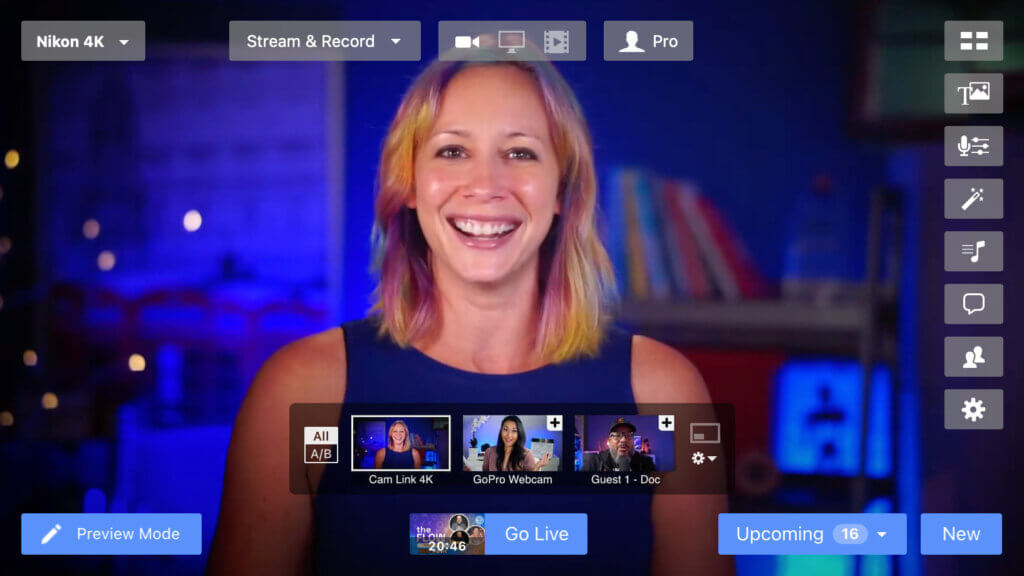
Ecamm is the Mac-native video tool for creators who want professional results without headaches. Whether you're streaming, recording, teaching, or presenting, you get studio-quality features that actually make sense. Join thousands of creators who trust Ecamm to help them look sharp, sound clear, and show up with confidence.
Pat Flynn trusts Ecamm as his live streaming tool of choice, and now you can use the same tool to create your own studio-quality content. With Ecamm, you get everything you need: multicam switching, professional overlays, and direct streaming to any platform. All of this is designed exclusively for Mac. Whether you're launching a YouTube channel, coaching clients, or building your online business, Ecamm gives you the tools to look professional without the production team. Get 15% off your first payment with promo code SPI15.
Take 15% off your first payment
Claim your discount with coupon code SPI15
Sponsored link
The post Ecamm appeared first on Smart Passive Income.
]]>Short-Form Repurposing 101 The Do’s and Don’ts of Posting One Video Across Multiple Platforms In this workshop, Pat Flynn and Gideon Shalwick will walk you through a clear, practical framework […]
The post Short-Form Repurposing 101 Live Event appeared first on Smart Passive Income.
]]>
Short-Form Repurposing 101
The Do’s and Don’ts of Posting One Video Across Multiple Platforms
In this workshop, Pat Flynn and Gideon Shalwick will walk you through a clear, practical framework for repurposing short-form content across multiple platforms without burning extra time or energy.
Add the event to your calendar


Watch the replay 
EXCLUSIVE DISCOUNT FOR SPI
50% off your first three months
To help you get started, Vubli is giving SPI fans 50% off your first 3 months when you use the coupon code PAT.
What you'll learn in the Short-Form Formula course

Understand how short-form video drives discovery and growth.
Learn why platforms like YouTube Shorts, TikTok, and Instagram Reels are the fastest ways to grow an audience today, and how to use them strategically to tell stories that truly connect.

Build a daily content rhythm that creates unstoppable momentum.
Master the habits and systems that make posting consistently feel effortless. You’ll plan, batch, and publish with confidence while avoiding burnout.
Create, edit, and repurpose videos with clarity and speed.
Use simple tools and repeatable workflows to produce professional content quickly. Learn how to film on your phone, edit efficiently, and repurpose videos across platforms to reach more people with less effort.

Grow beyond views by turning followers into loyal superfans.
Discover how to introduce offers naturally, grow your email list, and build real relationships that turn engagement into long-term trust and income.
Save 16% with annual billing


SPI Community
$99
/ month
$83
/ month
Billed annually for $990
You have access to:
- Downloadable cheat sheets and templates
- Public events with Pat Flynn
- Q&A sessions with Team SPI
- Free 101 introductory courses
- Pat Flynn's book companion courses
- Full community forum
- Team SPI (priceless)
- Monthly beginner workshops (live and replays)
- All premium courses ($5,500+ value)
- Cohort course accelerators ($499 value each)
- Pat Flynn's office hours twice per month ($1,000 value)

Join the SPI community to access the
Short-Form Formula
The post Short-Form Repurposing 101 Live Event appeared first on Smart Passive Income.
]]>How to Show Up On Camera Without Feeling Awkward Join Pat Flynn and UltraSpeaking's Tristan de Montebello to learn how to speak clearly, deliver a strong hook, and film confidently using just your […]
The post How to Show Up on Camera Event Page appeared first on Smart Passive Income.
]]>
How to Show Up On Camera Without Feeling Awkward
Join Pat Flynn and UltraSpeaking's Tristan de Montebello to learn how to speak clearly, deliver a strong hook, and film confidently using just your phone.
Watch the Ultraspeaking event
FREE BONUS FROM ULTRASPEAKING
Level up your public speaking today
Get Ultraspeaking's free email course with five techniques to improve your public speaking
What you'll learn in the Short-Form Formula course
Understand how short-form video drives discovery and growth.
Learn why platforms like YouTube Shorts, TikTok, and Instagram Reels are the fastest ways to grow an audience today, and how to use them strategically to tell stories that truly connect.
Build a daily content rhythm that creates unstoppable momentum.
Master the habits and systems that make posting consistently feel effortless. You’ll plan, batch, and publish with confidence while avoiding burnout.
Create, edit, and repurpose videos with clarity and speed.
Use simple tools and repeatable workflows to produce professional content quickly. Learn how to film on your phone, edit efficiently, and repurpose videos across platforms to reach more people with less effort.
Grow beyond views by turning followers into loyal superfans.
Discover how to introduce offers naturally, grow your email list, and build real relationships that turn engagement into long-term trust and income.
Save 16% with annual billing
Accelerate
Do It Together
$99
/ month
Billed quarterly for $297
$83
/ month
Billed annually for $990
You have access to:
- Downloadable cheat sheets and templates
- Public events with Pat Flynn
- Q&A sessions with Team SPI
- Free 101 introductory courses
- Pat Flynn's book companion courses
- Full community forum
- Team SPI (priceless)
- Monthly beginner workshops (live and replays)
- Hot Seats with Pat Flynn
- All premium courses ($5,500+ value)
- Cohort course accelerators ($499 value each)
- Member-led masterminds
- Networking events
- Pat Flynn's office hours twice per month ($1,000 value)
Join the SPI community to access the
Short-Form Formula
The post How to Show Up on Camera Event Page appeared first on Smart Passive Income.
]]>How to Show Up On Camera Without Feeling Awkward Wednesday, January 28th at 11:00 AM PT / 2:00 PM ET Join Pat Flynn and UltraSpeaking's Tristan de Montebello live to learn how to […]
The post How To Show Up On Camera Without Feeling Awkward appeared first on Smart Passive Income.
]]>How to Show Up On Camera Without Feeling Awkward
Wednesday, January 28th at 11:00 AM PT / 2:00 PM ET
Join Pat Flynn and UltraSpeaking's Tristan de Montebello live to learn how to speak clearly, deliver a strong hook, and film confidently using just your phone.
Let’s be honest: most people don’t feel natural on camera
But confidence on video isn’t about being perfectly polished. It’s about knowing how to show up comfortably, clearly, and with intention.
Pat Flynn and Tristan de Montebello will tackle the real challenges creators face when recording videos: getting past the discomfort of hearing your own voice, resisting the urge to overthink every word, and staying composed when filming in public feels awkward or intimidating.
You’ll leave with simple techniques and practical tools you can use immediately to start showing up on video with more ease, clarity, and impact.
The event will be streamed live on YouTube. To access event reminders, sign up below.
Meet your presenters
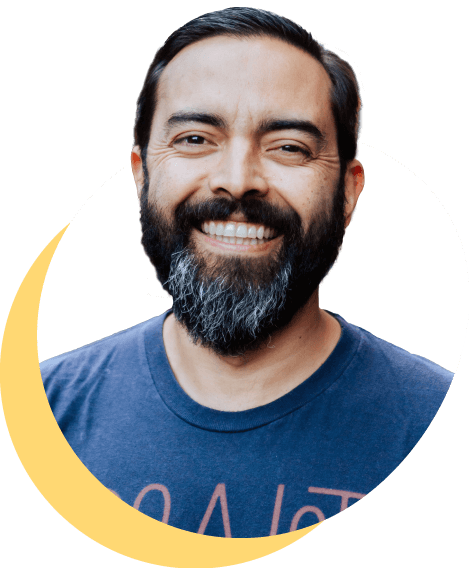
About Pat Flynn
Pat is the founder of Smart Passive Income and several other successful online businesses — each built on systematic audience growth as a foundation for success. He's a sought-after public speaker, providing the keynote address to multiple industry conferences each year. Public speaking was not something that came easily to Pat; it's a skill he has worked very hard to develop, with practice and repetition, and he knows you can learn it too.
About Tristan Montebello
Tristan de Montebello is the co-founder of Ultraspeaking and the fastest competitor ever to reach the finals of the World Championship of Public Speaking, getting there in just seven months. After overcoming his own speaking anxiety, he built Ultraspeaking, a communication training company that helps people speak naturally, confidently, and authentically in high-pressure situations through live practice and speaking games.
Register now to get event reminders
Join Pat and Tristan to level up your on-camera presence!
Wednesday, January 28th at 11:00 AM PT / 2:00 PM ET
The post How To Show Up On Camera Without Feeling Awkward appeared first on Smart Passive Income.
]]>What do you want to achieve? Figuring this out in exact terms is part one of this six-step goal design session. If you follow me through this powerful exercise, you'll […]
The post SPI 907: Six Steps to Make 2026 Your Best Year Yet appeared first on Smart Passive Income.
]]>What do you want to achieve? Figuring this out in exact terms is part one of this six-step goal design session. If you follow me through this powerful exercise, you'll have a clear roadmap on how to double your success in 2026.
Don't miss this chance to hit the ground running in the New Year!
I'm not just talking about your business targets, either. This is the framework I've used to uplevel every aspect of my life. From entrepreneurship to physical health, you can leverage today's episode to crush any goal and have your best year ever!
I'll especially want you to uncover and go deep on your top three goals using the SMART system. You'll zero in on your first steps and the triggers that will support you in taking real action. And if you've been keeping an eye on my Lean Learning content this year, you know that's all you need to get moving. [affiliate link] You don't have to have everything figured out on day one to win big!
So listen in to create your blueprint for a successful 2026!
You'll Learn
- The six-part goal design system that changed my life
- How to have your strongest year yet in 2026
- Uncovering what you want for yourself and your business
- Understanding your “why,” and inspiring yourself to act
- Why emotional and physical goals matter as much as business goals
- Uncovering your top three priorities and leveraging SMART goals
- Pairing your first steps with powerful triggers to take action
Resources
- Visit FullFocusStore.com to find out more about the tools that inspired this episode [affiliate link]
- Subscribe to Unstuck—my weekly newsletter on what's working in business right now, delivered free, straight to your inbox
- Connect with me on X and Instagram
SPI 907: Six Steps to Make 2026 Your Best Year Yet
Pat Flynn: What do you want? What do you want? That is the first part out of six in this goal design podcast that you are about to listen to. This is based on a program that I once took back in 2013 all the way through 2016. And it was a program called Best Year Ever by Michael Hyatt. I wish it still existed because I would still pay for it every single year.
It is the best course that I ever took. Again, it no longer exists. Thank you to Michael Hyatt, one of my mentors, who really changed my life because of the way that this was designed. And now, I would highly recommend checking out his Full Focus Journal. If you go to FullFocusStore.com, you'll see it there, among other things to help you with your goal setting.
But I wanted to, with the inspiration from his course that no longer exists, I wanted to lay something out in kind of my own style for those of you who are here who want to make 2026 your best year ever. I want you to take the success that you've had in 2025 and double it. Or if you've been struggling this year, if you haven't gotten started yet, I want you to really lay down the tracks so that you can succeed next year.
Now, of course, success is defined differently by different people, which is why we need to go through this process because many people just take actions thinking that they're going to lead to success because it's the same successful actions other people have taken, but your path is different than my path is different than other people's paths, so it's really important to think about these things, and it's, again, in six different parts, the best year ever course, my gosh, the beauty of it, and the biggest part of the inspiration from that I got that I'm passing forward to you is the idea of thinking about your goals holistically, not just about your business, which most people think about, especially if you're an entrepreneur, you think about your business goals, but there's so many other aspects of your life that deserve and need your time and attention and the laying of these tracks so that you can measure, so that you can understand what works and what doesn't.
And in this first part here, I want you to be selfish. I want you to think big. I want you to not worry about how you're going to make these things happen. I want you to not have to worry about the specific numbers or anything like that. I want you to just answer the question in each of these seven different categories.
What do you want? What do you want? And as you listen to this podcast episode, I would love for you to just pause if you need time to think about these answers. I would love for you to at this moment gather the important people around you. Maybe it's your spouse or a business partner or somebody, or maybe you just send this to them and have them listen to this as well.
But this is going to help you understand where do you want to go and how you're going to get there and what to focus on, which is the whole goal here. And if you're doing this with somebody else, have them do it on their own. And then compare notes, and you're gonna find that there can be some really amazing moments where there is alignment.
Fantastic, let's do that. And there might be a disconnect. Fantastic also, because now we can talk about those and understand each other, and then move forward. So let's talk about part one. What do you want? What do you want? So within each of the following categories of your life, I want you to write down what you hope to one day achieve within that category.
One day. Not by the end of next year. I just want you to think big and think far into the future. You can be specific or you can be general and you can write down more than one in each of these categories or think about more than one in each of these categories as well. If you are a member of the SPI Community, you might be familiar with this exercise because we run this design workshop every single year live and in person.
We have people pause or I pause the teaching to have people spend time actually doing this. And then, having people share out and this is the benefit of community and why you should be a part of it. But even if you're not, even if you're just listening to this, you can participate. So within each of the following categories, think about what you hope to one day achieve within that category.
What's interesting is if you've done this before you can compare notes. You can compare are the wants the same? They don't have to be. It is what you are in right now within each of these categories, so here are the seven categories. Number one, emotionally. Where do you want to be one day? In your mind.
What is your mindset? How are you living life? Your emotions. What are you saying to yourself? What are your values when it comes to what you choose to do and why you choose to do it? That's emotional. And yeah, we're creating emotional goals. What do you want? Isn't it crazy that most of us really never have thought about that?
How do we want to be emotionally? And if you're worried because you're wanting something that seems so far off, again, like I said earlier, don't worry about that. Don't worry about the how. Don't worry about anything else other than just thinking into your mind and into your body and into your soul and asking yourself, what do you want?
Write that down. Next, intellectually. That is the absorption, the learning, the consumption of education and how much further you want to be and where do you want to go intellectually? What would mean success to you intellectually? What does that look like? That's a tough one. Next, physically. Where do you want to be physically?
This is a big one because this is the one that had the biggest impact on me when I was going through Michael Hyatt's course. Again, the beauty of his course was thinking holistically about my life, not just about business and money and finances, but physically. And that was something that I hadn't thought about before, creating goals and thinking about where do I want to be?
And I remember back in 2009, my son was born. Yes, he's turning 16. He might be 16 by the time you listen to this actually. I wasn't thinking about my physical health. I was thinking about my business and generating revenue. And as a result, I sacrificed my health. And as a result of that, eventually that caught up to me and I wasn't as creative, I wasn't as energetic, I wasn't as happy as I could have been.
That not just affected myself and my work, but that affected the people around me too. My wife, and of course my son. So by thinking about physically where I wanted to be, I could then take the right actions. I wasn't going to become a a gym rat or anything like that. I knew that that wasn't possible with the amount of time I had to spend on other things, including family, but I wanted to be physically fit enough to be able to keep up with my kids as they grew, to be able to stay healthy and live a long life, and to have energy, to be creative, and to stay a top performer.
These are all things that are important to me. What is important to you? Think about what do you want physically. It could be something that's not about your body. It could be you want to run a marathon. It could be the fact that you want to do 100 pushups without stopping. You want a six pack. Be selfish.
It doesn't matter. What do you actually want? Next, relational. This is another big one that we often don't think about. We expect our relationships, especially with our spouses and our kids, to just kind of happen. And if you just kind of let things go and just see what happens, then you lose out on opportunities to grow and grow intentionally and intelligently as well.
Most of us, we care a lot about our business and the numbers. We look at the numbers. We look almost daily. We look at the analytics. We check out our P&Ls, our profit and losses, and our balance statements. We put meetings on calendars and we have goals and measurements and things related to our business.
And what do we do for our families? We don't do any of that. You might have a vacation seven months down the road on the calendar, cool, but I want to ask you, what do you want when it comes to the relationships that you have? Remember, you can include many things in these. Hit pause if you need to to think about that.
Next, and finally we're here, even though this is probably where you thought we would start, business. What do you want your business to be? Ultimately, what do you want to be doing in your business? How do you want to be perceived? What lights you up in terms of the future? Remember, don't worry about the how yet, just what do you want?
Next, hobbies. What do you want with your hobbies? I know I want to break 80 in golf one day. That's on my list for right now, and I'm going to start doing that. I'm going to start working toward that. Right? I haven't golfed since the kids were born, but I'm starting to pick it up again. I'm starting to go to the range.
I'm starting to meet new friends by doing that, and I want to add that to my hobbies. It's important that you have an avocation, a hobby, that lays on top of everything else, because this is your time to breathe. It's your time to play. It's your time to recharge. And for most people, if I know that they don't have a hobby on their list that they're focusing on, that they're struggling, which is interesting, because you think putting time into a hobby is taking time away from these things that can help you succeed, but no, you need to have balance, you need to be well rounded, and a well rounded entrepreneur, especially, has a hobby, even just one, that they focus on, that allows them to breathe, and then come back to their work, come back to their family, even more energized.
And then finally, number seven, financial. What are your financial goals in the future? A lot of times when we get to this part of the discussion, when I'm doing this with people in person, which again, if you are in the SPI community, you'll have heard this before, you'll have done this before, but a lot of times entrepreneurs, especially, you just create these arbitrary numbers with finances that seemingly mean they mean success.
I want to be a seven figure entrepreneur. Okay. Do you need to be a seven figure entrepreneur? What's your number? Now it could be a big number, which is fine, but you have to be clear on what your goals are. I know a couple people whose goal is to make 125k per year. That is a completely different business model, set of actions, a business type, than somebody who's trying to make 10 million a year.
Everybody's different. So what is yours? What is your want when it comes to financial? And it's not just business, it's retirement, it's savings, it's investments, what does yours look like? What do you want? This is part 1.
Part 2. For each of the aspirations that you've put in there, think about why that's important to you.
What is motivating you to achieve that? And here's a quick way to help. I want to make a million dollars, so that blank. The so that becomes the magical phrase that helps you find the why. And if you cannot find the why, why is that an aspiration? It makes you think, it makes you wonder. This is your opportunity to see what really matters to you.
And if you compare notes with somebody else, this is the very interesting part because this is where values, beliefs, reasonings, and your why comes into play against others. And again, that's not a bad thing if you and your partner, spouse, business partner, et cetera, have different goals or different wants.
Better to find this out now and talk about it, discuss, and get in alignment with each other than later. Than later when it's perhaps too late. So, again, for what do you want, add the, so that when it comes to adding something like let's say you wanna finish your first marathon. Why do you wanna do that?
I wanna finish my first marathon so that I can prove that I can accomplish really hard goals that seem impossible so that I can be an example to my kids, so that I can be healthy because if I finish a marathon, I will have been able to overcome a lot of health related challenges or stamina or endurance related challenges that I normally have.
That's an example. I want to go on date nights every week with my wife. Why? Well, so that we can continue to have time away from the kids to chat about life and other things and dream together and create moments for us to think about the future together, which at least for the first dozen years of both of our kids lives was very tough to do because they took all of our time and effort and they required so much time and energy solely, but the date nights have helped.
So that's just an example. Why do you want those things? Again, hit pause and reflect if you need to. Also, if I didn't say this already, if you happen to be listening to this on Christmas Eve, which I'm very grateful if you do, this is when this episode comes out, Christmas Eve 2025. However, I would highly recommend spending some time with your family now.
And maybe even if you've already gotten to this point, maybe you stop this podcast episode, go and hang out with your family, call somebody you know, call a friend, call a family member from afar, and just start asking them about what they want and what their goals are, what's getting them lit up about the future.
You can always come back to this, and between now and when we all start again in January, you can hopefully digest the rest of this and create a plan for yourself. But that's part two. Why do you want it?
All right, part three. This is where you start to make some decisions here. We're going to create your top three goals. Out of your list of aspirations and motivations, the ones that you've already thought about from part one and two, choose three circle three, or think about three that stand out to you that are maybe most exciting choose from different categories, by the way, if you have three that are really exciting, but they're all from the business category, remove two and just pick your favorite one and then save the other two for other categories. Just as a reminder, the categories from before, emotional, intellectual, physical, relational, business, hobbies, financial. So choose three from three different categories to focus on for the remaining parts here. And for each one of those, I want you to convert one of those, each one into a clearly defined SMART goal to achieve or SMART habit to form. So what is a SMART? You may have heard this before, but we're going to go over it for the sake of this example, or for the sake of this workshop, because it's always a good refresher.
S M A R T. This is going to be an acronym, which stands for specific. So you need a specific goal. M is measurable. You need to be able to measure it as you go. I want to be happier. Well, how do you measure that? You can't, and you can get a feeling, but you got to get a little bit more creative and specific and something that you can measure. There are ways to do that, and you have to be creative about it, but let's keep going.
A is achievable. You want these things to be Within the realm of possibility, I'm going to become an all star NBA player by December 26th, 2026. I mean, it's important to shoot big, but it's also important to know what is actually possible. I don't want you to discount yourself, but a 43 year old, half Filipino, 5'8 man who opens Pokemon cards is probably not in the cards for an NBA contract. Let alone being an all star, but think big. Okay. Nearly impossible, but not impossible. So achievable.
R, the R stands for relevant. And by relevant, what I mean is it's something that aligns with your broader objectives and your values, right? It kind of confirms that if you were to achieve that, it would actually help you with getting you what you want or getting you to where you want to go, right?
And the T is time bound. The time bound part of this is the force function or the voluntary force function that I talk about in my book, Lean Learning, this idea of having a date where things are to happen. And this is where you can see your progress. You can reverse engineer from that date to see certain milestones along the way. And you're able to more easily measure with relevance to time, Your progress to go back to the M, which is measurable, something that actually has, you know, numbers and clear and specific, all these things. So again, specific, measurable, achievable, relevant, and time bound.
I want you to create a clearly defined goal or habit for each one of these things, right? So if you want to become more physically fit as sort of a general goal, okay, let's get specific about this. I want to be 160 pounds and have less than 15 percent body fat by August 31st, 2026. That fits the bill. It can help you get to where you want to go, but it's specific.
It's measurable. You can not just weigh yourself, but you can also go get a DEXA scan, D E X A. It's like a very low dose x ray. It's interesting because I have done DEXA scans now, and I've seen just the power of scanning and understanding how much body fat I have. It's actually a procedure, it literally takes five minutes, you just literally sit down, and I hate saying literally all the time because that's not the best grammar, but it's that easy.
You just lay down, this thing goes over you, and then you get all this data. And it's meant for bone density, it's completely painless, and it's very low dosage x ray, and it gives you a very accurate reading of your body fat, and exactly where that fat lives, and how much visceral fat you have, etc. So it is very, very useful, and I've used that time and time again.
I go and get that done every six months to see where I'm at. Sometimes I'm where I want to be, sometimes I'm not, but then I get kicked into gear when I'm not. And so again, by measuring, I'm able to define what my next actions can be and kick into high gear if I'm behind or be proud of the work I did because I'm where I need to be.
And if I'm not, hopefully I'll be that way the next time I measure. But the time boundness of this, right? August 30th, 2026, 15 percent body fat, 160. So that is a example of a goal based thing that we're talking about here, right? A goal. Or a habit. If you want to run a marathon, you can, instead of well, this kind of goes hand in hand, but I want to run the Boston Marathon 2027, dah, dah, dah, or whatever it might be, time bound, measure specific, et cetera.
But it might be a habit. I want to run at least one mile a day during January, 2026. I want to run at least two miles a day in February of 2026, and then all the way up to December, getting up to 12 miles a day and being ready for a marathon or half marathon by then. That's just an example. Go ahead and do that.
With the three that you've selected from three different categories, I want you to think about the SMART goal. Specific, Measurable. Achievable. Relevant. And time boundness for three of them. Create a goal or habit. That's part three. All right.
Now, part four, this is where a lot of these goal setting workshops kind of stop.
It's like, okay, cool. You got the goals. Go do that habit. Great. But this part four is going to be very helpful for you on what to do next. Because that's literally what you're going to think about. What are the first steps? For each goal or habit from what you've just done, write down the first steps you'll need to take from here.
And if you're not sure, then the first step is going to be learning what the first step is. Right? Your first step is to learn what the steps are. So what might be the next best thing to do to get the ball rolling or who might you need to reach out to, to make things happen? So do that with each of the three goals and or habits that you've just done.
And that's really great because then just like I talk about in Lean Learning, now you'll just be able to focus on just that, that first step, knowing that there are resources and help coming when you achieve that step and move on to the next thing, right? This is Lean Learning in progress, but you need to know A, the direction, which we've just talked about the why, yes, we got that behind it too, which is this sort of fuel behind it, but then we need the first steps. Great. This is where we are. Now you can just focus on that and trust that as you move forward, there's going to be people and or resources there, more relevant resources than if you were to find them now for that next thing.
Part five, what are the triggers? So for each goal and or habit that you wrote down, also write down a trigger, something that will activate you to continue what you need to do to make sure you keep going or are reminded to take that action.
This could be a person that checks in with you every day. It could be a tweet that you schedule ahead of time to let the public know that you're doing something, then thus holding you accountable. If you were learning an instrument, perhaps that trigger is the fact that you've put that guitar in the hallway, and every time you see it, you are reminded about it, instead of having it in your closet and then having to take it out each time. It's just right there. You can't miss it where you're running. Shoes are always untied with socks, ready to go for the next morning before you go to bed, this is doing something now, as I once heard it. I think I remember somebody saying, you're almost like the butler to your future self.
You are the Butler to your future self. So you're doing things now to set your future self up to go, man, thank you past me for doing that. Because you are your own butler for the future. So create a trigger for each of those three things.
And then finally, with each of these goals and or habits, I want you to think about a person uniquely for each of them, they can be the same person, although I recommend finding different people for each one. That way you can kind of lean on their shoulders when you need them, and call them for help, and have them hold you accountable. And you don't want to ask too much of one single person. Although, you I know some people like my wife who would be able to do this across many of these things.
Ask yourself who will support you. Find someone you trust, who you can share your goal with, ideally a mentor, somebody who knows that thing, who's been there before, who's gone down that path as well. You want somebody to hold you accountable. So write down a person who comes to mind for each of the goals or habits that you have in mind.
And better yet, if you can have a method by which they can hold you accountable. Maybe they'll text you every day or every week. Or maybe if they don't mind, you'll get on a call with them every single month, whatever it might be, set that up. And that is your six part goal design podcast.
So first of all, I want to wish you Merry Christmas, Happy Holidays, Happy Hanukkah, whatever you celebrate.
I want to celebrate you being here as a listener on the podcast, over 900 episodes in. And I look forward to a couple events early next year. I will be at PodFest. If you're going to be at PodFest in Florida, I look forward to seeing you there. I will be there the first half of the event, so please look out for me and say hello if you will be.
I also am attending some Pokemon events as well. Hawaii Pop Con in Hawaii, of course. And then an event in Vancouver in February as well called Collectopia, which should be really fun. But either way, I just want to thank you, wish you and your family well, stay warm. Stay safe, stay awesome, and if this is your first time listening to the podcast, what a great one to start on because hopefully you'll get started on some goals for 2026 that will matter, that will be exciting, that you can get other people involved with, that align with your goals and values, of course.
And I look forward to hearing how it goes because we're going to work together in 2026 to get it done. So thank you so much. Happy Holidays. I'll see you right before New Year here on the podcast as well, so hit that subscribe button if you haven't already. Thank you for the follow, and I'll see you in the next one.
The post SPI 907: Six Steps to Make 2026 Your Best Year Yet appeared first on Smart Passive Income.
]]>Early, quick wins and small steps stack up to create massive results. This is how we stay motivated and avoid feeling overwhelmed when faced with big projects. Still, how do […]
The post SPI 906: Easy Rules for Crafting Challenges That Convert appeared first on Smart Passive Income.
]]>Early, quick wins and small steps stack up to create massive results. This is how we stay motivated and avoid feeling overwhelmed when faced with big projects. Still, how do we take that all-important first leap?
In this episode, I share why challenges stand out as one of the most powerful tools that help people move toward their goals.
For years, I've watched students consume content and buy courses without ever taking real action. They wanted change, but the work ahead felt daunting. That's when I started pairing my educational content with challenges for my audience members, and it made all the difference. I was finally able to inspire people to act and begin planting the seeds of success!
Today, I want to help you do the same for your followers.
Don't miss this session because I discuss the seven rules of crafting effective challenges! From setting achievable targets and keeping steps simple to creating accountability and celebrating wins, I'll cover everything in this episode.
Because I don't just talk the talk, I'll also share a first look at my upcoming short-form video challenge. Thousands of people have been asking for help with TikTok, Shorts, and Reels, so this is my way of making it easy to turn strangers into superfans on these platforms.
The 30-day video challenge is about to kick off and is completely free to participate in, so be sure to check it out!
You'll Learn
- The psychology behind crafting effective challenges
- How quick wins build up resilience to push toward big goals
- The story behind my first challenge at 100Emails.com
- How to home in on a high-impact action for your audience
- The seven easy rules for crafting effective challenges
- The next steps and opportunities after the challenge ends
- A sneak peek at my 30-day short-form video challenge
Resources
- Craft a viral short-form video series with my 30Videos.com challenge
- Go from 0 to 100 email subscribers in three days with my 100Emails.com challenge
- Subscribe to Unstuck—my weekly newsletter on what's working in business right now, delivered free, straight to your inbox
- Connect with me on X and Instagram
SPI 906: Easy Rules for Crafting Challenges That Convert
Pat Flynn: For the last several years, I've talked about building community and why community is important. Not just because we have one here at SPI and one that you could join and be a part of, and people have been getting wins and results and all those great things that come along with it. But community is important because this is a way to future proof your brand, to engage those who are following you and help people climb that pyramid of fandom, right?
People start out at the bottom, where they become a casual audience member. They follow you. They're kind of feeling lonely while they follow your brand. They don't kind of think of themselves as lonely, but they don't see a community there. They're not feeling like they're a part of something.
They're coming into your space, your content, watching your videos, whatever it might be, to collect something, and then they move on. We want to bring them into a community so that they can feel A sense of belonging so that they could feel like they're getting paid attention to, so that they could feel like they are making progress on whatever their goals might be.
Ideally, just so that they don't feel like they're alone. And when it comes to creation as a creator online, it's important to not just talk, talk, talk, talk, and tell people what to do exactly. You need to motivate them and not only do you need to motivate them, you need to get them to move, to actually do something, to get results.
And that can be very difficult. A lot of times we don't see any movement from our audience because what we're asking them to do feels so big or feels so grand, right? This is why When we've started talking about business, it's like, hey, let us help you start your business. That is such a big thing to think about and wrap your head around.
And immediately, people start, when they think about this big thing that they're trying to wrap their head around, they start immediately going into reasons why they cannot do that thing. Well, I don't have enough money to start a business. Well, I don't have enough time. I've tried it before and it doesn't work.
You start coming up with all these different stories. And this big thing just becomes a big magnet of false stories based on previous beliefs or limiting beliefs or previous experiences. Rather, we need to focus on getting people to move on something a lot smaller, right? The power of a quick win. And this is where the idea of building and creating a challenge for your audience is really important. A challenge can do all of the above. Motivate, inspire, get people to move and see results, and make people feel like they are a part of a community. But not only that, it allows people to experience that rather small win, relatively speaking, to then open themselves up to the bigger things that you might have to offer, the bigger tasks that can help them go from that first step in the challenge to the next steps and further down the road with you and hopefully one day joining your community as a member or participating in your upcoming cohort based course or program or perhaps hiring you as a consultant because you've already got them some you results.
In 2013, 2014, kind of, 10 plus years ago, I ran my first public challenge, and this was run on the SPI blog.
And at the time, all the rage, and I still think it's very important, although it's not all the rage quote unquote anymore, is email building an email list. And a lot of people were having trouble getting started and couldn't wrap their head around the idea of building an email list, especially when people started talking about numbers in the thousands, tens of thousands, writing emails, getting data from that many people on your list.
No, I'm just starting out. How do I get started with this? And of course, I wrote blog posts and I had podcast episodes helping people get started. I had a course, I had all the information people could ever need to succeed with email marketing. By the way, those materials are still available for members of our community.
Look up Email Marketing Magic if you are in the SPI community. Of course, you have access to all of our courses in there, and that's the one I'm talking about. But even then, even though people had access to all that they needed, people were still having trouble getting started.
They felt lonely in the process, and so I decided to, around this time, start a challenge. And this challenge was called the 0 to 100 email challenge. It was a 72 hour challenge, a three day challenge, to help people go from zero emails on their email list to exactly 100. And in that first go around, from how dormant people were with getting access to and reading my material, listening to the podcast episodes, and actually taking action on starting an email list, As dormant as people were, 15,000 people participated in this challenge that had a start date, it had an associated Facebook group to go along with it, there were daily posts in those three days to help people learn how to finally get their email list going.
And many people, in fact, most people who took that challenge succeeded. They saw more emails than they ever had before. Many people not just getting to a hundred emails, but some even getting to over 1,000 emails in a three day period just simply because they had simple instructions, took action, they had a time period to do it within, and they were doing it alongside other people.
That's it. And so, what I want to do is encourage you to think about a challenge that you can have your audience and your followers participate in the beginning of 2026. Last week in our episode that kind of dove into the idea of short form content, the best opportunity there is for you right now to grow quickly online is with short form content and the upcoming challenge that we have to help you do that starting on January 12th.
In fact, I have a URL for you now, a website. If you go to 30Videos.com, you'll see there exactly how you can get involved and get started with that and get and download some information beforehand before the actual challenge begins, because starting on January 12th, members of the community who have access to this, the people who are publicly going through this challenge, are all going to be creating daily videos together for 30 days.
And I want you to start thinking about a challenge that you could offer your community. It could be a 24 hour challenge, it doesn't have to be 30 days, it's important for short form in that context to be 30 days, which is why it's daily for 30 days, and 30Videos.com once again. But it might be a 24 hour challenge, a 48 hour challenge, 72 hour challenge, a 7 day challenge, whatever it might be that relates to an easy step that your audience can take to start their journey to help them get a result.
You might wanna reverse engineer what that result might be. That could be a nice quick win for them to start with and turn that then into a challenge. And in this particular podcast episode today, I wanna share with you why challenges work, go into the psychology of it a bit.
I wanna share with you some rules related to challenges that you should be thinking about before you create your challenge and announce it and make it public. We're going to go into some of the mechanics and operations of it as well, and then what to do after the challenge, because the truth is, after the challenge is the most powerful part of this process.
It's something that allows you to then, in a way, permission to help move people into the next steps with you, whether that's another free step or a paid step or whatever it might be. But today, we're diving into the challenges and why they're powerful for creators and their audiences and how you can use them to spark action, build trust, and grow your brand. The most engaged communities are the ones that seem to always have some sort of challenge going on. And when you think about it, as a participant, as a member of these communities, whether it's an enclosed community like what we have at Circle, or in a Facebook group, LinkedIn group, or it's more public, like what we're doing with this upcoming 30 day challenge, because it will be a public challenge.
We want as many people participating as possible. Let's talk about the psychology of it. Action breeds belief. Action breeds belief. You can talk all you want about how great things are when people take action and do things, you can get people to hear about all the fun stories of success and things that you have gone through yourself, success stories of your own students and your own colleagues, but when a person experiences what it's like to take action themselves and they start to see those results, even if they're small, they start to believe in themselves and you.
And that's when the magic happens. during the 100 emails challenge, which actually you could still see at 100emails.com, the landing page for it. Again, we'll talk about the mechanics of this and whether you need a landing page and all those kinds of things. We'll talk about that as we go through, because I want to help make this easy for you.
But with the 100 emails challenge, a lot of people found success who didn't hit 100 emails, because it wasn't about actually hitting 100 emails. 100 was just the psychology of something small and achievable, that people could be like, yeah, I think I could do that and I could give it three days. If it doesn't work, then I don't lose anything.
Well, like I said, some people got to a hundred, many did. Some got to even a thousand plus, but many people had emails in the 20 and 30s and 50s. And even just a dozen. And those people still felt it was valuable and successful for them because, again, with those emails you could do some powerful things as far as next steps.
Learning about who those people are, understanding what content to create next, using those emails as survey opportunities. And so people, even though they didn't get to 100, because they took action, because they saw some small result, they started to believe. Many of those people became members of our community.
They enrolled in our courses and have done very well for themselves. Those small achievable steps build confidence. When you break down a challenge into the daily challenge and maybe even hourly within that, you start to see some people actually being able to grasp the idea of doing this and then actually seeing it through themselves.
Because those micro wins, again, build momentum and psychologically and even biologically we have a part of our brain, the reptilian part of our brain, that when we see something that we like, when there's a reward that happens as a result of an action, that part of the brain fires up and continues to go back to get more.
And that is what we can offer by breaking down these bigger goals into smaller challenges and breaking down these small challenges into micro win opportunities. The other component of this that was really important, because we did actually automate the 100 emails challenge, it is something that is delivered via email, and it is something that can be happening at all times, in fact, there are hundreds of people going through it right now, probably, at this very moment, who signed up for it, within three days from the recording that I'm doing right now.
And there will be people who sign up tomorrow, and the day after that, and the day after that. However, there was one thing in the beginning that brought in 15,000 people doing this all at the same time. A huge wave of motivation. A huge wave of success. A huge wave of people joining our email list. And a huge number of people clicking on our affiliate link for Kit.
And then later down the road, of course, the course came. I wish the course was available back then, but it wasn't, but that's okay. People still filter through and join because of the email marketing magic course, but nonetheless. That first go was huge, not just because this was a new thing, but because we were all in it together.
The three day period had a sense of community and accountability. Challenges, when done in a public manner or when it's done in a cohort or group type way, manner, it can create a sense that we're kind of all in this together, right? Which increases motivation and follow through. It's exactly why it's so much easier to go to the gym when you go with a bunch of friends every morning or however often you go versus just doing it on your own.
The community and the accountability go a very long way. There's social proof connected to this as well. Social proof is when people see other people doing something, they want to then join in. So there is a portion of social proof that matters for the sign up process. Hey, join this challenge. It's happening now.
We have hundreds of people already signed up to collect and get these emails. We have X number of people starting on this date. Come join. Don't miss out, right? It inspires people to participate. But there's social proof even within the challenge, after it begins, because there's proof in people also taking action.
Nobody wants to be first, but if they see other people doing it, they're going to want to do it as well. And especially if they start to see other people succeeding, and to see how easy this is, and to get some help and accountability, again, from the other people that are in there. When people share their progress, it inspires others and creates a viral effect.
Because then those people get started. They share their process. and progress and it just continues to be this incredible flywheel and then you can take some of those results and make them public for the next challenge which will then bring more people in which will then bring this viral effect of people sharing their progress the next go around for the people inside which will then get more results for people on the outside boom, flywheel. And that commitment and that consistency within that time period is important.
Right, the idea that there's a date that we're going to commit to do this and an end date where it ends. And that's why a lot of people don't take action. They're curious about how long this will take or they don't know what to expect or how to measure results and success. This is again where the idea of committing to a challenge that starts on a particular date and ends on a particular date and has a particular and very specific hope and results tied to it.
Then it's great. Then it's going to be more likely to work. People are more likely to take action, and therefore, more likely to believe in themselves, and you. There's a lot going on in the brain when it comes to the idea of a challenge. You need to use a challenge. I want you, and I want to encourage you, to think about how you might challenge your audience, and really get them involved.
Don't just, like, Say it at the end of a podcast. Hey, okay. Thanks for listening to this podcast. I challenge you to go out there today and make somebody's day. That's what I want to challenge you to do. That's not that specific. It's not specific in date. It's not specific in action. I want you to get specific.
Why? Because with the idea of a challenge. You can generate leads. Free challenges are a very low barrier entry way to get new people into your ecosystem, into your world. This upcoming challenge, people are already buzzing about it. People are already wanting to sign up again. 30 videos, the number 30Videos.com.
And this is a great way for you to join our email list and participate in what we have to offer and how we offer it and hopefully get a taste of something that you maybe want to see more of. Or at least, at the very least, You exit with the idea that you've gotten something that you didn't before, and the next time somebody asks you, Hey, how did you get started with this?
How did you begin your video success? Oh, it was Pat's video challenge. His 30 day video challenge. Yeah, 30videos.com. Yeah, yeah, that's it. You see how easy this could work, even for people who don't necessarily participate in things after? It becomes a memorable moment because we've gotten a result for you, or at least that's the idea.
A challenge can help you build trust and authority, right? You prove your methods that work. You prove that they work by helping people get real results in a relatively fast period of time. So that trust and authority, that's, you know, technology changes every single day. And every single year we see new systems, new platforms, new technologies arise and fall.
And no matter what, it's trust and authority on those platforms, with those systems, with that technology that will always, always have to be there in order for you to succeed as a business owner in one way, shape, or form. Building trust and creating authority with challenges is a wonderful way to do it because you're serving your audience at the same time while being sort of the person who can help them get there.
Pre selling, right? Challenges give people a taste of your teaching style and your community before they invest in your paid offers. And this is very clearly something that many entrepreneurs want. They want sales. They want to be successful. People that join their courses, their cohorts, their communities, but they're just doing cold email campaigns.
They're just doing cold email outreach. They're doing a public more content piece and then hoping some of those people will be interested enough to trust that what they have to offer will help them. Or you can get people some results first, prove yourself, and be more likely to get a yes when you ask.
This is what a challenge can do. It can kind of pre sell. It primes your audience for what is to come, in a bigger sense, after. And it's a content engine as well. Challenges are an incredible content engine. With UGC, have you ever heard of UGC? That's user generated content. There are testimonials that can come from this, stories from the challenge, that can fuel not just more people joining your challenges, Just your brand in general, right?
The stories that you can collect that you can bring on your podcast now, the stories that you can collect that you can then use to market the things that you have to offer. So let's talk about the rules of a great challenge. First of all, rule number one, make it possible. The challenge should feel achievable for a beginner.
Avoid anything that might seem overwhelming or something that doesn't seem possible. You want to bring it in to simplicity. And this is why it was 0 to 100 emails. Now we have the 30 videos challenge, the 30 day video challenge. And yes, that might seem a little bit more difficult, but it's just 30 videos per day, and the way we teach it is it's going to be simple videos, right?
Just a particular framework that you can kind of repeat for x number of days. And it needed to be 30 days. Because you need that many days of data, that many reps to start to get to a point where you can start to see some success specifically with short form video. 30 days is kind of maximum when it comes to a challenge and how long because many people are gonna drop off, which is why hopefully you have some retention tactics, ways to remotivate people in the middle of the process.
The longer the challenge, the more likely you are to need that in order to keep people going all the way through. But either way, people can imagine doing a quick video per day for 30 days, and you want to make it possible for them to achieve that. Right? Imagine I said, get to 100,000 emails. People are immediately going to believe that that's not going to happen, or that it's not meant for them, or it's impossible, and so they're not even going to participate or even try.
They're out. Same thing if we said, get to a million followers on Instagram and YouTube with this short form challenge. No, first of all, that's not going to happen to most people. It will happen to some. Likely, who participate in this challenge. A, you can't guarantee that, but what can you control? You can control people getting more views, building a bigger audience than they ever have before with short form video.
That's something that will happen if you stay and remain consistent, and so that's what we can show up for. So rule one, make it possible. Rule two, keep it free, or nearly free. Right, a person's gonna need a phone, I would recommend a phone, to do your 30 day challenge. If we had said with our 100 emails challenge, hey, you have to get this email service provider and pay for it first.
People are already out. They don't know that it's worth investing in that because they haven't gotten a taste of what it's like to do the thing that that thing that you can invest in will do for you. So keep it as free as possible. Remove financial barriers. This is why you didn't need an email service provider to go through the three day challenge, the 72 hour email challenge.
You just needed a pen and paper and a spreadsheet. That's it. The goal is participation, not profit. Profit can come later, indirectly, as people enter your ecosystem and see what you have to offer, and most importantly, having gotten results first. So, keep it free. Rule number one, make it possible. Rule number two, keep it free.
Rule number three, remove hurdles, right? Not just expensive tools, or complicated tech, even free tech. If it's hard to do, then it's not going to work, right? Remove any need for any real special skills, right? The biggest hurdle for the video challenge is going to be editing, which is why the idea is try not to even have to edit at all, if possible.
Right? There are videos and people who tell great stories who have a repeatable framework who don't have to edit. They can literally just have to do it in one take or small little edits, slicing, dicing on their app. And that's it. And I already foresee that that's going to be the biggest problem for the people going through the 30 video challenge.
But what's cool is that by forcing you to do this every day, you cannot overthink this. You do not have the time to over edit and over analyze, you just need to get it out there. So it actually, the daily ness of it, is a way to get you to actually not edit as much, and to get through, to hit record and then publish daily.
Okay, anyway, that's rule number three. Remove hurdles. Make it easy. As easy as possible. Rule number four. In the teaching portion of this, keep the steps clear and simple. It should be the easiest to read and understand or watch if you're watching videos in this challenge. Use ChatGPT if you need to. Take whatever paragraphs you have to instruct people and say, hey, ChatGPT, take these paragraphs and make it simpler to understand.
In fact, break it down into a step by step process for me. Whatever you need to do, make it clear and simple. Rule number five. Visible progress. Participants should be able to see and share their progress. It's so much easier to do a challenge when there is something trackable. This is where a lot of people, especially in the mindset space, kind of struggle.
They're like, okay, 30 days to be happy or to be stress free, but how do you measure that? Right? I have seen some brands do this very well in that realm. They literally, at the end of each day, have the participants fill out a report. And in that report, they actually have to quantify how they feel, for example, which then gives a number to how they were compared to the days before and overall a number at the end of the challenge and hopefully tracking in the right direction.
But even then that is seemingly a little complicated and a lot of steps. And again, the more that you could simplify this, the better. 30 days of video. Great. You'll know whether you win because you'll either have done a number of videos or not. Right, you could track how many videos you publish, and the nice thing about that is that's what you can control.
You can't necessarily control the views, right, if this was a 100,000 view challenge, that would be very difficult, although still trackable. Very, very hard to understand whether that will happen or not. There will be some people, again, who will get that as a byproduct. And again, the idea being, just create.
Because if we focus on the views, you're going to get down on yourself when you don't hit a video that has a lot of views. You're going to ask yourself, why am I doing this? You're not doing this to get the views. You're doing this to get to 30 days, and as a byproduct of that, the views that are meant to come will come.
You'll see some videos that do better than others. Great, let's lean into that. Let's not do the other videos that kind of bomb. Let's work on your hooks, etc. There's a lot of things to do there. So number five is visible progress. You want visible progress. You want a way to check in every single day and see how people are doing.
Rule number six, use a community. I would recommend using some sort of community. It could even be as simple as just your Facebook group. Or, you an Instagram post every single day where your community shows up and leaves a comment saying they did the job. In fact, that's how we're going to run this one coming up.
You want to allow for people to see that there are other people doing it alongside them. If you have the opportunity for them to connect with one another, great. This is where social media thrives with threads and connections and replies and those kinds of things. At a minimum, that's great enough.
Try to bring a sense of community and people seeing that others are doing it alongside them. Social media is great for that, but a Circle community, a Facebook group. Again, don't overcomplicate this. If you already have a community, do it there. And then rule number seven, very important. The last rule here.
So we started with make it possible. Number two is keep it free or nearly free. Number three, remove hurdles. Number four, clear and simple steps. Rule number five, visible progress. Rule number six, community and accountability. Rule number seven, very important, celebrate wins. Publicly, during the challenge, after the challenge especially, recognize participants progress and their completion.
Hey, great job to Joan who had seven days in a row of video, and one of those videos saw over a thousand views. Amazing, Joan. Keep it up. Let's go for 14. Two weeks straight. Let's do this. Recognize participants progress and their completion publicly or within the group that you're doing this effort. So that's rule number seven.
Celebrate the wins. So here is kind of more technically what you need to do to launch your own challenge, right? Number one, pick a simple, high impact action related to your niche. Get your first 100 emails. Create videos for 30 days. You know exactly what the goal is and what you're trying to attempt to do.
Set a clear time frame. 72 hours, 48 hours, 7, 14 days. One week challenge, 30 days. Then you could use a page like a landing page from Kit, which you can freely create if you sign up for Kit, SmartPassiveIncome.com/Kit. What you'll need is some sort of landing page, a page that you could drive people to, to sign up for this.
Right? This is what brings people to your email list. There are many ways to do this. We are going to be experimenting with ManyChat inside of Instagram to get people on our list through social media. So we'll be hearing more about ManyChat in the near future, because, man, it's a powerful tool for social media.
So, on that landing page, you want people to sign up. When they sign up, you want to be able to send them some information about when this all goes down, what to expect, what are the kinds of things they're going to have to do, and just encourage people. And then on the day that it begins It begins and you share the information they need to start to take that action, right?
You could set those things up ahead of time, like daily prompts or reminders via email, social. Write these things out ahead of time if you can, so you're not creating them on the fly. You can edit them sort of on the fly before you hit publish or broadcast, but having them available allows it so you're not scrambling and the challenge doesn't drop off.
You have already thought this through. Again, build that community space if you need to. Facebook group, maybe it's a Discord or a Slack channel, hashtag even. And then plan how you're going to celebrate and showcase your participants who have gone through this and have completed it and have gotten some wins, right?
Bring them on your podcast, talk about them in follow ups, and send emails about them, and then think about what the next step is going to be. This is the power of the challenge, is thinking about the challenge is step one. What might I be able to offer for step two? How might I be able to encourage people to move on to the next thing, and then the next thing after that?
It starts with a challenge, but what might step two be? Maybe it's actually purchasing a software that would help them do this thing that they did more manually up front, which is exactly what we did. Offered Kit as an affiliate for people who participated in the 100 emails challenge, because they were doing that more manually.
They were keeping track of those emails manually. And if you want to send these emails out in a more broadcast kind of manner, plus create an autoresponder and have these things all done for you, get the affiliate, go through the link and we earn a commission through that. So there might be some tools or things that you can offer.
You might have your own things to offer. You might want to book a call if you're getting people to consult or coach with you, et cetera. So here is the big thing. Before we finish up. You know, again, I wanted to make this simple for you. Number one, I want you to think about a challenge using all those sort of things that we just talked about in mind.
Keep those things in mind, especially with keeping this simple. What might a challenge be for you and your audience in Q1 of 2026? For us, it's a 30 day video challenge. 30videos.com, go there, because we're going to kick that off on January 12th. You're listening to this after, you could probably still go to 30videos.com because this is a challenge that I want to continue to run again and again, so long as I know that short form video is a leading method and strategy for building an audience, getting people to come find you, and then getting people to get interested in what you have. So, 30videos.com. Go there, sign up, and get ready to start.
All the things that you're going to need to know happen right after you sign up there. Again, so much, and go figure out what the challenge is for your crew. That's your call to action in this episode. I thought about creating a challenge challenge. Here's a challenge to create a challenge for your community.
But that would have been too confusing and I'm just telling you now. Start thinking about it now and get those things in motion because when your audience takes that action and motion happens, they're gonna want to come back to you because they'll start to trust you. It's getting them those results.
Thank you so much, I appreciate you, and hit that subscribe button, because we're coming up to the end of the year, we're in the 900s now, people, and we're approaching episode 1000 very soon in the next year or two here, so make sure you subscribe so you can catch that, and all the great things that we have coming your way.
See you soon.
The post SPI 906: Easy Rules for Crafting Challenges That Convert appeared first on Smart Passive Income.
]]>I'm now a big fan of short-form video for entrepreneurs, despite my initial skepticism. Done right, this format is the top opportunity we have to stand out and grow online […]
The post SPI 904: The Hero Platform Strategy—How to Grow on Social Without Spreading Yourself Thin appeared first on Smart Passive Income.
]]>I'm now a big fan of short-form video for entrepreneurs, despite my initial skepticism. Done right, this format is the top opportunity we have to stand out and grow online today.
For the best results, though, you should take advantage of multiple platforms at once. But how do you show up everywhere without burning yourself out?
In this episode, I'm chatting with online video pioneer Gideon Shalwick. He is the creator of Vubli, a tool that enables you to automate posting videos to YouTube, TikTok, Instagram, and more. [affiliate link] This is a huge time saver because Vubli doesn't just schedule posts for you. It generates titles, descriptions, thumbnails, and tags, removing the friction that stops many of us from posting consistently.
Listen in because Gideon and I dive into the most effective strategies to help you win big with short-form content. We discuss finding your hero platform, debunk myths about using third-party tools and posting daily, and get into the importance of engaging with your audience at peak times.
The most important thing to keep in mind is that consistency is king. That's why finding the right workflow and pairing it with tools like Vubli is vital. So, tune in to take full advantage of the short-form video boom!
Today's Guest
Gideon Shalwick
Gideon Shalwick is a seasoned entrepreneur and video strategist, now leading Vubli.ai—a platform that helps creators and personal brands grow their influence through short-form video. With Vubli, users can upload once and publish everywhere with one click, complete with AI-generated titles, descriptions, and tags for each platform. Before Vubli, Gideon founded Splasheo and built several successful startups in the video and creator space. Today, he’s on a mission to make short-form video distribution effortless so experts can become the go-to authority in their niche without burning out.
- Find out more about Vubli and claim your 50% discount [affiliate link]
You'll Learn
- How to save hours and post on every platform at once
- Why posting daily is essential in the short-form era
- The overlooked importance of thumbnails for Shorts
- The most important time to engage with your audience
- Focusing on one platform versus posting everywhere
- Discovering and mastering your hero platform
- Why consistency and efficient workflows are vital
Resources
- Subscribe to Unstuck—my weekly newsletter on what's working in business right now, delivered free, straight to your inbox
- Connect with me on X and Instagram
SPI 904: How to Win Big in the Short-Form Era
Pat Flynn: Way, way back in the day when I first started blogging, there was a creator who I saw as one of the first people to really utilize video in their brand. Come to think of it, there were a few that were early on, and for some reason, they seemed to be all in Australia. Darren Rowse from ProBlogger, Yaro Starak, but this person, our special guest today, Gideon Shalwick, also from Australia, has created one of the most helpful tools that I use today to help me get more reach, to help me gain more authority, to help me, yeah, generate more revenue too. And if you are at all interested in short form video, or just videos in general, this will be the episode for you. Gideon Shawwick, I've talked about some of his tools before, Splashio was one, and there was another one that helped people create Facebook ads in a more automated fashion.
But this tool, Vubli.ai, is one to help you distribute your one single short form video across all platforms almost instantly. And do it in a way that makes sense. So we're going to talk with Gideon today about sort of the history of his businesses, but also how we got here with short form video and how to best maximize the opportunity with it.
And we'll, of course, offer a fun little offer for Vubli for anybody here who's interested as well, once you learn about it. So here he is, Gideon Shalwick, founder of Vubli.ai. Here we go.
Gideon, welcome to the SPI podcast. Thank you so much for being here.
Gideon Shalwick: Hey, Pat. Yeah, awesome to be here. Looking forward to it.
Pat Flynn: It has been a long time since you and I have really had a chance to sit down and connect because we had once done that before a long time ago, back in the 2010s era in the blogger days. And you were a different kind of creator and entrepreneur back then. Tell me what Gideon was like back then.
What properties were you working on? And I know you did a lot with video. You were in fact, one of the earliest to get involved with video. I've always known you for video, but it's changed over time. We'll get into that, but if you could give us a quick account of what it was like when you and I initially made contact and became friends.
What was life like back then? What was the world and entrepreneurship like back then for all of us?
Gideon Shalwick: Oh my gosh, how things have changed. I think back then it would have been 2008, 2009, right about there that a partner of mine, Yaro Starak, we launched a program called Become a Blogger. And that was all done on video and, you know, one of the little claims to fame we had was that it was the first, we thought it was the first, it was one of the first at least, courses completely done on video.
And I was the video guy, I created all the videos painstakingly, oh my gosh, it was such a painful thing to do back then. But it was all done on video. Yaro was more on the promotion side, but I was on the creation side of the content, but that was sort of my first big success online with that particular training.
And I think that's probably how we met because, you know, you're doing the blogging thing, Yaro's doing blogging, I was doing blogging training. But before that, I had two years of essentially depending on how you frame it, struggling or preparing, you know, for, for what was to come. And because I really quickly got into the video thing, even two years before that, when I just became an entrepreneur, it was 2006.
I started doing video because I wrote a book and I wanted to promote the book. And so, Hey, this, this is YouTube thing. Let me check this out. Maybe I can get some extra traffic because I struggled with traffic. Okay, let's figure out this, this video thing. And, a camcorder and I started interviewing some of the best people in the industry and just wanted to hear their thoughts for how they became successful.
But I had a camcorder and an old PC and the files were in, I'm not sure if you remember this, I think it was called HDR format. Oh yeah, wow. Okay. Yeah. It was like a compressed kind of a format that worked really quick and well with the old Sony handicams. And the trouble with him was that if you wanted to get them onto your computer to edit them, they immediately increased by 10 times the size.
So the video file size is so big. I had the most awesome project where I interviewed some of the best people in the industry. I had about 12 to 20 interviews lined up and I was going to edit these interviews and what happened was the files were too big for my computer, my computer died, that poor project never saw the light of day.
But in the process, I learned a lot. I learned a lot about video cameras, studio setup, and just how video specifically works online. Because it's a different beast online to offline. But anyway, that was like, you know, like a two year process essentially to, to get to where I then launched something with Yaro. Did the Become a Blogger thing, and then from there I just did video project after video project, online video project specifically.
And always using video for building audience, but then also using video for delivering product. So my background's in content, you know, I've got a content guy. But yeah, since then, I've been moving more into software, which I'm sure we'll cover later today.
Pat Flynn: Yeah, yeah, for sure. I mean, back in 2005, 2006, I mean, YouTube was just brand new.
Gideon Shalwick: Yeah.
Pat Flynn: At that point. And a lot of people weren't thinking about it as sort of a way to become known for things. It was more of a, just a place to kind of be a repository for cat videos and, and funny things. There were some, some personalities and brands showing up. A lot of comedians and stuff were, were on that platform, but education stuff wasn't really on there.
And it was really cool to see you kind of take that on and lead that in a way. And then I remember Yaro very much he was a big inspiration for me. And that's how you and I got connected was, was kind of through him and become a blogger and the various projects that you've worked on. And you did dive into software.
What was one of the first video related software projects?
Gideon Shalwick: So, one of the things that happened in my career is I started noticing people needing video animations, like logo animations and outro animations and lower thirds and that sort of thing. And it was kind of painful to create and everybody wanted one, you know, and it was just like a cool thing.
So I started a company called Splashio. That was the original thing. And I remember we, I think we created a few animations for you guys as well with a couple of your brands. And, you know, at first we just, we did it all manually and, but then the dream was to then automate that later. And we kind of did, we, we sort of, we were on our path there, but I think we, we were too slow.
Anyway, someone else beat us to it and they took the same idea and did a really good job with it. By that time I met someone else. The co-founders and I said, well, I wanna automate this thing, but I need a software team. So we teamed up together and we said, well, it's, instead of doing it under Splasheo, the original company, let's create a whole new company and, and target something else that's a little bit more specific.
So we targeted video ads in particular, video ads on YouTube. And we said, okay, well, let's, what can we do? It's like the five second skip thing was just a thing. It just came out. And we thought, okay, well, really well positioned for that. Let's create something in this space where we automate the animations for creating a 20 second video ad.
So teamed up with some people for that. And that was called VeeRoll and I'm not sure we were the first, but we're certainly one of the first people to automate the production of video ads for YouTube and later Facebook ads as well. And it was incredible days because I don't know what the numbers are today, but back then, because of the ads, the way they were different, not sure if you remember, this was only there for like six months, but when a skippable ad showed on YouTube, the whole video was clickable, not just the link or some other small area on, on the video.
The whole video was clickable. So because of that, we could create our animations so that you could have a call to action where you say, click here or click there or click anywhere on this video to go to my landing page. And we used that in combination with a targeting tool that we built as well. So we could you could do a keyword search and it would show you all the videos that ranked on YouTube for that keyword and all the channels and you can pull those in and then say, okay, run my ad against these specific videos in these channels.
And because of that, we were getting like an 80 percent click through rate, like eight zero, not eight, or 0.8, it was an 80 percent click through rate on our ads. It was just like, I mean, we thought it was just normal back then, but as we progressed, we realized that it was quite a special thing. But anyway, that was VeeRoll.
I did that for about four years and exited that. And then I jumped back into Splashio, and then by that time, you know, the market moved on quite a lot. And with Splashio, we then pivoted to, to turn it into a short form video production agency kind of company. But the vision for me there was always to automate that as well.
Again, I was too slow. And we got the, the manual version of it pretty well dialed in, but we never, you know, we automated a bunch of it. Like it was, when you looked at the software, it looked like a SAS. That was really interesting. It looked like a SAS for the user, but in the back end, it was human beings doing the work, you know?
So, so people would come in and place their orders with our beautiful interface. And there was a lot of software there that we built for that. But then when it came to the delivery. We have human beings doing it and then pop it back into the system and it flicks out an email. Everything seemed automated, like, you almost couldn't tell it was humans doing the work.
Yeah, that's interesting. So we never quite got to automating that. Someone else, again, beat us to it and did a really good job with that. And then I thought, well, this is a couple of years ago. And I thought, well, what's next for us? You know what? What should we position ourselves for? You know, where's the world going?
This is just when AI was coming out. ChatGPT was just making his entry. We're about six months into it and I thought, well, the writing's on the wall. We've got to do something here where, you know, AI is going to take over. It's going to take over all the creative stuff, all the editing, everything. Maybe a little bit too profiteer there, but we thought, let's do it.
Start positioning ourselves for that. So we created this new brand called Vubli, 100 percent software. So this time we started with software instead of manually doing stuff. Built a team around it and created some software that just looked at one very small slither of the, the pain points when it comes to the whole video marketing process, which is the, the distribution of the contents.
Like, you know, it's one thing creating the content, but it's another thing actually distributing and promoting and getting views and, and getting it out there to the world. And that company was called Vubli. Yeah. That brings us to the. The current day and age.
Pat Flynn: To present day. Yes. So AI was really the big unlock for the automation component of this to read and to see and to view these things that people are uploading and then be able to make decisions off that and then have the tool actually create and make decisions based on those things that were uploaded initially.
And I've, I've had the opportunity thankfully to experience Vubli and all it has to offer and a lot of people know that I've been diving pretty deep into the short form world across different platforms from YouTube, TikTok, to Reels, to Facebook. I post the same videos on X and all across the board and it takes time to do that.
I publish the same video but it still takes time and Vubli solved that problem for me. It's, it's awesome. And you can have it write the descriptions and titles for you. It understands where to put thumbnails and which thumbnails to use. It's pretty darn amazing what you've been able to do here. And I'm curious because you could use this tool in so many other ways with long form videos.
But you specifically choose to focus on short form and short form only. I'm curious why that decision, because this could be used for other things as well, but why just short form video?
Gideon Shalwick: 100%. We actually started Vubli with long form focus, because we thought that's where the biggest pain was, because we thought people wanted to upload their videos, but the files were really big, for example, and there were no schedulers back then that could do really large files.
You know, as a, as a creator, you spend so much time creating great looking video. And then if you wanted to use a scheduler, you know, it just it kills the quality or alternatively it doesn't even accept it. So we actually built Vubli for long form. So you can actually upload like really large files, up to 50 gigabyte large files to the system.
But as we were working on it, we realized that the pain point wasn't as much for long form creators. I mean, yes, it can help you, but you know, how often do you upload a long form video, like even if it's a podcast, it's like once a week maybe, or maybe twice a week. In most cases, that's like the maximum, so you only feel that pain twice a week.
Whereas when you look at the short form world, totally different game, the quality of files or videos are still important, so you can, it's still important to be able to upload larger files and files that look good, but now the pain point is at least once a day, you know, maybe twice, three, four, like five times a day.
And if you're just posting to one platform, sure, no problem. You can probably still handle it or maybe someone else can handle it for you. But when you start posting to multiple platforms, that's where the pain really starts kicking in because now all of a sudden it's, it's not just a copy and paste job.
You know, if you want to do a good job with it, you've got to create unique titles, descriptions and tags and you know, captions or whatever else for each different platform. Even if you're using so much Chat GPT, it still takes time to do that, you know, five or six times for each platform. And then the other thing, and I don't know why this is, but when you go to any of the platforms, you still have to upload your videos from your device.
There's no, there's no integration with any of them as far as I know with something like Dropbox or Google Drive or any of the other sort of file sharing services. And what that means is that, okay, it's a little thing, but if you've got to do it five times a day, you've got to upload your video from your computer or your device, your mobile phone through your own internet connection.
And sometimes your internet connection is not that great to the social media platform, and then you've got to do it. For the next platform and the next one and the next one. So it's, it's like a little thing like that, that it all adds up. So the uploading thing, the creating of the, the, we call it meta data training, your title descriptions and tags or Instagrammers call it captions, the text that goes with your video and you're creating all those things, it all adds up and then for each video. And then if you do it multiple times a day, there's like, you know, it's potentially hours of time, you know, so if you do it yourself or even if someone else does it for you. So we thought, why don't we just remove that pain because it's, it's almost like you get so excited about creating a great video and then I don't know about you, Pat, but oftentimes you get to, you know, you kind of finish and you're like, yes, I'm ready.
The video is now, it's going to go everywhere and you get, oh, and I still got to publish it. And then it's like that final little straw that sometimes breaks the camel's back. And I know you're a consistency guy and, and I think for me to be consistent, you've got to remove as many friction points in the process as possible.
And so this is one of the major friction points we decided to remove. It's just like, once you got your video, you just want to, you just want to upload one place and basically, ideally, just click a button and everything gets taken care of for you. And that's exactly why we built Vubli.
Pat Flynn: That's the magic wand wish that we all have with things and Vubli is that for short form video. I mean, if you, again, almost at a minimum, you need to be publishing once per day on these platforms, right? And to do that once per day on one platform, some people can't even handle that. Try to do daily. Daily is great. Quantity is important in the short form world.
There really is no penalty posting too much. Even the CEO of Instagram said as such, the videos will find the right audience at the right time is really what happens. So of course, still, like you said, have a quality video, one that has a good hook and is, you know, going to hold people as long as possible.
That's always key. Of course, we don't want to put junk out there, although a lot of people are doing that. But let's say you did create a great video and okay, you're publishing. Once on Facebook, and now you have to, like you said, take that video, upload it, then also to Instagram, and then write all the data, all the metadata, the description and caption.
Then you gotta publish it to YouTube shorts, which is a little bit different. And there's a title for that. And then a certain other way to get a thumbnail on there, which you have to do it on your phone to go to YouTube, not YouTube Studio, but the actual account on YouTube to then select the thumb. Like there's, there's so many different steps for each of these platforms that they add up.
And if you then. Publish maybe two videos per day. I mean, you're just exponentially creating more and more effort and more and more friction. That's not going to make it easy for you to do that. I think I saw somebody yesterday talk about one of these channels in India. That's just seeing 9 billion views per day.
For example, they're posting a hundred videos per day and it's insane. And I, of course, we don't want to recommend that. And a lot of it may or may not be great, but quantity is important. So any tools out there like this to help us is, is great. And so what you do is with Vubli, you upload the video once.
You've already connected your accounts where you want to post this, a Facebook page or pages, Instagram, of course, TikTok. I think you can, what else can you integrate with? X.
Gideon Shalwick: Yeah. So YouTube, Instagram, TikTok, Facebook Reels, LinkedIn and X. So there's six at the moment, but you know, we'll add more over time.
We've, we've had some people asking for Pinterest in particular, quite a few. So we'll probably add that one next, but yeah, whatever. So, so in terms of, we try and respond to our users and don't just add things just willy nilly. For example, I was just listening to your, your podcast earlier today on my walk, we talk about your update about short form video and you mentioned Snapchat, but it was a horrible sort of experience for you.
It felt like a boomer, you know, using, using this, this young person tool, but no one's asked us for Snapchat yet, which is really interesting. So maybe it's just because we don't have a big enough user base yet, but I'm sure that'll get mentioned as well.
Pat Flynn: Sure. I mean, I, I will raise my hand and ask for that because it's, it would just solve one of those problems, right?
And the interesting thing about Snapchat, I heard this recently, is that it has more active users then Instagram and TikTok combined. Wow. But they're all between 13 and 17 years old, right? Or like 13 and 21, right? That, that's different. That's why nobody's asking you cause. You probably don't have access to that audience.
Gideon Shalwick: Yeah. So is this with your The Pokemon stuff. The Pokemon audience, their younger audience. So they'd be using Snapchat more. Yeah. So I think our audience might be slightly older perhaps at this stage and that's maybe they're not asking for it. There's something interesting you mentioned, Pat, I think I just want to touch on, you know, I forgot to mention that the thumbnail thing as well, cause it's a relatively new feature for Vubli, but it reminded me of, of, of a bigger idea there.
And that is what we've often seen with clients who come from not using Vubli. To then using Vubli is that they would either do a terrible job with the text that goes to the video or they would like they were just like really terrible copy for example and then copy and paste that same text to each platform right because they think So, in other words, they wouldn't do it properly at all.
Like, they would just have some random or, you know, mediocre text and then copy and paste that over. So, either do it bad or not do it at all. And the same thing with thumbnails. People would either go, ah, this is too hard to do it individually for each platform. And so they'd either not do it at all or do a terrible job, you know, in either case.
So, and I think that's where Vubli can really help is like, you know, for each platform it does it individually. So, it creates unique content in your own voice. And that you can train by the way as well, we've opened that up as well, we've completely opened up our AI prompt so you can personalize it 100 percent for you and make it suit 100 percent for your situation.
But then it's also different for each platform. So for example, and you probably noticed this, I think you mentioned how TikTok was kind of a weird platform, platform for you, right? And the reason is because the audience is different there and Snapchat, again, different audience. So, so why write the same content for them, for people on YouTube, if it's different people on TikTok, you know, you need, you need to tailor it specifically for each platform.
And I think that's really useful. So with Vubli, it allows you to do that very quickly with, you know, using AI, which means you get a better result. So not only does it get done, but it helps you get a better result as well, because A, you're going to be more readable for your different audiences, it's going to be more attractive for the different audiences, because it's specifically written for that audience, that platform in your own voice. But also it means that you're actually doing it as opposed to just the copy and paste sort of job that sort of looks terrible and the results are evident. You know, people coming in from just a terrible version using Vubli where it's specifically looking for keywords that are search engine optimized and this sort of thing and specifically each platform it all helps and builds to help your videos become more discoverable.
It's just not just about time saving. It's also about getting more exposure. And then the thumbnail thing, the more I looked into that, it's like, I can't believe it. This is the weird thing, and this is within the context of short form. Now, it feels like I haven't done any, any Like data research on this, but it feels like a lot of people are missing out on a huge opportunity there.
Like if you look at, if you look at YouTube long form, you'll know this, all the big creators know this. Your thumbnail is almost the most important thing for discoverability for your videos, right? Your thumbnail, your title, and then your content. It's like in that order, right? So we've got these big creators for long form spending all this time on their thumbnails.
For long form, but then you're going to look at the short form. It's just like, there's no thumbnail. It's just like this random shot that YouTube chose or that, that Instagram chose or whatever else. And there's no thought behind the thumbnail. And most people think, okay, sure, but that's who cares about it because most people just do the thumb scroll.
So there's no thumbnail there anyway. Not true. Not true at all. The thumbnail shows up in ways that you wouldn't expect way more. Like if you go to YouTube right now. To both, actually any of the platforms, if you go to both desktop and mobile, the thumbnail of your short form videos show up everywhere.
Everywhere.
Pat Flynn: They're heavily promoting it. I mean, it's like, you see two or three long form videos and then a whole array of short form video thumbnails from people that you've watched or people that YouTube thinks that you want to watch. And it's a particular frame either from that video or an uploaded thumbnail and so it is a huge lost opportunity for sure for some additional reach in ways that you might not even know is happening.
Gideon Shalwick: A hundred percent. So that's one of the key things we wanted to solve as well. It's like upload one thumbnail. And then get it added to all the different platforms in one go. Now I must say, there's a little caveat here, YouTube is the only weird one where the API doesn't allow us to add it 100 percent but it will get you 50 percent there.
So basically you still select your thumbnail within Vubli and what we do is we actually add it as the first frame in your video. Some people like that, some people don't like that. But then what, what it does for you is when you open up your YouTube app and you go into the edit for that particular video, then basically just select the first frame and automatically already has it locked onto the first frame when you open up the editing screen and you just hit the checkbox and you're ready to go.
And then your thumbnail is perfect on YouTube and all the other ones, we figured that as well. So it automatically will show you YouTube without you having to do anything else.
Pat Flynn: Yeah, it's obviously important on Instagram. A lot of people go to your Reels feed or your video layout in your profile, and they'll see those, right?
So that's key, especially, you know, for my Pokemon channel, you could see clearly how important it is because I'm showing off the pack before it's opened. In fact, Before, when I was just uploading the videos, and it was still working, I was getting views, I saw a lot of people comment and say, Oh, you spoiled it for us.
We can already see in the thumbnail that you open the pack that you say, Should I open it or should I keep it sealed? Well, you've already answered it on the thumbnail because you're showing us the inside of the pack. So I was like, Oh, I guess people can see these things. I mean, there's proof right there.
So, going back to the thumbnail and using it, and I've also found that when there's some action happening or there's some like for me in the card space when I'm holding the pack but somebody else Is holding the pack and there's like some exchange happening or some movement or some action that's happening those seem to do much better and then it ties to the beginning of the video where i'm actually in person negotiating with somebody about that thing.
So there's sort of a story being told with the thumbnail there versus just a random frame. And you know, a lot of the ones that I click on that I see are ones where it's a person's reaction or there's some curiosity in there. A lot of times people do go so far as to, and I'm curious your thoughts on including text on short form thumbnails.
I know that's sometimes in important long form, depending on the context and situation, but do you think it might be worth adding and maybe going into Canva, for example, to just add some text on top of a thumbnail if you have that opportunity or time?
Gideon Shalwick: Great question. I think the answer is probably depends on your audience as you've got to test it.
I think that's what it comes down to. I will say this with one experiment I ran, I basically had every video where it was very text heavy. In fact, I blurred myself out in the background and then I just had, if you can imagine the vertical mobile screen size, and it was basically just text kind of filling up the whole thing.
And I thought, you know, like reading is one of the most captivating things you can do because when people read, they don't see the letters. When you read properly, you don't see the letters. You create a picture in your head of what you're reading. When you read a book, you know, you don't remember the letters, right?
You remember the picture in your head that you create. And so I thought, if I'm good with creating text that can invoke a visual image, you know, that can oftentimes be stronger than the actual image itself. But then I showed it to one of my mentors, Aaron Soghi, amazing guy. He's got like 700,000 followers on TikTok and he recommended I should test without any text at all and just, just to see what would happen.
Cause then you get the face there and so it allows you to be a bit more creative and create some more variability as well. I didn't get around to that yet for that particular experiment cause that experiment just ended at that, when I got that advice. But I think that the bottom line is I think it's worth testing, you know, like test with text.
Test with text plus image and then test with just image and see what happens.
Pat Flynn: Yeah, I've had in some thumbnails that I've created, I've had time to like put an arrow pointing to the thing that I want to make sure people see or are looking at, especially if there's a situation where there's a lot of things happening on a thumbnail, because it's the frame from something that's happening, I want to draw attention to where I want attention drawn. And a lot of things that we teach inside of our community related to thumbnails for a long form is about sort of like less is more, you know, don't tell the whole story. Just kind of create something of curiosity so that people will click through. So anyway, we're getting into tactics now, which I'm curious.
So let's keep going with this. By the way, if you want to check out Vubli, check it out. You can get, I believe, your first three months at 50% off if you go to SmartPassiveIncome.com/vubli, you can sign up for an account there, and again, kind of just upload once and then distribute everywhere.
That's great. It almost makes the short form videos feel, in a way, like how podcasting kind of feels. You just upload it once to your host and then it kind of gets distributed out there, and you can fine tune it to the different platforms. I've had a really good time experimenting with it, and I've even provided some feedback directly to you, Gideon, that you've already made changes about, which is really cool to see.
And that's why I love working with companies like you. And, you know, full disclosure, Matt and I have come on as advisors to the company as well, because we see this being something that will be utilized very, very heavily for people who are getting into short form, which we continue to talk about, and we'll be running some challenges earlier next year to help people do this and distribute these videos far and wide, hopefully.
So I'm having a lot of fun with it. Anyway, SmartPassiveIncome.com/vubli. Go ahead and check that out. That is an affiliate link, of course, and thanks for that special deal for our people. Gideon, that means a lot. What do you see working out there for creators? Obviously, get them on as many platforms as you can using tools like Vubli, but what other tactics are people using to grow their short form presence?
Gideon Shalwick: A couple of things that's come up, which I think it's worth mentioning. One is the whole debate with, should you focus on just one platform as opposed to spreading yourself too thin with, you know, multiple platforms at the same time? That's one thing. And the other thing that's, that's cropped up a few times, which is kind of debunked all small spoiler alert has been debunked quite a lot, which is whether your reach gets affected with using, you know, third party tools too to distribute your content. So if that's of interest, we can cover that.
Pat Flynn: Why don't we start there? I mean, that's literally the number one thought I had because there was once a time, especially on, I think it was X, back when it was Twitter and Facebook and other tools, there were a lot of distribution tools that when you would use, it always felt like your growth or reach was stunted because these tools preferred you to post natively on those platforms.
That was just ingrained in my head for a very long time, but you had mentioned, and I've also come to learn that this is debunked. Can you talk a little bit more about why it's no longer the case?
Gideon Shalwick: It's a very interesting little story with quite a bit of a history. So in different layers, I should say as well, it's different layers, which sort of makes it a complex story.
Basically back in 2010, there was an article that came out of someone that tested their content. I'm not sure if it was just the video content, but testing the content with a scheduler and they saw a massive reduction in reach when they used a scheduler compared to when they did it natively. And, and then this article kind of went viral.
And to this day, to this day, people still quote that article from 2010. So what happened was, just full disclosure, I did this research through ChatGPT, but you can, you know, it provides you with a link so you can go and check it out. You can do this for yourself as well. What happened was apparently that was a bug in Facebook's API.
And then they fixed it. They had an update and then that problem went away. But people talking about it didn't go away. So that was one thing that happened that was really interesting. Okay, so there's one layer. And it was only Facebook and this is 2010. Now the next layer is these different kinds of content.
Which is, there's text content, there's image content, there's video content, but very importantly now, more recently, there's short form video content and we know that kind of all of them, like even with YouTube, they had two different algorithms, I'm not sure if it's the same one now, I think they might have combined things or marriage is a little bit better, but essentially it was two algorithms running separately and then you've got TikTok, which, you know it's only short form.
And then you've got Instagram, which was IGTV and then became Reels. And now Facebook was posts and then Reels. And I think now they're calling everything Reels or something like that, right? A lot of changes has happened. And to make a claim that one size fits all in this, this context is not really fair.
So that's another layer, like these different algorithms for different things and different rules, different things. So just, just to inject something here. From what we've seen, and also from the research I've done, we've seen zero effect of using a third party tool on your reach. Zero effect, and in some cases, from the research I've done, you might even get an increase in reach, and the reasons are a little bit fuzzy on that, but from what I can tell is that one of the reasons is that when you're using a scheduler, you're more likely to keep on going and being more consistent.
And as a result, then you get more rich. But one of the key findings we found was that, and this might have a real effect, is when people use a scheduler to post their content, what sometimes might happen is they might schedule their content and either schedule it during a time that they're not there, they're either asleep or they're thinking, Oh, it's getting scheduled and I don't have to be there.
And what we've noticed with all the platforms, I'm not sure all of them, but certainly X and YouTube, Instagram. Maybe all of them, is they're looking for those engagement signals very soon after you've posted, so if you're using a scheduler and you post your video and you just leave it, you're sleeping or you're on holiday or whatever else, and there's no one either from you or from your team to then interact, like, say someone leaves a comment, like, I know on X that's really important, I think they recommend within the first half an hour or an hour, if someone leaves a comment, you've got to get back right away, like, as quick as possible, that sends a really positive signal to the algorithms, so if there's zero engagement from you, then of course that's going to affect your reach, but that's got nothing to do with what tool you're using to post your content.
So there's all these different layers, and I'm the bottom line is, from all the research I've done, it always comes back to this. When you're creating the content, the most important thing to help you get reach is the quality of your content and how well you engage with the audience, regardless of where it came from or where it was published from.
So it's a really interesting debate and I know it's top of mind for a lot of people who think, oh no, you know, another, yet another layer, I forgot to check this yesterday, but it'd be a very interesting number to find. Is the scheduler industry as a market, how big is that? And you look at all the bigger players, they've been around for a long time.
And the big question in my mind is, if you are getting penalties for reach, why are these companies still around? Surely they wouldn't survive, you know, if when the users post content, they that would stop getting rich, but people keep on using them and they are multi million dollar. Like I said, I wish I found, I have a number, maybe we can find that number afterwards, but what that industry size, it is huge.
It's not a, it's not an insignificant market size for those sort of companies. So, and yet another layer just to sort of maybe the final layer that I could add is why the heck would these platforms provide APIs in the first place to help people post their content. They want to give people as many options and possibilities for posting content and API is just one of those reasons, one of those methods that they've created to help people post their content. So why would they want to restrict? You know, it doesn't make any sense to me at all. And like I said, we haven't seen any evidence ourselves from our users.
We haven't seen any evidence. So, but you know, studies are getting done all the time and sometimes the results are biased. The hard thing to find is an unbiased study from academics, say, for example. I think there was one or two done, but it was a long time ago. And like I said, short form is a whole new game again now, so.
Pat Flynn: Yeah, that's interesting. It reminds me of some early studies that were done about eggs and cholesterol that were published that then put this thing in a person's mind back in the seventies and eighties that eggs were bad, like don't have too many and high cholesterol, et cetera, that like we just kind of assumed is truth when, you know, new studies have been done that have debunked that or have gone deeper and realized that, okay, that wasn't necessarily right.
So, I mean, in the same way, I think all of those arguments kind of lean toward okay, the tool itself is not going to be the problem. If there is a problem, it's going to be your content and, like you said, the engagement, which leads us to that second part that we talked about, which was your first prompt, which was, should you just stay fully engaged on one platform and be fully present there?
What are you losing by spreading yourself too thin? Because you can't possibly reply to every single comment on every single platform. Is it worth it to still do that? Obviously, you have a tool to enable us to be everywhere. Are we losing out because we are everywhere?
Gideon Shalwick: Yeah. And that's a great question.
I've, you know, like I said, at the start of this interview, I've always been a content guy, because that's how I cut my teeth back in the day. So I come from a content background and I remember teaching this as well, where I would, where people would ask me, where do you start? There's so many different platforms, you know, do I post on all of them, et cetera.
And I always tell people, pick one, master it, and then add another one once you get bandwidth. So that was the advice I'd given in the past. The advice I give now, now that we've got automation and AI, is that the game has changed? So things change all the time. Like I noticed you, you changed your position on long form versus short form, for example, right?
So you're allowed to change, you know, because the world changes, the only constant is change. So the advice I have now is focus on one platform as your hero platform. But, use tools like Vubli, or anything else that you want, to help you still post everywhere else as well. I mean, why not? If it doesn't take any extra effort, and you can do a good job with it, why not?
You know, why not? Because we ran this experiment as well, and I think you saw this too, sometimes you might post a video on YouTube, and it does something totally different on Instagram. Or totally different on TikTok. So it might, it might be mediocre on YouTube and Instagram, and then all of a sudden it goes viral on TikTok, and you go, what the heck happened there?
You know, it's a different audience, you know, different algorithms, etc. So why should you limit yourself to just one platform if there's massive opportunity to be had elsewhere? Without any extra effort, it's like a no brainer. And that's part of the reason why we built Vubli, because I recognize that. I come from that position of focus on one thing, you know, because you're, what's that book called?
The One Thing, right? Amazing book. It is your, from a strategy perspective, having that laser focus on one is your, is your best chance of success because you're honing your resources and it just increases your chance of success, right? So my advice doesn't change. It's like, keep doing that, but select a hero platform, and the hero platform is simply the one that you focus most of your attention on, but then use something like Vubli to still post everywhere else and garner that additional exposure and reach.
And as you grow, you build your team. Just because you start with one platform and just because you have one hero platform doesn't mean you only have that focus on the one platform forever. You know, as you grow, things develop, and you start getting more money coming in, your team starts growing, you can, for example, at one point have one person in your team just dedicated to one platform, if you wanted to, that becomes their hero platform.
So I think, I mean, obviously you can get great success with just focusing on one platform, absolutely, if you're just one person and that's all you want to do, 100%, but my argument is, with all these other audiences out there, why not? Why not access them as well if it doesn't take much or any extra effort?
Pat Flynn: Here is a story from my end that will support this as well. I had not posted on Facebook specifically because I just am not a big fan of Facebook in general. However, I recently, and by recently I mean three months ago, started to notice that there were a lot of Facebook pages claiming to be me, Deep Pocket Monster, and they were getting to the point where they were Reaching out to audiences, pretending to be me, and then scamming people.
And people were losing money, and that didn't make me happy. And a part of the problem was just, I was not on that platform to have the official brand there. So I said, okay. I don't want to be here, but I have to be here. I'm going to show up and I'm just going to republish my content that I've been publishing everywhere else.
I'm going to publish the same videos. I literally don't have the time to engage there. But at least I'll have the main Deep Pocket Monster Facebook page. I can use that to get rid of all these other ones that are fake, because I can prove my identity and all that stuff. And I have the IP and X, you know, et cetera.
So I set up shop there and three months later, I have done very little engagement there. I mean, every once in a while, because I'm there, I'll see a comment, I'll reply to it, but it's nowhere near my hero platform like Instagram and YouTube are. 200,000 followers now on Facebook. Wow. $150 to $200 a day in additional revenue from simply posting the exact same video with zero engagement.
And people are still replying to comments, saying they enjoy watching, saying that they now watch me on Facebook. A completely new audience that wouldn't have found me otherwise. Yes, in an ideal world, I would also engage there and show up. I could probably generate more revenue and more fans there, if I were also present there.
But I just, I just can't. So do I take all the videos off? Of course not. They're there, and they're serving the audience. Because the videos themselves are entertaining and now I have this following there, which also as a byproduct, now I have another property that when I'm doing a brand deal or sponsorship, I have another place to post those videos and more followers and more views coming in, right?
Those views add up. It's 25 to 30 million additional views per month that I can now sell. Yes. In a way, which is awesome. Again, another benefit, right? Imagine you have only one home platform that's providing 100 percent of your, your revenue, your followers, et cetera. Imagine you have half the amount of followers and zero engagement on so many others, but that's still so many more new followers and eyeballs on your videos that you could add into your sponsorship package. That's huge. That's absolutely huge.
Gideon Shalwick: Yeah. And you know, short form, and this is why I love short form videos so much because it's, it's such a, it's such a different beast, you know, look, it's, if you think about the way that people consume short form, they don't always engage.
The difference in engagement is how long they watch. That's the engagement. It's not a comment, it's not a, like even, it's not a subscribe. Like it's subscribing is now like really low down on the list. And that's why you can get a very successful, like a TikTok, TikTok is probably known more for this. You can get a channel or a TikTok page or whatever with not many followers, but you go and look at the channel and go, huh, millions of views, millions, you know, and maybe not for every video, but each video almost seems like it's treated independently of your previous existence or your previous track record. It's like, right. It's like, no, here's the new video. Let's see how it goes with the audience. Let's treat this video as an individual unit. And if it's awesome, let's flick it out there. Why not? You know, why, why limit someone's channel based on their subscriber rate, you know, a number of subscribers.
So, and for me, that makes it really exciting for pretty much everybody because it means it levels the playing field. No longer do you have to have like a hundred thousand or a million subscribers like you used to do in the, in the day to be able to compete. You know, now it just comes down to how creative can you be and how consistent can you be?
How awesome can you create the content, and how consistently can you post that? And, and so the creativity of, you know, there's plenty of tools to help you with that, but when it comes to consistency, we'd like to think, we wanna help you there. So we'll remove at least one of those pains to help you be more consistent.
Pat Flynn: And that consistency is exactly what combats my initial thought about short form, which was you can't build a relationship with an audience with 60 seconds, right? It takes time. I used to, and a lot of the audience knows this because I've used this analogy a lot, I used to use the metaphor that short form videos were like Halloween candy, right?
People come to your house, they get the candy, then they leave and they move to the next house. They don't remember you. Right, they might get a nice candy and then move on and then they don't see you until next year, but the truth is, if you are consistent, and for example, if you're publishing daily, it's not just a Halloween thing, it's an everyday thing.
Every day they're coming to your house, and maybe if you have the king size candy bar, then they're gonna remember you, and they're gonna come back the next day, and then come back the next day, and then talk about you, because it's not one 60 minute video, it's sixty one minute videos for 60 days, right? And it's like You can build a relationship.
In fact, a lot of the people who watch my channel, the short form channel, if I don't publish at 830 p. m. Pacific time, people wonder, what happens? Where are you? I've now become a part of a person's ritual or day. A lot of parents come up and say, hey, it's like a fun thing my son and I do every day before we go to bed. We watch one of your videos every day. And it's just such a cool thing because it is consistent. And that's why you have to keep hitting publish. You have to keep showing up. And that's more than why. Showing up across the platforms, all of them if possible, and again, Vubli is a great tool that can help us do that, is a great thing.
So I'm all for it, this is why I'm happy to be an advisor and an affiliate and to have you on the show and to push this out there because we can take this one message and this thing that we do that we put our time and effort into and put it out there in front of people who maybe wouldn't have followed and found us otherwise if we just kind of limited it to one or just two platforms.
So, Gideon, this has been really, really great to have you on and to talk about a tool that is so useful right now. If everybody wants to go and check out Vubli, you can get 50 percent off your first three months if you go to SmartPassiveIncome.com/vubli and you'll see the deal there. And a little bit more about the tool.
It's very easy to use and onboard all the technical stuff that's required is there's tooltips and things to help you through that. And again, Gideon and his team in there are there to help you as well. And it's always improving. So I appreciate that. Any final words of advice for the short form creator that's out there, whether they have been creating content for a while and are trying short form, or maybe they're a brand new creator and short form feels like a kind of easy entry into content creation.
What tip would you have for success, Gideon?
Gideon Shalwick: Yeah, I think the, the tip I'd have is to, something that I learned from you, and that is the consistency thing, but also something that I've recently been, I've known about this lesson for many years, but I haven't implemented it properly. And that's from Nathan Barry from Kit, creating flywheels and building momentum.
And the thing with that is that the mistake that I made in the past was that I thought I was building momentum, but I ended up just creating dots. Dots, dots, dots and straight lines. And then a dot would finish, a line would finish. And it wouldn't have a feedback loop to start again. And the key difference was to then say, Hey, if I want to be consistent here, I've got to create a flywheel, if I want to build momentum, I've got to create a flywheel, I've got to close the loop.
You know it's, it's, it's one thing creating one video. But it's another thing to create a system that allows you to create one video or post one video a day or two videos a day, five videos a day. So it's about, you know, thinking not just about the video, but the system behind it to help you build something that can create momentum.
And, and a big part of that is to remove as many friction points as possible from that process. And the posting and distribution part of it is one of the big key pain points. So if you can remove that friction point, it's going to mean naturally that you're going to build that momentum a lot easier and a lot faster as well.
So, yeah, for me, the bottom line with this stuff, if I look at you and your success, it's consistency. I mean, your first 60 days with, was it Short Pocket Monster? Yeah, short pocket Monster, yeah. Was 35 days. Nothing. Right? But you posted every day the number 35 boom, 750,000 views, and then all of a sudden your flywheel was spinning.
So the, the first bit is a bit more tricky and hard, but then as you build, that momentum builds sneak into that breakthrough point. So that'll be my advice. Build a flywheel and, and that helps you be more consistent, which helps you build that momentum and helps you get to that breakthrough point.
Pat Flynn: I love it, man.
Thank you so much for today. Appreciate you. I know all the way on the other side of the world might be what? What time is it over there for you right now?
Gideon Shalwick: Oh, it's nine o'clock in the morning here.
Pat Flynn: Oh that's not too bad. It's 3:00 PM here. That's perfect. Yeah. And you're off, you're in Australia.
Gideon Shalwick: Yeah. That's it.
Pat Flynn: Very cool. Gideon, thank you so much for this. Appreciate you and everybody appreciates the hard work you've done to make things easier for us. So thank you again.
Gideon Shalwick: You're welcome. Thank you so much.
Pat Flynn: Alright, I hope you enjoyed that conversation with Gideon, always a pleasure and a wealth of knowledge coming from him.
And just to see the focus on short form video, I mean, this completely makes sense. Again, it's exactly why Matt and I became advisors to the company, why we're an affiliate for it, why we wanted him on the show today to talk to you about this. So if you go, again, to SmartPassiveIncome.com/vubli, you can get 50 percent off the first three months there if you want to check this out.
If you're doing any short form videos, go You might as well publish them out everywhere and do it in a way that doesn't take too much time and helps you do it in the right way. So again, SmartPassiveIncome.com/vubli. Check it out. And thank you so much for today. We're going to continue to talk about superfans and short form video and get you going, especially leading into 2026.
We're going to make next year the best year ever for you. Make sure you subscribe so you don't miss out. Cheers. Thanks so much.
The post SPI 904: The Hero Platform Strategy—How to Grow on Social Without Spreading Yourself Thin appeared first on Smart Passive Income.
]]>