Powerful tools of the trade for online entrepreneurs We only recommend online platforms that we use to manage and grow our own business. There’s no hype or fluff here — […]
The post Resources v2 appeared first on Smart Passive Income.
]]>Powerful tools of the trade for online entrepreneurs
We only recommend online platforms that we use to manage and grow our own business. There’s no hype or fluff here — just the stuff we’ve found essential to our success.
Over the years, we’ve worked hard testing dozens of online platforms to find the ones that can be real game-changers for your online business. Here are the critical few we believe in so much that we use them ourselves.
This page is broken up into a series of guides. Choose the guide that matches where you are right now to get our best recommendations for you.
The right resources for where you're at right now
For beginning entrepreneurs
I'm brand new to this — keep it simple.
Resources, apps, and services for the brand-new entrepreneur. If we were getting started today, these are the tools we would use.
For advanced entrepreneurs
I have employees and contractors to manage.
These are the tools that we use to run the SPI business, manage payroll and taxes, and keep track of complicated processes.
For podcasters and YouTubers
I need gear and software recommendations.
Our favorite equipment and software for video and podcasting production, from budget picks to fancy gear worth the cost.
Special deals for you from our sponsors
This is an affiliate link
Sponsored Recommendation
Ecamm
Create studio-quality video from your Mac. No complicated setup required.
Ecamm is the Mac-native video tool for creators who want professional results without headaches. Whether you're streaming, recording, teaching, or presenting, you get studio-quality features that actually make sense. Join thousands of creators, including Pat Flynn, who trust Ecamm to help them look sharp, sound clear, and show up with confidence.
Get 15% off your first payment with code SPI15.
This is an affiliate link
Sponsored Recommendation
HighLevel
All-in-one sales and marketing automation platform
HighLevel is the leading all-in-one sales and marketing automation platform built for agencies, entrepreneurs, and small business owners. From funnels and CRM to automation, payments, and reputation management, HighLevel brings every essential growth tool under one roof — so you can simplify your tech stack and focus on scaling your business.
Start your free 30-day trial today.
This is an affiliate link
Sponsored Recommendation
Poppy
Create viral content & ads with Poppy AI.
Poppy AI is the only AI tool that lets you work visually with multiple inputs at once. Drag in YouTube videos, competitor content, PDFs, voice notes, and images – then watch as Poppy helps you create viral scripts, ad copy, and social media posts that actually convert.
This is an affiliate link
Sponsored Recommendation
Relay
Your cash flow could be clearer with Relay
Relay is small business banking that puts you in complete control of your cash flow. It’s an all-in-one money management platform with multiple checking accounts, team spend controls, no account fees, and more—so you can see what you’re earning, spending and saving.
Don’t waste another day—or dollar—with traditional institutions that nickel and dime small businesses like yours, sign up for Relay today!
Get $50 when you sign up and fund a Relay account
This is an affiliate link
Sponsored Recommendation
Riverside
Record, edit, and repurpose all in one place.
Riverside is a recording and editing platform built for creators, podcasters, and entrepreneurs. You can capture remote interviews in up to 4K video and crystal-clear audio, then edit and repurpose everything in your browser. It’s trusted by thousands of creators who want to publish faster and skip the tool-juggling.
As an SPI listener, you’ll get 30 days of our Pro Plan for free. That means full access to everything you need to create faster and free up hours in your week.
Use code SMART at checkout to access all Pro features.

This is an affiliate link
Sponsored Recommendation
ScoreApp
Create a high-converting quiz that grows your list…and your income!
ScoreApp helps you create quizzes or assessments that your audience actually get excited to take! It gives them instant, personalized feedback, and gives you the data you need to qualify leads and follow up automatically. Set it up once, and let it work for you 24/7, turning visitors into loyal customers while you focus on what you do best.
SPI listeners get 50% off for three months.
This is an affiliate link
Sponsored Recommendation
Shopify
Shopify is a commerce platform that helps you sell online and in person.
Entrepreneurs, retailers, and global brands use Shopify to make sales, run stores, and grow their businesses.
With Shopify, you can:
- Create and customize your website
- Sell in multiple places, including web, mobile, social media, online marketplaces, brick-and-mortar locations, and pop-up shops
- Manage products, inventory, payments, and shipping
Start your business journey with a free trial.
This is a sponsored link
Sponsored Recommendation
Tailor Brands
Form your LLC from $0 + state fees with Tailor Brands
Tailor Brands brings everything into one place — form your LLC, build your brand, manage your finances, and stay compliant. We guide you every step of the way, so you focus on what matters most and launch your business, worry-free.
This is an sponsored link
Sponsored Recommendation
Taplio
Build your LinkedIn brand like a pro in no time.
Taplio is your LinkedIn coach tool, built for people who take the platform seriously. It helps you stay consistent with all the tools to grow your personal brand on LinkedIn. Taplio shows you what wins so you can post with confidence and grow faster. Start your free trial and see your personal brand grow!
This is an sponsored link
Sponsored Recommendation
Vubli
The fastest way to post short form videos everywhere.
Vubli is the fastest way for creators to schedule & post short form videos across YouTube Shorts, Instagram Reels, TikTok, Facebook Reels, LinkedIn, and X.
Upload your video and thumbnail once, then Vubli auto-generates platform-ready titles, descriptions and tags so you can post everywhere in a few clicks. On average, creators save around 27 minutes per post.
Get 50% off your first 3 months with code PAT.
Easy-to-use resources for beginners
When you're first getting started, it's important to keep things as simple as possible. This will minimize the amount of time you spend working on technical issues, freeing up your time to actually serve your customers. It will also help you keep your costs low. Here is our list of what you need to get started.

Choose a tool for talking to your audience
One of our core beliefs at SPI is that you need to “own your audience,” which means that you need the ability to contact them outside of social media platforms. In other words, you need to be able to email them. SPI began in 2008, and we have seen time and time again that social media platforms love to make changes to their algorithm — and often it upends the current monetization strategy for that platform.
We have two different tools that we recommend. Both of these platforms make it easy to email your audience and to create an online storefront for selling products. Kit leans more heavily into the longer-form content space (podcasting, video creation, blogging), whereas Stan is more focused on helping social media influencers create a storefront that they control.
Kit
Kit is the only email marketing platform we use, and will ever use. Kit is our #1 recommended email marketing platform because it has been built with care to the exact needs of creators building online businesses. Their user experience is very user-friendly. And segmenting our subscribers into focused groups so that we can deliver content specific to their needs has never been easier. We’re all in on Kit.
This is an affiliate link
Stan Store
Stan Store is the fastest, easiest way for entrepreneurs to launch their online businesses. It’s an all-in-one storefront where you can sell digital products, manage income, track analytics, and more — all in just a few clicks. Set up your Stan Store in 5 minutes and start monetizing your knowledge and passions today!
Get started today with a 30 day free trial of Stan Store.
This is an affiliate link

Decide if you want to build a website
After you set up either Kit or Stan Store, do you need to create a separate website? Strictly speaking, the answer is no — both Kit and Stan Store allow you to create landing pages. In the spirit of keeping it simple, this can be enough. But if you need something more, especially if you need to build an informational resource, then you will want a website.
For a Website, you need to purchase hosting, a domain, and then you need to choose a theme, which is the design of the website. There are many website platforms these days, such as Squarespace, Wix, and Webflow. We are big fans of the WordPress platform, because it will grow with your business over time.
Flywheel
Offering thoughtfully built tools to manage your clients and websites while growing your business. Flywheel handles all of the technical bits and bobs of running a website built on WordPress — including nightly backups, blazing-fast speed, 24/7 support, and a free SSL certificate.
This is an affiliate link
Rockbase
The Rockbase theme truly makes it easy to quickly create a WordPress website, using beautifully designed blocks that are easy to assemble. That's why we used it to build this website. Created by talented creators for talented creators—just like you.
This is an affiliate link

Form an LLC
When you build a business, it is important to separate your personal finances from your business finances. Part of how you do that is by establishing a business entity; typically in the United States, most small businesses begin with a Limited Liability Company (or LLC). You should consult an attorney in your area to find out what is best for your individual circumstances. If you want to manage the filing yourself, either of these services can walk you through the process.
Doola
Doola, formerly Startpack.io, helps global online entrepreneurs form US LLCs, supporting customers through the incorporation process so they can confidently collect payments, build credibility, stay legal, and make more money.
This is an affiliate link
ZenBusiness
ZenBusiness provides the essential tools and guides entrepreneurs and small business owners need to create a successful business. Officially filing an LLC is a great first step… but that's only the first step. ZenBusiness provides the ongoing education, support, and tools to quickly and easily set up and run a business on their platform.
This is an affiliate link
If you are starting a community
If the business you are planning involves creating an online community, then we highly recommend the Circle platform. It's the one we use to run our community, and it supports including online courses and events as benefits for your members.
Circle
The modern community platform for creators — and the easiest way to set up a premium community experience. That's why we use it for our communities.
Circle is powerful enough to support some of the largest and most successful online communities — while being easy to use for community builders who are just starting.
This is an affiliate link
What we use as an established business
We often get asked about the tools we use to run the SPI business. Before we recommend those tools, it's important that we stress that SPI has been around for 15+ years, and so we require a set of tools and services that are far more complicated than a beginner needs. With that caveat, here's what we use to run SPI.

Managing employee benefits
Bonusly
Bonusly made it easy for us to create an employee recognition program. We use Bonusly in two ways: to give our employees annual rewards based on longevity with the company; and as a peer recognition program, with points that employees. Employees can choose how to redeem their Bonusly points from a catalog that includes retail gift cards or cash to a PayPal account.
Guideline
We are so grateful that Guideline exists because without it we may never have rolled out a 401(k) plan to our team. It integrates beautifully with Gusto, which we use for payroll. And it keeps us compliant, which provides blissful peace of mind. Follow this link for three months off of your employer fees.
This is an affiliate link
Gusto
Gusto makes running our SPI business a breeze. It starts with payroll, which is critical to get right for a growing business. We also use Gusto for PTO tracking, culture surveys, capturing important documents such as the employee handbook, and more. Oh, and their concierge team is dynamite.
This is an affiliate link
Tools for collaboration
Dropbox
Dropbox is our cloud-based document storage system of choice that easily syncs with all of our team's computers and provides simple access controls to third-party contributors, such as contractors for audio and video editing.
This is an affiliate link
Monday.com
Monday.com is our new go-to work management platform. It's drag-and-drop simple. There are oodles of pre-made templates for a variety of use cases and it's highly collaborative and visual by design. We use it for darn near everything we do.
This is an affiliate link
SavvyCal
SavvyCal makes scheduling easy by allowing your recipient to compare their calendar with yours to find availability. You can connect multiple calendars and offer different meeting types. Our link gets you your first paid month free after your 7-day trial.
This is an affiliate link

Slack
Slack is our beloved digital HQ for all things SPI. We organize all of our communications in Slack using various channels tailored to unique projects, departments, and hierarchies. It's made email almost a thing of the past, which is glorious for our productivity.
This is an affiliate link
Marketing platforms
Kit
Kit is the only email marketing platform we use, and will ever use. Kit is our #1 recommended email marketing platform because it has been built with care to the exact needs of creators building online businesses. Their user experience is very user-friendly. And segmenting our subscribers into focused groups so that we can deliver content specific to their needs has never been easier. We’re all in on Kit.
This is an affiliate link
Poppy AI
Poppy AI is a fantastic time saver for us in the process of creating email copy for nurture sequences. We feed in a bunch of historical content (past emails, lead magnet PDFs, YouTube videos), and then Pat records an audio file with his focus for the email, and Poppy converts it into a written email using AI.
We use Poppy as a jumping off point — from there we edit and revise to make sure the email is a true SPI email. It's a great time saver that we recommend.
This is an affiliate link from a current SPI sponsor
RightMessage
RightMessage gives us the ability to dynamically display content and user experiences on our website tailored to individual audience types. One of our favorite tools is the toaster widget, which has helped us boost website event registration. With A/B testing, pop-up questions and forms, and dynamic page editing, RightMessage gives you a huge bang for your buck.
This is an affiliate link
Rewardful
It can be hard (and expensive) to grow a SaaS business — that's why Rewardful offers a simple way for companies to set up affiliate and referral programs with Stripe. Just connect your account and let us track referrals, discounts, and commissions for you!
This is an affiliate link
Stan Store
Stan Store is the fastest, easiest way for entrepreneurs to launch their online businesses. It’s an all-in-one storefront where you can sell digital products, manage income, track analytics, and more — all in just a few clicks. Set up your Stan Store in 5 minutes and start monetizing your knowledge and passions today!
Get started today with a 30 day free trial of Stan Store.
This is an affiliate link
Tools for your website
Iubenda
Iubenda ensures that your website is compliant with the latest privacy laws. They have a variety of services, including policy and term generators, cookie management, and consent solutions. Of the solutions available, we've found this one easiest to use.
This is an affiliate link
Rockbase
The Rockbase theme truly makes it easy to quickly create a WordPress website, using beautifully designed blocks that are easy to assemble. That's why we used it to build this website. Created by talented creators for talented creators—just like you.
This is an affiliate link
Podcast and video gear and software
Podcast and video production requires both gear and software. We've rounded up our top recommendations for both.
The gear we recommend
We've put together gear lists on Amazon to make it easy for you to get started with your podcast or YouTube channel. The lists below are Amazon affiliate links, and if you purchase through those links, SPI will receive a commission from Amazon, at no additional cost to you.
The Basic Podcasting Kit
Consisting of only three items: a simple, high-quality USB microphone, pop filter, and a basic microphone stand, this kit will get you started as inexpensively as possible without sacrificing quality.
We have two microphones recommended here; the AudioTechnica microphone is easier to get in the USA and Samson microphone is easier to source outside the USA.
These are Amazon links
The Advanced Podcasting Kit
This kit is for serious audiophiles or podcasters ready to upgrade their setup. If you haven't podcasted yet, please consider starting with the basic kit to make sure that you'll stick with podcasting before splashing out on this more expensive gear.
We have two high-end microphones recommended here, but you only need one.
This is an Amazon link
The YouTube Add-on Kit
We often get asked which camera we'd recommend for a high-quality YouTube setup. This camera is our top pick.
Combine this kit with either of the podcasting kits to handle your audio recording.
This is an Amazon link
SwitchPod
This minimal, versatile, handheld tripod was specifically designed by Pat Flynn and Caleb Wojcik with video creators in mind. It's quick to set up and comfortable to hold.
This is an affiliate link

Podcasting software
Descript
Descript offers simple and powerful collaborative tools to edit your audio and video just like a text document! Remove the tedious work that often stands between an idea and its expression and focus on developing your craft instead of getting side-tracked with platform fatigue.
This is an affiliate link
Fusebox
The official podcast player used by SPI! Fusebox provides your website visitors with a superior listening experience. From its powerful podcast hosting and analytics to the industry's most elegant and responsive web players, Fusebox is a must-have tool for starting a podcast.
Get three months free when you join using our affiliate link. After creating your account, email [email protected] with the subject line “Three month credit for SPI readers” to receive your free three months.
This is an affiliate link
Riverside
Riverside is a recording and editing platform built for creators, podcasters, and entrepreneurs. You can capture remote interviews in up to 4K video and crystal-clear audio, then edit and repurpose everything in your browser. It’s trusted by thousands of creators who want to publish faster and skip the tool-juggling.
As an SPI listener, you’ll get 30 days of our Pro Plan for free. That means full access to everything you need to create faster and free up hours in your week.
Use code SMART at checkout to access all Pro features.
This is an affiliate link from a current SPI sponsor
Video software
Ecamm
Ecamm is a livestreaming platform for Mac that allows you to manage multiple inputs, bring in pre-recorded segments or slides, and add effects to your live broadcast. It will help you greatly increase the quality of your live video.
This is an affiliate link
Frame.io
Frame.io is a key component of Pat's workflow for producing, reviewing, and collaborating on videos. The user experience is off the hook. And upload times are blazing fast. And it's all highly secure too. If you're a video pro like Pat, definitely check out Frame.io.
This is an affiliate link
SwitchPod
This minimal, versatile, handheld tripod was specifically designed by Pat Flynn and Caleb Wojcik with video creators in mind. It's quick to set up and comfortable to hold.
This is an affiliate link
Vubli
Vubli is the fastest way for creators to schedule & post short form videos across YouTube Shorts, Instagram Reels, TikTok, Facebook Reels, LinkedIn, and X. Pat and our team use it for posting.
Get 50% off your first 3 months with code PAT.
This is an affiliate link
Wistia
Wistia hosts all of our core website and marketing videos. We've been using it for years and have no intention of switching to a different option. We believe in Wistia and are all in on them.
This is an affiliate link
The post Resources v2 appeared first on Smart Passive Income.
]]>Someone with half your expertise is building an audience right now. Meanwhile, you’re still deciding which platform to use or spreading yourself thin trying to be everywhere. So, how do […]
The post SPI 857: Social Media Is Changing… This Is Where You Can Build an Audience the Fastest appeared first on Smart Passive Income.
]]>Someone with half your expertise is building an audience right now. Meanwhile, you’re still deciding which platform to use or spreading yourself thin trying to be everywhere. So, how do you narrow your focus and start creating content that attracts a following?
Listen in because, in this episode, I share my thoughts on picking the right platform to achieve your goals. This session is a deep dive into YouTube, TikTok, Instagram, X, LinkedIn, live-streaming, blogging, and podcasting. You can think of this as your social media roadmap for 2025, so join me to find out more!
You'll hear me address the pros, cons, best practices, pitfalls, and realistic milestones for each option. I also dive into creating engaging content, storytelling, becoming a better communicator, and how to post consistently and frequently.
While any platform can work, not every platform is right for you. Keep in mind, if you build it they will not come unless you make the most of your chosen medium. Tune in to make an informed decision based on your unique strengths and skills!
You'll Learn
- Why you should only focus on one platform to build an audience
- The top social networks you should consider in 2025
- My YouTube strategy for long-form videos and Shorts
- How the TikTok ban will affect creators looking for fast growth
- Leveraging posts, Stories, Reels, and collaborations on Instagram
- How to grow your business and find high-value clients on LinkedIn
- Understanding X in 2025 and leveraging it to build a following
- Why YouTube is still the best platform for live-streaming
- The state of blogging and why it can still work for some creators
- The benefits of starting a podcast for relationship building
Resources
- Subscribe to Unstuck—my weekly newsletter on what's working in business right now, delivered free, straight to your inbox
- Connect with Pat on Twitter and Instagram
SPI 857: Social Media Is Changing… This Is Where You Can Build an Audience the Fastest
Pat Flynn: You know what's crazy right now? There's probably somebody with half your expertise building a massive audience while you're still trying to figure out which platform to focus on. You're spreading yourself thin. You're wondering if you've chosen the right lane, or maybe you've chosen too many at the same time.
And like I said, you're just spreading yourself thin and these people. They're not necessarily working harder than you. They're not as smart as you, they just pick the right platform and they're doing the right things on them. See, social media and platforms that you can publish on, they're changing dramatically.
TikTok's algorithms, they're creating huge opportunities for people. YouTube Shorts is suddenly rewarding creators like never before. LinkedIn Organic is surprising everyone, but here's the thing. While every platform can work, not every platform will work for you. So today, I'm going to show you exactly where you should be focusing your energy based on who you are and how you create.
I'm going to go through each of the different platforms. Some are social media, some are more like YouTube. And no fluff, no try everything advice, just a clear roadmap. to building an audience as quickly as possible so that you can then take that audience and put them into something like an email list or a stand store or something like that.
And then you can own what you've grown and generate revenue from there. So let's dive right in. Again, the idea here being you focus on one for a certain period of time, I would say 60 days, 30 days could be a good experiment as well, but you choose one and you go for it. And if you happen to be on many of them for right now, you literally stop posting on all but one.
I know that might be hard, I know you might have your systems in place, and if you do and it seems to be working fine, but it would behoove you to experiment and see what would happen if you just took all that energy and put it just into one. Kind of like, you know those flashlights? Like this happened the other day, I was out on a lake early in the morning, before sunrise, and my son and I, we had a flashlight.
And the flashlight's one of those where you can kind of twist the lens, and if you twist it, it gets more focused, and if you twist it the other way, it just kind of spreads out. And it's Cool. Okay. You could spread out, but then when you spread it out, it's not very lit, but if you're looking for a specific point or a specific bush or something like that, or just better direction and brightness, you know, you put that laser focus on and you're good to go.
So that's what we want to do here. Okay. So let's start with. Now YouTube, I'm going to break into two different sections. We talk about YouTube a lot. I'm heavily invested and getting rewarded on YouTube. And I know many of you are as well, but if you are considering YouTube or on it, let's just kind of validate it here.
So really it is perfect for patient. Creators, patient creators who know that it's going to take some work who enjoy teaching, who enjoy storytelling, who can commit to consistent production schedules. It is not there for those seeking for overnight results. There are some platforms where you can get some overnight results, but they're not going to be as long term relationships that you'll build there.
It's not going to be something that's going to be very fruitful because it's just. Quick, and then kind of one and done, kind of like a person visiting your house for Halloween, they kind of get what they need and then they leave, versus a person sitting down and enjoying your restaurant, becoming a lifelong fan, that kind of thing.
That's what could happen. on YouTube. A huge benefit is it has a very high long term earning potential. Once you get into a rhythm there, once you have these videos out there and you start to find out who you are and how you tell story and how you show up, there is a lot of ad revenue to be made on YouTube.
There's a lot of ability to take those people who come across your multiple videos, they're subscribed, they come and see you every week, every other week, how often you publish. And you build a relationship with them and they come to your email list. They want to buy your product because they want to get more from you.
You can hire people who want to get coaching from you because they're getting asynchronous coaching from watching your videos, but they want to talk to you directly. And that comes with a price. So coaching and done for you services. Can be very, very well managed and well sold on a platform like YouTube.
It is a search engine. Of course, I don't focus too much on the search engine capabilities, although that is there, and it's the second most popular search engine after Google. The benefit really is going to be the, what they call suggested traffic and browse traffic. That's where your video will show up on a person's homepage or.
After a person watches another video gets recommended to them and they're not even subscribed It's just what YouTube believes they want to watch next and if you nail the title and thumbnail Which is the first moment of potential kind of interruption or attention grabbing that is going to do very very well for you In addition long form YouTube videos perform very well in an evergreen fashion I mean there are certain exceptions to this rule If you're doing time based news things or sports, what happened today in the baseball game kind of stuff, that stuff's not going to last as long, but if you build your content so that the stories continue on or so that the lessons remain relevant, these things can really start stacking on each other.
Every video feeds into all the other videos and things can grow from there and the evergreenness, the usefulness of those videos for your brand can stack on one another in a really, really. Great way to grow your brand, grow your subscribership, build loyalty, garner authority, and also of course, generate revenue.
And you can build strong brands on YouTube with long form for sure. Now, like with anything, there are weaknesses. So in addition to key strengths with each of these platforms that I'm going to guide you through today, we're going to talk about the key weaknesses and a key weakness on YouTube for a long form video.
And when I say long, I mean, Not the vertical videos, but the horizontal videos that are, you know, more than three minutes in length. Right? They're three to however long. I've created videos that are hours long, in fact, that have done very well. Whatever the case may be, because it's more than just like a video shot on your phone that you can post immediately like a short, it is a little bit slower to grow.
There is something to be said for quantity with any platform. The more you publish, the quicker you learn. The more you publish, the more that's out there for people to potentially find you, and for you to get in front of them. But with long form, especially if you are spending time with either storyboarding or crafting a story, it can be really slow at the start.
Especially if you've never done video before, because It takes a lot of courage to hit publish and to start talking to the lens of your camera and then to edit and put the stuff out. Sometimes it could take weeks to create a video that's only 8 to 10 minutes in length. And I've spoken to a lot of people, even my good friends, like Rick Mulready, who recently started his YouTube channel that's now grown.
By the way, Rick, I know you listen to the show. I want to congratulate you in front of everybody. You are now over 40, 000 subscribers on your Rick Mulready channel. On YouTube talking about AI, and it was just like, he'll vouch for this slow initial growth, but he's ramping up his videos are seeing tens of thousands of views now because he just got started and he fought through those initial kind of hardships with getting in front of the camera for the first time.
He's doing an amazing job. So Rick, super proud of you. I just wanted to share you as an example here. It is a significant time investment. It is going to require a lot of energy and effort. And there's a bit of a technical curve as well, because likely you were crafting these stories where you have voiceovers over this stuff.
If you're doing like essay type documentaries type stuff, you're going to have to produce those. In post edit, the voiceovers, it might require more locations for you to go to more research, those kinds of things. But this is why these things get watched for longer because there's a story. There's something that you share in the beginning that hooks people to the end.
And that's what you must do. So let's talk about some must do practices. So we talked about key strengths. Key weaknesses must do practices strong hook first 7 to 10 seconds. I need to know why am I here? What is this going to do for me? Every viewer, this goes for every platform. Everybody is selfish. We want to know what's in it for us.
And on YouTube, it's especially important. Significantly important because you're putting so much time and effort into the storytelling in the long form video that if you don't nail the hook, then there's literally no reason for a person to stick around. And if people leave early, if people leave within the first 30 seconds, Then, that signals to YouTube that, well, okay, well, people who see this don't stick around, so let's not share it with anybody else, right, and that's where you get less impressions, you get throttled impressions.
The reverse is true, though. If you hold people for a long time, YouTube will help you. YouTube will support you. They'll send it out to more people because, when you think about it, you're helping YouTube keep people on the platform, which makes them more money. So when you help YouTube, YouTube will help you got to optimize your titles and thumbnails.
That is another must do. We call it the click and stick strategy in our YouTube from scratch course. And the click is the title and thumbnail and the stick is the retention. So that's the hook and the storytelling. And then the last thing you must do here. I mean, there's a lot of things, but other than just hit publish and go, which is going to teach you more than anything, study the analytics.
The more you look at your analytics, you go into your videos and you'd say, okay, you look at the retention graphs. Where are people dropping off? Go to that part in the video. In fact, the retention graph is nice because inside of YouTube's analytics, you go to the point at which it drops off and it will.
It shows a little video of what's happening at that moment in your video and you can go, Oh, that's where I just kind of blabbered on about something. I'm going to not do that the next time. Or you see a nice flat kind of length of time in your retention graph. Great. That means whatever you said right before that or however you're delivering that content during that time is keeping people on board.
So study that. Do that. Click through rates. Watch time. Those are all really key engagement. These are kinds of things that you must. Must pay attention to the analytics, common pitfalls, chasing perfection early on. If you try to get it perfect upfront, you're never going to hit publish. And that means you're never going to learn and you're never going to put it out there for people to potentially find not niching down enough.
I think when we try to create too much general content, that's out there. You are not going to really get a person to go, Ooh, this is for me. Right. They're going to go on. This is, is this for me? Is this not for me? It seems to be for everybody, but like I need something a little bit more specialized. Other pitfalls are poor thumbnail design.
Don't tell the whole story in the thumbnail. I see it all the time. You put little images of everything across the entire story that you're trying to tell, or the entire lesson that you're trying to share, just one image that is focused, that incites curiosity that plays with the title. If you include words in your thumbnail, don't have it match exactly the same words as the title.
That's redundant. Have it be a word that might intrigue somebody related to the title that they have just read. Right, so poor thumbnail design. Inconsistent uploading. You gotta stay consistent. It's really, really key. That's how you build audience. That's how you build a rapport with those people that are watching, but also with YouTube.
YouTube begins to learn your upload schedule and help you out if you can help them, again, get in front of more people. So, to finish off with YouTube longs, I'll call it, the best practice would be to commit to six months. Six months of consistent uploads for one video per week, ten to fifteen minutes in length.
Now don't take that as you must have a ten minute video and if it's nine minutes it's never going to work. No. The videos need to be as long as they need to be. I mean, you can have a very valuable five minute video just in general. Try to shoot for videos that are kind of around that length. That's a good length, 10 to 15 minutes.
Initially six month goals, you can get to a thousand subscribers in six months. In fact, in many cases, if you just study like what we teach inside of YouTube from scratch, inside of our SPI community. I mean, we've had people get to a thousand subscribers in less than a month by just following some simple rules.
I've shared many of them with you already to help you and staying consistent and don't worry about the views. Yes, worry about the analytics and use the views to understand why or why not certain things have happened. But you want to worry about staying consistent more. That is going to be the win here.
And that's going to be a common theme throughout all of these platforms that we're talking about, all these publishing methods, right? Just shoot for the goal of consistently showing up in the rate that you want to. Commit to that. And the numbers will happen and the numbers will happen the way they're supposed to.
And then you can assess afterwards whether or not you want to continue. Speaking of continue, let's continue with YouTube shorts. And this is specifically for YouTube. We will be talking about Instagram as well as Tik TOK and other short type platforms. But let's talk about YouTube specifically. So YouTube shorts are.
Really, really great for quick tip creators, those testing things on YouTube. What I love about shorts is it's a perfect experimental ground, right? You can experiment for something with something for like 30 days and you can just kind of show up for 30 days straight and try a bunch of things and you can try different content.
It's a great sort of stepping stone into the world of video. If you aren't really great at editing and you just kind of want something quick and simple. You know, you don't need to be a flashy editor to hold a person's attention. Again, hear about it when we get into the tips in this section, but the hook is going to be really key.
And there are people who don't do any edits at all. They just talk to the camera or they show something that they're doing while they're talking or create a voiceover. And these are highly engaged videos that are wonderful. Some key strengths. Well, it leverages YouTube's platform. There's a lot of people who are on YouTube and YouTube Shorts I think are, what is it, a billion views a day?
I don't even know, it's ridiculous. Just on the Shorts shelf alone. The Shorts feed, it's crazy. Lower production requirements, like I said. Quick audience feedback. You'll be able to tell rather quickly what is working and what is not after even just a week of publishing daily. And if you can go even more than daily, Some of my favorite creators, I just happened to catch four or five times a day.
I would still focus on quality, or I should say value, having value in what it is that you share and showing up. And again, not worrying about the numbers. You just consistently show up. It will start to work, but quantity is still key. Don't sacrifice value though. That's what I'm trying to say. You want to still have some value, but you don't have to have the highest quality stuff.
In fact, sometimes the more raw stuff is more real. It's more relatable. And that's what I love about this too. It's as if it's okay that you're just talking to the camera. It's as if when you're watching, it's like, Oh, this person's in the room with me, right? I see a lot of videos. Where I watched till the end, a person's telling a story for several minutes.
They're just in their car. They're like waiting for their kid to come out of practice or something. And they're just talking to the camera about something that I'm interested in. Right. And if you do have the opportunity to have both a long form channel and a short form component within it, then sometimes if the audience is overlapping, the shorts can turn into long form viewers and even vice versa.
Not always the case. In general, same audience, same channel. Different audience, different channels. So some key weaknesses, however, it's less predictable than long form. The algorithm is very finicky. It's changing all the time. I mean, the other one is too for the long forms, but it just seems like you can do the exact same thing the next day and it won't go anywhere.
So it's a little bit harder to predict. It's harder to monetize directly. You can monetize on YouTube Shorts, but I mean, we're talking 10 cents every. Thousand views versus on longs, depending on your niche, you can get anywhere between 5 to 50 for every thousand versus 10 cents. So that's what, for every million views, you're getting a hundred bucks.
That's not a lot. Monetization just doesn't happen on only ads. It can happen by bringing people to your program or talking about it or bringing them to your shop or showing the thing that you're selling. And those things are possible too. And the other key weakness here is there is a need for frequent posting.
It's, it's just not going to work. It will not work if you just are infrequent, the more the better. And it's sad, but that's how the algorithms work. Must do practices hook in the first second. You have to have some visual, some movement. I mean, think about it. People are doom scrolling. I mean, they're flipping through until they find something that catches their eye that we're basically like on, what is it?
Tinder with our audience, we have to catch a person's attention or they're just going to swipe away. So what can you say? What can you show? What can you do? You have to think about that single clear message per short going all over the place. It's not going to work. That's why in general like the top five tips or whatever on shorts don't work very well because it's like people just need the one.
So if you have like a top five tips thing that worked somewhere else, break it up into five different shorts that could work really, really well. So post consistently once a day. Is ideal two to three is actually better per day, every other day, probably minimum, but it's not going to work as well. If you're going to do this, do it.
And like I said, you're going to laser focus on it. So daily. And when you do this daily, you will learn how to do it even better and even faster, get more comfortable with it, et cetera. And every once trending sounds. Trends aren't as important anymore where you're using the song that everybody else is using or the same dance or anything like that.
I wouldn't even worry about that. That's what people think that shorts and TikTok and reels have to be like, where you have to just dance to get attention. No, now it's about the hook and talking to the people that you believe this video is for. And remember a person's doom scrolling. How are you going to help them understand what's in it for them?
So some common pitfalls are, I mean, this one's if you also have a TikTok and you repost on Instagram. Reposting the one with the watermark is just doom, don't do that. No clear value proposition, you're kind of just blabbering on, again, hook is really, really important. Too many topics at once. Weak hooks. I mean, they're, yeah.
Don't even worry about and stress about thumbnails or anything like that. Like, people don't see the thumbnails unless they're coming to your page. But the massive growth comes from when people see it while they're flipping through and your video shows up. So, timeline and metrics. Commit to 60 days. I mean, I would do 60 days.
Try to get 60 days, 60 videos, if not more, 45 to 60 seconds for each. I mean, again, they can be as short as 15. I would say if you do this, you can have multiple videos that have over 10, 000 views and you can get 2, 500 subscribers within 60 days. I mean, it's very possible for sure. Next, let's talk about TikTok, which is pretty similar to YouTube shorts.
There's going to be a lot of overlap here. However, there's some special things with the TikTok algorithm that we want to talk about as well. TikTok in particular is really great for high energy creators who can post frequently. In fact, there is a strategy here where you could post both on YouTube shorts.
And I think that is something that can work really, really well if you just get the systems in place. If you just do one, it doesn't take very long to just literally publish to the other. Trouble with doing that is now your focus is broken up, especially when it comes to the community and the comments that are happening there.
But that's not as big of a worry, but it is a great platform. Issue with it is it's really unknown whether it's going to continue to be here or not. It was banned at one point. It kept being mentioned to be banned or it might be sold, but if it's sold, it's going to change because it's not TikTok's algorithm anymore.
It's whoever bought it. The strength of TikTok is its algorithm. It is probably out of all the platforms here today. The one where you could probably grow the fastest. There is monetization opportunities on there as well. You can generate more revenue. I generate about a third of the amount of revenue on TikTok than I do with YouTube shorts, just FYI.
And that's just, again, a fraction of, of YouTube longs in terms of ad revenue. But let's talk about more of the key strengths here for TikTok fastest growing growth potential. Like I said, powerful discovery algorithm has a search capability. Sure. But it's again, the feed. And again, this is why it's important for your videos to be very niched and very purposeful for a group of people because The algorithm will find those people.
There's really good built in editing tools, there's a quick feedback loop, meaning you'll rather quickly see what is working and what is not. Which is great. The key weaknesses though are the videos have a pretty short lifespan. In general, there are many cases where videos will pop off and do well for a very, very long time.
But in general, that's very rare. Keeping up with the algorithm and staying on top of it and continuing to create is going to be really important. So the longevity of these videos aren't really great, but when you show up and you're in real time and you're talking about real life things that relate to the real life people that are there, I mean, you're showing up.
It's so easy. You just put on the phone, you just take your phone, shoot yourself filming the video and talking and you're there or shooting the thing or. You know, offering your tips or telling that story. There is a need for constant content, just like on YouTube shorts. And there is platform stability issues.
Again, like I said, is this going to be around? I don't know. Some must do practices. You know what works really, really well on TikTok? Taking somebody else's video that was already proven to be successful and you take the beginning of that other person's video and if they've enabled it, which you will know if you can try to stitch it, it will either let you or not.
And stitch means you're going to add on to a certain section of that video. So you could watch one of my videos, for example, and it's the first 10 seconds and then it cuts to you. Reacting to it or talking about it or, you know, validating it or countering it, whatever it might be. This works really well because the hook was already proven.
Go to a creator that you follow in the niche that you're in. Take one of their videos that is very popular and stitch the beginning of it. Maybe you're answering the same question that they're answering, or maybe you are commenting on it, or you disagree with this person. The hook is already there. It's not you actually, it's them.
And you could see by the analytics, cause you can go in and literally see how many views all these videos have from other people. And then you can kind of just piggyback off that. So doing the stitching thing works really, really well. Posting multiple times, if you can, there is a very, very strong community aspect on TikTok with the people that follow you.
I feel like more than any other platform. For shorts, like you can talk to them and talk to them as a community, give them a name. And this is something that like, I just feel like TikTok does really, really well. Again, it's really good at finding the right people for the right videos. That is the strength of TikTok.
And it's why people's algorithms are so keyed in on who they are, right? And so if you can show up and. You know, integrate yourself into their daily life. I mean, people are watching my take talks before they go to bed every single night. It shows up right on time for them every single time I publish because I publish the same time every day and they look forward to it.
And they're like, Hey, good to see you again tonight, Pat. I'll see you tomorrow. That kind of thing like that kind of feel happens on tick tock, which is really cool. Some common pitfalls, though, are that. You don't want to overproduce these things. Again, I think the more raw the videos, the better. The more real life these things are, the more a person's going to connect with you.
Same thing as YouTube shorts, inconsistent posting is not going to really help at all. You want to stay consistent and post once a day, kind of minimum if possible. And. Kind of have that be the boundary for you. What would it take for you to post once a day? How much time potentially might you need or need to carve out?
And what should you say no to when it comes to the productions that you're putting together for TikTok so that you can get to that once a day publication schedule? The other pitfall is not taking advantage of, like I said, the stitching and the commenting. The commenting is a really great thing too. You can do this on other platforms too, but really It works really, really well on TikTok.
If a person replies to one of your videos, you can actually create a video with that reply then being shown on the screen. So you can now show that you are engaged with the community, but maybe a person says something that was incorrect or supports what you're sharing. And then you can further that. And again, it allows you to address individual people in the comments.
And this works really, really well. This is how you start to create. two or three videos a day because you're not producing with a camera separately and then post editing and all this stuff that's not even required. You can have these sort of like really engaging conversations, show these comments on the next video that you share that get put into the feed and on your page.
And again, the more the merrier. The more the merrier. So timeline and metrics, I would go for again, 60 days here daily and you could repurpose if you wanted to, but if it feels like it's starting to get a little bit like a chore to do that, then don't just be sure if you do repurpose that you don't publish on Instagram or on, on YouTube, the one with the tick tock watermark.
And I would say that you get. I would say 5, 000 followers and consistently get 1, 000 views per video. I mean, how huge would that be for you to just focus? Like, this is what I'm saying. The power of this, like just focusing on one of these alone. Now there's always going to be that drawback of putting all your eggs into one basket, which is why we're doing this for a short period of time, which is why we want to eventually bring these people from whichever platform we grow on to our email list or to our stand store and start showing them the other things we have to offer.
So let's move on to Instagram now. So Instagram is great, especially for visual brands and lifestyle content creators. If you do a lot of things with your hands or the locations that you're in, those types of things, I feel like Tik Tok is better suited for face to camera while Instagram is not as great for face to camera.
Right. That being said, it can work. I have seen brands on there and I do follow people who do face to camera on Instagram, but take talk. It feels like that. That's more not welcomed. It just performs better there. But again, Instagram with reels is another place for you to publish those things, right?
Because there's Instagram reels, there's Instagram stories, and there's Instagram posts. So posts can be videos as well. There's a lot. To uncover with Instagram. So I'm going to talk about Instagram more of in a general sense. We've, I think I've covered a lot of short form strategies and a lot of those strategies will work for Instagram reels as well.
Instagram stories are great stories. If you are doing stories, it's not necessarily a great way to quote unquote grow because you're mostly in general, sharing those stories with people who already follow you. So I like. Tacking on Instagram stories, just to kind of talk about this real quick. I like tacking on Instagram stories, just in moments of the day where I'm doing something that may be interesting to those people who already follow me.
I don't fine tune those. I just might take a picture and go, look where I'm at, or, Hey, this thing caught my eye, or what do you think of this? Or run some sort of poll or something. I try to create at least one story a day on Instagram, just to kind of continually and more deeply engaged with those who've already subscribed or who already see my videos or my reels.
So stories are there to kind of like amplify and build even stronger relationships with people. And I love Instagram stories. It's one of my favorite things to just do like on the fly. If I'm at a convention or something, I'll just take a snap photo or I'll stop a quick photo of where I'm at or who I'm with and tag that person.
And boom, there's a story and everybody's kind of like. Getting an insider view of what I'm doing. That's what I think stories are great for. It's just like, Hey, come follow me on this journey. You can do blitzes. I think blitzes of stories are great. If you happen to be at like a convention, you can just say to yourself, okay.
I'm going to do 20 quick story posts about where I'm at and things I see right away and they're just there for the next 24 hours and then they disappear. And that's why they're, they're there for people who just kind of are following along in your journey. But let's talk about Instagram in general. So it's really perfect for visual brands, lifestyle content creators.
Like I said, there's a multi format. Right, like I said, so if it feels like it's too much because, well there's posts, and on these posts, do you do video, do you do carousels, do you just do an image, you have to write the little bio or the blurb, hashtags are still a thing on there where it's not on platforms like X, there's stories, there's reels.
There's trials. Here's the thing about Instagram. Monetization basically is zero. Unlike TikTok and definitely unlike YouTube. The same videos that I'm posting on TikTok and YouTube that are getting millions of views and tens of thousands of dollars per month are getting zero dollars on Instagram. There was once, at some point, A monetization system that is similar to the TikTok and YouTube sort of ad type strategy that doesn't exist anymore.
You cannot sign up to it. It is for people who are grandfathered into it. And the only way to monetize now are through gifting. I think I've received two cents from somebody on Instagram for a following of 800, 000. On Instagram on DeepPocketMonster and over a hundred thousand on Pat Flynn. And I think there's subscriptions as well.
You can ask your subscribers to pay and they pay monthly to get access to like additional posts that only subscribers can get. But I would much rather do that with something like a paid newsletter or a community. But it is something you can monetize if you have a bigger audience. And that kind of makes sense for the kind of content that you're doing.
So key strengths, however, for Instagram, multiple content formats. So you can kind of like Tackle things from a bunch of different angles. There's strong brand building potential. This is a great one because a lot of brands that do work with other brands are on Instagram. And they do their work and the social media managers at these other companies do brand deals through Instagram, probably more so than TikTok and then definitely more so than YouTube.
It's hard to connect directly with people. On YouTube. That is a weakness of YouTube specifically. This is a strength on Instagram. The person to person connection. The DMs. And if you are a brand and you're showing up and you're getting a lot of views and you connect with these other brands that are out there, it's so easy to connect with them.
It's so easy to partner with them. And do these brand collaborations. It's so easy to actually do, like literally publish a brand collaboration and a person I did this with the Detroit Lions. I did, uh, get paid for that. I got flown to Detroit and I got to come to a game and open Pokemon cards on the field.
But I filmed a short and a real and a tick tock on their field and on Instagram, we just collabed on it, which meant that it was published on both my following and the Detroit lions following. So it was as if they posted it, even though I initiated it, it showed up on both of our pages and both of our feeds to our audiences.
And as a result, it was the time their second highest viewed, video on Instagram Reels within like two weeks. The Detroit Lions. I helped them create their second highest viewed video, which was pretty cool for a period of time. I think it currently has like 4 million views at this point, but it was cool.
The little collab that we did, it's so easy to do brand partnerships on a platform like Instagram. So that's what it's huge for. Great for relationship building for your audience. When you start to get comments, reaching out to DMs or via direct messages to them. Even putting a little voice message or a little video saying hello.
So easy to do on Instagram. That's what I love, love, love about Instagram. It's a relationship building for sure. And there's some pretty good shopping integration too, to have people buy things, if you sell them later and those kinds of things, Instagram is really, really good at that key weaknesses though, it seems to be increasingly pay to play.
So, you know, like boosting posts and those kinds of things. I mean, that's just, that's just the meta way. That's how it was on Facebook. It's this way on Instagram. It's a complex algorithm. It is kind of unknown how the algorithm works compared to like a TikTok or a YouTube, there are more higher aesthetic expectations on the platform.
Right. Whereas like you can be a little bit more loose on tech talk on Instagram, especially if you're doing posts and carousels. I mean, this is, this is a visual platform. That's why it's made. So having higher end stuff, higher produced stuff is going to be important. And it's pretty time intensive. I would say it does require a little bit more work, especially if you were.
Doing like what you should do, which is mixing a lot of these formats together, like real stories and posts, creating the same kind of like consistent aesthetic that used to be more important. It's not as important anymore. Like more people just don't care about how their actual page looks. Remember when people used to like, you know, the grid, they used to kind of create like pictures with the grid and make sure they all had the same kind of like, if you're a photographer, then yes, people are still going to look at that.
And that's how you get clients. People look at your kind of portfolio and your Instagram pages, your portfolio. That's again, a huge advantage of a tool like Instagram, it being more visual. If you are eventually going to get clients that are more in a visual field or are looking to you for visual or motion type stuff, then yes, Instagram is definitely the place you want to be.
The community component of it, like I said, it's going to be really key. Maintaining that aesthetic is something you must do. And then some specific tips for feed posts, carousels work really, really well, especially for education, like, okay, step one, and then swipe step two, swipe step three, or if you're sharing.
Top 10 places in Monterey Bay to visit. Cool. Let's put them all in a different image, multiple posts, and people are swiping through. That is called a carousel high quality visuals three to four times per week on feed posts for reels. Definitely similar strategies to what we talked about in the other short form platforms.
Using music is great. They're tapped into a lot of music that you can just put in the background, even on stills and then four to five times per week. So basically daily, if possible stories, some update per day. It's going to be important. And again, this is why it's like multi format, right? You're building an audience through your reels and feed posts.
Feed posts are injecting more visuals to your audience. Your stories are more behind the scenes a couple of times a day if possible. And I would give it 90 days. If you were just starting out on Instagram, give it 90 days, three to four times weekly on posts, four times to five times weekly on reels stories daily.
Give it 90 days. You could probably garner 2, 500 followers. And again, have that really good engagement with those videos. That's what you want. You want to ask questions. You want to have people tell their stories in the comments. I see that happening more on Instagram than on tech talk for sure. People in the comment section itself, sharing their life stories, opening up a bit.
People are more likely to do that on that platform. All right, let's talk about LinkedIn. Yes. Perfect for B2B creators. So business to business creators. That's not to say if you are not a business to business creator, it's not going to work for you. It's working for a lot of people, but professional is, is the keyword there.
Professional thought leaders. You are looking to stand out and be an authority in the space that you're in. It's not really for just. Entertainment focused creators, right? There's always going to be some sort of business or professional aspect to this. So if you think in reverse engineer from who your ideal clients are, if you have clients, then think about that.
If your ideal person who's going to be engaging with you is more like a casual, just person who's watching a game show, a person who might watch Mr. Beast, then maybe you aren't ready for LinkedIn or it might not make sense, but it's still worth experimenting with. Because there's a lot of people on there.
It feels very old school. And some people love that. It feels, cause it's mostly written content. I would consider video. And we'll talk about that in the tips in just a second. People like Neil Patel, I'm basing my strategy on. He's going live daily with video as a, as a my. And it seems to be working. I am getting some engagement on LinkedIn for the first time ever.
After having an account for a decade plus by doing what? By focusing on it. You might have heard this in a previous podcast episode where I said I was going to focus on LinkedIn. For a certain number of days straight and I'm doing that and it's working and I'm learning and the algorithm starting to go Oh Pat's consistent here.
Cool. That's what a lot of these algorithms will do. So key strengths high value professional audience This is where if you eventually know that you're gonna have just a few clients, but they're paying you thousands, right? You are doing consultations or you're doing done for you services for other businesses.
You don't need a million followers or subscribers You just need a few key clients. This is where you can hook up with them. They can find you and you can chat with them. You can have professional conversation and even just get hired right on the platform has really good organic reach right now. Content longevity is working.
I'm seeing a lot of people who are creating these really highly valuable pieces of content that are helpful that people save, they bookmark and they're using them and they're not just using them. They're sharing them with others, which then gets more views, more reach. And again, like I said, the professional networking on this platform is unlike anything else.
Key weaknesses, though, is it is kind of limited with creative freedom. I mean, I definitely think that because of that, there is a case for standing out by being more creative on the platform, especially in the niche that you're in. I mean, again, I'm not an expert at LinkedIn. I'm in the middle of learning it as I go, but there is sort of a etiquette.
It feels like on the platform, especially with comments and how people reply. I've tried some videos that are more entertainment based that work elsewhere that just. Aren't working on LinkedIn and sometimes the more professional how to type stuff stuff that I feel like worked back in the day on blogs Works really well on LinkedIn and I do feel again that word blog We'll talk about that in just a second later on in this conversation We're having today about different platforms because blog is an interesting one but it linked in does feel like the old days of blogging where I'm publishing what feels like blog posts just In video format, but the comments feel very bloggy and that's both good and bad.
It's good because maybe just for me, it's familiar. It's where I started and I know how that works. And so the more you engage, the more you leave comments, the better it is. I mean, your account will be seen more. Just the algorithm will push it out more in your posts if you are engaging with more people.
That's just how it works. And it feels like how people used to leave comments on blog posts back in the day where I'm not sure if it's genuine or not. And with AI, I'm not sure if these people are actually meaning to say these things or if they're just pushing a button to say these things. I'm not sure.
So it does feel a little interesting and a weird time to be in this. But I do like it. It does come with more of a professional tone. Maybe considered a weakness. You kind of have to Again, there's like an etiquette there. It feels like it's slower growth, but again, if you are targeting the right people and you just need a few clients and they pay really, really well for the work that you have, I mean, it could work really, really well.
This is Justin Welsh's number one platform, I believe is LinkedIn and he's crushing it. I'd recommend you follow him and it's a more narrow content scope, but I hear. That, and I'm not here yet because I have just started on LinkedIn. You can do a really good job of cycling through a 90 to 120 day content cycle, right?
Where you kind of just like repost, not copy paste, but you can kind of go through a 90 to 120 day content cycle where you're kind of like bringing back the same topics that you brought back before and maybe just updating it. I cannot wait to get to that point where I can get to kind of like a third through the year and then just kind of.
Say the same things over or better. That's really cool. But like I said earlier, key weakness, slower growth, more narrow content scope. But here's what you must do. Sharing industry insights is something that I see working really, really well. This is something I see Neil Patel do. He's like, these are the kinds of posts that have the most backlinks, or these are the kinds of videos that get the most views and it's super helpful, right?
Again, it's like. The old blogging days. Here are the kinds of posts, but now in an updated format here on LinkedIn, which is kind of cool. I like it. Tell professional stories. This is where I think the creativity can come in, in a more professional setting. Tell professional stories. Jason Pfeiffer. Does this very, very well.
He's the editor in chief at entrepreneur magazine, and he's got a fantastic LinkedIn account you should follow. And just the storytelling. And he tells stories of other companies and he tells his own stories. And I love it. It works really, really well. Post during business hours, people are probably at work wasting time on LinkedIn and that's where you can be found and engage with the network as well.
Again, that is very, very important. If you're just posting and it's kind of one way street conversation, you're not engaging, you're not actually commenting and liking like. All those little factors liking even do matter. So the commitment I would probably commit to 120 days. 90 days maybe minimum. And post 3 5 times a week.
I would post, try to post daily. But again, remember, you have the ability to create written posts. You have the ability to create images. You have the ability to do videos. And I'm just trying the video thing because I'm starting to get familiar with that. Even though I'm not totally comfortable with it.
Yes, I do YouTube, and I'm not totally comfortable with video, but I do it because I know that's a great, great strategy. And after 90 days, or 120 days, 500 connections. 500 connections, consistent engagement, that's what you want to shoot for. Alright, next, let's talk about X. So X is a X factor here in the social media platform arena.
And of course this was formerly known as Twitter. I've been on the platform since 2010, so 15 years. So I've seen it go through a number of different changes. And right now, especially since the takeover from Elon Musk and his purchase, it's become very interesting. I know a lot of people just don't want to go on it sometimes just because of Elon.
But also it's not, how do I say this? It's very similar to. Tick tock in the way that you basically will get more of what you put into it, whoever you engage with the kinds of topics you're interested in, you're just going to see more and more of that your bubble and the walls in that bubble become thicker, the more you dive in, and that could be a good thing because you get more of those kinds of things you want to know, but it also https: otter.
ai If you, I don't know how I got into this, but in X, especially around the election time, I must have read a couple posts or watched a couple videos that made X believe that, like, I wanted to go all in on political related stuff, and I just started to see, like, just one side of things the whole time based on those first couple videos I saw, and you just got to be conscious of that, and that may be great in some cases, maybe not so great in others, but let's talk about X in a few different ways.
Let's talk about its key strengths. Let's talk about X in a few different ways. Actually and really who it's perfect for it's for it's like quick insights quick community building quick conversation This is where you can kind of like water cooler talk and you can educate and you can share threads threading isn't it's important We'll talk about some must do practices and such but you can just have a random thought and share it with literally If nobody sees it, no worries, but also a lot of people could see it.
And that's kind of cool. You never know what could blow up on there. That that's also where it's kind of like on TikTok. You never know what you could share. On my DeepPocketMonsterX account, or I might say Twitter a few times because I still mix those two up. I posted just a random thought the other day about how much trash Pokemon cards have because the boxes have all this plastic and all this waste.
And I just shared that randomly. And then a bunch of people retweeted it, a bunch of people shared it. It has 184, 000 impressions. Like 5, 000 to 6, 000 people hearted this thing. And it's had a lot of people discuss. Around it and share their thoughts and some people agree. Some people disagree. Some people came up with solutions They're kind of debating under there just because I had this thing and I only had at the time 15, 000 followers on Twitter And I got a hundred and eighty four Thousand impressions and I got several thousand more followers just as a result of that one post because it was I mean I don't know how it was controversial.
I think there is too much trash, but I think it's because it connected with people directly just Just directly. So I think that that's what the strength is on Twitter. The other strength on Twitter, and what I love, is something that I got inspired by Alex Hermosi. You know, I'm not a huge fan of his, but I don't dislike him either.
Maybe I'm just intimidated by his muscles and his wife beater that he wears all the time. But he does this thing where he uses X as his experimental ground. He'll post a number of different random thoughts throughout the day, and he'll just see which ones actually take off. And the ones that take off, that's a signal.
I'm going to create a podcast episode about it, or he does, or he'll create a video around it. He'll go deeper into that. It'll become a newsletter because it's proven and you can see that, okay, this thing took off on X. People shared it. They talked about it. They're communicating around it. They'll probably do that elsewhere too.
So I love that idea. And why I think X is really key. Monetization can happen on the platform. I monetized on the DeepPocketMonster channel. And with, I think I had 6 million impressions. I think I made 29. Just to kind of give you an idea. So here are the key strengths. So, real time engagement. This is like, As real time as you can get, which I love great for networking.
I've networked and have built a lot of great, strong relationships just on X alone. And if you need more direct relationships for your business, X is a great place to do that. And yes, some of it is professional, but. A lot of it isn't so where as LinkedIn is more professional and kind of professional only this is where you can be entertainment based and like there's a lot of gamers and a lot of all kinds of industries, actors, voiceover artists, like you name it, they're there quick content testing, like I said, and you can.
Even though the character length is pretty small for a particular post, to get that quick thought out there, you can create threads. And that means, like, replying to your own stuff to create basically a blog post, or a longer thought about something. And those tend to get more reach, too, because there's just more.
The comment theme here, unfortunately, is, More is better. With a lot of these things. With YouTube longs though, I would say more story is better, in my opinion. So, some key weaknesses for X. Fast moving timeline. I mean, stuff like you post today will be negligent tomorrow. Like, there's literally, like, it's not even gonna matter what you said yesterday.
That said, there are things that can take off and, you know, depending on what you say, stuff that you said a year ago can come up in certain arguments and stuff. So you just gotta always be honest. Admit when you're making mistakes. I mean, this stuff moves really, really fast. It's a, it's a fast moving timeline, but you can find your people in there and use the tools that Twitter offers you to create those lists of people that you want to follow, because there is a lot of noise out there and they'll feed a lot of people to you that you may or may not want in front of you.
The reach is unpredictable, but that is both a good thing and bad thing because you never know. Need for frequent posting. So again, like I said, more is better and you, you have more room to just play here. Probably more than anywhere else because a post is just so informal that you, you publish it and you'll see and be able to tell right away whether or not it was something that carries on in the niche or not.
And very limited monetization, like I said. It works really well, though, for things like behind the scenes, sharing things as it's happening. There was somebody I saw who was live tweeting, like, a date that they were on. It was a date, they actually used X. I cannot remember this person's name, but it was such a fascinating case study.
It happened last year, in 2024. And a guy said that he wanted to fly to I think Japan with a woman and go and take her on this date, just literally friendship, like nothing, no funny business, and just kind of treat this person to a flight to Japan and get to know them better. And as creepy as that kind of sounds, he found a date.
And he was live tweeting this date, sharing some pictures as they were going along. It was really sweet actually, it became like a romance story for a hot minute on Twitter or X. That was how he was relaying what was happening, was through X. I, I don't see that happening like, as much on YouTube Shorts. I see it happening a little bit more on TikTok, the sort of real timeness.
But X is really where a lot of real time stuff happens. It's why a lot of news outlets use X, because X utilizes that fast moving timeline. A lot of sports, a lot of Olympic coverage, for example, when that was happening, was happening and very valuable to consumers on X, right? Engaging threads hooks are really important here as well.
Like first couple words. capture their attention. You can engage with bigger accounts. This is what's really cool. You can make quick connections with people because it is so informal. You know, I've had big celebrities just reply and retweet. You don't want to, you want to know something funny again. I don't talk about politics.
I don't share my political affiliation here whatsoever. But interestingly enough, Obama follows me. And my team found this out for me, I don't even know, I don't know if he just did a mass following one day or a social media person had listened to my podcast, I have no idea, but when he was president he had followed me, which I thought was kind of interesting, so all that to say you can connect with and communicate with a lot of people.
Larger brands, larger celebrities, larger accounts build in public. Like I said, it's a great thing that you can do and share things in real time and post consistently. So as far as timeline and metrics, if you choose this mission, I would say 60 days post three to five times a day, and you could probably get a thousand followers and some consistent engagement from that, from your audience.
Alright, next let's talk about live streaming. Live streaming is a special kind of publishing because it is live and it's difficult to imagine ourselves sometimes live doing anything because it's real. You cannot get more real than this except if a person were in the same room with you. And I probably wouldn't want every single person in my audience in the same room with me, but I want them to feel like that.
Sometimes if I'm opening Pokemon or if I'm sharing business tips, just like I did for 365 days straight on the income stream, which was the name of my daily show during the COVID thing. In March of 2020, I had vowed to go live every single day at 9 AM. And I did that for 365 days. And then it ended. It was a 365 day experiment.
And it was. Beautiful. One of the best decisions I ever made. Did it grow my YouTube account? Because I went live on YouTube. Not really. It didn't cause any huge influx and growth, but it did help create some incredible relationships with people who I still have like such a deep relationship with today.
People who showed up every day with me. And it was great because I was able to show up for them during this crazy time where nobody knew what was happening or what was going to happen. And we can kind of like consoling each other and I could just help them build their businesses during that time. It was really amazing.
And it really is live streaming, whether you do it on YouTube or Twitch or kick. There is a live component on any of these other platforms as well. Instagram, Tik TOK. Is there LinkedIn live now too? I'm not exactly sure, but live is amazing because you can really connect with people. And if you happen to have some experience with public speaking, this is really, really going to be helpful.
However, I will say. That going live is a great kickstart to a public speaking career because it forces you to get up there and learn how to engage and tell stories and on the fly share things, which is such a handy characteristic to have, especially in the business space. Because then when you're on a sales call, guess what?
It's going to be so much easier when you're in person in a networking event. So much easier. It is a great platform where you are allowed to make mistakes. People don't expect it to be perfect. And a lot of people will just kind of put it on the background or kind of listen more casually because they just have nothing else to do, or they're interested in the topic that you have to share.
So as far as building a larger audience, There are people who are building audiences with just live streaming. If you have an engaging personality or you want one, this is the place to do it. If you have limited time or inconsistent schedules, however, then this wouldn't be for you. It is one of those things that you will benefit most by showing up consistently.
By practicing, you get better every single time. You get more comfortable every single time. And even if you have Zero people watching, it's still worth doing because you can, number one, those replays will still be available and still be useful. In fact, on the live streams during the income stream on the Pat Flynn YouTube channel, more people were watching the replays than the actual lives.
So that's, again, one of the big benefits of YouTube is those lives that then turn into videos and you can update the thumbnails and titles later if you want. Those will still be seen and still work evergreen, less so on platforms like Twitch or Kick or especially on social media platforms like TikTok and Reels.
Those lives don't get seen as much and as often after the live is over compared to YouTube. So YouTube live is definitely my favorite. Great discoverability. And you can then take from those lives. This is a cool benefit of the lives is with all that content. Let's say you're live for an hour and you go live every other day.
Well, during that hour, you maybe tell 12 different stories or five different stories you're engaging. People are asking questions and you're answering those questions. And those are five minute chunks. Any of those chunks. Those little moments in the middle of your live stream can turn into shorts, and you can rip them out.
In fact, you can do that just right from the YouTube platform itself. And a lot of people are using those lives to create a lot of those shorts that then bring more people back to the lives, and then the VODs, the videos on demands that are created afterwards from those lives. So that's really cool. A consistent schedule is going to be really key.
Engaging with the chat is going to be something you're going to have to learn to do. It is a skill, it is an art, but it can be learned. Referencing people by name, calling them out, and using a lot of tools. This is where maybe the weakness is, is it takes a lot more tools. It takes a lot more technicalities to do this.
It takes a lot more effort. It takes a lot more energy. It takes you getting out of your comfort zone, and that's hard, but also it's so worth it. So worth it. You can monetize on lives as well in many different kinds of ways. So consistent schedule, engaging with the chat is key. You need a clear stream structure going into a stream.
A person wants to know, okay, what is happening here, right? You're not at the point when you're starting out that you can just kind of show up like moist critical does on YouTube and people will like show up by the thousands because they just are already a fan of this. You have to have topic specific streams.
And you can come in as the expert or somebody exploring or doing research in real time and sharing as you go. Emily Baker, for example, is somebody who is an incredible live streamer. She has been on the podcast several times before. She's a lawyer. And she covers a lot of these cases that are happening in real time.
And she's like kind of discovering things as she goes and interacting with her audience. And just trusting her knowledge and expertise to do that rather than like scripting this whole thing and creating videos up front. So it's actually easier for several people once they get into the groove and they get used to it, to create livestream videos versus scripted storyboarded videos or even shorts.
The shorts can come from these videos, which is really cool. And like I said, quality technical setup is going to be key. People are not going to watch a grainy live stream with terrible audio. The audio is really important component of it as well. So that's just kind of a high level view of live stream, but I would encourage you to do that.
But again, if you're going to do this three to four times a week, two hours each time, 90 days. Go for it. You will be a much better communicator after. You will have developed a strong relationship with a few amazing people in your audience who discover you and show up and continue to show up for you because they find you unique in some case or they love what you say and they want to learn more.
These can become coaching clients. This is like. A 90 day webinar you're doing, but you're kind of just starting that relationship now. I would say you can get to a point where after 90 days, you're getting 50 average viewers in every live stream and one core community forming. That would be awesome. And that's all you need to build a strong community and a community that would support you and help you launch your thing or join a community that people would pay for, whether that's a discord community or a community on circle or something like that.
90 days, go for it. Next, let's talk about blogging. Blogging I've said it before, I said this in a mastermind group and they kind of got on me, but let me say this with an asterisk, blogging is dead, but it's not really. It's kind of dormant. It's not a growing platform is very oversaturated and SEO is not as useful as it once was search engine optimization.
There is no longer a just build it and they will come situation. And I know it's. If you build it, he will come from the movie, but if you build it, they won't come. You have to go and find these people to come back to your website and check out your blog. Blogging networks are no longer a huge thing where if you blogged and people kind of would discover that blog from their own blogs, these kinds of things just aren't working anymore.
However, blogs can still work. Websites are still important. It's not where I would recommend starting. However. But, there are a few cases where blogging can make sense for you at the start. I don't want you to start here because you're afraid of video though. That's where a lot of people, I feel like, get it wrong.
They're like, okay, well, I'm not good on camera, I'm not good on a microphone, therefore I will blog. I feel like you are then choosing the hardest route for yourself moving forward to be discovered. Not because writing does not allow that capability, but because you are just ultimately scared of these platforms that we've already talked about today.
that are going to get you many, many more eyeballs and ear balls on you, your balls. Yeah, we haven't talked about podcasting yet. We'll, we'll talk about that last year, but blogging is perfect for deep subject matter experts. Super highly technical things work really, really well on blogging because it does need.
A lot more room to talk about it needs a lot more visuals to show certain things and again there is a case for having these things still be shared on YouTube, but for people who are very search heavy in their content where there are people searching for these things and you know this and you want to create the literal best information on this stuff, then blogging can be really great for that.
It's definitely not for people who are seeking quick results or viral growth. Key strengths, you get to own your own platform. Unlike these other platforms where you're building your audience and then at any moment in time, an algorithm can change, which is why, again, you've got to own what you've grown.
If you've grown something on YouTube, if you've grown something on X or on LinkedIn, taking them out of there and into an email list is going to be really key. If people are on your website or a blog, they're already, and it's really easy for them to subscribe. Content longevity is great. If you create something that is really, really useful, a pillar article in a community or in an industry, well, it's just going to get shared and linked to.
There's a lot. to do to make that happen and a lot to understand to give yourself a chance, but it is possible. Search engine optimization, like I said, isn't as strong as it once was, but it's still a thing. You can with the proper metadata and proper titles and keywords and just really good content that people share, then yes, you can be found when people search for it and that's free traffic.
And then the email list building from your blog is really great. Key weaknesses, slow growth, very high competition, very saturated. Technical requirements aren't as much of a weakness, but it still is. This is why I think starting on something like a stand is probably my number one recommendation. If you aren't needing to write on a website, if you want to sell something or sell into a coaching call or really quickly create an online course or a membership or something, Stan is great for just.
Removing those technical requirements, a blog specifically though, which Stan is not going to allow you to do is setting up a WordPress site on a host and domain, and that's just going to take a lot more effort and time. I do have videos to help inside of our courses and stuff, but that is not. As big of a deal as it once was because before we used to have to code our own websites, use things like Dreamweaver and there's regular maintenance, you know, especially with plugins and other things like that, like websites do require upkeep.
Whereas on these social media platforms, those are being updated on the back end on their side. Keyword research is really important. Quality over quantity. I would say that that is definitely the case here. This is the one case where going deep into something is much better than just surface level a bunch of times.
So quality over quantity here, internal linking, understanding how. Any articles you write kind of relate to your stuff and also other stuff that's out there on the web. You want to show Google, you want to show Wikipedia, all these other things that you are a resource worth linking to and becoming a part of this interweb of, of resources for this particular thing.
And again, you must also. While they're there, capture an email. So time commitment would be six months for this post once or twice weekly. And you could probably get a thousand monthly visitors in a, in an email list of at least 150 to 200 people within six months, realistically, that being said. There are ways to grow your email list even without a website and a blog that you could grow to over a thousand on your email list faster.
But if you are going down the blogging route, that would be the case. Now let's finish off with podcasting. We're here on a podcast right now. I think the huge strength. of a podcast is its ability to create a deep relationship. I mean, you've been listening to me for over an hour. People are reading a blog post for maybe 10 minutes.
People are watching a video for probably less in general, especially short from content that's 45 to 60 seconds, and then they're out, moving on, swiping up, and something like on X or LinkedIn, they're just spending a couple minutes reading something and moving on. Here, you're listening because you are in the car, you're on a walk or on a jog, you're at the gym, you're on a plane because you've downloaded this, and you just are here with me.
And that is unlike any other platform. This is why I'm so big still on podcasting, even though you've seen me go all in on YouTube lately. We're here. We've been together for an hour, people. That's. Huge. You've heard my voice. There's no exit button when listening to this like there is on any of these other platforms.
You can go so deep with the relationships with people. And this is why podcasting had been the number one way that people had discovered the brand back in the day. And it's how most people who are in this community have come to find me, have come to join the community. By the way, if you haven't yet, you should, smartpassiveincome.
com slash community. But some of the weaknesses of podcasting, however, relate to its findability. There is not really an algorithm that's helping us much here. Having a website to support can add a little bit to that, but what people are doing now is adding YouTube. To their podcast or recording a video to go along with their podcast and publishing that or just publishing the audio on YouTube music through YouTube and getting more listens that way, but there isn't really a great algorithm for people to if you come up with the best episode, then it's not going to automatically be shown to people who that best episode would be for for your niche.
And that's that's a shame. That's a huge benefit to things like YouTube and these other social media platforms. A big detriment to podcasting. You can still be found on search through Apple Podcasts and Spotify and things like that and like I said Google as well. But really what's gonna get your podcast to grow is word of mouth.
Which is why the sort of deep rapport with your audience is really key because people will build a relationship with you, they'll listen to you, they'll talk about you with others, they'll get more people to become fans much faster than you can if you were just to randomly stumble across them yourself.
Because a person's recommending you to them. Right. There's no better recommendation than one that comes from a trusted friend. And that's where we as podcasters can definitely take advantage. And this comes with creating excellent content, going deep into these conversations. It's so much easier to connect with somebody and say, Hey, would you like to come on the podcast?
I'd love to interview you and share your expertise with my audience. And give you some exposure so much easier to do it that way than with a YouTube video because a person has to then think about getting on camera and those kinds of things and what are they going to say and people understand YouTube is more formal, more edited, more cut versus a podcast is feels just more raw.
It's more conversational. It's like the audience is just kind of in a room with two people talking and that's great. This is why I love podcasting. The relationships that it's built for me that have helped my business, my family, my career has been unmatched. To any other platform. So if you are going to go down the effort of going into podcasting, amazing.
You want to get to the hook. We no longer have the ability to talk for 10 minutes about random stuff before we get into the episode. People are trained on these other platforms that we just talked about. And then when they come onto a podcast and they don't get what they want right away, they're moving on.
So it's really important in the first minute, just like I did in the first minute of this episode here. Give them a hook. Like I said, remember there's probably somebody out there half as smart as you growing much faster because they're doing X, Y, and Z. That was a fine tuned hook to get you to perk up and go, what I need to figure out what's going on here.
And here you are one hour and eight minutes later, plus to figure out all this stuff. And hopefully this is helping you at least explore these options. If you haven't really considered all of them yet, or get excited about one or two. And again, choose one for the time commitment time for podcasts. Best practice again, hook in the first 30 seconds.
I would say even 20 seconds. You have, we have a little bit more room than on a tick tock where you had the first two seconds, but still you want to get to it fast. Storytelling is key. This is the platform to practice storytelling, tell your stories, really get into the visuals, study storytelling, become the best storyteller possible, and then people will tell that story and bring more people in via word of mouth, because that's where growth is really going to happen on a podcast, word of mouth, people talking about these episodes, we hear when a certain celebrity is on another person's podcast and some You That's what we want to have happen with our shows as well.
So practice maybe talking about something a little bit more controversial. Bring an opposing view on your show and have a debate, but a friendly one with them. These are the things that are going to work to really, really get some views and people listening to your show these days. I would commit to six months, four months minimum, six months would be ideal.
One podcast episode per week 30 minutes to an hour each could be longer and I would say if you do this I think again with all these things you could speed up the process by going through our courses, right? We have our number one course, which is power up podcasting. It's by far most successful I feel like you could get to a consistent 500 downloads per episode That number will vary depending on the niche that you've selected.
500 downloads per episode and a core audience being built. An email list can even come off of that. But I feel like you could even get your first client. Maybe even two within the first couple months. So that's podcasting. So we talked about a lot. of platforms today, and I want to say just number one, I'm proud of you for trying to figure this out because it's not easy.
And the truth is, when you commit to this time period for whichever platform, don't worry about how well the videos, the posts, the audio is doing. Yes, look at the analytics, consider how to readjust from there, but don't get so down if the numbers are down. I would get down if you knew that you could have published something, but you didn't.
That's where I would be down. And if that happens, if you miss a date or if you're not consistent, great. Just go, okay, I'm going to do better next week. Boom. And then you get back on the saddle and you go for it. The win is you seeing it through for that length of time that we talked about and then being able to assess truly whether or not you want to continue or not, or try something else.
Awesome. Keep up the great work. We're going to go a little bit deeper into video in the next week and also some of these other platforms as well in the future. Make sure you hit subscribe so you don't miss out. And again, if you want to go really deep into some of this stuff and learn how to do it the right way, the smart way, head on over to our community.
If you're in the community already, you know, you have access to all of our courses already, but head on over to smart, passive income. com slash community. Just get started and we'll see you in there. Thank you so much. And best of luck to you. I'll see you on any of these platforms because I'm on all of them, but I wasn't on all of them right away. One at a time, laser focus. You got this.
The post SPI 857: Social Media Is Changing… This Is Where You Can Build an Audience the Fastest appeared first on Smart Passive Income.
]]>We often debate the value of expanding your offering beyond doing one thing really well. The truth is, having a narrow focus is a fantastic way to run a business! […]
The post SPI 825: Behind the Scenes of a Major Rebrand & Lessons Learned After a Hard Fail appeared first on Smart Passive Income.
]]>We often debate the value of expanding your offering beyond doing one thing really well. The truth is, having a narrow focus is a fantastic way to run a business! But what happens when you set your sights on more ambitious goals? How do you grow and level up on your core mission?
This is what I'm discussing with ConvertKit CEO Nathan Barry today. With a rebrand to Kit, they've built an incredible operating system for creators who mean business. [affiliate link]
So what does an all-in-one platform look like when all is different for everyone?
As a long-time user, affiliate, and advisor for the company, I'm excited to see Kit innovating and evolving. In this episode, you'll hear all about the powerful app store they're launching to supercharge how we use their ecosystem. Kit will also come with an enhanced hub for next-level analytics, and a slew of performance improvements.
Finally, Nathan and I chat about the Creator Network, the number one tool I use to grow my Unstuck newsletter, and Kit's free tier for users with up to ten thousand email subscribers. This is way more than you can get anywhere else, so go to SmartPassiveIncome.com/convertkit to sign up! [affiliate link]
Today's Guest
Nathan Barry
Nathan Barry is the Founder and CEO of Kit, formerly known as ConvertKit, an e-newsletter platform designed for creators. In previous careers, Nathan has been a software designer, author, and blogger. After learning the power of email marketing, he gave up a successful blogging career to go all-in on ConvertKit. Today, ConvertKit is used by over 670,000 creators, including Tim Ferriss, James Clear, and Rachel Rodgers and brings in over $40 million per year.
- Find out more about Kit [affiliate link]
You'll Learn
- Lessons learned from a failed rebranding attempt
- Why and when you should consider rebranding
- Growing and expanding beyond your initial offering
- Having a narrow focus versus building an ecosystem
- Allowing other people to expand your platform
- Kit—the operating system for creators who mean business
Resources
- Subscribe to Unstuck—my weekly newsletter on what's working in business right now, delivered free, straight to your inbox
- Connect with Pat on Twitter and Instagram
SPI 825: Behind the Scenes of a Major Rebrand & Lessons Learned after a Hard Fail
Nathan Barry: We're building the operating system for creators who mean business. Meaning that this is actually the core foundation of my creator business. Everything else funnels through this. The dashboard is customizable. It actually brings in data from the other platforms that I use. It's very, very extensible, right? Like, we run very different businesses from each other. You know, you can't build an all-in-one platform when all looks different for each creator. And I think most of all in the brand, we want to keep creators at the center of it.
Pat Flynn: So this year marks the 10 year anniversary of something really special. That is, the number of years I've advised this company, whose founder I brought on today, who just made a radical change in their business. We've had him on before, but Nathan Berry has just done something that is, I don't know if it's ever been done before.
And what that is is a second rebrand after a misfire. So Nathan and his company ConvertKit, which started around the 2012, 2014 era. I came on early as an advisor. I've seen them grown up and I've seen them like a kid grows up, make a lot of mistakes. And one of those mistakes was back in the 2017, 2018 era. They rebranded to a word, Seva, and a month later they took it back.
And we're going to talk about that. But most of all, the rebrand that just happened from ConvertKit to now just Kit. Kit.com. Three letter domain, pretty wild. And we're not going to talk about how they did the rebrand, there's a lot of that that is documented in a documentary on their YouTube channel, but we're also going to have Charli, the creative director, Charli Prangley , later this month to talk more about the nuances of a rebrand and what you can do if you are ever rebranding and mistakes that were made before that were not made this time and those kinds of things.
I wanted to bring Nathan on, the CEO of Kit, to talk about the plan. Why the rebrand? What does it actually mean? What brought it on? And what does the future of Kit look like? And I know a lot of you who listen to the show are interested in what this is and, you know, are users of Kit. It's still going to take me a little bit of a while to get used to just calling it kit because ConvertKit was ingrained in my brain for over 10 years now.
But this is a fascinating conversation. We get into the insights of Nathan versus competitors versus just feelings of wanting to make sure we get it right this time. All those sorts of things and more and a lot of lessons learned no matter what size your business is. So let's dive into the rebrand of ConvertKit to Kit with Nathan Barry, CEO and founder of Kit.
Here we go.
Announcer: You're listening to the Smart Passive Income Podcast, a proud member of the Entrepreneur Podcast Network, a show that's all about working hard now, so you can sit back and reap the benefits later. And now your host, he's just one year away from having two teenagers in the house. Pat Flynn!
Pat Flynn: Nathan, welcome back to SPI, man. Thanks for being here, dude.
Nathan Barry: Hey, thanks for having me.
Pat Flynn: This is a big month for Kit, which I will still have to remember to say, because I'm so used to saying ConvertKit because well, actually, I'll have you reveal the big news in case people don't know what has recently happened with ConvertKit.
Nathan Barry: When this comes out, we will have just made the switch from ConvertKit to Kit. You know, changing the name of a company 11 years in is kind of a big deal, so we'll see how everything goes. It's smooth so far, knock on wood, but yeah, it's pretty exciting.
Pat Flynn: So when you think of a rebrand in the way you just described it, like, what does that mean to you? I mean, it's more than just a logo change. What is what does a rebrand really mean to you?
Nathan Barry: Oh, it's so many things. First, this is a little bit easier as a rebrand because we're like going from ConvertKit to Kit, right? We're shortening it rather than going for something entirely different.
Pat Flynn: Right. Which you've done before. And we'll talk about that, I'm sure.
Nathan Barry: Yeah, we can we can get into that. So, you know, going into the rebrand, probably the biggest thing is what does it mean, as a company, what should people expect? Like, it wouldn't make any sense if there wasn't a story related to the product that we sell as it relates to the new name.
So like earlier this year, we launched our app store and that is really how we think about, you know, what Kit is, right? Cause everyone's creator business is different in some way. You know, your business, my business, someone else's, they all have a little bit of a different angle. And so the way we talk about it is like, Hey, you can build your kit the way that's the right fit for your business.
By bringing in the right automations, you know, bringing these other apps to round it out. And so that'd be the first thing is the, the story overall of the name. Does it make sense? Logo brand style, all that's really important. And then ultimately it comes down to the perception of like, how do people refer to the brand?
Like you, you always say like, this is the way we want to be perceived, but you know, you got to actually base it on how people. truly perceive you.
Pat Flynn: There was a reason to make the switch. What was the reason for you and for ConvertKit to move to Kit? What was the perception and what do we want the perception to be?
Nathan Barry: Yeah, so I think the perception was that we're software that's really good at helping people convert visitors to customers, which is a great perception to have. We want to keep all of that, but then level it up from there. So we want to build a brand that's really the operating system for creators who mean business.
So really focusing it on creators who are taking their craft seriously, their professionals are showing up in that way. And then it being a lot more than, you know, a bespoke tool. It's like, Hey, this is actually the platform that is going to run your whole creator business and adapt and grow with you as you plug things into it.
And then, you know, I'm recording right now in Kit studios, which is the first of many locations that we're launching around, you know, a physical space for creators to come in and create high quality content. Think of it like the Amex Centurion Lounge, you know, is to American Express as Kit Studios will be to Kit.
And so we needed a brand that like encompassed all of that. I think Kit does a good job.
Pat Flynn: Yeah, Kit Studios is a wild, imaginative solution for your customers. I mean, anybody can sign up if you are a ConvertKit user to book space. And currently there's a space in Boise, Idaho. And you said that you're rolling out more spaces.
Can you give any sort of hints as far as like what cities you're looking at?
Nathan Barry: Yeah. So we're still early cause we got to figure out what it actually takes to roll this out. But Boise is five studios in one building. So there's individual recording studios, like what I'm in right now to talk to you, where I got you up on the teleprompter, shooting through the DSLR. And then so there's two set up like that and there's three for like sit down podcast style conversations. As far as locations, you know, we're looking, I think New York is coming up pretty soon. That's the one I'm looking at next. I think LA, Austin. Atlanta could be interesting.
We'll get Boise and New York going and then then go from there.
Pat Flynn: Yeah. I mean, this is, this is a whole nother venture. I mean, an arm of kit, if you will, which takes me back to an interesting question that I have, you know, when ConvertKit started, it was. And you and I got on board and I became an advisor.
I mean, this is 2014 era, early days. I remember specifically ConvertKit was such an amazing, innovative tool because it was like, we're going to master email for creators and it wasn't even creators back then it was bloggers. It was a very specific tool built that you had created for a very specific kind of user.
And that's in contrast with what you just said as far as what Kit is and where it wants to go. And now you have these studios and it's this entire platform. How do you respond to somebody who's like, Well, I like the best of the tool that does the one thing. Why isn't it still that? Why grow beyond that?
Nathan Barry: Yeah, I think the thing that's unique is the focus on the type of user. Most business tools used by creators are actually general, small business tools or they're they're made for another industry and they're borrowed into the creator space.
Pat Flynn: Yeah, that's true.
Nathan Barry: And so what we look at is If our narrow lens is creators exactly, what can we do for creators that no one else can do?
And so that's where you get into solving these problems. Like, none of our competitors are going to go and build studios for creators to come in and use, because they serve all of small business. But so that's just one example of something that we can do because we only focus on creators. The other thing is I had a big intellectual dilemma for a long time around the all in one platform versus the narrow focus platform.
And so I said for years, like we're building the narrow focus platform and the creators I would talk to would kind of say two things. One, they would say like, Hey, we want the narrow focus platform. It should do one thing really well. Don't add in all this feature bloat where you're just checking boxes, but you know, it doesn't actually provide value.
And then they'd sort of separately or like after that and be like, yeah, but could you do this thing that's really like an all in one creators were saying we want the best of both worlds. And I thought for a long time, like, it's not possible. Like, these are two ends of the spectrum. You know, you can do a few things really, really well, or you can go abroad and do it all fairly poorly where you don't serve any niche well.
And I just sat with that problem, honestly, for years. And then it was probably 2022. That I was thinking about and watching some other platforms and other industries, specifically WordPress and Shopify, like, wait a second, the core product is pretty focused in both those platforms, but it's the ecosystem of what's built on top of it.
It's their app stores and plugins that really allow all this flexibility. And so I realized that no one in the email space was building an app store where people can actually customize and change the experience and, and use it differently. So that's a huge opportunity for us. And we could actually have the best of both worlds where we could say, hey, the core platform is dialed in, we focused on this.
We're not going off and building a course platform and a CRM for tracking individual sales leads and all of that. They would spread our, our team super thin, but we can build all these hooks and integrations where someone else can then go build a CRM that is made for specifically for coaches to track the sales that they, you know, like one on one leads.
I mean, that's what we built and what we launched this year, and it's still super early. We've got to build so many more endpoints and all that, but I think my favorite example is this app called Kit Board, which is a CRM for ConvertKit for Kit specifically. And what it does is you and I, for the most part, when we interact with our audience, sell products or all of that, it's one to many, right? You don't really need a custom field for someone's spouse's name. Someone's all these things that like if we were doing direct sales, we might be keeping track of, and so ConvertKit is, and see, I'm going to like ConvertKit kit right here. So Kit is, is focused on that one to many.
You know, James Clear is sending an email out to a million people, right? That's the way that we operate. And then you have CRMs over in the other space where it's like, all right, we're dealing with a 20 sales leads on, you know, I've got 50 leads for my design agency and I'm working through them and tracking status and logging details.
And usually those worlds don't meet, but I keep finding examples where those worlds overlap. Like a coach I think it's a great example. Someone might have a newsletter and a podcast as a coach and they've got 3000 people on that list. That they talked to one to many, but then, you know, you get a lead of someone who wants to sign up for coaching services that 500 or a thousand dollars a month.
Well, you talk to them one to one and you need to move status and track them and attract that sales opportunity. And so Matt Crandall, the developer behind kit board built this app entirely on top of Kit, where it uses all the same data, there's no sinking, there's none of that, and it is just this other view that lets you track the status of each sale and, and everything else, and then run automations and everything off of it, because, guess what? It's all powered by Kit. And so it has Zapier built in, it has full automations, it has landing pages, it has everything else. And so that's where we realized, like, wait a second, we truly can have the best of both worlds, like this narrow focus platform that then has targeted apps go for it. And Matt just came out with an update about a week or two ago, where he's like, kit board now has, you know, let's stop all these features.
And I'm watching it as, you know, the owner of Kit and being like, all these new amazing features just shipped for effectively Kit CRM. And no core kit team member spent any time on it, you know, but now it has like five new features. And so as a customer, the rate of development and improvement and like solutions for your business just gets so, so much faster.
Pat Flynn: Similar to an iPhone in the app store. Being the engine that kind of made the iPhone accessible and utility for everybody, just depending on who developed these tools. What's in it for Matt? I mean, he seems to be doing a lot for this and for Kit board. I mean, that is incredible. What's his benefit?
Nathan Barry: Yeah.
So similar to the, you know, the app store for the iPhone, it's, he's able to sell and price the app how he wants. And so. He's saying for, I think he has a basic plan for a hundred bucks a year, and then a more advanced plan for 200 a year where you can layer this on. And so, yeah, so it was a business model inside of Kit now through the, yeah, exactly.
And it's just like, imagine the iPhone is a great example. Cause imagine if you use the iPhone, but you could only use apps that Apple made. We remember back to when the iPhone first came out and it was super cool, but like Apple had eight apps and you can only use the calculator for so long, you know, like it's really like opening it up to the community.
And that was kind of crazy to me to see that like, Oh, the App Store, Shopify, all these other things exist. But no one in the email space was doing that.
Pat Flynn: That's really amazing. Well, congrats on that. And you know, the innovation that I'm starting to see with kit now, I mean, it almost is like the name change is just the end result of a lot of the changes that have been happening in the new direction that you're taking.
What spurred on this new direction? What caused this new innovation? I'm not just talking about the app store as well and not the rebrand and the name, but it seems like over the past year, year and a half, there've been a lot of and finally novel things. And I say finally because it had felt like for so long after the birth of ConvertKit that it kind of just I want to say was resting on its laurels for a while or complacent.
Tell me about that. What was it just it grew into something that was now slower to move on or were you scared of something or what was going on during that time period?
Nathan Barry: I think there's a couple things. One is just growing pains as a company. You know, as you figure out what it takes to scale a platform.
And we'll say a platform and a team, right, as you get past 50 employees, you know, sending billions of emails, that kind of thing, there's these inflection points that you hit where it's like, Oh, we just have to level up the infrastructure and all of that. And so from a customer perspective, it's like, I don't know, the product is the same as it was before.
And it's like, Oh, but actually, before we could send a billion emails a month, and now we can send 5 billion a month, you know, and as a user with 10,000 subscribers, you're like, I don't know. It just works like it's supposed to, but there's a huge amount of that went behind the scenes to make that happen.
The other thing is we spent a long time probably, yeah, around like 2020, maybe 2019 to 2021. We're focused really internally trying to figure out what does it look like to, to build and scale a team. I think I had a lot of lessons to learn, you know, as a leader of a team at that size. And then, yeah, between that and dealing with a lot of technical debt, like that took up all the attention of the company.
And then there's sort of this round of, I guess, things that we've always believed in, but maybe more aggressively pursued. Like one thing is on the community side, I've always deeply believed that being a creator is a multiplayer activity, right? I think back to, I think you and I first met at New Media Marketing, New Media Expo, or Blog World,, whichever it was called then. Right, and then getting together for coffee. The next time I was in San Diego, right. I have dozens and dozens of stories of people that I met who I partnered with in some way they encouraged me or whatever else that like led to where I am today, both as a creator and you know, running Kit.
And I think every creator I talked to has tons of those stories. But what was kind of odd to me, so we're all like for masterminds, go to meetups, go to conferences, you know, do not do this journey alone, and then we're all using email software. That's like, oh yeah, but you have to do this journey alone.
You know, when it comes to the software, this is a solo activity. But everything else about your creative journey is multiplayer. And so that's another huge pivot where we realized like, wait a second, we've always believed this. Why is it not baked into the product? And so that was the launch of Creator Network where we're saying, all right, we're building a product that is collaborative by default.
If you and I were starting our newsletters, you know, and our creator businesses all over again, and we've got a few hundred subscribers each and we meet at a conference and we're hit it off and we're encouraging each other and we're saying, Hey, let's form a mastermind so that we can help each other grow.
Well, now we can actually just go in kit and recommend each other as well. So now every time someone subscribes to your list. It promotes mine and vice versa. And so you get this like collaborative experience and journey, and that's just the first feature in Creator Network. We want to build all these other features of like, Hey, what if we could co market between our lists in our separate accounts, but we can share a segment across them or how could we help people match up with other creators?
So there's all kinds of things, but it's basically all these things that we've always believed, and now we're just very hungrily building into the product.
Pat Flynn: What percentage was a result of. That understanding of, okay, we need a community here. We need to be able to help connect people together. And I know that you had for years, tried that and are still doing Crafting Commerce, which is the once a year event. So it's very apparent that that was a part of your nature and the company's nature to bring people together.
But now it's kind of baked into the Creator Network inside of the software, which I think is really cool. What percentage of it is inspired by that kind of need and want for community versus tools like Substack and Beehive having something similar going on and people talking and kind of like seemingly innovating a little faster during that time.
How much did they play a role?
Nathan Barry: A pretty decent role. So there were two products at the time that came out basically at the exact same time. One is Sparkloop. They launched a product to help anyone on any platform do this recommendation functionality. And then Substack did the same thing. At basically the exact same time.
And so Sparkloops was cross platform and Substack's was within their platform. And so that was that recommendation functionality. And so we got to sit back and watch that and go, okay, this is interesting. It's starting to work. You know, we can watch it happen in the ecosystem. It matches this long term belief that we've had, but we didn't necessarily know how to, to put it into practice.
What are the mechanics that we actually use? Like things that we explored is like, okay, do we need to have a Reddit style voting page or, you know, like Digg.com back in the day where things are voted up and down based on, you know, maybe someone's like popular newsletter essay is ranked up there or something else or, or products, you know, how do we provide discovery for creators?
And really what we learned watching SparkLoop and Substack at the same time is like, Oh, it's not about what discovery we can provide for creators. It's about how we can connect them better. So they provide that for each other. And so that really kicked off the project of like, okay, how well is this working?
Oh, it seems to be working well. We should be doing this within our ecosystem. And then, you know, Substack's doing it in a closed way, Sparkloop's doing it in an open way, and so we're like, that's in line with our values. And so that's where we put together the deal to acquire Sparkloop and bring them into the ecosystem.
And so now the cool thing with Creator Network is inside of Kit, you can use the Creator Network with any other Kit customer. But then SparkLoop allows you to use the paid functionality in it across any platform. And so we're able to build a much bigger network because someone who's a kit customer can benefit from all the other Kit customers who are in it and then also everyone else.
So for example, the Hustle is not a kit customer. They're using like enterprise level newsletter software, but they are an active sponsor inside of the paid recommendation side of, of SparkLoop. And so that's available to all the Kit customers. So it's pretty fun to see it come together.
Pat Flynn: It has been really fun.
You know, I've been there since the beginning of the Creator Network. I was invited to the little beta sessions that were done to validate it and to break it and rebuild it with you. And that was done really, really well. I love how you included us in that process or a few of us, at least.
Nathan Barry: That feels forever ago.
And I realized that was just like less than 18 months ago.
Pat Flynn: Yeah. Things are moving fast. Things are moving fast. And so what I always say, it's like, okay, well. Is ConvertKit slash now Kit just trying to play catch up? And my answer to that, and I'd love your answer too, I think we're at a point now where we've caught up and we're now innovating faster.
And we have this incredible moat, which is the number of users on Kit that allows for this creator network to be the most powerful kind of email based network available to, to most creators, which I think is really special. And I'm so glad because for years, even during the sort of low period, if you want to call it that, there was still this equity being built up of users and people who have fallen in love with the brand.
And now it's being like put to use and is of benefit to, to everybody else inside of it. It's been really neat to see it all kind of unfold, albeit you know, a little slowly during those years, but I mean, man, you've caught up. Well done to you and the team.
Nathan Barry: It's in the areas that you decide to focus on.
And then what happens in the market, right? Because something that we haven't talked about and actually a much bigger company than Beehive or Substack is Flowdesk. And they came in and really built a company around like beautiful email design. And they did it by rendering the emails as images. So you could get great design.
It's not as great for readability, but you know, it really demonstrated like, Oh, people really, really want that. And so when I think of like, I actually have this list that I keep on my computer of unforced errors. So like, you know, in baseball, there's errors that you make that the other team you know, really set you up for, but then there's the unforced errors where it's like, yeah, you know, that was all, that was all, that was all you, you know?
And so one of the things that I have in this list of unforced errors is that I was late to figuring out that the creator industry creators really wanted, not just like pretty simple plain text emails. Like I was used to sending and, and a lot of copywriter focused, you know, they wanted like beautifully designed email templates. And we were pretty late to figuring that out and like changing that perspective.
And it was really Flowdesk coming in and, and like demonstrating, Hey, you can build a business to tens of millions a year in revenue. off of this core value prop. And so that took us a while to figure out how do we deliver like on beautiful emails without compromising like the readability and the accessibility, you know, so like you can't put all this text and images.
Like it's just, it's not good for screen readers. It's not, You know, all of this stuff, it's not good for deliverability. And so like that took us longer first to come around to, we should do this. And then second, to figure out technically how to do it, you know, now to do it, I feel like we've leapfrogged in a bunch of ways because we not only have the tech and design built out, but then we also now have this email template marketplace, where all these great designers are building and selling templates.
So like our mutual friend, Caleb Wojcik, relaunched his newsletter. And I just saw that, you know, that he had sent it out. And he had used a new template that he had bought from another designer named Rafal, who sells it on the, you know, the Kit template marketplace.
And that was a fun moment. And a bunch of people emailed Caleb and was like, did you switch to Flowdesk? And I was like, nope, this is Kit. Like, you can get these world class designs and, and in so many of them, because they're made kind of like the app store, right? It's not, what can the kit team make for creators, it's how can the Kit team make a platform and then what can creators make for creators, which turns out is a lot.
Pat Flynn: Oh yeah. That's amazing. Let's switch back to the rebrand itself and the move to Kit. This is not an easy thing to do. And you had one false start before. Yeah. What were the lessons you learned from the last time that you made sure to get it right this time?
What were those things and how did you address them? And if you wanted to tell the story a little bit, just to kind of set it up, you know.
Nathan Barry: Basically, we had talked about a lot back in 2017, 2018 of really looking for a name that was bigger than ConvertKit that could encompass, you know, this big vision.
Actually, it was when I saw your San Diego studio that you opened up, but then I thought, Oh, we need to enable this for more and more creators. And so that's when like the first ideas for,
Pat Flynn: Oh, wow. I didn't know that, you know, and now as kit studios, it was my fault.
Nathan Barry: Yeah, exactly. This is all Pat's fault. But thinking about, you know, had these much bigger, bigger dreams and felt like we had outgrown ConvertKit as a name.
And so we went in the search for a new name and we ended up landing on Seva as a name, which in Hindi means service, in Sikh culture it means selfless service. And we rolled out that switch to the name. We went for a big flashy launch. We did the full cut like live at the conference, did the full cut over right then.
We pulled it off the exact same moment. And that had two immediate reactions that we expected. One was this is great. I didn't actually like ConvertKit as a name because it felt too salesy, you know, I didn't want to, I'm not converting my audience. I'm, I'm serving them, you know, I'm, well, I'm helping them.
And so I love where you're headed. The next reaction was like, this is dumb. Like ConvertKit made sense as a name. What even is Seva? You know, you have all this brand equity built up. ConvertKit is clear, Seva is not. So we expected both of those reactions. But then there was a third reaction that we didn't expect just from being naive, and that was, Hey, Seva is actually like a sacred word in Sikh culture.
In our religion, it's the highest form of worship and like that word means a lot to us. And so that was the one where like, Oh, we did not understand what we were getting into. And so we ended up really having a lot of conversations, really listening to the Sikh community there and then making the decision to roll back.
And so we were Seva for all of 30 days and then have spent the last six years as ConvertKit.
Pat Flynn: I mean, that is we don't have to dive into it. I think we've covered this before on the show, but I think so. That's a little bit of a PR nightmare around that time. Yeah, it was rough. But you got through it.
And so I would imagine that when the idea for the rebrand to Kit came up, all these feelings and questions started to come back. How did you make sure and understand that you weren't going to go down the same route? I mean obviously Kit is, I don't know if it's a religious or sacred term, but I mean it's shorter than ConvertKit.
It's part of the original name already. What inspired that name and what made you move forward with it?
Nathan Barry: Yeah, so I had at first thought like, Oh, I've used up all the chances to rebrand, you know, like you get some things you have one shot at in life. And if that doesn't, you know, like let the idea go and move on.
But we always had this thought of like, well, there is actually one name that we could rebrand to that would fully encompass our vision, you know, and not be such a big deviation. That it like we could actually go to it and that's, you know, going from ConvertKit to just Kit There's a long track record of like The Facebook to Facebook. TransferWise to just Wise. Right, like a lot of people have made moves like that and had to go really well So we were like wondering if the domain ever becomes available, we didn't want to become like TheKit.com like that was not, that was not going to work.
If we're doing it, it had to be Kit.com. So we get into the domain story in a bit, but I think the first thing was like a natural transition of this is just a company growing up rather than something that's a huge difference. Second was really soliciting a lot of feedback from customers beforehand.
Charli did a lot of calls with, you know, customers and creators to understand the reactions, what those would be, a lot of research there, and then the next thing is the rebranding public of launching it and saying, Hey, we're going to do this. And then having a whole bunch of time in between then and when we actually did it, having a couple of months so that we could get through all the SEO implications and the technical, you know, there's a lot.
And really, so we get help and feedback from the community. Right. So people can come in and say, Hey, I've actually done a giant domain migration before. Let me share the lessons learned. And so we, our SEO team and them get on a call and we've really learned from that. So those were some of the big things that were different of no longer the splashy moment and instead really going for like methodical execution.
Pat Flynn: Yeah. So far, the rollout's been. Way better than the first time around number one. That's true, too but no I mean I have to commend you and especially Charli who we're gonna have on later in the month who wasn't creative director in charge of, of a lot of the the the what's behind the decisions that are made and she did a wonderful job so just as of yesterday if we're recording this in August, but at the time this episode goes out, it should be the day prior yesterday that the brand officially switches over.
And so I know that the new look and the new feel and perspective is, is one of being bold, those kinds of things. What are your thoughts on the new direction of Kit and why those choices? What is the perception we're trying to give off nowadays?
Nathan Barry: Yeah. So I think it's that we're building the operating system for creators who mean business.
Meaning that it should be not just a, a side part of your tech stack or like, Oh, this is how I reach my audience. But this is actually the core foundation of, of my creator business. Everything else funnels through this. So you'll see things like the dashboard is customizable in a way that you can say, Hey, this is the dashboard for my creator business.
It actually brings in data from the other platforms that I use. If I sell on Teachable or Mighty Networks or something else, like that data flows right through into the dashboard and I can see it all in one place. It's very, very extensible, right? Like, We run very different businesses from each other, you know, you can't build an all in one platform when all looks different for each creator, right?
And so having that extensive functionality, and I think most of all in the brand, we want to keep creators at the center of it. Right. You'll see that in all of our storytelling. Even the documentary we're making about the rebrand is not just the story of our rebrand. It's talking like we're interviewing all these creators in the Kit ecosystem who have also rebranded and what they've learned and what they do differently and, and all of that along the way.
So those are the main things of like empowers your core business. It grows with you. It's for creators who, who mean business, who are taking this seriously. And then creators are at the heart of it.
Pat Flynn: Where can one go and check out the documentary? It sounds interesting. And if anybody out there is doing a rebrand, this might be a great place to start to get some insight.
When we talk with Charli, we're going to get some specifics as far as like, well, what questions should we ask our audience? How should we understand what the color choice should be or those kinds of things? So we'll get into that with Charli and I'm sure that's covered in the documentary as well, but where can people watch that?
Nathan Barry: It'll all be at Kit.com.
Pat Flynn: Kit.com. Nice. As we finish up here, Nathan, it's always great to have you on the show. You know, we've had you on when you were just an author before the software development came. We had you come on when you finally made that decision to go full time with ConvertKit before you were deciding whether or not you should keep doing the author thing.
And then, you know, of course, we're all grateful that you chose this route, but here we are today now in the sort of new era or new phase of, of Kit. Five years from now. What does it look like for us who invest our time and money and efforts in our ecosystem, our business into building on Kit? What does that look like in, in five years for us?
Nathan Barry: Yeah. I mean, I think the first thing is that kit will still a hundred percent be around independently owned serving creators, right. I've like, we have, no desire whatsoever to sell or raise capital that requires us to go, you know, down some other investor first route. That's the first thing. I think the second thing is it's really coming together as a community, not just around we do similar things.
So maybe we'll use the same tool in a similar way, but actually where each creator makes the product better because they're on it, right? Like when a new creator joins creator network, it becomes a little bit better for everyone because there's now more opportunity for matches and collaboration. So you get those network effects.
And then the same thing in you know, apps and everything else, right? You get these creators, whether they're designers or developers who are like, I wish that kit had this thing. And then they go, so I made it and now it is, you know, either I'm selling it or it's something that I'm giving away for free.
And basically this idea that it's our platform collectively and we can all make it better because that's what creators do, right? Creators, we have this lens and this viewpoint on the world of like, of being inherent optimists. Where we believe that the future will be better than the present because we're going to make it.
So it's not, Oh, someone else will solve these problems or make the, you know, deal with that. It's like, no, no, I am going to play an active role in shaping the future. So I think it's this commitment that we all have at Kit. And then that, you know, kit customers have to each other of like, Hey, we're paving the way for the whole next generation of creators, and we do it in the tutorials that you share, the podcast episodes, the shared automations.
Next year we'll launch a landing page marketplace where designers can build and share and sell landing pages. And it's just, it makes it like we're just knocking down as many barriers as possible so that you can create a thriving business.
Pat Flynn: I love it. And then Kid Studios, more locations, San Diego. I'm waiting for the San Diego option.
Nathan Barry: We're gonna have to figure out what the collaboration is on the San Diego location because that'd be pretty fun. I got to figure out how we bring in the local community. You know, like you don't want to do a Kickstarter for locations. necessarily, but you want like the community in that city to be like, this is ours. We collectively brought this to life. That's something that you and I'll have to brainstorm some more.
Pat Flynn: You're getting me way too excited right now. We could go on and on about that. Let's chat about that offline for sure. And, you know, we'll look back at this episode one day with the start of this idea.
But thank you, Nathan. This has been incredible. Congrats to you and the team on the rebrand. SmartPassiveIncome.com/kit, that is our affiliate link. You also have the new plan as well for the newsletter plan. What is that exactly? How many free subscribers could a person gather as they start to build their business on Kit?
Nathan Barry: Yeah, so it's 10,000. As people saw all the price increases across the industry and they saw us do a rebrand, then they're like, well, you got to pay for that somehow. So I guess the prices are going up. And I was like, no, actually, they're going the other way.
Pat Flynn: Yeah, we're going the opposite way. Incredible.
Well, it's been an absolute pleasure to have been an advisor this entire time. And still, and to see it grow up and to see where it's at now, I'm very proud to be a part of the kit team and just super stoked for you and what you've built and where it's going. Congrats, man. Any final words before we part?
Nathan Barry: No, I just say thank you so much for your help and support along the way. Like your expertise and care and passion, like your fingerprints are all over this company over the last, oh man, eight years. It's been a long time. Thank you, man. Anyway, the company would not at all be what it is now without you and the SPI community.
Pat Flynn: I appreciate you, man. Thanks for that, Nathan. And best of luck. We'll talk soon.
All right. I hope you enjoyed that conversation with Nathan Barry. A lot of great insights and I, gosh, the Kit Studios. Like I want this ASAP locally to be now. There's a lot that goes into that obviously, but man, I would do whatever it takes to make that happen here in San Diego and maybe around a location near you one day.
But Nathan, congrats to you and the team. Head over to SmartPassiveIncome.com/kit. You can check out their newsletter plan if you aren't signed up already, or if you haven't even been there in a while, go and check it out. Kit.com it's pretty epic what they've done and the stance that they're trying to make the position that they're making, what they're trying to say with the rebrand and how they made these choices again, we're going to have Charli Prangley on the creative director from Kit later on in the month, more toward the end.
So make sure you subscribe now. So you don't miss that. Plus we have a lot of amazing conversations that we're going to happen or have happened here on the show between now and then, but we'll be talking about more decisions that are made, why certain font choices, all these kinds of things down to the little nuances and the questions that you can ask your audience when you are doing a rebrand to make sure you're headed in the right direction.
And again, don't make the mistakes that Kit did once back in the day. They get a second try and that's pretty unusual. So congrats.
And thank you for listening all the way through. I appreciate you. I hope you enjoyed this insider view on Kit and what they've been up to. And I look forward to serving you in the next episode.
Till then, keep on keeping on, keep rocking it. Cheers, y'all.
Thank you so much for listening to the Smart Passive Income podcast at SmartPassiveIncome.com. I'm your host, Pat Flynn. Sound editing by Duncan Brown, and our executive producer is Matt Gartland. The Smart Passive Income Podcast is a production of SPI Media and a proud member of the Entrepreneur Podcast Network. Catch you next week!
The post SPI 825: Behind the Scenes of a Major Rebrand & Lessons Learned After a Hard Fail appeared first on Smart Passive Income.
]]>You have to choose, and the options are simple. Like most people, you can give up control of your time and attention to others. That's the default in today's world, […]
The post SPI 808: How to Take Control of Your Time with Nir Eyal and Matt Gartland appeared first on Smart Passive Income.
]]>You have to choose, and the options are simple. Like most people, you can give up control of your time and attention to others. That's the default in today's world, but it's unlikely to put you on a path toward your goals.
To succeed, you must make a different decision. You have to resist the things that break your focus and take control of your life. You have to be indistractable!
This roundtable with author Nir Eyal and my business partner Matt Gartland is one of the most powerful discussions I've had on the podcast all year. Please listen in because the actionable tips shared today on managing your time are legit game-changers!
Nir has researched this topic for over a decade and has identified the main reason we struggle with attention. Guess what? It's (mostly) not the internet's fault!
Today, we want to help you build up the most important skill for our era. We examine the lessons from Nir's latest book, Indistractable, and discuss willpower, scheduling, accountability, and even planned spontaneity. [Amazon affiliate link]
Think about it—where does the entrepreneur you want to become invest time?
If your schedule is not aligned with your values and dreams, or even if you're too distracted by your smartphone, listen in to unlock your life!
Today's Guest
Nir Eyal
Nir Eyal writes, consults, and teaches about the intersection of psychology, technology, and business. He previously taught as a Lecturer in Marketing at the Stanford Graduate School of Business and the Hasso Plattner Institute of Design at Stanford.
Nir co-founded and sold two tech companies and was dubbed by The M.I.T. Technology Review as, “The Prophet of Habit-Forming Technology.” He is also the author of two bestselling books, Hooked and Indistractable. His books have resonated with readers worldwide, selling over 1 million copies in over 30 languages.
In addition to blogging at NirAndFar.com, Nir’s writing has been featured in The New York Times, The Harvard Business Review, Time Magazine, and Psychology Today.
Nir attended The Stanford Graduate School of Business and Emory University.
- Find out more at NirAndFar.com
- Indistractable: How to Control Your Attention and Choose Your Life by Nir Eyal [Amazon affiliate link]
Matt Gartland
Matt is a 5x startup founder/co-founder with three meaningful exits to date. Today, Matt serves as CEO of SPI Media, a venture he co-founded with good friend Pat Flynn to take the SPI business to the next level. His entrepreneurial career spans digital media, ecommerce, and the creator economy. Beyond his own ventures, Matt is an advisor to and/or angel investor in such tech companies as Circle, Karat, Maven, and Supercast.
- Connect with Matt on LinkedIn
You'll Learn
- How to become indistractable in a world of excess
- The reason you can't focus, and why it's not the internet's fault
- Busting the myth of willpower as a limited resource
- Why all forms of media are fine if used with intent
- The right time to use accountability to stay focused
- Skills to overcome the three ways you get distracted
- Adding time for reflection and spontaneity to your calendar
- Why you should be generous with money but stingy with time
- The steps you can take today to prevent future distractions
Resources
- Subscribe to Unstuck—my weekly newsletter on what's working in business right now, delivered free, straight to your inbox
- Connect with Pat on Twitter and Instagram
SPI 808: How to Take Control of Your Time with Nir Eyal and Matt Gartland
Nir Eyal: The antidote to impulsiveness is forethought. That's really the summary of my 10 years of research. That if you wake up every morning and your cell phone is right there, you're going to pick it up before you even say hello to your loved one. If you leave these type of decisions to the last minute, you will fail. But if you plan ahead, there is no distraction we can't overcome. Paolo Coelho said, "a mistake repeated more than once is a decision." So, how long are we going to complain about, "Oh, social media! All these things are so distracting!" before we do something about it? So a distracted person keeps getting distracted. They are choosing to be distracted because they keep making the same mistakes.
Pat Flynn: One of my favorite authors as of late is Nir Eyal. And he has written a couple books that have gone pretty wild out there, Hooked, How to Build Habit Forming Products, and Indistractable: How to Control Your Attention and Choose Your Life. And we're going to talk more on the latter today, in a round table, with myself, Matt Gartland, and Nir, of course, himself, and we also get a glimpse into some of the other research and findings that he is doing with relation to a new book that he is working on, which is really fascinating.
But today we do talk about things like habits and willpower following through, how to make sure that you are being held accountable. What does that actually mean? And, and actually how to get to that next level in your business and in your life through the world that we live in today. And what I love about the way Nir approaches his work is it's always sort of science and research based and he explains it really easily.
I mean, there's a lot of authors out there who do science based findings for things that involve self improvement, but Nir, I find breaks it down easier than anybody else. And so enjoy this conversation between Matt, myself and Nir, and let's talk about leveling up in life and in business. Here we go.
Cheers.
Announcer: You're listening to the Smart Passive Income Podcast, a proud member of the Entrepreneur Podcast Network, a show that's all about working hard now, so you can sit back and reap the benefits later. And now your host, it took him nearly 40 years to finally get over the fact he'll never be taller than six feet, Pat Flynn.
Matt Gartland: Hello friends, and welcome back to the pod. Another fun round table episode, as always with my partner in crime, Pat, and this time around a very special guest. We are thrilled to have Nir Eyal with us. Neer, how's it going? Thank you so much for being here tonight.
Nir Eyal: Oh, my pleasure. Thanks for having me.
Matt Gartland: Yeah, we're thrilled to reconnect.
There's so many great things that you've been doing over the years that, you know, are, I think, as relevant and prescient as ever. So really just to kind of jump in, and it's a fun connection point back to even our relationship where it started, is your book Indistractable came out about five years ago, which was crazy when I looked back at that.
And more than ever, these days, I feel more pulled than ever, you know, there's more signals, there's more noise, there's more fractiles on the internet where I could be putting my time and attention. So I'd love to kind of even hear your perspective being really like you wrote literally the book on it.
Like, do you feel like distraction in the universe that we're living in, especially with online media, has it improved in the five years since the book has been out or has it gotten even worse?
Nir Eyal: For sure, the world is becoming a more distracting place. And why does that happen? Because it is the result of abundance.
This is the first time in human history that we have so much, right? If you are fortunate enough to be living in the industrialized world, you're much more likely to die based on a disease of excess, like diabetes, than you are starvation. And that's, that's the first time in human history that that's been the case for 200,000 years.
Humans have been plagued by drought and starvation, and this is the first time that we actually die of these diseases of excess in any significant number. So we're seeing something very similar when it comes to information abundance. That the price of progress, again, the price of all this progress, of having all these good things in the world, is that now we have to learn how to deal with them.
So yeah, it's a wonderful thing that for the first time in 200,000 years of human history, we don't have to be constantly bored. If you look at literature, if you look at, you know, the historical record, there's Boredom was a huge problem for people for 200,000 years. This is the first time in history where we have this amazing boredom alleviation device in our pockets at any time of day or night.
And that's pretty great. That's wonderful that we can learn a new language with Duolingo that we can use an app to read a book. We can watch videos about pretty much anything we'd like to learn about. But the price of all that progress is that we have to learn how to become indistractable. So I really think that there's a bifurcation that there's people in the world who will allow their time and their attention to be controlled by others, essentially have their lives controlled by others and people who stand up and say, no, I will control my time and attention.
I will control my life. Because I'm indistractable. So the world is definitely becoming a more distracting place, but that doesn't mean we're powerless.
Matt Gartland: So then how do we think about trying to reclaim some of that power or at least put, you know, the guardrails so much of that wisdom is in the book. I just wonder in five years, how have even your own applications of that right in your own career, with your own business, with your own family, you know, we all here have some kids.
So I'm curious, like how you've even adapted and evolved along the same guidelines.
Nir Eyal: Absolutely. So this is what the book is all about. And it took me five years to write Indistractable because I kept getting distracted. And so it wasn't until I learned these tactics for myself that I could put them to use.
So today I'm 46 years old. I'm in the best physical shape of my life. I have not quite a six pack, maybe like a four and a half pack, even though I used to be clinically obese. It goes to show I'm not very athletic at all. I've never been athletic. But I work out when I say I will, I eat right because I say I will, I have a better relationship with my family than ever before because I'm fully present with them.
I'm not on my phone. I'm not distracted. I'm fully present with the people I love. And so I have a better relationship with my wife and my daughter than ever before. And I'm more productive at work than ever before because instead of diddling around with email and slack channels and whatever other junk, I do the work that I say I'm going to do.
And so this is the skill of the century because there is no facet of your life, your mental health, your physical health, your professional wellbeing. All of this stuff requires you to be able to focus your attention. If you can't focus your attention long enough to read a book or to, you know, take an online course or to sit still long enough with your family over dinner without checking your device, you got a problem and we got to figure out how to fix this problem. And listen, I was patient zero. I wrote this book for me more than anyone else, because when I read everyone else's take on the subject, it was stupid stuff like, well, just tell your boss, no, right. Just say no more. That's stupid advice.
Who's going to, you know, the only people who give that kind of advice are tenured professors who can't get fired. If you tell your boss, no. You're going to get laid off. That's a stupid thing to do. Or here's a better piece of advice. Stop using social media. Stop checking email. Thanks, stupid. I'll get fired.
I won't have a career if I stop using these technologies. So I just, I didn't feel it was productive. It was certainly wasn't for me to tell people, stop using technology. Technology is the problem because you know, when I started studying this topic, well over like 10 years ago now, one of the first things I learned, Was that distraction has always been part of the human equation.
Plato, the Greek philosopher, 2,500 years ago was complaining about how distracting the world is. So the problem can't be caused by our technologies. It's not technology's fault. We love to blame the technologies. It's very convenient, right? It's Mark Zuckerberg's fault. I'm not doing it. But of course, what I learned when I studied the psychology of, of distraction is that the vast majority of distractions are not external triggers. External triggers are the pings, the dings, the rings. That's where everybody starts. They think they know how to manage distraction. Turn off your phone, grayscale your screen, turn off notifications. That stuff doesn't work because only 10 percent of distractions come from your phone.
You know where the other 90 percent of distractions come from 90 percent in here, right? They start within us. They're not external triggers, their internal triggers. So the big aha moment for me was realizing just digging into the basic research, starting from first principles around what is distraction.
Distraction is an emotion regulation problem. It's an impulse control issue. Your brain probably is not broken. You don't need any pills. What you need is skills. These are skills that we don't learn. I didn't learn them in school. And we don't teach our kids. How do you focus? How do you make sure that you can become indistractable?
It starts with, there are four big steps, so I can, I can walk through those in a minute, but the first and most important first step is to master the internal triggers. Boredom, loneliness, fatigue, uncertainty, anxiety. If you don't understand the root cause of why you are escaping reality with distraction, you're always going to get distracted by something, whether it's too much news, too much booze, too much football, too much Facebook, you're going to find distraction because you're always escaping a feeling.
So if you don't have tools to deal with the feeling, none of that other stuff is going to work.
Matt Gartland: I think it's, it's powerful to continue to even reflect on history as then a barometer of the future, right? I mean, so many of these things that truly can be, I get synthesized into constants, right? You know, some things are truly timeless.
And then just trying to acclimate ourselves as best we can to current state realities, but know that, yeah, some things there's just really common denominators for. It was an appreciation I had. for the book when we were working on it together. And I don't think I completed that thought in the setup, but it was one of the last book projects that I did before Pat and I joined forces and created SPI Media was working on on Indistractable.
One of the big takeaways though, of that time working together and then just even myself trying to, you know, continually work on myself in the same capacity, right? To try to do the internal work and then set up external environments, my office, other things to play a factor was how much of this was like on me personally, right?
And there's still that, that sense of self responsibility, of course, to process this information, to do the internal work and to do that. But what, what I've also found and would love Pat, you didn't even chime in on this as well, is surrounding yourself with other people that kind of believe in trying to operate in the same way, sort of like an internal and the small community effect where like, if I can have, you know, my team or my partners also like talk about these concepts, right, maybe together in our sort of safe spaces.
Trying to help each other has helped me in my own ability to reduce my susceptibility to distractions. And I'm curious if like more of a network effect has played into, you know, Pat, your lived reality with distractions and in your, if it even, even remotely begins to kind of overlap with some of the research that you've uncovered on the subject.
Pat Flynn: Yeah, I mean, for me, you can't read the label when you're inside the bottle. And sometimes when I'm in my own work or I'm even being distracted, I don't even notice it at times because it's almost automatic in many cases. And when there are other people who I've given agency to, to catch me or, you know, help me stay on track, it's always helped out.
And this is where my mastermind groups come into play. This is where my wife comes into play. This is where you Matt have come into play several times as well. It's like, Hey, we, we got something to focus on. Let's stay on the path. And, you know, some people need outside help more than others, but it's been vital, absolutely.
The hard thing is Nir the last time you were on this show, I think it was on a seven years ago, and that was after your, your book hooked, which plays directly with this because like these tools and social media, like they're not built to help us through these problems we're talking about right now. I mean, they're actually working against us, which is why I love that you follow this up with your book and they're not going to stop trying to hook us.
So for me, it is a willpower and discipline more than anything. And that is something that If you don't consciously think about it, these things are going to control you. You're not going to have control over it, and it's really scary what can happen.
Nir Eyal: Yeah, I'd love to build on some of that. So one of the things, the concept that I had to change my mind about was this concept of willpower.
In fact, we're starting to realize, and much of the psychology community has already come around to believing, that willpower is a myth, actually. It's not a concept that's actually a helpful psychological designation. In fact, we used to have this belief, that we called it ego depletion in the psychology community.
Ego depletion is this idea that you run out of willpower, just like battery charge on your phone, that it becomes something that you run out of. And there were some studies done by one very prominent professor that showed that in fact, this was true that people, when they were taxed with difficult tasks, they would run out of willpower.
They would, you know, use up the gas in their gas tank, so to speak. And so this got a lot of popular press. And then it turned out that as we do in the social sciences, when a study sounds fishy, when a concept sounds too good to be true. What do we do? We replicate the study. We run it again. And as far as we know now, a decade off from, from when these studies were published, it turns out that this idea of ego depletion, that we run out of willpower, like gas in a gas tank, as far as we can tell, the studies don't replicate. It doesn't exist. It's not real, except, interestingly enough, in one group of people. There is one group of people out there who really do experience ego depletion. They really do run out of willpower like gas in a gas tank. Who are those people? People who believe that willpower is a limited resource.
That's it. It's the only people that had this effect. So this is super important because when we hear things in the media all the time about how technology is addictive, how it's hijacking our brains, how we're powerless to resist it. In fact, what we're doing is reinforcing exactly what the tech companies want.
It's called learned helplessness. The media companies want you to believe there's nothing you can do, right? You're powerless because what do people do when they believe they're powerless? Nothing. So it's not me. It's not my parenting style. Oh, it's my kids are playing are on TikTok. They're playing Fortnite.
That's it's addicting them, right? The word addiction comes from the Latin slave, addictio. It's a clinical term and addiction is not, Ooh, I like it a lot. An addiction is a pathology, but we toss this term around as if we're all enslaved. And as Henry Ford beautifully said, whether you believe you can or you cannot, you're right. So one of the things I'm really fighting out there is this perception that we're powerless, that we're slaves, because that is the number one best way to give these media companies what they want is to believe there's nothing you can do about it.
So I think a much healthier approach is to see, you know, what media, all forms of media, whether it's the news, whether it's movies, whether it's social media. All form of media is fine. It's great as long as you use it with intent. I think the big problem is that people, they use these tools to escape a feeling.
And this is not something we talk about. We talk about willpower and grit and resilience. We don't talk about how to manage uncomfortable emotions. And if we can begin to identify those emotions and figure out, wait a minute, when I'm bored, I tend to check email because email will tell me what to do.
When I'm lonely, I check social media. When I'm uncertain, I Google something. When you can begin to identify the internal trigger, the feeling, with the action, then you can start taking steps to break that spontaneous stimulus and response relationship. But if we just go about our days thinking, oh, it's something broken about my brain.
I probably have undiagnosed this, that, or the other. I probably need pills for this because there's nothing I can do. Then we actually do become powerless. So that, that I think is a very important aspect.
Pat Flynn: And then confirmation bias kicks in and you look for signs that that's true, which like just furthers the spiral.
Nir Eyal: Totally. Absolutely.
Matt Gartland: Yeah, that's absolutely fascinating. I wonder how, again, with a certain sort of accountability mechanism, you know, and this is coming from a layman. I don't have social science or psychology to back up maybe a theory, but like I can physically feel more focused and in more control.
Maybe that's just my, my brain doing things, but when I am in a small group or I can get help from my mastermind, right. Or Pat and I are having a private conversation and we're able to really kind of refocus ourselves on what's important and kind of check in on priorities. That to me feels like it is helping to fade away some of the distractions or the impulse pulls that sometimes are just kind of their own, which is like they're in the ether. So like, is there any science or truth or, or backing to, again, the power of accountability in groups like that to try to assuage some of these, these impulses?
Nir Eyal: Yeah. So, so this is called a pre commitment device, which is just a fancy way of saying you're going to plan out what you're going to do and when you're going to do it. And this is very well studied. I mean, there's thousands of peer reviewed studies about exactly this mechanism that you're describing. There are a few different kinds of pre commitments, or you can think of them as a pact.
We have an identity pact where we have some kind of self image. So that's why the book is called indestructible. I made up that word. It's meant to sound like indestructible. It's who you are. It's an identity. This, by the way, comes out of the psychology of religion. When someone calls themselves a devout Muslim, they don't say, Oh, I wonder if I'm gonna have a gin and tonic with my dinner.
No, devout Muslims don't drink alcohol. It's who they are. When someone says, I'm a vegetarian or a vegan, they don't say, Oh, I wonder if I'm gonna have a bacon sandwich for breakfast. No, because that's who they are. It's their identity. So one very important pact is to have a new identity, to call yourself indistractable.
It is who you are. Because remember, behavior change always necessitates identity change. If you want to get in shape, you have to call yourself an athlete. If you want to learn a new skill, think of yourself as an academic, right? Thinking of yourself as a new identity is incredibly powerful as a tool. So that's one identity pact.
We also have a price pact where we have some kind of monetary disincentive. So the way I got in shape and stop being clinically obese and today I'm in the best shape of my life is because I have this price pact that every morning I walk into my closet, and I see this calendar on the wall and taped to the calendar is a crisp 100 bill.
And every day, this is called the burn or burn technique. Every day I look at that 100 bill and I have a choice to make. I can either burn some calories, right? Take a run, go for a swim, do some pushups on the spot, some kind of physical activity. It's a rule I made for myself. Or I have to physically light that 100 bill on fire.
So burn some calories or burn the money. So I've entered into this price pact with myself to do what I say I'm going to do. Right. To finish this book Indistractable, I made a bet with my buddy, Mark. I said, Mark, I'm going to finish this manuscript or I'm going to pay you 10,000. Works like a charm. It's the most one of the most effective techniques you can use so the only problem with these packs there's a couple other packs.
One of them is a social pact you described earlier the only problem is these techniques come last. Okay, if you listen to this interview and you say, oh great I know how to change my life. I'm gonna start making these packs and tip making bets. It will fail It will 100 percent fail unless you do the other three steps first.
So step number one, master internal triggers. We talked about those emotions. That's the most important first step. And I show you how to do that. Step number two, making time for traction, putting in your calendar time to do what is in accordance with your values. Step number three, hacking back the external triggers, all those pings, dings, and rings.
That's kind of the simple part, but super important. If you do those three things first, then the packs will work. What most people do if they try these packs, even the social packs that you talked about earlier, which are very effective, right? Entering into a pack and saying, okay, Pat, we're going to get together.
We're going to sit next to each other. We're going to keep each other accountable for the next 45 minutes. Go very, very effective. But if you do that last. It will fail. It will break. You have to first do the other three.
Matt Gartland: So they stack. It's one plus one equals three maybe equation. If you can be successful with the foundational layers, at least I would hope so, you know, they become more powerful collectively, right?
Sort of the unity of all the forces together.
Nir Eyal: It's like learning any new skill, right? If you want to play basketball, you have to learn how to dribble before you can dunk. So you really have to figure out how to manage your emotions. That's the most important part. You have to have those arrows in your quiver ready to go.
And people gloss over this stuff because I don't want to think about my icky sticky emotions, right? That's no fun, but I'm telling you, we have to acknowledge that distraction is an emotion regulation problem, an impulse control issue. So what I found in my research is that the most successful people, people who are at the top of their game, whether it's in business, The arts, sports, whatever it is, these people, they experience the same exact internal triggers.
They also feel lonely and bored and stressed and anxious. They feel the same emotions that everybody else feels, sometimes even more so than the average person. The difference is that those people know what to do with those emotions. So highly successful people, they don't do what most people do. Most people, when they feel a little bit bored, a little bit anxious, a little bit stressed, they look for an escape.
Give me a pill. Give me a drink. Give me a scroll. Give me a click. Give me something to take my mind off of this discomfort, right? What highly successful people do, they don't escape the emotion with distraction. They use it as rocket fuel to propel them towards traction. And so that's really the big difference.
But good news is that we can all learn how to do that.
Pat Flynn: I'm curious about, in terms of high performers, you had mentioned time for traction, calendar, and putting things on there is so important, but I know a few people who use them in completely different ways, right? There are people who will literally put minute by minute what it is that they're supposed to do so that they don't have to think about it, they're not going to get distracted, and that's not my style.
I prefer more time blocking, and this day is meant for this, and this day is meant for that, or in between these hours. I'm curious if there's perhaps one that works better than another, or is it kind of like a diet. You kind of kind of have to figure out the one that works for you. How do we best utilize our calendar in that way?
Nir Eyal: Absolutely. Okay. So step number one, master internal triggers. Step number two, as you said, is make time for traction. You have to turn your values into time because you can't say you got distracted unless you know what you got distracted from. I'm going to say that again. This is so important. You cannot say you got distracted unless you know what you got distracted from.
So if you have a big open white space calendar. What did you get distracted from? You didn't plan traction. So you can't say that you got distracted. You have to plan what you're going to do. Now I'll tell you what doesn't work. Pat, what doesn't work is when people say, I'm going to be spontaneous, right?
Whatever happens happens. I'm just going to go with the flow just so I can, you know, go wherever the muse takes me. That absolutely doesn't work. We know. From study after study that the more freedom, the more leeway, the more unscheduled time people have, the less productive they are, which is of course is an illusion, right?
How many times we have a weekend and we say, Oh, I've got nothing planned. I'm going to sort through the garage and I'm going to organize my bookshelf and I'm going to do this. I'm going to do that. None of it gets done. We need constraints. People operate best when they have some kind of constraint. And so the best constraint you can have is time blocking now.
And a lot of people have converted to this. Mark Andreessen, the famous venture capitalist and Andreessen Horowitz, he used to have a famous article about how he doesn't plan ahead. You know, if someone needs to see him, he needs, they need to come during the moment and that's just how he operates. And I was so happy recently, just last year, he said that technique doesn't work at all.
What does work? Time boxing. And that's exactly what I promote in my book is planning out what you're going to do and when you're going to do it. So this is what Elon Musk does. This is what Mark Andreessen now does. If you look at the calendars of highly successful people, they don't go with the flow.
They plan their day. If you look at the calendar of unsuccessful people, they don't plan their day. So what that means is you've got to plan out according to your values, right? Values are defined as attributes of the person you want to become. You have to turn your values into time. Now, whether you schedule them like I do where I do 15 minute blocks, some people do an hour block, some people do a minute block.
It doesn't actually matter what denomination you choose. The only thing that matters is that it's chosen in advance. So sometimes I'll actually schedule half a day. For example, when I'm with my daughter, we have what we call planned spontaneity. Sounds like an oxymoron plan, spontaneity. Why do I do that?
I have four hours with my daughter where we're just going to hang out and we don't know what we're going to do. Maybe we're going to go surfing. Maybe we're going to go to the library. Maybe we're going to go to the park. We don't know what we're going to do, but why do I plan that time? Why do I time block it?
Because that tells me what I will not be doing. I will not be putzing around on my phone. I will not be taking business calls. I will not be saying, Oh honey, let me just do this one thing on my phone. No, I have scheduled that time and devoted it to somebody I love very much because that's in accordance with my values of being an available father.
So that's why it's so important to schedule that time is not only what you will do, but what you will not be doing. And then you can experiment it, right? You can try 15 minute increments, 20 minute increments, all day increments. It doesn't really matter as long as it's planned in advance. Do not change it in the moment.
Matt Gartland: How far in advance are you doing that planning? Are you doing weekly planning, monthly planning? And, and I ask in part, because especially with say some of our, our community members trying to build businesses, they're in the early stages, they have lots of ideas. They're trying to, you know, kind of curate their ideas, right?
And the notion of going from an earlier stage of even a creative process, whether I guess it is a business endeavor or just even a hobby project or something, the question of, of that time horizon, like how far out am I trying to, to do that planning so that I can bring more focus to the thing and I can see a light at the end of the tunnel and I can stay committed to that end point.
Right. So I'm curious how you in your own work, in your own life, do that.
Nir Eyal: So in my 10 years of experience and working with thousands of clients at this point, I would say about 80 percent of people can do this once a week. That's what I do. So almost all white collar professionals have visibility for about a week's time, right?
That's about what we kind of know. All right, I wake up around this time and I tend to have lunch around that time and I, you know, have these tasks to do in these meetings. So that's what I do every Sunday night. Okay. 8 p. m. It's on my calendar. I have 15 minutes where I review my schedule from the week that just passed.
I look at my schedule for the week ahead and I make adjustments. Now, I would say most of my calendar stays the same, right? I tend to work out at the same time. I take meetings at the same time. I have my focused work sessions around the same time and I'll make adjustments. Oh, you know what? This person needed to meet with me at this time, so I need to move some things around.
No problem. So for me, the cadence is the every week I do it on Sunday nights. Sometimes I meet with professionals who say, you know what? I don't know what's going to happen tomorrow, right? Like, I don't know until I get there. So for example, doctors give me this a lot, right? Like I need to show up and then I need to know what's going on.
Then I can make my day. So the idea is that you make that schedule in advance. With the amount of visibility that you have into your day, week, or month. So if you can see ahead and say, okay, I basically know where things are going to fall out from my day. Then you can make it, you know, so many people I work with, they do it first thing in the morning.
Many people do it the last thing at night for the following day. I happen to, and about 80 percent of people I work with, we can do it once a week.
Matt Gartland: Pat, do you have any rituals? I'm kind of curious, even with your creative processes, you have a number of projects, obviously SPI, but you have the Pokemon channel, you have other things happening. So yeah, how do you even give some curation and definition to that?
Pat Flynn: Yeah, I mean, to add a little bit more color to this amazing discussion is one thing I've learned that I've needed to do is plan to plan.
If I don't give myself time to then figure out the time that's going to happen later, nothing happens. So when I'm working on a new project, okay, we need a two hour block of time to sit down and plan this project out. Right. And that has helped so much because not only just does it help me, but it helps everybody else who's involved in the thing.
When I'm planning a video shoot, okay, we need to sit down, figure to then talk about how we're going to shoot this thing. We don't just like get into it right away and put it on our calendar. We need to figure out the spacing and when, when this is all going to happen. And it's, I don't, I don't know if it's a different part of the brain, but it feels like it, because in some moments I need to be more creative and spontaneous.
And I do block time out for that as well. But other times I have to be in planning mode to think about my future time right now, and without that space, I think it would just be a jumbled mess.
Nir Eyal: Pat, I'm not surprised that you use this technique because this is something I see in successful people that unsuccessful people don't do.
And that is that they don't differentiate. I think I use different terminology, but you're already doing this. It's the difference between what we call reactive work and reflective work. Reactive work is reacting to notifications, reacting to emails, reacting to taps on the shoulder from your colleagues.
Everybody in their day has to have time for reactive work. That's just the nature of work. These days, the problem is that people get habituated to reactive work. Why? Because thinking is difficult. Most people do not like to think it requires cognitive horsepower. It's much easier to say. Huh? What do I do right now?
Well, let me check email. Email will tell me what to do. That gives me that nice warm glow of, Oh, I'm being productive. Even though if you're not planning time in your day for reflective work, reflective work is a kind of work that can only be done without distraction. Planning, strategizing, thinking for God's sakes can only happen during reflective work time without distraction.
So if you are not planning some time in your day, to think, and that could be 30 minutes, an hour. It doesn't matter, but you'd have to have some time in your day for reflective work. If you're not doing that, I guarantee you you're running real fast in the wrong direction.
Pat Flynn: I think I remember Ramit Sethi talking about how he reserves his Fridays specifically for that kind of planning, right?
He's doing his work. He's doing his calls Monday to Thursday. 20 percent of the week is dedicated to literally, okay, let's strategize for the future. Let's all come together and think in a way that we just didn't have the space to do so earlier in the week. And so he's a high performer. He's doing well. I know a lot of other people would do that now too, that you've said that.
So I appreciate you calling that out and giving it some structure.
Nir Eyal: It's kind of an untapped competitive advantage. I mean, if you look across your industry, most people ain't thinking. They're not. People are not thinking. They just do. They just react. They don't reflect, but game changers take time to reflect. Now, the reason people don't do this because they don't realize you have to plan that time ahead.
So even when they do plan that time, they do it for like five minutes and then they have to check email and then they have a notification and then the, the, the, the, and they don't have the time to properly think about the task in order to make those game changing discoveries. So you, you've got to not only plan that time, but keep it sacred.
Pat Flynn: I don't know if you know this Nir, but I have started a YouTube channel in the Pokemon space and it's been doing really well. We're almost at a million subs. And there's been a lot of other Pokemon YouTubers who've been in the space for such a long time. And they're starting to notice how quickly we are growing.
And they're just like, where did this guy come from? And you're producing all these amazing videos and the audience is going to you. And we've been here for such a long time. Like why aren't we getting views? And it's interesting because I just see them habitually creating the same videos every week, and it's the same thing.
They're not giving themselves time to step back and go, okay, let's actually talk about what the audience wants today. The audience has changed over the last decade. And of course me coming in new, I have a new perspective and I do plan time with my producer to go, okay, what is trending right now? What's coming up later in the year?
That's, that's interesting. Oh, the Olympics are coming this year. Can we do anything related and around that? Okay. Well, we got to start that planning now. So now we're ahead of everybody because we have given ourselves time, literally the space to come up with stuff. And like you said. And you're spot on, just a lot of us are on automatic mode because it's like, okay, one podcast a week, let's go, let's record it, let's schedule it, we're in it and we're doing it and we're feeling like we're getting busy work done and maybe we're not seeing the results because we haven't given ourselves time to plan a big bold move that can, that can help us jump up.
Nir Eyal: Totally. And not only is that, do we see that in the professional space? That that's very relatable. Unfortunately, and here's where it gets pretty raw, we see the exact same results and deficiencies when it comes to our personal lives. How many of us give scraps of whatever's left over in our schedule to our significant others, to our kids, to our brothers and sisters, to our parents, to our best friends.
We just give them whatever scraps of time are left over. And what this leads to, I mean, my, my mission in life here, the reason I wrote indistractable was because I don't want to live with regret. My goal is to live the kind of life that I can look back on and say, wow, I did what I said I was going to do.
Not what social media said I should do, not what the New York times or my friends or whatever else said I should do, but I lived my life according to how I wanted to live it to minimize regret. That's, that's the idea is to kind of become the kind of person that I would admire by doing what I say I'm going to do according to my values, as opposed to, you know, letting the wind blow me this direction, that direction based on other people's interests.
Because if you don't plan your day, somebody is going to plan it for you. So that's why we can apply the very same techniques that we would to our business, to our own life, to our personal life, to make sure we have that time with friends, with our family, by the way, also time for yourself. You know, we see a lot of people ragging on different behaviors, you know, Oh, you like to go on social media.
You like to play Pokemon. You like to watch YouTube videos. Oh, that's a waste of time, right? That's ridiculous, right? We see so much negativity around how people spend their time. People are so judgy around how other people spend their time. Oh, what you play Pokemon? That's ridiculous. What a waste of time.
But oh, I watch four hours of golf on TV. That's somehow okay. Ridiculous. That makes no sense. So we need to stop moralizing and medicalizing these technologies and realizing anything you want to do with your time is fine. Enjoy it without guilt, but do it according to your schedule and your values, not someone else's.
So the difference between traction and distraction is one word. And that one word is intent. As Dorothy Parker said, the time you plan to waste is not wasted time. So if you put in your calendar, Hey, I like to watch YouTube videos. There's nothing wrong with that. It's in my calendar. See, there it is. Now it's traction.
In fact, anything else would be distraction. So it's not that I'm arguing for, you know, this acidic life that you have to just work all day. No, no, no. I want you to plan time for the fun things in life. That's what makes life worth living. But again, have it scheduled according to your values.
Pat Flynn: I'm going to give you a second to pick up the mic you just dropped real quick.
Matt Gartland: Pretty darn good. What I find fascinating, interesting, maybe even difficult, right, to talk about publicly, and I don't know this way because we'll publish, but even privately is, at least in our industry, there is like literally the term creator now, like the identity to even or with the identity point that you brought up earlier Nir is now ingrained as to just execute to make a thing and make as much stuff as possible.
There's sort of this implied idea that if we slow down to plan, if we go slower, right, that is a bad thing that you're not hustling hard enough. You're not working fast enough. Like velocity is, is a big thing, right? Or at least it's implied or even externally discussed in that way.
Pat Flynn: If I'm not creating, who am I?
Right, Matt? It's like, so therefore I must create and create more.
Matt Gartland: Yeah. But if your primary identity, and this is something that spicy takes and whatnot, like if creator is your primary identity, it's something that I think is somewhat of a slippery slope, if not even, you know, a dangerous thing to the, the ultimate concluding thought or the end point of, Oh, I just, thus must always be creating.
Right. And, you know, create with intent is, is a different thing than just like create on autopilot. Or at least that's my interpretation of some of this conversation and just my own work, our work together, the creating communities were a part of. So I think it's a real thing to like consciously. Choose to slow down, right, and plan and dial things in and to look at the right KPIs and signals in your business or whatever it is that, you know, you should maybe be calculating right and looking at to then further inform your path is probably even harkens back to your example with the Pokemon if you're probably looking at certain signals, right?
In your analysis with your producer to further inform what you plan out and execute, but you got to slow down to do that.
Nir Eyal: The important part I think is it's not necessarily about the pace per se. It's about isn't in accordance with your values. So values are defined as attributes of the person you want to become.
So what does that mean? It means you look at how does the person I want to become spend their time. And so I give people these three domains, you've got you, you're at the center. If you can't help yourself, you can't help other people. You can't make the world a better place. Then you've got your relationships, right?
This is part of the reason we have a loneliness epidemic in the industrialized world is that people don't make time for these close relationships, particularly with friendships, right? Friendships don't die, right? They starve to death. You know, people who lose touch with their friends, they don't end these friendships because they got in a big fight.
That's pretty rare. They end these friendships because, Oh, we haven't talked in a long time. And I don't know. I guess we're still friends, but if we were friends, we would have talked a long time ago. So what happens now? We're not friends anymore. So that happens because we're not making time for those relationships, let alone with our kids, with our spouse, et cetera.
And then finally the work domain, which we talked about reflective and reactive work. I think the part that's, that's missing is the frame by which we assess how we turn our values into time. So I actually advise people not to make too many super longterm goals. Like for your example, if you're saying, my identity is to be a creator that that can be helpful, but it shouldn't be, you know, a forever and ever type of goal.
I think it's very hard people to define their values by saying what's important to me, right? Write down my values. Most people have a really hard time with that because we have conflicting values. I want to be an available father, but I also want to be a great business person, right? Like these are conflicting values.
So the reason a time box calendar is so powerful is that it forces you to make these trade offs given the constraints. If you want to know someone's values, you look at how they spend their time and how they spend their money. Now what they say, you look at how they spend their time and how they spend their money, right?
The problem is that for most of us, we're so stingy with our money. We look for sales and coupons and deals, and we split checks because we want to save a buck when it comes to our time, we just give it to whoever wants it. Oh, there's a stupid thing trending in the news. There's a war 5, 000 miles away. Oh, let me give my time to pay attention to those things, as opposed to spending the time the way I really want to, with intent.
As opposed to people who, who spend their money in a way that's very cheap and they count every penny, what we should be doing is being generous with our money, but stingy with our time. And why? Because we can always make more money. You can always make more money, whether you're Bill Gates or Elon Musk, you cannot make more time.
So I think we need to be stingy with our time, but generous with our money because time is a non renewable resource. So when we turn our values into time, when we say to ourselves, you know, I'm just going to plan a week's time, that's it. No more, no less. I'm not thinking about five years from now, certainly I'm not thinking about a lifetime, just this week.
How would the person I want to become spend their time, meaning how much time would I spend taking care of myself? So if personal health is important to me, well, do I have time in my schedule for exercise? Do I have time for rest? Do I have time if I like playing video games? Is that on my schedule, right?
How would the person I want to become spend their time, time with my relationships? Is it in your calendar? And then time for work, of course, reactive work and reflective time. So having that time in advance on our schedule is the only way we can turn our values into time. And then that will change over time.
So if you find, you know, like for one season of my life, being a creator was super, super important when I was writing my books, that was really my top priority. So I could see I had to make more time in my schedule, without neglecting my other values. But then after the book was done, you know what? I wanted more daddy time.
I wanted more time with my daughter and I could adjust that week by week, as opposed to having a very calcified identity that this is the way it has to be all the time that tends to stretch you in too many directions at once because you just can't do it all. Whereas when you put it on a calendar, you have to operate under those constraints.
Pat Flynn: I've heard a lot of other creators talk about that similarly with seasons, like, this is my season of writing a book, so therefore, during that season, yes, it'll be, you know, I'm gonna be waking up early and sacrificing a few things to get that done, but once that's done, it's my season of being at home all the time with the kids, just like you said, I've heard that, and it works really well.
And the idea of time being something that we shouldn't just hand out, although we do, it reminds me of this movie. I don't know if either of you have seen it, but it starred Justin Timberlake. And it's where time till death shows up on a person's arm and it's like a ticker. It goes down, but you can exchange time with other people so that you can live a little bit longer.
And it like changes your idea of like what time means when you realize that you only have so much of it to offer and the decisions you make and the things that you do change because of that, and that's actually how it is versus like you said, money, you can always make more money. It just doesn't feel like it or it doesn't feel like there's an unlimited amount compared to I don't know.
It's just relationship with time and money is so important here, and I'm so glad you called that out because it's, I mean, we see it with our kids are growing up so fast. I only have four summers left with my son. Crazy, right? You know, before he's out, it totally changes the decisions that I make and where I spend my time.
And I've had to tell myself that if I catch myself going down a TikTok rabbit hole, that that is time I took away from my kids with the limited amount of time I have with them. That gets me to shut off the app and go back and, and, you know, play catch again or something.
Nir Eyal: Yeah. Yeah, totally. And look, there's nothing wrong with some time on TikTok.
You know, parents, we need a break too sometimes. Sometimes I say, you know what? I've had enough kid time. I need to go do something on my own for a little bit. And that's, that's totally fine. But again, it should be planned. It shouldn't be I can't stand this feeling that I have right now in my head, let me go play a video game.
Let me go hang out on Tik Tok. Rather it should be, okay, I know that time is coming in my day. And this kind of is counterintuitive in that. One of the things you can do for yourself as well as your kids, you know, many people there's asked me about how do I help my kids become indistractable and there's a whole section in the book on how to raise indistractable kids.
One of the best things you can do is actually schedule the distraction. So if you're struggling with TikTok or email or YouTube or whatever it is that you find you're using for psychological relief from discomfort, in fact, putting it on your calendar, scheduling time for your kid to play that video game that they, you think they're addicted to, it's one of the best things you can do.
Because now the brain isn't constantly thinking, when can I play, when can I play, when can I play? I know exactly when I'm going to play, it's in my calendar, it says right there. So I don't have to constantly keep ruminating about it.
Matt Gartland: Yeah, very powerful. That, thinking back to a younger version of me, I will at least label myself as old, you know, now with kids and everything else.
I, I just wish these sorts of conversations were happening earlier, and again, I wish I had more access to that stuff 10, 15 years ago, you know, when you, you're an early stage entrepreneur, you're young, you don't have some of these important other kinds of constraints to like a significant other, or maybe you're married, maybe you have kids yet, right?
It's, it's at least it was for me easier to justify just drifting, right. And spending more time working or hustling or things with less intent. So if anything, you know, we're trying to like pull some of this wisdom forward to like the next generation of entrepreneurs that, you know, Have the next best idea, right?
But still to try to practice these disciplines and actually turn them into muscles and habits now, right? Far in advance of maybe other life events, you know, happening down the road.
Nir Eyal: That's right. Yeah. And, and look, there's nothing wrong with hustling hard, right? Like if you want to go be an investment banker or build a startup, you're going to work a lot of hours and that's, and that's fine.
I'm not saying people shouldn't work like crazy. If you want to work 24/7, that's your prerogative. It's not up to me or anyone else to tell you how to live your life. Okay. What I want to help people do is to live the kind of life they want. If you say you want a certain type of life, if you know you're capable of more, but you're not doing it, that's what I want to help with.
So I'm not going to tell you exercise and you know, here's what you need to eat. And then, you know, no, I'm not gonna make any judgments. If you want to play video games all day long, great, do it. But I want to help you do it with intent because the antidote to impulsiveness is forethought. I mean, that, that's really the summary of my 10 years of research.
The antidote to impulsiveness is forethought. That if you wait till the last minute, right, if you're on a diet, but the chocolate cake is on the fork, You're going to eat it. If you're trying to quit smoking, but the cigarette's in your hand, you're going to smoke it. If you wake up every morning and your cell phone is next to your nightstand, right?
If it's right there, you're going to pick it up before you even say hello to your loved one. So if you leave these type of decisions to the last minute, you will fail. They will get you these distractions. If you plan ahead. There is no distraction we can't overcome. So there's a wonderful quote, Paolo Coelho said, a mistake repeated more than once is a decision.
Such a good quote. A mistake repeated more than once is a decision. So, how long are we going to complain about, Oh, social media! Oh, video games! All these things are so distracting! My email! All these things are so distracting! Before we do something about it. So a distracted person keeps getting distracted.
They are choosing to be distracted because they keep making the same mistakes. Whereas an indistractable person says, okay, I see what you did there, right? You got me distraction, but I know that there's only three causes for every distraction, an internal trigger, an external trigger or a planning problem.
That's it. There is no other source for distraction. So an indistractable person says, okay, I'm going to take steps today to prevent getting distracted tomorrow.
Matt Gartland: That's your second or third mic drop probably in one episode. That's outstanding. It has, these things tend to happen. It is evaporated on us. Nir, this has been just a remarkable chat and you're continuing to write and expand upon all of this work.
Where can folks go to engage on that and get the latest and greatest from you?
Nir Eyal: Absolutely. Thanks. Yeah. I'm working on my third book now, so that'll be a few years ahead. But if you want to follow my writing until I get there, I publish a lot of my ideas as I'm working on my next book. And so my blog is called Nir and Far.
Nir is spelled like my first name, NirAndFar.com. And my latest book is called Indistractable, how to control your attention and choose your life.
Pat Flynn: Neil, may I ask you, can you give us a little heads up on maybe the topic that you're focused on for the next publication?
Nir Eyal: Yeah, sure. It's about beliefs.
It's about how our underlying beliefs affect our reality. And it's, it's an old topic. It's probably the oldest self help topic, but there's been a lot of research lately that's kind of overturned our understanding about the effects of beliefs. So for example, I've been going really deep into placebo research.
Placebos are frickin fascinating, and there's all this interesting research that actually now, I'll give you a taste. So, we used to think that in order for placebo to work, you had to not know that it was a placebo, right? So you'd go into the doctor, and you'd be in some clinical trial, and they'd say, okay, you know, we, we don't, it's a double blind controlled, randomized control study, so the doctor doesn't know if the pill is a placebo or not, the patient doesn't know if it's a placebo or not, and then we could see if the placebo has an effect.
And we used to think that you had to be deceived in order for the placebo to work. You had to believe you were getting the real drug. Turns out, that ain't true. That in studies where they tell people this is an inert substance, it has no pharmacological effect whatsoever, it is a placebo, it still works!
It's called an open label placebo. And in fact, the placebo effect in clinical trials, you know, like if you're a pharmaceutical company and you're, you have a new drug, you have to prove it's more efficacious than a placebo, right? The problem is that year after year after year, drug companies are having a tougher time getting their medications approved because the placebo effect is getting stronger.
The placebo effect is getting stronger in the general population in all of us. Why? Because more people are hearing about the placebo effect. And so it's turning out that it's beyond the belief. You don't even have to believe it's the medication, that there's something hardwired in us around expectations, essentially beliefs around, around how things should work.
That actually does change our perceptions. Placebos can't cure cancer. They can't cure heart disease. But turns out they have an amazing effect in Parkinson's. They have an amazing effect in insomnia, in depression, in anxiety, ADHD. I mean, the list goes on and on and on all the things that placebos can do. So that's just kind of a taste of what I'm working on now.
Pat Flynn: Thank you for that. That I cannot wait for that.
Matt Gartland: That's a fantastic trailer on what's ahead. Yeah. Excellent. Nir, thanks again so very much for everyone listening. Thanks so much for tuning in. We'll catch you next time in our next special episode of around table. We'll catch you then.
Pat Flynn: All right. I hope you enjoyed that conversation with Nir. Again, you should definitely check out his books, Indistractable, Hooked, pay attention to what he's got going on for his next stuff about beliefs, placebos. I want to know more about that. And I'm glad that we have somebody like Nir who is kind of advancing on that stuff, researching it, understanding it. And again, like I said, in the intro, he's so good at taking all of this stuff and making it easy for us to not just understand how it works, but how to apply it in our own lives as well.
So Nir, thank you so much. Matt, as always, thank you for joining me here on the podcast.
And I hope you enjoy this one until the next round table. We have more Friday episodes, some coaching calls ahead, and of course, our amazing interviews on Wednesdays, which you'll see coming up very soon. So if you haven't done so already, please hit subscribe.
I look forward to serving you the next one. We'll see you then. Cheers.
Thank you so much for listening to the Smart Passive Income podcast at SmartPassiveIncome.com. I'm your host, Pat Flynn. Sound editing by Duncan Brown. Our senior producer is David Grabowski, and our executive producer is Matt Gartland. The Smart Passive Income Podcast is a production of SPI Media, and a proud member of the Entrepreneur Podcast Network. Catch you next week!
The post SPI 808: How to Take Control of Your Time with Nir Eyal and Matt Gartland appeared first on Smart Passive Income.
]]>Brian Luebben soared to the top of the corporate ladder only to realize he preferred a different view.
The post How to Quit Your Corporate Job and Travel Full-time appeared first on Smart Passive Income.
]]>Brian Luebben had soared to the top of the corporate ladder, landing a prestigious position in a Fortune 500 Sales Organization in his mid-twenties and earning a substantial salary.
But then, a startling truth hit him: he did not want this life.
He didn’t just want financial success, he wanted to quit his corporate job and travel the world full-time with the freedom to shape his life and career as his own boss.
With the success of his podcast, which evolved into his growing media company, Brian turned his vision into reality.
Today, he lives his dream, traveling the world, earning passive income, and pursuing projects close to his heart — like his Action Academy. Brian’s story epitomizes entrepreneurial success fused with personal fulfillment.
Brian recently sat down with Pat Flynn to share his story on The Smart Passive Income Podcast.
Determined to align his career with his ideal lifestyle, Brian transitioned from corporate life to full-time traveler by following this gameplan:
- Determining his ideal vision for the future
- Establishing a solid financial foundation
- Creating content and collecting client data
- Developing a product tailored to his audience’s needs
- Pivoting his business strategy in response to customer feedback
- Generating recurring revenue
- Seeking out growth opportunities for the future
Planning your job exit
Establish your ideal vision for the future
So how do you determine your next steps after quitting your job to travel? How do you even start to replace a corporate salary? With so many unknowns, there was one thing that Brian was certain of: instead of running away from something, he wanted to run toward something.
This meant crafting a three-year “vivid vision” for both his personal and professional aspirations. By committing his dreams to paper, he gained a clear roadmap.
Here's the picture he painted:
“I wake up in the morning and I can feel the hot cobblestones of this balcony on my feet and I look out and I can see the ocean. I don’t have calls all morning, but in the afternoon I’ve got meetings with my team. I can make money anywhere in the world with a Mac and a mic.”
A financial foundation for full-time travel
Now that Brian had a clear destination in mind, he needed to map out the route to get there. His next step, which he calls “building a financial foundation,” involved investing in real estate.
Brian developed a portfolio of single-family rentals, generating enough passive income to cover his living expenses and begin replacing his corporate salary.
Although Brian was able to essentially live for free, he aimed for something greater. Taking a bold leap, he decided to sell his properties, allowing him to “swing for the fences” and focus on his true passions: his podcast and online business.
“What is the worst possible case scenario that happens if you quit your job and you go all in on yourself, right? “You run out of money. Now what happens? You go and get another job. So your worst-case scenario is your present-day reality, right?”
Will my business idea work?
Enroll in our free course, Smart From Scratch®, and you'll get:

A clear understanding of your target audience
Ideas on how to serve your audience
Your roadmap forward
Smart From Scratch® is a part of the SPI Community. Access the free course and start your entrepreneurial journey today! Learn more about Smart From Scratch®.
Turning your side-hustle into a thriving online business
Start to create content
Now that you’ve established your vision for the future, built a financial foundation, and are willing to take risks to pursue your passions, it’s time to start building your online business. But where do you start?
Brian explains that the first step is to simply start producing content in any format that showcases your skills and interests and see what resonates with your audience.
Brian accomplished this by hosting his podcast, The Action Academy, where he provides insights for people who share his desire — to build a business around their life, not the other way around.
Gather client data
To increase his revenue and better cater to his audience, Brian wanted to learn more about their needs. He offered 100 listeners a free 15-minute coaching session each. During these sessions, he asked them about the challenges and obstacles they were facing in achieving their business goals. This approach allowed him to collect a wealth of valuable customer data.
Why offer this free service? According to Brian, many entrepreneurs encounter a common pitfall: they create solutions for problems that don't truly exist. To avoid falling into this trap, Brian aimed to connect directly with his audience to determine exactly what the market demands.
Create a product that your audience really needs
Now equipped with this useful client data, Brian decided to create a course tailored directly to the needs of his audience. He developed a comprehensive 12-week, 52-hour program and reached out to the original 100 clients from the free coaching sessions, offering the course to them at $1,500 each.
Within just 48 hours, Brian made $100,000.
Pivot the business for growth
The business you envision for yourself might end up looking different in reality. This is because continued business growth relies on the ability to identify opportunities for expansion and to make adjustments when necessary.
Brian experienced this when he created a Facebook Group for his course participants to connect. Members began forming partnerships and making deals within the group. Eventually, discussions arose about the value of the group surpassing that of the course itself.
Brian recognized this as an opportunity and reassessed his strategy, embarking on a new phase for his business: community-building.
“The key is to just start step after step after step and iterate, change as you take customer feedback, and ask your customer, what do you want?”
Generate recurring revenue to fuel full-time travel
So, what came next for Brian after making this realization? He adjusted his business model to focus on building and monetizing the community. The course transformed into a 30-day onboarding process, now offered for free within the community.
This shift led to community members finding greater success by connecting with peers at similar stages as them or those who had overcome similar challenges. These connections provided valuable guidance and support, helping members navigate their journeys more effectively.
This business pivot also opened the door to recurring revenue for Brian, the key to unlocking full-time travel. Unlike the one-time transactions of individual course sales, the community's annual memberships promised ongoing financial stability and engagement.
Today, the community boasts around 200 active members and is overseen by Brian and a team of five. In its first year, Brian's business is projected to reach $1.2 million in annual recurring revenue (ARR).
“The reason I made that pivot was the course material wasn’t the answer. People were the answer. People have always been the answer.”
Ready to become your own boss like Brian?
Dive into SPI’s vibrant entrepreneurial communities where you can uncover courses on podcasting, online course creation, and community building — all skills that Brian used to achieve his freedom. Get the guidance and support you need to thrive on your business journey!
Explore SPI's communities of creators and entrepreneurs today.
Join 20,000+ other creators.



200+ Reviews
Living life as a full-time digital nomad
Looking ahead
Brian's upcoming plans include preparing for membership growth by considering adjustments like expanding his team and distributing responsibilities among his employees to ensure sustainability.
He also plans to introduce a referral program within his community to encourage member engagement and stimulate organic growth.
Additionally, Brian aims to increase his business's visibility and attract new members by creating short-form content. With an Instagram following of over 200,000 users, he demonstrates a strong ability to engage and retain a significant audience.

A vivid vision realized
Brian is now living his initial “vivid vision,” traveling the world as his own boss while continuing to expand his online business. He states that his aim was never to retire and simply relax on a beach somewhere. Instead, he advocates for building a business around something you love: quitting your job to travel full-time, not wander.
When your business is enjoyable to run, revenue and profit become natural byproducts. It’s what he calls “passionate income” as opposed to passive income.
Brian’s central message is clear: there’s no need to postpone happiness. Joy and fulfillment are available now, and anyone can realize and achieve it with the right guidance and resources.
The post How to Quit Your Corporate Job and Travel Full-time appeared first on Smart Passive Income.
]]>Meet Expert in Residence Caleb Wojcik Videographer, Video Editor, SwitchPod Co-Inventor We're thrilled to welcome Caleb as an Expert in Residence! Find him at CalebWojcik.com. Hear from Caleb Ten Questions with […]
The post Expert in Residence Caleb Wojcik appeared first on Smart Passive Income.
]]>Meet Expert in Residence Caleb Wojcik
Videographer, Video Editor, SwitchPod Co-Inventor
We're thrilled to welcome Caleb as an Expert in Residence! Find him at CalebWojcik.com.
Ten Questions with Expert in Residence Caleb Wojcik
How did you get started in entrepreneurship?
Back in 2010, I started blogging about personal finance at PocketChanged.com and starting read books & blogs by entrepreneurs like Chris Guillebeau, Tim Ferriss, and Gary Vaynerchuk. Running that blog led me to start working with Corbett Barr at Think Traffic in 2011 (which eventually became Fizzle.co). At that role I fell in love with video production and left in 2014 to start my own video production company and teach what I knew at CalebWojcik.com.
What makes you tick?
Systems. Processes. Checklists. Order. Rules. Structure. Anything that makes logical sense. 
What does an average day in your entrepreneurial life look like?
The first few hours are about our three kids. Wakeup, breakfast, school drop-offs, etc. Then I settle into determining the three most important tasks for the day across my clients, my digital projects, and my physical product business (SwitchPod). Really changes each day depending on whether I’m recording, doing a lot of editing, or completing admin tasks. I keep strict hours, so I’m always done by five and barely work nights and weekends (see: three children).
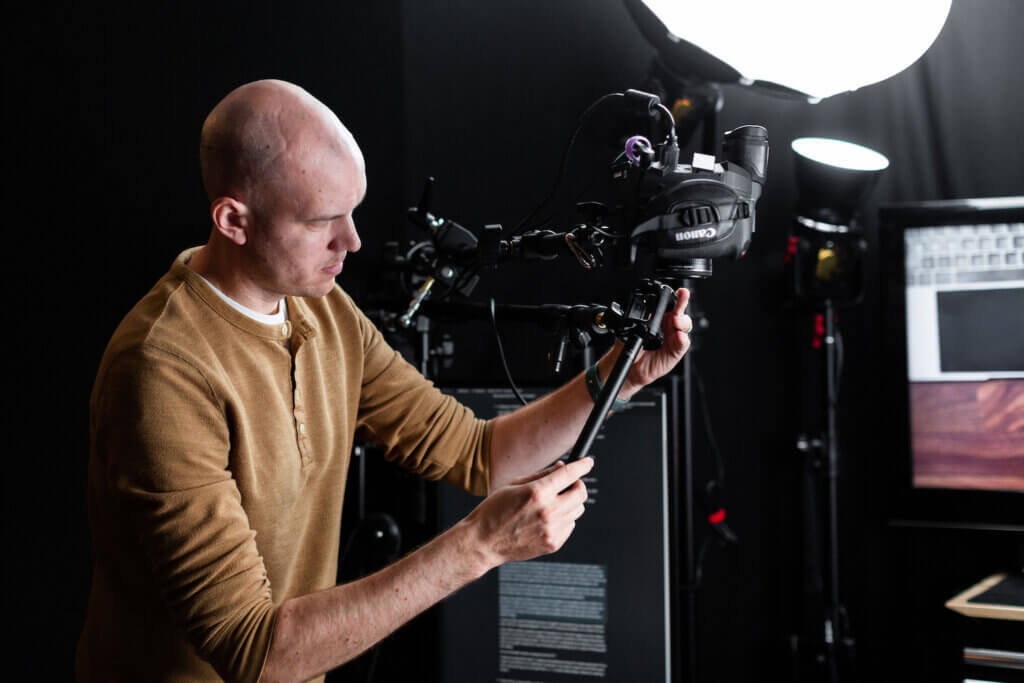
What are your areas of expertise?
My main areas of expertise are everything to do with video: Filming, editing, equipment, software, and all the places to publish videos like YouTube, social media, or online courses. Through 10+ years of running my own business, I can make a mean spreadsheet, develop a course launch, run a podcast, set up a mailing list, and more. I'm also well-versed in physical product launches (via Kickstarter) and running an ecommerce brand on Shopify or through retailers.
What are you looking forward to most in your residence with the SPI Pro community? How specifically do you want to help entrepreneurs?
Beyond helping people with what I'm an “expert” in, I want to help those who feel stuck. People who know they can accomplish more than they are now, who can see where they want to be but for whatever reason just can't see the path to make it there. This isn't easy. Otherwise, everyone that has boring jobs they hate at companies they don't like would do it. Being an entrepreneur is hard. But it is also the most rewarding way to spend your working time on the planet.
Why did you join the Expert in Residence program? What is it about Pro that makes it a special place/community for entrepreneurs?
This is a community of action-takers. I did a few accelerator group calls for a YouTube From Scratch cohort and each week I came back, people had already tried or implemented what we discussed on the previous call. I LOVE THAT. Action over research. You don't see that in every community online. A lot of people just want to pretend or play business. This community is different. It is full of action-takers.
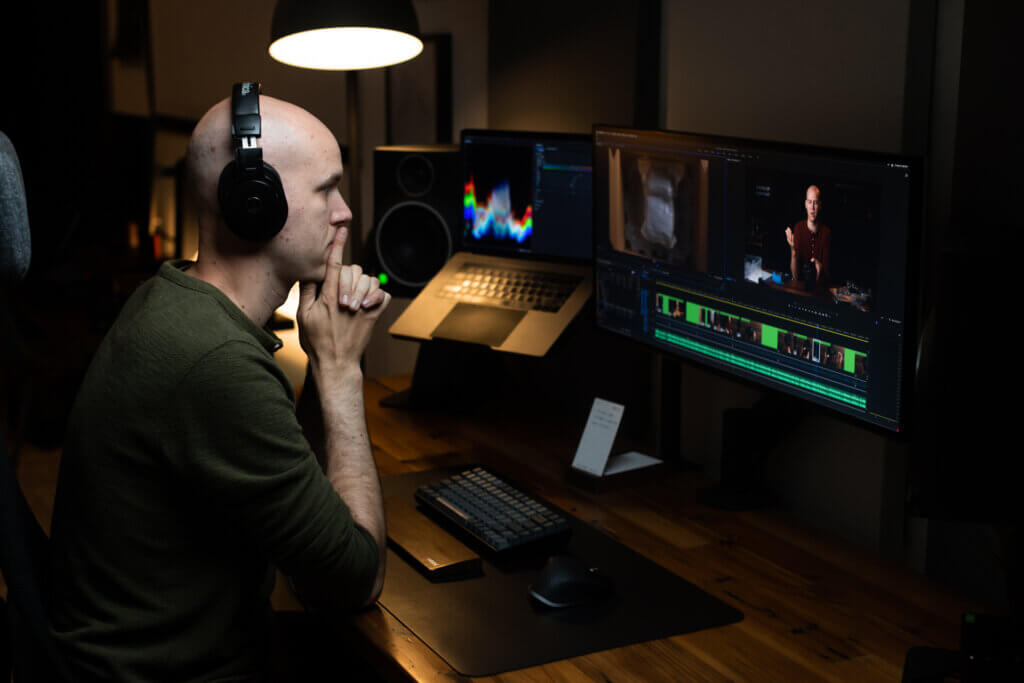
What is your biggest professional challenge to date, and how did you overcome it?
Juggling three types of businesses. Service, digital, and physical. I “overcome” it by being extremely focused on what I'm trying to do with each of them and understanding that they aren't all going to be the biggest, best businesses out there, but they all help me to have fun, meet new people, and keep my income diversified.
What is your biggest professional win to date and what did you do to make it happen?
Launching SwitchPod on Kickstarter to raise over $415,000. To make it happen I worked a lot. But more seriously, it was such a successful launch because we took our time and launched it when the time was right. We waited until our prototype was 100 percent ready. We waited until we had the right partners on board. We waited until the Kickstarter page was ready. We had to have patience for such a big launch.
Ready to find join your people and level up?
Like you, we're online entrepreneurs who crave connection, direction, and support from people like us.
The post Expert in Residence Caleb Wojcik appeared first on Smart Passive Income.
]]>Katy Widrick invested in the All-Access Pass to shift everything about her podcast and find alignment and purpose.
The post Building Wings on the Way Down: An All-Access Pass Success Story appeared first on Smart Passive Income.
]]>
For many entrepreneurs, the first step towards working for yourself full-time comes from necessity — more than just a light shove from the universe. And often — as in Katy’s case — the end results are more than worth the initial uncertainty and challenge.
Katy Widrick serves high-growth founders as a funnel fixer, recovering the biggest expenses in their businesses — lost sales — by using simple, effective systems to increase conversions and decrease top-of-funnel costs.
An EMMY-nominated journalist and multimedia producer, Katy has worked in marketing and revenue expansion for more than 20 years, strategizing and implementing profit-first funnels that help visionary leaders maximize their impact, grow their top-line revenue, and scale their product and service lines to seven, eight, and nine figures.
Katy joined SPI’s All-Access Pass in March of 2023, and it was a turning point in her career.
“Pushed Off a Cliff”
Here’s how Katy describes her entrepreneurial leap:
“In November 2021, I suddenly and unexpectedly ended my corporate career. I’d been working at an extremely fast-growing company for three years, as a member of the executive team. While it was an experience that taught me so much about growth marketing, profitability, external and internal marketing, leadership, and more, it also left me severely burned out and, if I’m honest, fairly uncertain about my next steps.
I took a sabbatical from the job and only a few weeks into the break, was notified that my position was being eliminated… so now instead of taking a leap, it felt as though I was being pushed off a cliff.”
It turns out, though, that the push was exactly what Katy needed to “build wings on the way down,” as she put it.
Between November 2021 and March 2023, Katy re-entered the workforce but this time as her own boss. She had previously founded a company called Make Media Over, where she offered online business management, email marketing, and sales funnel designs.
When Katy closed Make Media Over to pursue her corporate career, she thought it would be for good.
“I never imagined that I would go back to entrepreneurship. I truly dismantled the business — I shuttered the website, let all of my software subscriptions lapse, notified all of my clients that I was unavailable, and went all-in on the traditional corporate experience,” Katy tells SPI.
But when her corporate career didn’t pan out, Katy turned to the one asset she’d held onto for all those years: her LLC. It was still active, and Katy decided to go back to self-employment with some big, bold goals.
Ready to find join your people and level up?
Like you, we're online entrepreneurs who crave connection, direction, and support from people like us.
A Bold Pivot: Enter the All-Acess Pass
After 14 months, Katy made another bold choice. To empower herself with even more education and skill-building — and to take her business to the next level — she decided to invest in SPI’s All-Access Pass.
“I initially joined so that I could take advantage of the Podcasting Pathway. I’d started my own podcast during those 14 months, and it was fun… but I knew it wasn’t quite what I wanted to bring to my audience. There’s nobody I trust more as a teacher than Pat Flynn, and for that pathway alone, I knew the investment would be worth it.”
Katy had been podcasting and blogging under the brand “Rising Tide Talents,” a nod to her mantra that a rising tide lifts all boats. Her podcast episodes were solo-hosted and focused on marketing funnels and leadership.
A good start, but it wasn’t nearly the show she knew it could be. All-Access Pass gave her the clarity and the confidence to pivot her podcast and take advantage of all of the other materials in AAP.
“I decided to significantly shift everything — from the format of the show to the platform I hosted it on. Once I mapped it out using All-Access Pass’ guides, I immediately felt a sense of alignment and purpose. The first time I interviewed a founder on Hard Costs, I felt magic in the air. Since then, it’s been one improvement after another: I optimized the podcast for advertising, used the email marketing course to amplify my listenership, and much more.”
Part Mastermind, Part MBA, Part Accountability Group
Katy has been very successful at helping visionaries through their own blind spots, even as she continues to lean on the support of the All-Access Pass for help with her own.
“What’s that saying? A cobbler’s kid has no shoes? That’s absolutely been my experience: what I’m very good at doing for others, I’m quite terrible at doing for myself! Joining All-Acess Pass and being part of the community has been part mastermind, part MBA, and part accountability group — and I’m so thankful for my membership.”
Lightning Round
Biggest takeaway or aha moment from All-Access Pass
The Hook/Story/Ending plans for videos that Pat teaches — they work for so many other things, too!
Favorite course in All-Access Pass
Tie with Power-Up Podcasting® and YouTube From Scratch.
Unexpected benefit of All-Access Pass
The member referral program!
The post Building Wings on the Way Down: An All-Access Pass Success Story appeared first on Smart Passive Income.
]]>What happens when you stop competing and start collaborating with other creators? And how do we apply this concept to email and newsletters? In this episode, ConvertKit Founder Nathan Barry […]
The post SPI 757: The Creator Network Literally Grows Your Email List appeared first on Smart Passive Income.
]]>
ConvertKit is now Kit!
Our recommended email service provider has changed their name to Kit, but this podcast was recorded before that name change. While the links referenced in this episode refer to ConvertKit, when you click them, you'll land on a site named Kit. You're in the right place and our recommendation has not changed. You can read more about the name change here.
What happens when you stop competing and start collaborating with other creators? And how do we apply this concept to email and newsletters?
In this episode, ConvertKit Founder Nathan Barry joins me for a chat about the game-changing Creator Network. This is the number one platform I'm using to grow my Unstuck newsletter, and the results are incredible! [Full Disclosure: I'm a compensated advisor and an affiliate for ConvertKit.]
Listen in because Nathan and I discuss everything from building an email list from scratch to monetizing your reach by supporting creators you love. These are the best tactics to bypass social media algorithms and leverage the Creator Network to the max!
I'm excited because I've been an advisor and affiliate for ConvertKit for almost a decade, and this is the most innovative thing I've seen happen in the email space. So tune in and enjoy!
For more, check out my conversation with Nathan in episode 689.
Today's Guest
Nathan Barry
In previous careers, Nathan has been a designer, author, and blogger. After learning the power of email marketing he gave up a successful blogging career to build ConvertKit. Outside of work, Nathan spends his time playing soccer, woodworking, and chasing after his three boys.
- Find out more about ConvertKit [affiliate link]
You'll Learn
- Why the Creator Network is the best tool for email list growth
- How collaboration is shaping the future of newsletters
- Innovating and staying on top as a mature business
- Email-based tools for business and audience growth
- Earning money and supporting creators with recommendations
- Collaborating versus competing with other creators
Resources
- Subscribe to Unstuck — my weekly newsletter on what's working in business right now, delivered free, straight to your inbox
- Connect with Pat on Twitter and Instagram
SPI 757: The Creator Network Literally Grows Your Email List
Nathan Barry: We know that our content lives adjacent to other creators. But just the truth of the matter is that quality matters more than anything. Before you could probably get away with writing a mediocre newsletter and still get 5,000 subscribers and an acceptable open rate and on from there.
Back in the day, you could put out some mediocre YouTube videos and probably still get traction. Try to do that today, and it's not going to work. You put a ton of effort into it because you know that the content all around it is so high quality, and you're competing for that attention, but the pie is so, so big.
Pat Flynn: In 2014, I was invited to coffee by a friend of mine, Nathan Barry. And I had known Nathan as somebody who was a designer, a very prolific content creator. But what he brought to the table, literally the coffee table at a coffee shop in San Diego, was a proposal. A proposal for me to work with him on a new company that he had just started.
A company that was at the time making around $10,000 a month as a software, an email service provider. called ConvertKit. And he wanted me to come on to be a, an advisor and, and really a partner to the company. And what we talked about that day at that coffee shop was not really about money or earnings or anything like that, but a vision of the future that would be a win for both of us.
A conversation about how we could help each other along the way. That company, ConvertKit, at the time was making $10,000 MRR, or Monthly Recurring Revenue, $10,000 a month. Today, that company is generating more than $1,000,000 a day. Yes, they just recently, at the end of 2023, surpassed the $365,000,000 a year mark, which is amazing.
And I wanted to bring Nathan back on to talk about some of what they're up to to help us creators, specifically something that they recently launched last year in 2023 called the Creator Network. And I'm going to tell you that just up front here, it is the number one thing that is helping to grow our email list at SPI right now.
It's the Creator Network. And whether you are a ConvertKit user or not, you will get some value out of this because it shares some principles behind where we believe email to be headed to be a little bit more collaborative and a little bit more social. And what ConvertKit has built and why they built it and the advantages that they have with it is incredible.
So, as I mentioned before, we're going to be interviewing and getting an update from Nathan Berry, CEO and founder of ConvertKit, a company that I am an affiliate for and have been an advisor for, for about a decade. So I just wanted to share all that up front, but this is going to be a great one because there's a lot of lessons to be learned, especially if you're building something big.
You might be at the start of your startup journey, so whether you are a startup founder, a startup creator, or just a creator in general, it's this will be helpful for you and I look forward to seeing what you think. So here he is, Nathan Berry. Welcome to session 757 of the Smart Passive Income Podcast.
Here we go.
Announcer: You're listening to the Smart Passive Income Podcast, a proud member of the Entrepreneur Podcast Network, a show that's all about working hard now, so you can sit back and reap the benefits later. And now your host, he has a junk email account with over 100,000 unread emails. Pat Flynn.
Pat Flynn: Nathan, welcome back to the SPI podcast, man.
Nathan Barry: It is good to be here. It's good to see you, Pat.
Pat Flynn: You were here when you had first made the decision to sort of drop a lot of what you were working on in the design space and designing apps and such to go full time with ConvertKit. And here we are, I think exactly 10 years later, or at least close to that.
Pretty close, yeah. It's been a wild ride. How would you describe the ride with ConvertKit in one sentence?
Nathan Barry: One sentence. All right. Long but rewarding.
Pat Flynn: Long but rewarding. What were some of the bigger challenges that you had along the way that you can remember reflecting on the last 10 years with ConvertKit?
Nathan Barry: First, like the cold start problem of getting a, any product, but especially a software company off the ground and getting those first hundred customers or so.
And then really the first big partners. When you came over to ConvertKit, I think we were $10,000 a month in revenue. And then like, that was a huge inflection point. So basically like that cold start of getting going than the first partners is sort of two, two problems. I think in the six months after you switched to ConvertKit and then later started talking about it, we grew from $10,000 a month to a $100,000 a month.
Pat Flynn: So it was, that's pretty good. I'd like to maybe take a little bit of credit for that.
Nathan Barry: Oh, you a hundred percent should. I remember this is back in the day. Some people were going to be like, what are even these platforms? You did a live stream. I want to say it was on Meerkat. Could have been Periscope. Yeah, one of the two.
And you're like, here's what I'm doing in my email setup. And people are like, Oh, what's that? What email tool is that? And you're like, I can't tell you yet. This is like at 10 p. m. some night and a bunch of people figured out what the interface was. Someone in the comments was like, I think that's ConvertKit, you know, but you like deliberately like tease it and then not.
And then I want to say like a day or two later you did it again, but you actually said like, okay, all right, I'm using ConvertKit. Here's how it's going, you know, and you did such a good job of positioning us as like, basically of the hot new thing, which we were, but you know, it takes some good marketing to really emphasize that.
And I just remember and really that driving the next problem, which is once you have that crazy growth, how do you scale it? And how do you support that scale? Because we did, it was $10,000 a month in revenue when you became a customer and a little bit more when you became a partner and joined the board.
And then a year later. It was like $250,000 a month and 18 months from that date, it was $500,000 a month. So in 18 months, we went from 10k to 500k a month. And that was really like, I guess the third problem. If it's like cold start, how do you get partners? And then how do you scale? And support those partners, and the customers going crazy.
Those were three of the biggest challenges in there.
Pat Flynn: You know, we see a lot of startups come and have also seen a lot of startups go. I feel like a lot of startups that remain or at least stay a little bit more consistent before, and as they are growing, is related to the partners that they connect with I'd be curious to ask you now reflecting back and also for everybody else starting something, how do you go and make sure you find the right partners?
And and how do you and I can share my answer on the opposite end of yours, how do you encourage a partner to in fact get behind something and promote it and promote it authentically and still support that person and make it a win for everybody involved.
Nathan Barry: I think what makes a big difference is going beyond like the transaction and making it much more of a relationship.
And so, even for us, like, where we started, like, we met at Blog World, New Media Expo, I think people are going to be like, what even are these things? You're talking about platforms that haven't existed in decades. You're talking about conferences that haven't existed in a long time.
Pat Flynn: We're going back in time.
Yeah.
Nathan Barry: But really those in person connections and then going from there into like building those relationships. Like I still remember like us meeting the coffee shop in San Diego, like that kind of thing just goes so far. People are like, Oh, that's what worked to close the deal. It's like, no, no, that's what worked to start a friendship.
So I think that's the thing that we really emphasize and just think about it long term. Like too many people are saying like, Oh, if I could get this partner to do this one webinar, what would happen? And you and I both approached things from the beginning of like, okay, what would this look like to work together for, you know, I think we were thinking like a five year time horizon then, you know, but even now it's been a lot longer than that. And if you approach it from the beginning that way and you find partners who will approach it from the beginning that way and you invest in the relationship, then I think it makes a huge difference.
What would you say?
Pat Flynn: Yeah. I mean, there were a lot of reasons why I wanted to work with you and a lot of it was because you had come at it from a relationship first position and how you could potentially even shape ConvertKit to help a creator like me. You always made it about me, which is really interesting.
And as a result of doing that, I wanted to make sure that I did what I could on my part to return the favor. And to do that, it was very easy because ConvertKit was the hot new thing. It was something that was very useful to the audience at the time that they hadn't seen before. And so I had a lot of creative license to figure out ways to introduce those things and the new concept and the software to people and kind of blow their mind.
Right. I told a lot of people back then when they were like, how are you doing so well being an affiliate for ConvertKit? How did this even happen? I said, well, it's really easy to do when the product is really great. I'd also like to maybe raise my hand for a little bit of credit in terms of helping to shape the product itself through conversations that you and I had.
Nathan Barry: Well, give an example of that. Like we have this feature that's one of my favorites in ConvertKit, which is content snippets. Let's say I write the same email signature. Or I have a call to action for my book or my course, you know, you find yourself rewriting this in, in email sequences or in broadcasts or that sort of thing.
And you were the one that was like, Hey, there should be a library of content snippets that I can then write, I can have my calls to action, my social media links, you know, anything else. And then I should be able to just call that in, for a particular broadcast, or better yet, if I have all these automations, they could all pull in one snippet and I change it one spot and it updates across all these other emails.
And so that was something I remember the board meeting that we were at where you were talking about, like, how great of a feature that would be, and we built it and it's like with our professional users, the beginners don't know or care about that, but the pros are all about that kind of functionality, and that comes from like a tight connection between, you know, a partner and the product. And there's going to be other partners who don't have a product mind like you do, you know, but when you're in there using it all the time, and then you have that, that voice to be like, Hey, if you implement this, like, I know that I'm going to love it.
My team's going to love it. And by proxy, I know that, you know. 10,000 of my closest friends, you know, on this webinar are going to love it too.
Pat Flynn: I think you positioned it really well when you had me come on the board to essentially give me permission to tell you and everybody else on the team, like where things were lacking.
When you gave me that permission, it really opened my eyes to, Oh, this is what this relationship can be like. It's not just me promoting this product. Like I had many other products. I was a affiliate for a very well known web hosting company, keyword research tools, all these kinds of things. But in, in, in none of those relationships were, was anybody really asking me like, well, where can we improve?
And that's really where you started. And I absolutely love that. So some great lessons for those who are sort of in startup mode and working with partners. It's something that can be a win for all sides. And, you know, as time went by, more email service providers, competitors started to finally get smart to finally introduce a lot of the same things that ConvertKit was known for you know, being innovative for.
And now it's like everybody's catching up, right? And, you know, I remember some board meetings that we've had where we've actually, that was the main topic. It was like, Hey, everybody's catching up. Like, where are we in this space now? We are no longer necessarily the front runners in terms of innovation here.
What's happening, can you go through a little bit of the. the mindset of a CEO when something like that happens, your competitors are coming up and they're coming up fast and maybe even innovating ahead of you. How does one navigate that as a CEO of a fast moving software company?
Nathan Barry: Yeah, for us in the email marketing space, it was always very competitive.
Like we'd probably list off. You know, 20 plus companies that are tens or, you know, 50 million a year in revenue or more, but we were the only ones focused on creators. And so we had like MailChimp was focused on all of small business and creators happened to be a small business. And so they're like, great, you have a home here that, that works.
But we got to ride this wave of being the only ones focused on creators. And I don't think we fully understood how good we had it when we were directly competing with MailChimp and MailChimp was kind of competing with us. And then really, what happened is the creator economy grew. Which is funny, because investors early on were like, well, when we tried to raise funding, and failed.
Which I'm very glad for now, but they were like, this creator thing will never be big. You'll never like build a big enough business, you know, now, like obviously it's worked out quite well, but what would happen is, you know, years later, we ended up with a whole bunch of companies focused specifically on the creator world.
So I think of right now, like there's really four, there's us, Substack, Beehive and Flowdesk that within all of email marketing are now just focused exclusively on creators. So that's where we found ourselves like, Oh, we have to step up our game. And so a couple of things that we did that really helped.
And I remember those, those board meetings where we talked through it. One is really focusing on the conversations and the relationships with the creators. I think it especially got hard in two ways. I think we got a level of scale as a company where we started for a little bit loose touch with creators.
And then during like that came right before COVID and then during COVID. I didn't realize how much we relied on conferences and masterminds and dinners and coffee meetups and all of that to get that voice of the creator. So when it came time when like, you know, we went more than a year without doing any of those things, then you realize like, Oh, we're starting to lose that connection and touch with creators.
And so bringing that back and then also doubling down on product velocity, like, so it's basically how good and how actionable our ideas of what to build, like how close to what graders need, and then how quickly can we build them. And I think those two changes, like we restructured our whole product engineering team around how do we ship products quickly?
Like, how do we get a meaningful thing out like every other week? And that's really been. You know, this year, so I think those are the two biggest changes that we made to, like, make sure the company stays competitive for a very long time.
Pat Flynn: How have you adjusted since COVID to stay in touch with the audience and creators, as well as filtering all those ideas that come in for the engineering team?
Nathan Barry: Because you mean not every feature request should be directly built in.
Pat Flynn: I mean, from my experience, and I know just kind of logically that would kind of kill the company, kill the, kill the team, kill everything. And so I would imagine there's some sort of matrix or scoring carters or some method to absorb and intake everything so that it's on the table, but then rank them or grade them and then make decisions on that.
So how does that work? Where does one, in ConvertKit, get to connect with user and then how does one filter through all those requests and all the feature requests.
Nathan Barry: So I think the connections with creators got a lot better once we were able to meet in person again and then just be a lot more deliberate about getting on calls with creators.
We had a team put together, like telling a whole bunch of creator stories, and we had focused on their story and not as much on feedback on how we can help them better. And so like Issa and our storytelling team really put together those other questions, like, okay, what's your product feedback? How can we help you more?
And that was good. And then on the filtering, the ideas were that when the feature request comes in, you really have to focus on. What is the creator or the customer trying to accomplish? Often they'll say, here's how to solve it. And it's easy to be like, cool, let me log that. And yep, thank you. I've got you logged in there.
But what you have to do is really dig in and say, why do you want that? I know, like, what's the problem that you're trying to solve with that solution? And almost like set the solution that they suggested aside and really dig in. And then when you find the thing that you're like, oh, you know, we keep peeling back layers.
And then like across all of these creators that we've talked to, here's a shared problem. Okay. What's a solution that can come to, to solve this broad range of them. And so it's really falling in love with the problem rather than falling in love with a particular solution. And that's what makes the difference.
Pat Flynn: Can you give me an example of a problem that was highlighted in 2023 and then how ConvertKit engineered a solution for it.
Nathan Barry: Yeah, so every like author, podcaster, blogger, writer that I talk to, they all talk about one thing. They want growth and they're figuring it like they're all sharing tips. How, how can we grow all of that?
I was actually having dinner with Jason Pfeiffer, who's the editor in chief of Entrepreneur magazine just this week, he happened to be in Boise. And I was like, Hey man, let's, let's meet up.
Pat Flynn: One of our Experts in Residence at SPI.
Nathan Barry: Yeah. I was going to say that, that he, like, he speaks very highly of SPI and the community and, and you and Matt in particular of just like the connection that you all have to creators and how you serve creators. But he was telling me, he was like, look, when I get together with my author and creator friends, we're all asking, Hey, what's working for growth right now? And so we knew. The more tools we can build for growth, the better. And what we realized is that email has pros and cons.
On one hand, email is amazing for connection. There's no algorithm in the way. I can tag you, you know, based on the fact that you bought my book. I can reach you, you know, time things just to you versus like mass marketing on Instagram, for example. But email doesn't have distribution. And so it's actually, you have to rely on another channel.
And so what we were setting out to do is how can we build distribution native to email. And when you think about all these creators sitting around saying like, Oh, I really want to grow. And you look over here and there's another creator who's like, I really want to grow, but I don't know how. And we realized like, wait a second, you both have the thing that the other person wants.
And if you go to YouTube, their biggest advice on growth is to do collaborations. You know, collaborate with other creators, and we all know this, right, from going to conferences and everything else, like we all have an inflection point in our business that came from another creator that we worked with or met or got ideas from.
And so when we were looking at what to build in, you know the middle of 2022 and talking through that, it was like, okay, how can we like build basically native collaborations into the product. And that's what turned into the ConvertKit Creator Network, which is a way that when someone signs up for my newsletter, it says, Hey, thanks so much for subscribing, why don't you also check out these other creators? Why don't you check out Pat and Sahil Bloom and Susan Cain, you know, like a few other creators that I recommend. And then vice versa, someone signs up to yours, it recommends me and a few other creators. And so now, every bit of growth that I'm pushing for, like everyone that I get from social or LinkedIn or my podcast, wherever I'm growing is now driving growth to you and vice versa.
So it's like this multiplying effect. And we launched that in, I guess, spring 2023, and it's just taken off like crazy.
Pat Flynn: Yeah, it's been very nice to see because for a while, you know, we initially talked about ConvertKit being on sort of the leading edge of innovation and helping creators and email marketing.
And a lot of the tagging things were very innovative. I mean, we used to see them in tools like Infusionsoft and whatnot, and it was just so complicated. You had to pay people to set it up for you and ConvertKit made it really easy. And then of course everybody caught up and it seemed like for a while that, you know, ConvertKit was just kind of in maintenance mode, making sure things were working smoothly. And, you know, some things were coming out here and there and you came out with you know, a checkout system and all this stuff. And, and, and that was great, but for growth specifically, which is like the number one thing you said that people want, and I know this and everybody here listening knows this, there really wasn't anything that was serving us.
We had to rely on our outside platforms to make this happen. So when I saw this happen, it was refreshing because it was like, okay. back again with something new to really dive into what's helping us grow our businesses ultimately and the results have been incredible. Even on our end, we've had hundreds of other creators recommend the Unstuck newsletter here at SPI and we've recommended dozens of different creators and we've helped them grow.
In fact, a couple people have earned an additional extra thousands of subscribers from us because we have vetted them and we recommend them. And there, there is a process of vetting and there is a process of selection and approval. It's not just like Wild West, you can't kind of go on anybody's website.
And so there is still some collaboration involved, but to have it being done natively on ConvertKit is really, really great. And it's really easy. Now, I also know that ConvertKit isn't the first. email service provider that has enabled such a thing. Can you speak to how one innovates over something that has already been done?
How does one take something that somebody else is doing, but, but then make it better? And then what are the unfair advantages that ConvertKit has over perhaps the others?
Nathan Barry: Yeah, so SparkLoop was really the first to build out a recommendation system like this, and they launched it basically right around the same time that Substack also launched recommendations.
What was interesting about SparkLoop is that they were an open network, they worked with any email provider because they're not an email provider themselves. And that was really interesting. We also had very conveniently made a big investment in Sparkloop like a year before they came up with this. And so it was like, Oh, this is great.
You know, they had their referral product and we invested in that and then did a big integration. And I knew that those guys were going to come up with something really good. And so when they did it was fantastic. And so they were the first ones to roll it out. Substack rolled it out shortly after.
And then from there, you know, I think Beehive, a while later, added some similar functionality. I think the big difference with the direction that we're going is that we're building an open network. So I come from a world of like open source software and community and collaboration. And that's why I was so interested in what SparkLoop was doing, because especially in the paid recommendation side, we've talked about the free side, right?
Of I'm recommending you and you're recommending me, but we also have this whole paid component where I can go on there as a creator and say, Hey, I will pay $2 for every engaged subscriber that another creator sends to me. And I have a budget of $5,000 a month, right? And other creators can browse that and say, Oh, I'd love to recommend Nathan's newsletter and get paid for it.
That sounds fantastic. So SparkLoop came out with that paid side very first. And then as they were scaling that one thing they did that was really, really smart is they made it so that as a sponsor or as a creator earning, you could be on any platform. And so what that meant is that like Morning Brew and The Motley Fool and these Market Beat, like these big, big newsletters who know how to monetize really well and are really high quality, they're always going to be on like a Salesforce Marketing Cloud or some of these big enterprise systems. They're never going to be on a ConvertKit or a Beehive or something else because that's not the right fit for them. And so what would happen is now the big brands can sponsor really anyone can sponsor.
And then what it results in is a much higher, like, as a creator, you get paid more for every subscriber you're referring to like a Morning Brew or something, you have a huge collection of newsletters, you can refer to, because it's not, you know, a two sided marketplace inside of a walled garden, it's actually like widely open, and the quality ends up being much higher.
And so what we found, because of those dynamics of like the open marketplace, It's turned into a virtuous cycle where because we have the best sponsors trying to grow, then we end up with the best creators who want to earn more to recommend that, which results in sponsors being willing to spend more because the quality of the subscribers they're getting is higher.
And up from there, we actually found, we have put out an annual report, which is really interesting to look at, but we found out that 95 percent cause they quoted numbers in it, 95 percent of all paid recommendations are done through SparkLoop, which I guess if I didn't mention this earlier, we bought SparkLoop at the beginning of the year.
And so it's now natively integrated and ConvertKit and every other email platform. So we're really pushing this like open network and making it as big and collaborative as possible rather than like closed ecosystem.
Pat Flynn: When you look at it from a business and strategy standpoint, it makes sense to invest into this.
I mean, if you were going to use the paid recommendations, you're getting subscribers coming in and those subscribers could go down a funnel such that you will get an ROI, which then you can put back into the paid recommendations and then you develop this flywheel. I think yourself and Sahil and several other people on your on your side have been talking a lot about the this idea of a flywheel that things begin to grow or snowball in a way that just keeps serving you in multiple different ways.
And I think it's great. I have some questions that I know have been on my audience's mind about the Creator Network, just some initial reactions to them that I'd love to get your take on if that's okay, Nathan. Yeah. The first one is if, if a person's subscribing to my email list, right, which is great, and then they get served another page that says, hey, you might also love to subscribe to these people.
Initially, a lot of people are concerned that aren't I just diluting a person's email inbox such that my emails now are going to be now competing with Ali Abdaal's and Nathan's and Kieran Drew's and you know so on and so forth. What is the best practice or how does one wrap their head around this idea of yes it's cool to help promote other people's email lists but now I'm also competing inbox.
Nathan Barry: Yeah I think competing as a creator is a really Interesting idea because we're used to it in the business world, right? Like, I don't know, Walmart and target are competing and you're like, yeah, that makes sense. As a creator, there is a limited amount of attention, but there's effectively an unlimited number of people that you can get that attention from, right?
Like neither you or I are looking at it and going, okay, I want to grow my newsletter, but it's really going to be limited by the global English speaking population that cares about business. We know that we're so tiny compared to that, that we're not worried about market saturation. And so to what extent Is someone listening to, or let's say reading your newsletter and not mine or vice versa.
So like competition is kind of this weird idea, but we know that each individual has a fixed amount of attention, right? Yeah. I'm not going to read 40 email newsletters, you know, on a week cause that's just not reasonable. And so I think it's interesting to try to balance that. I think about competition probably the same way as email now, as I think about it with competition on social platforms, like we know that on my YouTube channel, someone is scrolling a feed and they're like, Oh, I'm going to pick that one. That seems interesting. They may not engage with every piece of content or scrolling, you know, Instagram is short from video.
We know that our content lives adjacent to other creators and that's always been the case with email. It's just now there might be more creators there. So I guess two things. One, the upside is distribution for great content just got way easier because now we can get in front of so many more potential readers, the other side of it, I was going to say the downside, but I think really just the truth of the matter is that quality matters more than anything. Before you could probably get away with writing a mediocre newsletter and still get 5,000 subscribers and an acceptable open rate and on from there.
In the same way that probably back in the day, you could put out some mediocre YouTube videos and probably still get traction. Try to do that today, and it's not going to work like that. If you're, if your YouTube videos were mediocre, would they go anywhere? Like you put a ton of effort into it because you know that the content all around it is so high quality and you're competing for that attention, but the pie is so, so big. I don't know. What's your take?
Pat Flynn: Yeah. My take is bring on the competition. I mean, I'm, I'm happy to recommend people that I care about and enjoy and also love reading. I mean, to me, that is a service to my subscribers is to go to Ali Abdaal's productivity newsletter because his stuff is great.
I want you to read his stuff. His stuff is different than mine. But when it comes to where there is real competition, which is like literally the inbox and the deluge of subject lines that are there that we have to read through, you know, you can on one hand go, okay, well now I'm going to be up against Ali and his copywriters and everybody else.
And it just makes me go bring it on. Let me fine tune my own copywriting. Let me get better at subject lines. Let me not just be complacent with how my emails are performing, but let me see if I can do even better now. Like it, it almost is a way for me to be even more motivated to, to offer something different and, and have it be a win for everybody.
Still, I want people to go, Oh, Pat's email is even better than Ali's this week, you know, and, and, and I'm okay with that. And maybe that's not necessarily the right mindset for everybody, but that's how I approach it. That's how I changed the story in my head about what is happening in the inbox.
Nathan Barry: Well, there's two things that that does.
One, it's a huge win for consumers where you're like, wait a second. All of these people are now competing to see who can create the best content for me. Absolutely. The next thing that it does is it really builds up individual niches. And Pat, that's something that you've talked about a lot of like really focusing in on a niche.
The, the hard thing about focusing on a niche is that you might not get distribution or get discovered. And so tools like Creator Network really help that where it makes discovery easy. And so someone might join a generic, how to get good at business newsletter and then get recommended a niche online business in the food industry newsletter, right?
And that might be a better fit. And they might ultimately drop the generic one and focus on the niche one, and that'll be a better fit for them. And honestly, we're here to serve. Right, and so this is positioning like as creators, we're serving our audience much better. And then finally, I think what you have to do as a creator is take a holistic approach to it, where you want to understand that your content is being consumed on many platforms.
And it's not, I'm not only posting on social so I can get a follower so I can convert them to the email list so it's on the newsletter. I really want them to engage on all these platforms. And I'd like someone to follow me on Instagram, Twitter, and my newsletter, and then they might skip over this week's subject line and be like you know, oh, that wasn't interesting, but I might have highlighted a section of that in my Instagram stories.
Or had a hook in some way that then said, Oh, check out the newsletter. And then they go, Oh, right. I should do that. Maybe the subject line didn't catch me, but the thing on Instagram did. And now I'm right back to the newsletter. And so I think about wanting to have these different touch points and really engage with a subscriber or a fan in a holistic way.
on each platform that they follow me. And then I'm like, Hey, I now have a YouTube channel. Check me out over here for some long form content. And it's different content, different hooks, different lengths. And it's going to catch that subscriber and hit them in different ways. And I just think of that holistic approach, which I'm now realizing as I say that, that you would refer to as be everywhere, which you may have talked about really a lot.
Pat Flynn: Be everywhere, but not all at once and not everywhere right from the start, you know, pick the one platform to focus on, grow, and then you can actually use that audience to grow elsewhere, right? Because people will want to follow you on multiple platforms or get the short form version of you here, but then the long form version of you here on those days, and they now want to go behind the scenes with you.
So now they're on your Instagram looking at more of your just personal life that you're willing to share and all that kind of stuff, right? And it does become a holistic approach. I'm not just a YouTuber. I'm not just an email subscriber or a newsletter writer. I'm Pat Flynn. And here's, here's all of me in different kinds of ways.
And you can choose and pick. Maybe, maybe somebody only does follow me on YouTube, in which case it's great. I'm going to serve them there when I am there. The other thing I wanted to bring up was for somebody who's just getting started, you know, for me, it was not too difficult to get in the Creator Network and have others go, Ooh, Pat Flynn's newsletter.
I want to recommend that to you. I trust him. I've, he's been around for 15 years doing this. Like I think his newsletter would be great. Or I am a subscriber to that newsletter. Let me also recommend it to my list. How does a person who literally starting from scratch, they just signed up to ConvertKit, they hear about the Creator Network and they're like, Okay, well, I don't have any connections. Do I need to build these connections first? How does one go about best utilizing the Creator Network when they're just starting out?
Nathan Barry: So what I would do is I would browse the Creator Network to discover other creators that you think might be a good fit.
Go subscribe to their newsletter and start reading their content. And then, first you can learn from it. Sometimes, like I've seen creators say, Hey, I'm going to be this creator of this niche. Like I'm going to clone this person's ideas and tactics, but like with my ideas in an entirely different niche.
And I think that's a good thing to do. So what I would do is discover a lot of creators, choose the ones that the right fit and start recommending them. But stay subscribed to them as well, and reply to their content, engage with it. And a couple things that you're going to see happen. First, you're engaging with their content, and they'll see that.
They'll be like, oh, Nathan. Well, they'll make the connection. This Nathan who just responded to my Twitter post, is the same Nathan that I just wrote that reply to in my newsletter. Like, oh, he's a regular reader. And then now, when they're going through their Creator Network stats, they might see like, oh, who's this person who sent me five subscribers?
Oh, that's Nathan. Right? Like, I think you have a story of a creator that you even had on the podcast who you met because they were sending you a bunch of subscribers through Creator Network. Is that right?
Pat Flynn: Corey. In fact, he's been on the podcast now as a result of that relationship that started on the Creator Network, which was, which was really cool.
So I definitely think that's great. As far as a person starting out to clarify when you say go search through the Creator Network that is accessible inside of your ConvertKit account under the sort of growth tab.
Nathan Barry: Yes, you go growth recommendations and there's a discover tab and you can say like, okay, here's my niche.
It'll recommend creators for you to recommend. Now one thing in it, where people make a mistake is they go and recommend say five creators and they sit back and wait and then they don't get any recommendations back.
Pat Flynn: They're not reciprocating. Why?
Nathan Barry: Yeah, because that other creator went sweet I have no idea who that person is, but I'm glad they just sent me five subscribers you have to actually go out and build those relationships And I would encourage people to do that the way I was talking about it, like following the creator, responding to them, you know, building that relationship gradually online and then maybe getting on a call or that sort of thing.
Second, do it at events. Events are such a good place, especially in your particular niche, you know, go to the food blogging conference, go to the real estate conference, like whatever your niche is. Go to those events and really seek out and meet creators, host a meetup yourself, host a creator happy hour.
The next thing is other communities that you're a part of, right? If you're in SPI Pro, right, there's a whole bunch of people who are there saying, Hey, I'm trying to learn how to grow an online business. It's like, go find the people in your niche and form those relationships. You're not going out and being like, Hey, how do I get Pat Flynn or Ali Abdaal to recommend to me?
Right? That, that's, that's the wrong level and it's not going to work. But you're saying, Hey, who could I form a mastermind group with? Who could we build a pod with who? Maybe they have a hundred subscribers and they're adding three to five subscribers a week because that's the level that I'm at. And really actively seek those people out and build those relationships.
And then when you're talking and you meet someone you say, hey let's help give each other accountability and and work together, you know, like a mastermind idea or just friends then also say and Hey, what if we recommend each other on Creator Network? Then you're going to drive that growth. So it's basically take a really active role in it.
Pat Flynn: Yeah. I mean, I got to do work?
Nathan Barry: That's the unfortunate thing about the online business world is you got to do the work.
Pat Flynn: It's also the fortunate thing. It's like those who, who work hard and work smart, you know, and build those relationships to serve others, other creators and their audiences, respectively, they get rewarded.
And it's great. And what I love about the Creator Network, it's, it's just allowed for those connections to happen in a way that easily serves each of those communities together. It's a tool. It's not going to solve all of your problems, but it is as useful as time that you put into it and those relationships.
And it has been very useful and it is currently today the number one thing that is recommending new subscribers to our email list is the Creator Network. You know, we do a lot of things to build our email list and it is the number one thing right now that still continues to grow our list over anything else, which is a big testament to you and the team and what you guys have built there.
So well done on that.
Nathan Barry: Thank you. One quick thing that I was going to add with that. Is for anyone listening who has their own community, a huge value add that you can do for your community is to help form those connections, right? Like a lot of what we do is, you know, people come to us and they take a course, they sign up for a membership, that sort of thing in order to meet other creators and learn and ultimately grow.
Well, guess what? You have these pods of creators who they all have what the other person wants. And so you can come in and say, Hey, we've got 100 people in this community and I'm going to form for whoever wants, I'm going to form five pods on the Creator Network, like who's interested. And then people will volunteer and say like, Oh me, you know, and then you can, your community manager can start to assemble these groups.
And really do that work for you. And what will really happen is your community will build stronger bonds to each other, which they will forever credit back to you as the person who made that connection. And they'll get better growth results. Like you're trying to teach them how to grow their business.
Well, you just made the connection and gave them the tool to help them grow their business. It's a great way to deliver on the promise that you had of, you know, the course of the membership that, you know, they originally joined.
Pat Flynn: If you're out in the wild, and maybe you're inside of a community virtual, or maybe in person, do you just go like, hey, are you on the Creator Network?
And like, just, you just say, hey, are you, do you have that? I do. Let's, let's, let's do this thing. It's just kind of, just kind of natural like that. What if a person doesn't, or they're not in the Creator Network? Where does one go from there? So if a person's listening, they're, In ConvertKit, they want to connect with other people in their community, but those people are not yet in the Creator Network.
What would be the pitch? What would be the best way to help them?
Nathan Barry: Yeah, so right now, at least for the free recommendations, you have to be on ConvertKit. We'll work on expanding that further. The paid side, you can be on any platform. And so, it'd be switching to ConvertKit and signing up. So let me just say that there's some really exciting things coming on the ConverKit side.
I can't, like, this will release slightly before those, but to make ConverKit wildly more accessible for creators. That's a good tease, right?
Pat Flynn: I might know what they are as an advisor, but I'm not gonna I'm not gonna spill the beans yet. It'll happen when it happens.
Nathan Barry: Basically to make it so that anyone who's thinking about signing up for ConverKit or trying to decide Oh, is this the right fit?
It's just, it's a natural, like welcome everyone in and that will be huge. So the biggest thing is if you're on another platform, we'll help you switch to ConvertKit. We have a migrations team we'll do it for you for free. And you know, if you're starting from scratch, we've got a great free plan to a thousand subscribers.
Yeah. And then you can get into Creator Network and start recommending people. And so it's really this reason to form community and get that growth.
Pat Flynn: Nice man. I love it. I think we can spend another hour or two talking about creators and utilizing email and the Creator Network. But I want to ask you one final question here as we finish up.
And it's related to the future. You know, we talked about the past to start out with. We're going to talk about the future now, and we're going to talk about, you know, the next two to five years down the road in terms of what the audience and especially ConvertKit users can expect from the team and from you and kind of what can you tell us to get excited for the future besides this thing that's about to drop that's a little bit more specific.
Nathan Barry: Yeah. So at a high level, our mission as a company is we exist to help creators earn a living. And so that's the lens that we view everything through. And so we're looking at how can we Help you make money, help you pay your mortgage and grow your business as a creator. And that's why we launched our sponsorship network, you know, it's like, let's directly sell sponsorships for you.
That's why we acquired SparkLoop and built up a whole paid recommendation side. And then really back from, you know, revenue or upstream from that is usually subscriber growth. And so we're really, really focused on that side of it. And one step up from subscriber growth, you know, up the funnel from that is usually connections.
And so the reason that we called all this Creator Network and like went, went out and bought CreativeNetwork.com and put everything under that umbrella is that we want email and like newsletters to be much more collaborative. And so you'll see us over the next few years, come out with a lot of features, not just to say like, Hey, browse the creator network, find someone to partner with and go contact them somewhere else.
But we're like, what if we could help form those pods better? What if we could host actually something that we're about to launch, well, it'll be live by the time that this comes out is we're doing creator happy hours. So twice a week, we're doing a, just a zoom call where 40 to 50 creators can jump on, learn something for 10 or 15 minutes, and then meet other creators in small groups.
And maybe you'll find someone who you might want to recommend on Creator Network. Or you might find someone who would be a good fit in your mastermind. But we want to say like, hey, how can we turn these simple collaborations into deep connections? And then also, what other kinds of collaboration features can we build?
Like, I think it'd be really cool if you and I are doing a joint promotion for something, and I could share my email list into your account. Or we could collaborate, like, you could say, say I'm going to do a promotion for SPI Pro. You could share a segment with me. I don't get to see any email addresses in it, right?
But you could say, share the segment as an exclusion. So when I send out my broadcast, it excludes everyone who's already a customer of SPI Pro. And that way, I'm not, like, I can target things much better. So that's, like, I want to build, like, Creator Network is the collaborative version of all this. What if I could write a snippet, to go back to that earlier idea?
And share it across to your account, like, there's no reason it couldn't work that way. And so that's the way that we're thinking about how do we build the most collaborative social product possible, but still give every creator the individual control of these are my subscribers. Here's exactly how I want to talk to them and build to have all the customization and flexibility.
Pat Flynn: So email almost becoming more social and collaborative. And I love that you and the team, and I know a lot of people on the team, a lot of the higher ups, and even just people who you've just hired and they're all in it for the right reasons. And so congrats for the journey that you've been on and the adventure continues.
So I look forward to having you back here, Nathan, at some point to talk about whatever the next big thing is for ConvertKit and how we can all utilize that to better our businesses and our lives as creatives. Thank you so much for what you do. I'll drop an affiliate link for ConvertKit in case people are curious about the Creator Network and all that stuff right after we finish up here.
On behalf of all of us using ConvertKit, thank you so much for creating such a wonderful tool and for caring about us and for continuing to think about how to serve us in the future.
Nathan Barry: Yeah. Thank you for having me on. Thanks for all your support over the years.
Pat Flynn: Of course.
All right. I hope you enjoyed that interview with CEO and founder of ConvertKit, Nathan Barry.
Amazing what they have put together, what they've been able to build and how they've been able to still stay relevant after so long. A company to be here for this long and still stay relevant and still stay innovative, is just a testament to how well they are in tune with what it is that the needs are for us, for, for us creators.
And for a while there, it didn't seem like they were really listening or at least taking action on the things that we needed, but now it seems like they are again at the innovative forefront of all of that, and I'm just very proud to be an affiliate, like I said, but more so just a partner and also a friend of, of Nathan, I'm very proud of what he's been able to build and the team over there at ConvertKit too. So shout out to team ConvertKit, I know a lot of you listen to the show and also just really stoked for the tools that are coming. And I'm also very proud to be an advisor to this company as well. And the experience as an advisor has been incredible. They've been very open and very honest with me and the other advisory members along the way.
And it's been a lesson for me in terms of how one might be able to build something much bigger than what one could do on their own. So thank you to Nathan. Thank you to ConvertKit. Thank you.
If you'd like to check out ConvertKit and get access to their creator network, as he mentioned, there is a amazing free trial that allows you to have over a thousand subscribers, or at least at this time, a thousand subscribers for free.
If you go to smartpassiveincome.com/convertkit, you can sign up through that link. We get a little kickback for that as a thank you. And it's at no extra cost to you. No payments needed until you reach the threshold that you are ready to start paying for either some of those more advanced tools or you start to unlock more subscribers, which is a great thing.
So again, smartpassiveincome.com/convertkit. Hope you enjoyed this episode. We're going to go deeper with some founders and creators here soon. So make sure you subscribe and looking forward to seeing what you think about the next one too. Cheers. Thanks so much.
Thank you so much for listening to the Smart Passive Income podcast at SmartPassiveIncome.com. I'm your host, Pat Flynn. Sound editing by Duncan Brown. Our senior producer is David Grabowski, and our executive producer is Matt Gartland. The Smart Passive Income Podcast is a production of SPI Media, and a proud member of the Entrepreneur Podcast Network. Catch you next week!
The post SPI 757: The Creator Network Literally Grows Your Email List appeared first on Smart Passive Income.
]]>A to Z Webinars Part of the SPI Community course library. Grow your list. Increase trust. Make more money. Become a Webinar Rockstar with A to Z Webinars Introducing A […]
The post A to Z Webinars appeared first on Smart Passive Income.
]]>A to Z Webinars
Part of the SPI Community course library. Grow your list. Increase trust. Make more money.

Become a Webinar Rockstar with A to Z Webinars
Introducing A to Z Webinars, a complete framework for creating, promoting, and delivering engaging webinars that help you grow your business. This course will not just help you run great webinars, but help you generate more revenue, too—even if you’re not good in front of the camera or afraid of selling.
If we’ve learned anything from running SPI since 2008, it's this:
The success of your entire business depends on creating a genuine connection with your audience.
People only buy from people they know, like, and trust, regardless of whether it’s online or in-person. But here’s the problem—it’s hard to create a genuine connection with your audience online!
Most of the methods people use, like blogging, posting regularly on Instagram, or creating a YouTube channel, can work well, but they’re incredibly time-consuming, and they don’t always directly grow your business.
So how do you build a relationship with your audience through the internet AND effectively grow your business at the same time?
With webinars and virtual workshops.
A to Z Webinars teaches you…
The mindset to win at hosting webinars
A successful webinar starts way before you go live. It starts right now, at the beginning. Getting into the right mindset and planning out your presentation will make all the difference when it’s time to go live. Learn to present in a way that’s compelling, engaging, and leaves your audience wanting more.
A to Z Webinars teaches you…
A technical tutorial for all stages
Webinars aren’t push-button easy! I’ll show you the different equipment and software you need to run a smooth training that both you and your audience will enjoy. I'll also walk you through my trusty pre-webinar tech checklist and show you my setup during the webinar. You’ll learn how to keep people engaged and how to deal with the unexpected. You'll also learn how to “evergreen” the webinar, repurposing the content so that it can live on.
A to Z Webinars teaches you…
A plan for promotion and selling
Your registration process matters. You’ll learn how to set up registration, as well as strategies for successfully promoting your webinar across your content platforms. During the webinar is one of your best opportunities for selling, but only if you treat your audience right. Learn how to weave your sales message throughout your presentation so it feels natural and compelling, without coming across pushy or too salesy.
More than just a single course
A to Z Webinars is part of the SPI Community, a supportive community of learners designed to help you actually do the work. We achieve this through our combination of exclusive live events designed to give you real-time help from and connection to other entrepreneurs, asynchronous messaging in the community, and access to our entire course library.

Meet Your Course Instructor
Hi, my name is Pat Flynn and my business runs on webinars and virtual meetings.
But hosting webinars wasn’t always second nature. I didn’t know the first thing about teaching my knowledge online. I was flying blind, like so many of us are forced to do.
But over the years, I’ve come to not only enjoy webinars (and get good at them) but also rely on them in my business.
Hosting engaging, valuable, and compelling webinars has allowed me to build trust, grow my list, and sell my products without being sleazy or manipulative.
In this brand new course, A to Z Webinars, I’ll teach you how to create, promote, and run webinars and virtual workshops that grow your list, increase trust, and help you make more money.
I’ve created A to Z Webinars because I want to show you how everything I have learned, and how you can make webinars and virtual trainings can work for you, too.
This isn’t a course about what worked for me years ago. I will show you exactly what I am doing TODAY in my business to get the results I want.
A to Z Webinars Course Outline
Welcome, Students!
- Welcome! Watch This First
- Office Hours
- Course Downloads
Module 1: The Mindset to Win with Webinars
- Welcome to Module 1
- Lesson 01: Why Webinars Work
- Lesson 02: 9 Ways to Use Webinars in Your Business and Brand
- Lesson 03: The #1 Mistake People Make When Starting Webinars
- Lesson 04: Planning Your Next Webinar
Module 2: Equipment and Software
- Welcome to Module 2!
- Lesson 01: Video Equipment
- Lesson 02: Audio Equipment
- Lesson 03: Presentation Software
- Lesson 04: Webinar and Workshop Software
- Lesson 04.1 Demio Demo
- Lesson 04.2 Zoom
- Lesson 05: Email Marketing Software
Module 3: Pre-Webinar Setup
- Welcome to Module 3!
- Lesson 01: What You Need Before You Setup Your Webinar
- Lesson 02: Setting Up a New Webinar on Demio
- Lesson 02.1 Setting Up a Webinar on Zoom
- Lesson 03: Customizing Your Webinar to Make It Great
- Lesson 04: Creating Reminder Emails
Module 4: How to Promote Your Webinar
- Welcome to Module 4!
- Lesson 01: Your Registration Page and Share Link
- Lesson 02: Your Email List
- Lesson 02.1 Email Walkthrough
- Lesson 03: Your Content Platforms
- Lesson 04: Social Media
Module 5: Preparing Your Presentation
- Welcome to the Recipe Book!
- Lesson 01: Where Do We Begin?
- Lesson 02: Outlining Your Presentation
- Lesson 03: Preparing Your Slides
- Lesson 04: Engagement Opportunities
Module 6: Going Live—Everything You Need to Know
- Welcome to Module 6!
- Lesson 01: Tech Checklist Before Going Live
- Lesson 02: How to Start a Live Webinar
- Lesson 03: Tips to Keep People Watching
- Lesson 04: What to Expect During the Presentation
- Lesson 05: The Best Way to Practice
- Lesson 06: How to Record Your Webinars for Later
Module 7: How to Sell on Your Webinar (WIthout Being Sleazy)
- Welcome to Module 7!
- Lesson 01: The Mindset of a Successful Selling Webinar
- Lesson 02: The First Five Minutes
- Lesson 03: The Middle of the Presentation
- Lesson 04: The Pitch at the End
- Lesson 05: Scarcity and Bonuses
- BONUS LESSON: The Power of Deadlines (Guest Interview)
Module 8: How to Follow Up After a Webinar Is Over
- Welcome to Module 8!
- Lesson 01: Checking Your Analytics and What's Important
- Lesson 02: Setting Up a Replay to Send Out
- Lesson 03: Email Follow-Up Sequence (No Selling)
- Lesson 04: Email Follow-Up Sequence (with Selling)
Module 9: How to “Evergreen” Your Webinar
- Welcome to Module 9!
- Lesson 01: What Can You Do with Your Recording?
- Lesson 02: Where to Find Your Recording and Where to Put It
- Lesson 03: Including Your Webinar in an Automated Funnel with Urgency
Module 10: Moving Forward
- A Final Message about Webinars
BONUS Section: How to Use Facebook Ads to Promote Your Webinar
- Basics: Using Facebook to Get More Attendees
- Using Ads to Help Sell More (with Examples)
We believe in community-driven courses
Save 16% with annual billing


SPI Community
$99
/ month
$83
/ month
Billed annually for $990
You have access to:
- Downloadable cheat sheets and templates
- Public events with Pat Flynn
- Q&A sessions with Team SPI
- Free 101 introductory courses
- Pat Flynn's book companion courses
- Full community forum
- Team SPI (priceless)
- Monthly beginner workshops (live and replays)
- All premium courses ($5,500+ value)
- Cohort course accelerators ($499 value each)
- Pat Flynn's office hours twice per month ($1,000 value)
The post A to Z Webinars appeared first on Smart Passive Income.
]]>AskPat 2.0 with Pat Flynn Archived Podcast — Not Actively Recording AskPat 2.0 was a weekly coaching call on online business, blogging, marketing, and lifestyle design. Callers submitted online business […]
The post AskPat 2.0 appeared first on Smart Passive Income.
]]>

AskPat 2.0
with Pat Flynn
Archived Podcast — Not Actively Recording
AskPat 2.0 was a weekly coaching call on online business, blogging, marketing, and lifestyle design. Callers submitted online business questions and Pat answered them.
Listen to the complete episode archive
Get Unstuck in just 5 minutes, for free
Our weekly Unstuck newsletter helps online entrepreneurs break through mental blocks, blind spots, and skill gaps. It’s the best 5-minute read you’ll find in your inbox.
Free newsletter. Unsubscribe anytime.

Join 100k+
Subscribers
The post AskPat 2.0 appeared first on Smart Passive Income.
]]>