Need help coming up with your next great business idea? This simple exercise has you covered.
The post Use the Power of “7s” to Nail Your Business Idea appeared first on Smart Passive Income.
]]>Having trouble finding a great business idea? If you’re like many aspiring entrepreneurs in the earliest stages of building your business, you may be struggling for one of two reasons:
- You have no ideas!
- You have too many ideas!
In this post, I’m going to share an exercise that will help you brainstorm a bunch of potential business ideas to find the one with the most promise. If your struggle is a lack of ideas, this’ll help get them flowing. And if you have too many ideas, it’ll help you narrow them down.
Turning passions, problems & fears into business possibilities
This exercise is called the 7/7/7 exercise, and it will help you uncover a list of “seed ideas” that could become the basis of your business. First you’ll brainstorm twenty-one ideas across three categories (hence the “7/7/7”), then you’ll narrow down those ideas until you find the most promising one.
In the 7/7/7 exercise, you’ll be brainstorming ideas in three categories:
- Problems you want to solve
- Passions that drive you
- Things you’re afraid of
These three categories—problems, passions, and fears—give you a framework for generating powerful ideas, some of which could eventually turn into working business models.
Why three sets of seven ideas? To be honest, it’s a little arbitrary. But we’ve found that twenty-one is a nice sweet spot of total ideas to work with. That said, feel free to tweak things up or down if you’re struggling to come up with seven ideas for each category, or you’re overflowing with ideas and can’t keep it to just twenty-one.
Either way, the 7/7/7 exercise will get you moving in the right direction when it comes to finding the right idea to build your business around!
And that’s all we’re shooting for at this stage: direction.
Will my business idea work?
Enroll in our free course, Smart From Scratch®, and you'll get:

A clear understanding of your target audience
Ideas on how to serve your audience
Your roadmap forward
Smart From Scratch® is a part of the SPI Community. Access the free course and start your entrepreneurial journey today! Learn more about Smart From Scratch®.
Putting the 7/7/7 exercise into action
Here’s how the 7/7/7 exercise works.
The first step is to find something to write on. It could be Post-it Notes, a whiteboard, or just a notebook—whatever works best for you. What matters is getting the ideas in your head somewhere where you can see them.
The next step is to start brainstorming seven problems, passions, and fears that could serve as the basis for your business idea. Don’t hold back—just get them all out onto your whiteboard or notebook. You might be surprised at what you come up with.
Next, look at the list of twenty-one items and start removing the ones that don’t make sense as business ideas. Maybe it’s because they’re not something you’re passionate about, or just aren’t realistic.
Once you’ve eliminated the ones that don’t make sense, take a look at what’s left. Take a few minutes with each of the remaining of the passions, fears, and problems to see which ones spark something for you. What is your gut telling you about each one? Consider how it might be turned into a product or service. It’s okay if you don’t have a clear picture of what that might look like—as we said earlier, we’re just looking for direction at this stage.
If you want to see the 7/7/7 exercise in action (complete with examples from the brain of Pat Flynn), check out the video below.
Next step: Putting your business idea to the test
So what did you think? Did the 7/7/7 exercise help you get closer to a business idea you’re passionate about, that solves a common problem, or that addresses a fear you and others share?
Hey, maybe your new business idea is one that does all three of those things?
This business idea generation exercise is obviously not the end of the road in developing your idea and turning it into a viable business. It’s just one of the crucial first steps in developing a winning business idea and landing your first customer.
In fact, the video above is taken directly from the third lesson of Smart From Scratch, our course designed to help you do exactly that.
If you want to take what you came up with in the 7/7/7 exercise and start turning it into an honest-to-goodness business, then check out Smart From Scratch. No matter what, the 7/7/7 exercise will give you a great starting point, along with some ideas about what you don’t want to do with your business. And it’ll even give you a chance to learn something about yourself in the process.
A few more resources for finding your best business idea
There are many ways to come up with a great business idea, and the 7/7/7 exercise is just one tool. Here are a few conversations from the SPI Podcast and AskPat archives that tackle the strategies and complexities of business-idea generation.
AP 0591: Is Keyword Research Still a Good Way to Find Business Ideas?
What happened to good old keyword research? Is it still a viable way to find a niche?
SPI 046: Building a Lucrative Business with No Ideas, No Expertise, and No Money with Dane Maxwell
Dane Maxwell takes an unorthodox approach to business building. He joins an early episode of the SPI Podcast to share his perspective on how focusing too much on ideas early on can hold you back.
AP 0961: How Do I Choose an Idea and Go Forward with It?
What happens if you have two really good business ideas, and you just can’t decide which one to pursue? That’s what Luis asks in AP 0961.
Make it messy to find your great business idea
Coming up with a great business idea isn’t supposed to be clean and simple. It’s a messy process! But if you’re willing to throw a bunch of ideas out there and sift through them to find the gems—using the 7/7/7 exercise, for example—you’ll be on the right track to developing a viable business. And if you want help with all business-building the steps after that—from discovering your niche, to researching customers, to positioning your business, and beyond—check out Smart From Scratch, which is now completely free.
Enroll now — access to the course is completely FREE
Smart From Scratch® is a part of the SPI Community. Access the free course and start your entrepreneurial journey today!

The post Use the Power of “7s” to Nail Your Business Idea appeared first on Smart Passive Income.
]]>This podcasting expert wants you to know that a successful podcast is within reach—even if your mic is an iPhone
The post Success Story: Randy Wilburn, the Seriously Serial Podcaster appeared first on Smart Passive Income.
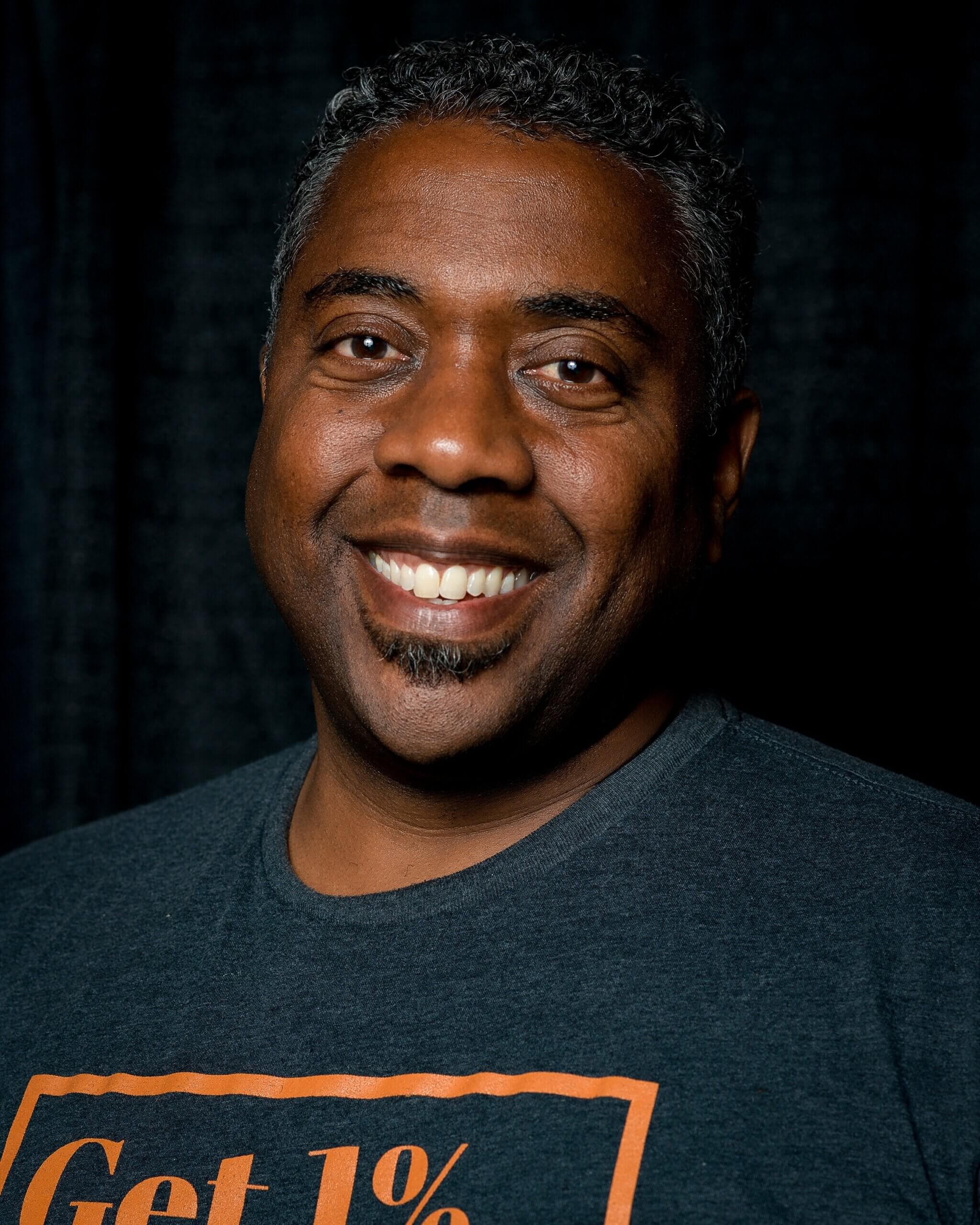
]]>Randy Wilburn is the founder of Encourage Build Grow, an agency that focuses on leadership development, communication and personal development for design professionals. In Randy’s words, he helps engineers and architects, environmental consultants, and planners “be better leaders, better communicators, and ultimately better people.”
[Note: This post contains affiliate links. Read our full affiliate disclosure here.]
Randy, who was featured in our first volume of “Black Entrepreneurs Speak Out,” is also a self-professed “serial podcaster” whose latest project has an especially local flavor. I Am Northwest Arkansas covers the intersection of business, culture, entrepreneurship, and life in the Ozarks of—you guessed it—Northwest Arkansas.
“I started that podcast here because I didn't know anything about this area,” Randy says. “When I left the company that I moved here five years ago to work for, I didn't really know anybody. I knew the gate agents at my local airport better than I knew people in town. So I said, let me figure out, let me learn a little bit more about this place.”
While “Northwest Arkansas” might not readily light up the mental map, this region near the borders of Oklahoma, Kansas, and Missouri is the home of retail stalwarts Walmart, Tyson Foods, and J.B. Hunt, as well as the University of Arkansas in Fayetteville, where Randy lives with his wife, Nicola, and their three kids.
A Family Tree of Entrepreneurship
Randy has always possessed an entrepreneurial spirit that blossomed from a foundation of family go-getters. A number of his relatives have run successful businesses, including his great uncle, who owned the first Black pharmacy in all of Western Pennsylvania.
Randy was also drawn to online business because of a desire for flexibility. Today his three kids are fifteen, thirteen, and ten—but ten years ago, when Randy began having designs on the online world, they were five, three, and a newborn.
“I had my hands full, and I wanted to figure out different ways” of working and making a living, Randy says.
He was also “never a big punch clock puncher. I don't mind putting in the time. But if I had to compare the two, I would love to do it on my terms as opposed to somebody else's.”
And so, in internet time and terms, Randy turned himself into a bit of a pioneer. Late in the first decade of the twenty-first century, he figured out how to put an email list together and offer services online. He and Nicola eventually spun up a number of companies focused on real estate, consulting, design, and even baby food companies out of their home.
Way back in 2008, they were even featured in a Businessweek article called “Mom-and-Pop Multinationals” for how they used virtual assistants—at the time still a cutting-edge practice—to grow their online businesses.

It was around this time that Randy came across Pat Flynn, who was also a member of the Internet Business Mastery group run by Jason Van Orden and Jeremy Frandsen.
“I've been around Robin Hood's barn” when it comes to online business, Randy says. “And I've always tried to figure out, okay, how can I really leverage this and create passive opportunities? And also just to leverage the online space to make life easier when it came to work? And so it’s just been a never-ending conquest to figure that out.”
Podcasting: Off the Ground and Into the Sky
Online entrepreneurship is the airspace in which Randy has been soaring for over a decade—and podcasting is the engine that’s propelled him.
“I've kinda followed that pathway to try to have a better understanding of how to run my business online, how to make my mark.”
He’s helmed more than six hundred episodes of a variety of shows, including a podcast for his old firm, Zweig Group, called the Zweig Letter, which is 173 episodes deep and going strong. He’s also been a guest on many other shows.
“And I got trained by the best”—a fellow by the name of Cliff Ravenscraft, who also gave Pat his podcasting wings.
Randy took Cliff’s Podcasting A to Z course way back in 2011. He had done some podcasting before that but “really wasn't certain about it. And Cliff really crystallized some things” for him. Through the course, Randy learned how to build his podcast episodes on a solid foundation “with a clear beginning, a clear middle, and a clear end, and in a way that I can kind of tell a story through whatever information is given to me.”
Randy started I Am Northwest Arkansas about a year and a half ago, and he’s already 83 episodes in. “It’s created an opportunity for me to kind of extend myself and have a better understanding of what the market needs, because I'm communicating with the market on a regular basis, through the podcast, through social media platforms.”
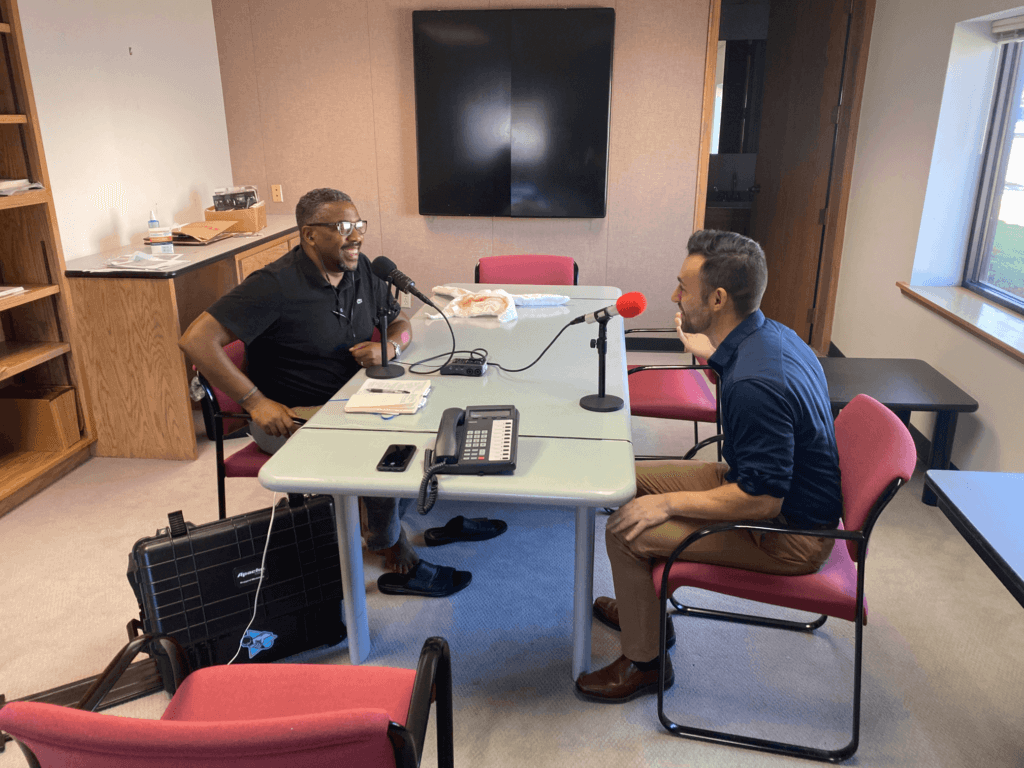
That communication has led to a number of growth opportunities, including partnering with local sponsors to help cover podcast expenses. He credits the niche nature of his audience—the “four-hundred-plus-thousand people that live in the greater Northwest Arkansas area”—a demographic that provides an obvious draw for local businesses that want to work with him.
Some of his sponsors have even been past interviewees. “I came back to them and they were like, ‘Wow, that show was great!’ And I said, well, there are other ways for you to be a part of this. And sponsorship is one of those.”
Beyond this local focus, the built-in economics of podcasting have also been beneficial. “The beauty of podcasting is that typically your podcasting audience tends to be a higher income bracket here in the United States. And that’s something that's never been lost on me.”
What Matters More Than Your Podcast Tech
In his decade-plus at the mic and behind the scenes, Randy has become a podcasting master in his own right. So it’s no surprise that he has a ton of great advice for other podcasters, especially those just getting started.
But maybe his most important piece of podcasting advice isn’t really podcasting advice per se—it’s just good business advice—wisdom he’s carried with him since the beginning of his online journey.
“You’ve got to build a list. You have to offer something that makes a difference for whoever your audience is. You have to find your tribe, and that's the one thing that has always stayed consistent throughout. Whenever I’ve developed a podcast, I've tried to find my tribe for that podcast and speak to them, with the understanding that I can't reach everybody. I can’t be all things to all people.”
Audience first. Find your tribe. Offer something that makes a difference. This is the core, essential stuff of any successful online business or project.
Podcasting is also about technology and process, factors that can be either exciting or overwhelming depending on who you’re talking to.
Speaking of technology, although he’s a self-professed audiophile, Randy swears by the AudioTechnica ATR 2100, which he calls “the gold standard of beginner mics.” He also has a Røde NTG2 (the same shotgun mic Pat uses in his studio) and a Zoom H6 for recording on the go (“The sound is amazing”), but the AudioTechnica is Randy’s podcasting bread and butter.
One thing Randy sees people fret too much about is sound insulation. For the record, when we spoke, Randy was in his insulation-free garage rocking his ATR 2100—and he sounded great.
The bottom line of Randy’s gear-light approach? “The barrier to entry for really good audio is not as high as you think it is. It's not nearly as expensive as it was before to get in the podcasting space, which is why I'm basically telling everyone, ‘You need to start podcasting.’”
Randy emphasizes that getting started and figuring out how the pieces of your podcasting system and process fit together takes time and legwork. But, he says, once you get into a rhythm and get your process down, it can be smooth sailing.
He figures that for each episode of I Am Northwest Arkansas, he spends “all of thirty-five minutes from start to finish editing, putting everything together, and putting it out and throwing it up on Libsyn and pushing it out to the world.”
“If you know what you're doing, once you learn it, the basics of it, the foundation of how to get good sound and how to qualify for your space and know what spaces are good, what acoustics are going to be like in any type of environment that you're going to be in, you develop that over time. That's not something that you're going to learn overnight. Then you stand a much better chance of putting out a good product.”
He’s currently creating an online course for his local public library called Think and Start a Podcast (a play on Think and Grow Rich, the landmark book by Napoleon Hill). Part of the impetus for this course was one way Randy sees many would-be podcasters holding themselves back: focusing too much on—yes—the tech that they forget to create a compelling product.
“If you don't have great content, I don't care. I don't care what device you're using to record your podcast with. I don't care what microphone you use. You can have fifty Heil PR 40s in your office. It’s not gonna matter because nobody’s gonna listen.”
Randy points out how the booming podcast space still has a lot of room to grow for those willing to create great content. The industry only recently hit one million shows, which still pales in comparison to the number of channels on YouTube.
“When people ask me, ‘I want to start a podcast,’ I'm like, ‘Do you have an iPhone? Great. Go record on your iPhone. Let's listen to that, and let's put something out.’”
So, if you want to get into podcasting, worry less about having the best of everything and more about putting in the work to create something great.
“At the end of the day, if you have a ton of shiny new objects but you can't put the work in, it doesn't matter anyway.”
COVID: The Silver Lining for Black Business Owners
When it comes to one of 2020’s most impactful phenomena, Randy doesn’t mince words.
“COVID-19 has just changed everything. I don't care who you are. Black, white, purple. It doesn't matter.”
But he’s equally quick to point out that the pandemic has had an outsize impact on Black business owners. This effect has been borne out in research by the Stanford Institute for Economic Policy Research showing a 41 percent plunge in active Black business owners (440,000) as of May 2020, a larger drop than any other demographic’s in percentage terms.
Nonetheless, Randy sees a chance for struggling African American entrepreneurs to embrace the potential of online business and digital marketing to stay afloat and even prosper in the midst of the pandemic.
“Now is the best time to think about, How could I take my business online and save it?”
He sees “an opportunity for several of those companies that have closed up shop, unless they've just totally gone bankrupt, for them to kind of pivot, to do an online marketplace. I think the online marketplace provides so many more opportunities than you realize, and that just enough people are not on there.”
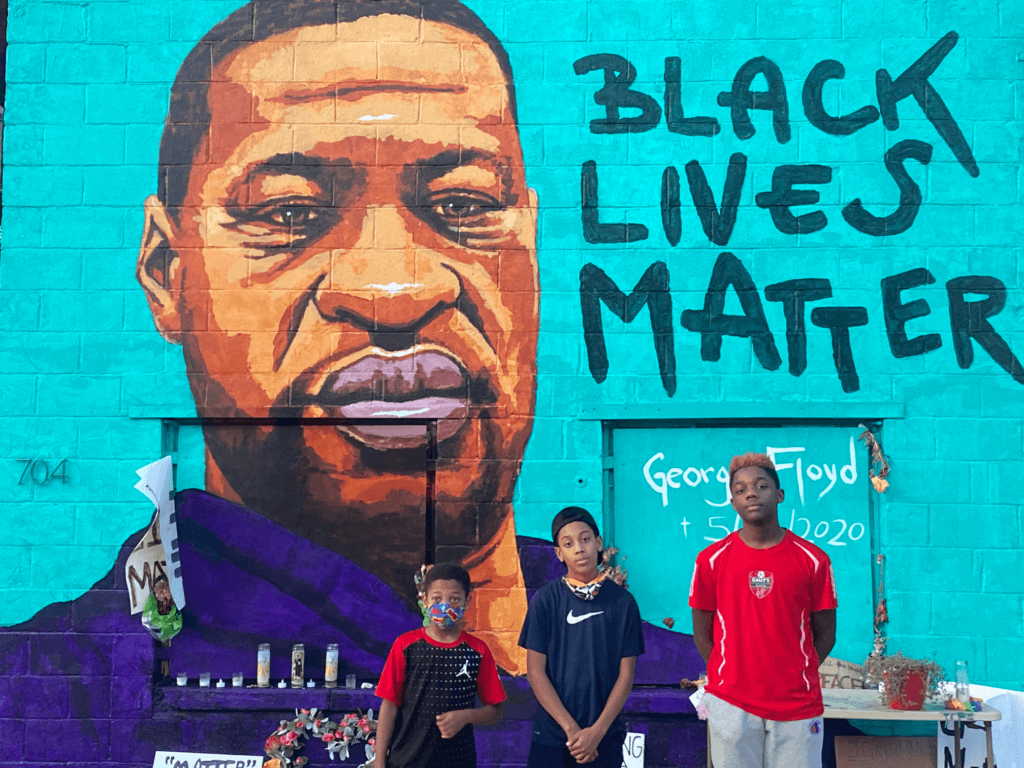
“As African Americans, we have some knowledge of online marketing and digital marketing, but we have never utilized it to the ability that it's available to us.”
As an example, he references the entrepreneurs that have quickly built online businesses making and selling masks. “They started out from nowhere… and these are all minority Black and Brown entrepreneurs that saw a need and said, ‘We're going to fill it.’”
Adventures in SPI Land
“I can't get enough of Pat,” Randy says.
He’s been an SPI Podcast listener “since day one” and has found himself inspired by more episodes than he can count—”Pat's had a gajillion great people on his show”—although some recent and not-so-recent shows featuring David Siteman Garland, Jacques Hopkins, and Jessica and Cliff Larrew have been especially impactful for him. In fact, the Larrews’ episode inspired Randy’s wife, Nicola, to start her own arbitrage-based business selling items through Fulfillment by Amazon (FBA).
Randy is also a huge fan of a number of SPI courses—and of courses in general.
“Build Your Own Brand is amazing. For anybody that is starting out in the online space, BYOB will give you the foundation that you need. You know what they say, is how if you build a house on solid ground, it won't falter. And Build Your Own Brand is a great example of that.”
He’s also learned from and recommends other SPI courses, including Smart From Scratch and Amp’d Up Podcasting.
“There's a lot of people out there in the online space that keep everything close to the vest. They don't share everything. They don't want to. It's as if it's all a secret, but it's really not. All this information is out there at your disposal. You don't technically ever have to take a course.”
So why take a course, then?
“To save you time, so that you're not going over here, you're not going over there. It's all right there in front of you. And if you’re like me and you have a hard time, because every time you see a squirrel you start looking around, then you need a good course to keep you grounded and to keep you focused.”
Randy’s devoured Will It Fly? and loves the companion course. “Superfans is amazing as well.”
He also credits Pat’s commitment to streaming daily on YouTube. “It's just been a testament to who he is. He's just been throwing nuggets over the bow. Every day is something new.”
“I tell people all the time, if you're trying to get started in this space, I couldn't think of a better place” than SPI.
Why You’re Never Too Old to Chase Your Dream
“Our time here on earth is—we don't know how long it is. Some of us can live to a hundred. Some of us can live to fifty. And every day is precious, I guess is my point. So I always tell people, if you still haven't gotten to the place that you want to be, don't give up.”
Randy’s hero is his grandfather, a man named Mal Goode. In 1962, at the age of fifty-four, Goode was a writer for the Courier, a Black newspaper in Pittsburgh.
That same year, ABC News was looking to hire its first Black network newscaster—the first on any network.
Goode was good friends with Jackie Robinson—yes, that Jackie Robinson—who Goode used to cover on his beat for the Courier. The Hall of Famer encouraged ABC’s news director to give Goode a shot. So ABC News invited Goode, along with about forty other African American candidates, to audition for the role.
“My grandfather knocked it out of the park. He beat out a lot of younger people for the job. He was fifty-four years of age, and he got his shot.”
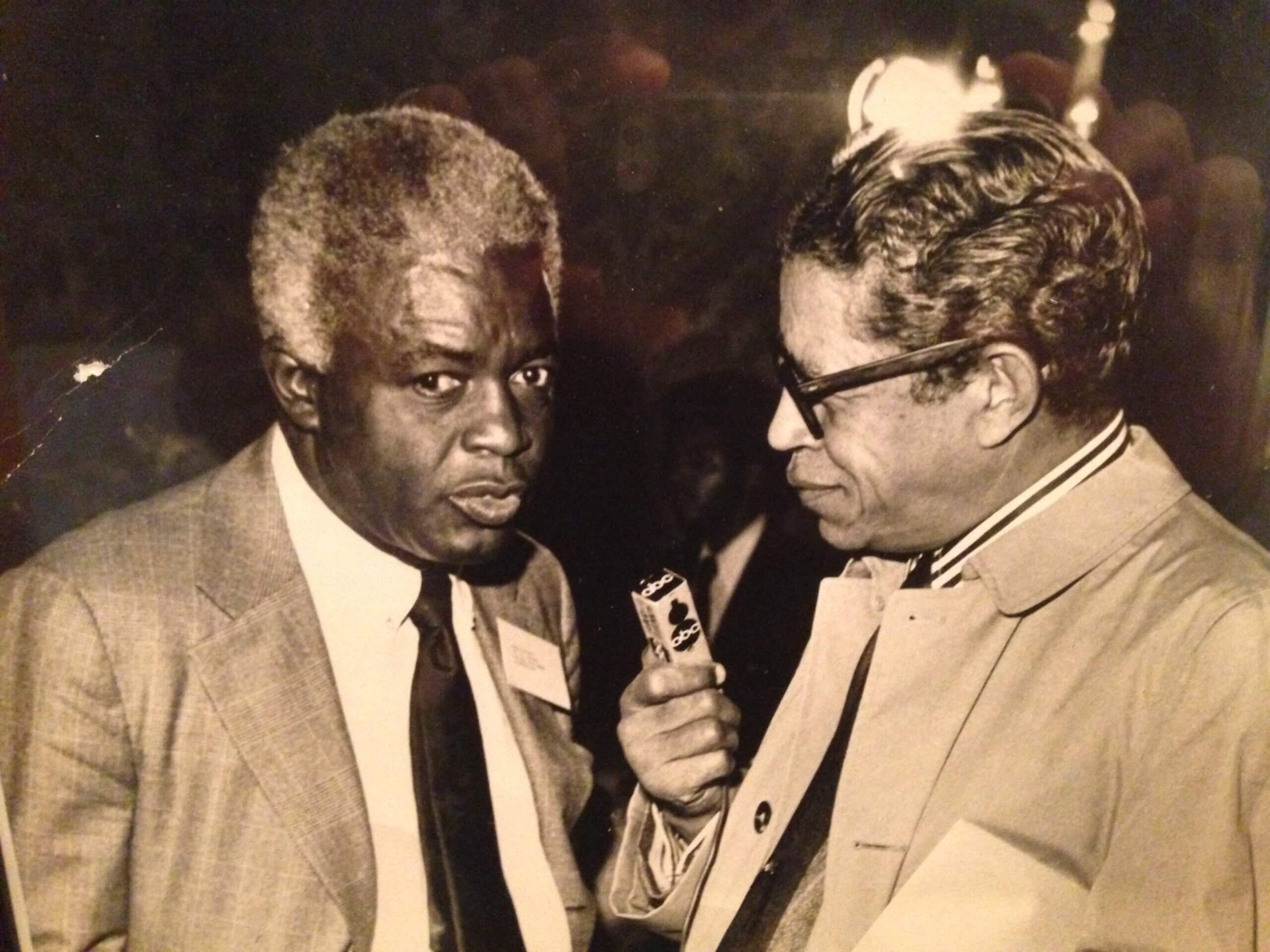
Goode went on to cover the assassinations of John F. Kennedy assassination and Malcolm X, the Poor People's Campaign march, Martin Luther King's funeral, and the Cuban Missile Crisis. According to Randy, he was also a mentor and friend to both Ted Koppel and Peter Jennings and a number of others who came through the ranks at ABC news.
“He wanted to do things at a younger age, and the doors weren't open to him because he was an African American. But he persisted, and kept pushing the envelope and pushing the envelope. And in 1962, he broke through.”
“At a time when people were not used to seeing African Americans on TV period, he was there.”
Learning how his grandfather got his break well into his middle-aged years gave Randy a crisp perspective on what’s possible whatever your age.
“If you feel like, Man, I still haven't met my calling, it's never too late to do that. And I think that doing something online creates leverage and creates an opportunity that you wouldn't necessarily get with a brick and mortar business. And I just think that if you learn to master this space, the sky’s the limit.”
His own experience as a serial podcaster and digital pioneer has only fortified Randy’s belief that “nothing is impossible,” especially online. He also nods to Pat’s own story of creating entrepreneurial lemonade from life’s lemons.
“You know, [Pat] talks about, when he got laid off from his architectural job and he had just been named the job captain and all that stuff. And then he just realized that, You know what, I have to be master of my domain.”
Home & Away
Find a need, then go serve it. “Simple,” maybe, like Randy says, but potentially life-changing, too.
“I think we all come to that place, you know, those of us that choose this path. We all come to that place where we’re like, You know what? I would rather just call the shots. And sometimes the shots are going to come up short, but sometimes I'm going to knock it out of the park, and that's when you can have some real success.”
Perhaps Randy’s most inspiring story of overcoming a seemingly insurmountable barrier came early on in our interview. This Boston sports fan was grilling him for tidbits from the seventeen formative years he spent in Dorchester, a suburb of Boston.
“I always tell people, ‘Never say never.’ I grew up in Northern New Jersey, and I always said I would never go to Boston. Hated the Celtics, hated the Red Sox, Yankees fan growing up, and definitely didn't want to have any part of Boston. But it took my heart and introduced me to my wife. And all three of my boys were born there. So I have nothing but love for Boston.”
Talk about knocking it out of the pahk.
The post Success Story: Randy Wilburn, the Seriously Serial Podcaster appeared first on Smart Passive Income.
]]>In this month's income report, I talk about planning for 2017 launches (including the Smart from Scratch relaunch) and reading biographies for inspiration.
The post My January 2017 Monthly Income Report appeared first on Smart Passive Income.
]]>Welcome to the first Income Report of 2017!
Here, I’ll be detailing line items from January 2017, including income sources and expenses. As always, I’ll also be sharing what’s been going on internally and what the plans are in the coming months.
If you’d like to get a record of all Monthly Income Reports dating back to October 2008, you can find them right here.
Thanks again, as always, for your support.
Now, let’s get started.
Important Goings-On in January
As with most people, I had a newly found energy and a ton of excitement as the calendar started fresh again. I was a little worried because my family and I had just returned from an Australian Christmas vacation, and usually when I come back from long trips I get jet lagged and don’t want to work for a while. This time, however, I recovered very quickly, and on day one of 2017 I was off to the races.
The first thing I did was realize that with all of the goals I had laid out for the year (nailed down thanks to a goal-setting course I took from Michael Hyatt), it was going to take some major planning to make it all happen, and I wouldn’t be able to do it all on my own.
My team and I decided that it would be beneficial for a few members of Team Flynn to fly to San Diego so we could all meet in person and lay out a detailed plan for the year (more on that later). Ideally this would have happened before the new year started, but we were all on vacation with our respective family and friends for the holiday.
They planned to fly in mid-month, and I was anxious for them to arrive. In the meantime, I started some new habits that would help me support my goals for the year.
First, I started waking up at 4:00 a.m. every single day. I initiate a morning ritual that consists of breakfast, coffee, reading, meditating, and journaling before I start work. When one of the kids wakes up, I stop. I usually get a good two and a half to three hours of uninterrupted work in during this time. It’s glorious. Ever since reading The Miracle Morning and interviewing the book’s author, Hal Elrod, I’ve been a huge fan of waking up earlier instead of staying up later, which is what I used to do.
In 2016, my day typically started at 6 or 6:30 a.m. I’d get through my normal routine and then the kids would usually get up. That shifted to a 4:30 a.m. wake up time when I started playing 5-on-5 basketball on Monday, Wednesday, and Friday with a bunch of other dads in the area who were also eager to get some exercise before the day starts. Now it’s 4:00 a.m. every day, no matter what day it is. Having these extra hours for myself and my work in the morning has been huge, and I’ve never felt so productive.
Within the first week, I was able to outline and record a brand new six-video “how to start an email list” tutorial (akin to my popular Podcasting Tutorial), which would set the tone for some heavy duty tutorial-style content that will be published more frequently this year.
That tutorial went live just last week.
Additionally, I was able to complete the rough outline for my new book during these morning hours. I’ll be starting the writing process very soon!
Biography Blitz
Another habit that I’ve been incorporating into my life since the start of the new year has been reading more consistently.
I typically read a book a month, but it was kind of random when I read. So, I’ve traded my T.V. and “random social media” time for reading, and I feel like I’m much better off for it! Now that I’ve been giving myself more specific times of the day to read, I’ve been reading a lot more, a lot faster, and, as a nice byproduct, writing better too!
Specifically, I’ve been diving into biographies.
In addition to the usual nonfiction, how to, and business books that I read, I made it a goal to read one biography per month in 2017. Currently we are within two weeks of February, and I’m already halfway through my fourth one.
I’ve already completed Phil Knight’s Shoe Dog (which I finished in two days; it was a super fun read!), then Benjamin Franklin and Steve Jobs, both by Walter Isaacson. I’ve found biographies to be extremely interesting, and I even got my seven-year-old boy to start reading the ones for kids, like this one. That way, we can talk about them together!
The Weekends
With the early morning hours working in my favor, as well as a change in the kids’ schedule that gives me even more time to work during the afternoons, I’ve set a goal to avoid work on both Saturday and Sunday to keep the weekend completely open for family time, and rewarding myself.
I used to let myself work on the weekends if I had to. The only consistent weekend work I’d do would be on Sunday night, which was dedicated to recording a batch of AskPat episodes. This year, I’ve cleared out my weekends entirely. This frees my brain and allows me to become more fully present with the kids. It makes me work harder during the week, too, because I know that I want to keep my weekends clear.
Beyond family time, I’ve allowed myself to earn a little reward if I do good work during the week, mostly in the form of playing video games. I love playing video games, and I’d stick that time in randomly during the week if I had some downtime. Now, I use the weekends for that specifically, and it’s been a nice break in between work weeks to cool down, and get some “me time” in.
And in case you’re curious about what game I’m playing, it’s typically one of two games: Star Wars Battlefield or a fun indie game called Rocket League.
The Team Arrives!
On Thursday, January 19, part of Team Flynn flew into a rainy San Diego for our planning session. We sought out shelter in an awesome conference room named “The Think Tank” in the brand new WeWork co-working space in downtown San Diego. Armed with Post-It notes and markers, we got to work.
We started with an annual review, as we always do. First, it was about what we accomplished and what worked really well in 2016. Then, we talked about the things that didn’t go well, including a few key moments during the year when “someone dropped the ball.” We reviewed those situations and made sure there were systems in put into place so that didn’t happen again. It was a great and honest conversation, and made me remember why I loved working with this team.
After that, we dove into planning for 2017.
We covered everything from ongoing content for the blog, podcast, and YouTube, to courses that we want to launch and even new affiliate promotions.. Plus, we also covered our upcoming physical product, which I’ve teased quite a bit over the past few months. I’ll be talking monthly about that project when we kick it off next month.
Every major project with a launch date had its own Post-It note color, and on a timeline from January to December marked on one of the walls (each wall, except the glass wall with the entrance, was covered with whiteboard material with a grid overlay), and we started placing these Post-It notes down based on when they would be launching.
We were able to make sure nothing was overlapping and there was enough breathing room between each, and then we worked backwards from the launch date to determine when we were going to start work on those projects, and what milestones we needed to achieve along the way.
This was a brilliant exercise that allowed us to make sure that at all times during the year we had things on the board. But, at the same time, making sure that it wasn’t too much work so that we could stay focused. We shifted a number of projects around and even removed a few based on what we felt was possible.
After two and a half days, we had our plan for the year, and it really fired us up going into February, starting with preparing and launching a brand new course that’s been in beta since October called Smart From Scratch®.
Smart From Scratch®
The big focus of January was the upcoming February re-release of my new course for beginners, Smart From Scratch. More than 100 students have already gone through the course, so it’s a big deal now that it’s coming out of beta and will be launched publicly this month on February 27.
If you’d like to sign up for the waitlist, click here!
The team and I worked hard to take all of the suggestions from the previous set of founding students and put them into action. We went through the entire course with a fine-tooth comb and refined as much as possible to ensure that the material was exactly what it needed to be for this launch.
And I couldn’t be happier with how it turned out!
I published a piece last week related to the course and why it was built the way it is, including some of the hard lessons I learned from a previous products that failed. Here are The 7 Lessons I Learned While Testing & Launching My First Online Course.
I look forward to seeing how Smart From Scratch performs. But for now, let’s dive into the income breakdown for this past month.
Full Disclosure: Some of the items in the list below are affiliate links, which means that if you choose to make a purchase through that link, I will earn a commission. This commission comes at no additional cost to you. Please understand that I have experience with all of these companies, and I recommend them because they are helpful and useful, not because of the small commissions I make if you decide to buy something. Please do not spend any money on these products unless you feel you need them or that they will help you achieve your goals.
Lessons Learned in January
After reading about all the greats that I’ve read in biographies so far this year, I came out of those books inspired, energized, and determined. But, on the other side of things, also very concerned.
I posted about this concern on Facebook the other day and it started a great discussion about what it takes to be one of the greats, and if it’s even worth it, and I wanted to embed that thought here for you as well, as I feel it’s definitely something that needs to be talked about.
Here’s that post below:
At this point in my life, at age thirty-four, with the success I’ve had so far, I know I can go bigger and deeper. There’s so much I want to fight for and so much I want to still do, but I wouldn’t want to do it at the expense of the relationships I have with my children.
I feel I’m doing well so far as far as keeping them involved, loving them every day, and being a great example for them as a present and caring father, but when I think about what would be written in my own biography (if that would be something worth reading), would I be willing to sacrifice my family for that? I hope not, and I hope there’s a way to have both. Maybe that’s what I become known for.
What do you think about this? I would love to hear your thoughts below.
Cheers, and as always, thank you so much for your support! Here’s to an amazing 2017 for all of us. I appreciate you!
The post My January 2017 Monthly Income Report appeared first on Smart Passive Income.
]]>