What would you regret more, letting go too early or holding on too long? There's no shame in changing direction when something stops working or isn't lighting you up anymore. […]
The post SPI 919: How to Start New Things Without Quitting the Old Things appeared first on Smart Passive Income.
]]>What would you regret more, letting go too early or holding on too long? There's no shame in changing direction when something stops working or isn't lighting you up anymore. Shame only starts creeping in when you stay stuck because you're afraid to make a tough decision!
If you have ideas pulling you in multiple directions at once, listen in on today's session to hear how I decide where my focus should go! I'll share and walk you through my Letting Go Matrix. This is a simple four-quadrant tool and exercise that helps you find clarity when your tasks and opportunities become overwhelming.
Should you double down or fully let go? Join me for this episode to figure out your next move and unlock your potential!
I'll also discuss the five questions you should ask yourself about every major commitment in your life. This will help you gain perspective and overcome the sunk cost fallacy and all-or-nothing thinking that might be clouding your decisions.
If you're like me, you need a system to cut through the noise and stay on track. Tune in for this episode to move forward with confidence!
You'll Learn
- Why squirrel syndrome is such a common problem for entrepreneurs
- Why clarity comes from commitment, not keeping your options open
- Figuring out what to focus on using my Letting Go Matrix
- Deciding when to optimize, double down, step down, or walk away
- The five questions to ask about every one of your commitments
- Overcoming the sunk cost fallacy and all-or-nothing thinking
- A simple exercise to audit your projects and gain perspective
Resources
- Check out my book, Let Go, if you haven't already [Amazon affiliate link]
- Subscribe to Unstuck—my weekly newsletter on what's working in business right now, delivered free, straight to your inbox
- Connect with me on X and Instagram
SPI 919: How to Start New Things Without Quitting the Old Things
Pat Flynn: If you have any ounce of entrepreneurial energy in you, whether you've tried to start something before and it failed, or maybe you are doing something and it's working for you, either way, this is a struggle that I know many of you have dealt with. And honestly, it's something that I've wrestled with my entire entrepreneurial journey.
So picture this. You're climbing a ladder. Making steady progress upward, when all of a sudden you see another ladder right next to you. This new ladder looks shinier, maybe it leads somewhere more exciting, and you begin to wonder, should I jump over? What many of us do is we try to straddle both ladders.
And the trouble is, you can't climb either one effectively, if you have one leg on each. You're kind of stuck in the middle, and going nowhere, and also putting yourself in danger. It's not the safest way to climb a ladder, to straddle two, and sometimes three or four. And this is the entrepreneur's dilemma.
And today, we're going to solve it together. I'm going to share my framework that I've developed over the last 18 years of building businesses from my very first automated website that still earns passive income today, to more recent decisions like moving on from the SwitchPod with my partner Caleb, which we talked about a couple episodes ago in episode 917.
And so by the end of this episode, I hope that you'll have a clear system for knowing when to let go. Because that's reallywhat helps us move forward? It's not just what to say yes to, it's also what to say no to, when to optimize, when to step back, and also when to double down. So let's dive in.
And I want to take you back to 2008. A lot of you have heard this story before, but I'm going to share it in kind of a different kind of way. Because back then, I was laid off from my dream job as an architect, you know this, but There's a part that I never really talk much about, and that is, even after I started making money with my website, Green Exam Academy, I started selling a PDF file that had all the information anybody could need to pass the LEED exam.
LEED again stands for Leadership in Energy and Environmental Design. It was helping people pass a very difficult exam, one that I really struggled with myself. I built a website, I created the study guide, and I sold it. And I started generating revenue. This was back in October of 2008. $7,000 in that first month, which was insane.
$9,500 in November, and $12,000 in December. And it kept going up from there for a couple years, and then it kind of steadied out. And then I started SmartPassiveIncome.com, where most people know me from now. However, back then, October, November, and December, with those numbers I just shared, I was still emotionally clinging to my old career.
I remember spending hours updating my architecture portfolio and my resume, and I was even applying for jobs that I didn't really want, all while my online business was starting to take off. I was literally standing between two ladders. One foot in the traditional career world, right, climbing the corporate ladder, and one foot in entrepreneurship.
You know what happened? I couldn't climb either one very effectively. And it was funny because when I made the conscious decision to fully commit to entrepreneurship, to fully step onto that ladder to completely let go. Everything changed. I think my revenue doubled that month to $28,000 a month and then it tripled.
But here's the key thought. I didn't just abandon architecture. I made a strategic decision based on data, results, and where I wanted my future to go, where my energy was. And I had this thought of, well, I put so many years into architecture. My parents paid my way through college, and I was super grateful for that.
Would this be going against their word and against their support? It felt like that. And those were the stories that I was telling myself. And this taught me my first lesson about letting go. Clarity comes from commitment, not from keeping all your options open. So I want to introduce a framework, or sort of a matrix for you.
A lot of you know that I like my matrices. If you've read my book Let Go, you'll notice that there are some matrices in Will It Fly? Are there matrices in Superfans? I'm not exactly sure. I don't think so. But there is a pyramid of fandoms. So I do like structure and framework and try to bring in my little architecture notes here and there in my work.
But anyway, this is the Letting Go Matrix. So over the years, this is something that I've created. It's a simple framework, and it helps you decide what to do with any project, business or commitment in your life. And you can use this at any time you can, maybe after you hear this, you can pause and start to think about your own commitments and the things that you're doing and where your time and action is being spent, but here are the four quadrants, quadrant one, optimize and automate, right?
These are the things that are high impact. You enjoy it, but it's taking too much of your time. This is where you want to then optimize and automate. Quadrant 2 are for those high impact things that you love that deserve more of your attention, that want more of you, and you want more of it. That's where you double down.
That's the quadrant number 2, doubling down. Quadrant 3 Are your strategic exits. You're having a low impact in that space, but there's value to be preserved or transferred. And then quadrant four is to just completely let go, right? Low impact, it's draining your energy. It's time to move on. It's not even worth trying to figure out how to move this elsewhere or evolve it. It's just, let's just move on. That's the complete let go.
And the magic isn't in the quadrants themselves. It's honestly in assessing where each of your commitments fall and then taking decisive action. So let me go over those quadrants one more time. So optimize and automate. These are the things that are high impact.
You enjoy it, but they're taking too much of your time. You have other desires. You have other things that you want to do and put your time into. Well, you optimize and automate these things that you want to keep because they're high impact. Number two, the doubling down. High impact. You love it. And it wants more of your time.
This is where Quadrant 1, when you figure out which those things are, you can gain some time back to put into Quadrant 2, doubling down. Quadrant 3, strategic exit. These are your low impact things that have value, but they're not really energizing you anymore, so you preserve what it is that you've created or you've transferred it.
And Quadrant 4 is the complete letting go of things. I've done that with a few software ideas where it was low impact, a struggle, draining my energy, and I gave it X number of months to work on. At which point I decided that I didn't want to do it anymore. It just, I had to let go.
So let me give you a perfect example of quadrant one in action.
So Green Exam Academy, right? My very first online business. It was making great money. I mean, we're talking six, nearly seven at one point figures annually, but by 2010, I was spending 20 to 30 hours a week. on everything from customer service, updating content and managing the entire like the hardest thing about that one was there was constantly things that needed to be updated because the exam kept being updated and my heart wasn't in that world anymore.
I was actually with Smart Passive Income at that time after a couple years was about a year and a half into Smart Passive Income and I loved it. Loved, loved, loved teaching what I learned setting up Green Exam Academy. I was getting invited to different places. I was getting onto podcasts. I was starting my own podcast and I wanted more time for that.
So, I had a choice. Keep grinding on Green Exam Academy, something that was working but consuming my life, or find a way to optimize it so I could pursue new opportunities. And I chose optimization. I wanted to lean more into Smart Passive Income. So, here is exactly what I did. I hired a virtual assistant to handle customer service.
So, this was actually a free trial. Overseas customer service, virtual assistant to handle all the emails. I created evergreen content that didn't need constant updates. I had built automated email sequences to drive people to those things that didn't need constant updates. And probably the best thing I did was I actually connected with a company that was way more active in updating content and I just became an affiliate for them. So I started linking to that other site knowing that they would stay up to date and I could generate revenue, almost the same amount of revenue for a period of time, rather than selling my own products. Now I sold my own product for another year after this point because the content in that product was still up to date, but as soon as I needed to update it because there was another version of the exam that came out, I converted everything over to affiliate marketing for this other company.
And just continue to generate that amount of revenue. And it's been that way ever since. And I had just set up systems, everything from as soon as a person gave me their email address, I sent them over to the other website and pointed them in the right direction, showed them which products they should get, no longer my products, but somebody else's.
And again, 18 years later, this business has now generated passive income every single year, every single month. I haven't touched it. And it still brings in revenue. And that is the power of strategic optimization, also the power of passive income. But that could not have happened at first. I had to get involved, I had to be active, and the passive part of the income comes as the very last step.
But this, again, is an example of not abandoning something that works, it's just you make it work without you. And that's possible sometimes, especially when it comes to this kind of thing, but other times, it's not.
Now, I'm going to share a more recent example, me and Caleb's decision to move on from the SwitchPod. If you listened to episode 917 a couple episodes ago with my partner Caleb Wojcik, you heard us talk about this transition. That was actually one of the most fun episodes I've had in a while. It was a perfect bookend to our story.
How we started and invented a product in 2017, launched it in 2019, generated a lot of good money and revenue, but also a really great product. People still tell me they are still using their original SwitchPod years later, which is so cool. But over the years, we put it to a more automated thing. We did optimize it as much as we could.
And then we realized that it was either something that was just going to slowly die over time if we didn't put any more energy, or we could transfer it to somebody else. So, this wasn't a Quadrant 4 situation where we just kind of walked away from it. We had this asset, we had inventory, we had a product, we were the number one, or not number one for tripod on Amazon, but we were up there.
But of course we had the buyer slot whenever a person typed in SwitchPod on Amazon, and that was worth something, and we had this product, it was selling every day, it's just we didn't have our heart and soul into it anymore, Caleb had twins, I had other businesses. Deep Pocket Monster stuff started taking off. And so we asked ourselves, are we the best people to take this to the next level, or would our energy be better spent elsewhere?
And it was very clear to us that we needed to potentially find a person to take this from us and take it to where we believe it could go, just not because of us. We got it to where it was, and it needed somebody else to get it to where it's going. And sometimes letting go isn't about failure, right? It's about recognizing that your season with something has ended, and that's okay. That's totally okay. I think it's great that it made it easier that Caleb and I did that together, you know, you can't read the label when you're outside the bottle and we had each other to feed off of in terms of where we wanted to go, how things were, where we wanted to put our energy, and what we would want to do with this thing.
So, of course, as we mentioned in episode 917, we sold it! Ta da! If you didn't know that, we sold the business. SwitchPod is no longer ours. We transferred it over to somebody for some sum of money, and they are going to take it to the next level. Hopefully. But we'll still be there as advisors. We worked out a deal where we're still on as advisors and helping out for a transitional period.
So it's been really neat to see, and it's been bittersweet. You know, it is the product that I absolutely loved getting my name behind and getting my hands dirty with. I'm literally looking at a SwitchPod right now in front of me. I still love it. I still use it. I still support it. I still recommend it.
Check out SwitchPod.co if you haven't already. And I'm just excited to see where it goes. But this was a transfer and it was great and it felt good. And it just opened up so much more time. And even though it didn't take a lot of time, that's the other thing about this. Like you might find that there's a lot of things in your life.
You're like, Oh, well, it doesn't take that much time. Sure. But it still takes up brain space. It's still time being taken. And you have to ask yourself, where might that time, attention, be better spent? Or what would I do if I didn't have to worry about this at all anymore? We don't often realize that those small things do add up quite a bit over time.
Now, here is a another framework, if you will. These are five key questions That I want you to ask yourself as you might be thinking about the things that you're committed to, the work that you're doing, and the question, I mean, it's like, how do you actually make these decisions on what to do? So here are five questions that you might want to ask yourself about every major commitment that you have.
These are ones that I ask myself as well. So question number one, what is the opportunity cost? What is the opportunity cost? If you were to spend 10 hours a week on this thing, what are you not spending those 10 hours doing, right? What am I not doing with those 10 hours? This goes along with a phrase that I often say, which is when you say yes to something, you also say no to something, or when you say no to something, you're recommitting to something.
So if you spend 10 hours on this thing you're thinking about this week, what are you not spending time on? What's the opportunity cost? Question number two. Am I the best person to do this? Am I the best person to do this? And just because you can do something doesn't mean you should keep doing it, and I don't want you to think like, just because there's quote unquote better people out there to do it, that you shouldn't be doing it.
Because being the best to do something might not necessarily mean you know how to do it all yet, but it involves your heart, your soul, your commitment, your time, your desire, your goals on the other end of this. So don't just think like, okay, I'm not the best person to do this, but this is something that is something you need to ask yourself because there might be somebody else that is on your team, somebody else that you can hire that can take your time away from that and ask yourself, okay, if I were to get some time back, if this thing takes me five hours a week to do, and if I, if I no longer had to do that, but somebody else did it and potentially did it better, what would that open up for me?
This, I found out Incredibly fast. Once I started the Ask Pat podcast, because that came out in 2014. This was six years after the Smart Passive Income podcast, the podcast you're listening to now. Ask Pat no longer is a show that I published to, although it still exists, there was over 1,200 episodes of that over the years.
It was daily five days a week for several years. Anyway, when I had the desire to create a second podcast, there was literally no time for me to edit and produce my own show a second time. 'cause I was literally doing everything for this show. No longer do I do that, but back then I was, and the thought and idea of creating a second podcast was just so foreign to me until I spoke to John Lee Dumas.
John Lee Dumas, who has Entrepreneurs on Fire still years later now, 15 years later, is doing a daily podcast, which is crazy. Anyway, he and I went to Starbucks. He told me how he created a system and optimizes so that he can create a daily show. And it wasn't him editing it, it was somebody else. And so that really encouraged me to explore it or at least experiment with somebody else touching my podcast.
But it wasn't this podcast. It was a new podcast, so I felt a little bit more okay with that, and I found out very fast that not only could other people do these things like editing podcasts faster, they could do them better. And I was like, whoa, can I apply this to Smart Passive Income? And oh, yes, I did.
And I found people to edit and create and produce this podcast much better than I could. And I could spend more of my time building relationships, getting more creative, writing more. This is where some of my books came in because I finally had time to do it. So even though I loved editing my podcast, was I the best person to do it?
Probably not. And then I realized, wow, there's people out there who can do it faster and better than me. So question number one was what is the opportunity cost? That was question number two. Am I the best person for this job? Question number three, does this align with my current goals and values? So, what excited me five years ago might not be what excites me today, and that's normal.
Think about all the things that you're working on these days, the things that are taking up your time, things that you are focused on, and audit yourself with each of them. Are you still as excited about these things since the day you started? And this is great, because if you're not, you can question it.
It doesn't mean, again, you let go of it completely. Just make sure that you either find your way back to that thing that's exciting, or maybe you do find somebody else, or maybe you do let go of it, as we talked about in The Matrix before. Question 4. Can this be systemized or delegated? Before I let go, can I optimize it to run without me?
And question number 5, this is a big one. What would I regret more, letting go too early or holding on too long? Oh, that's deep. So this one's about kind of your gut and long term vision more than data and logic, right? What would you regret more? Letting go too early We're holding on too long. Now you don't need perfect answers to all five questions.
These are just guiding questions, but if you're honest with yourself, the pattern will become clear. And remember, there's no shame in changing direction. The only shame is staying stuck because you're afraid to make a decision. Here are some common mistakes that people make when we get into these exercises, when you start asking yourself these questions, when you start auditing the things that you're doing, right? Number one, the sunk cost fallacy. This idea that you've invested so much time and money into something that you can't quit now, because it would be a quote unquote waste. Now look, the time and money are already spent, and trust me, I know what it's like to feel the sunk cost fallacy, because remember, I put X number of years into schooling for architecture.
I was in the workforce for architecture for so many years. My parents paid me to go to school for architecture, and I feel very blessed about that. So even more, it felt like I was going behind their backs by wanting to become an entrepreneur. 'cause, yeah, I maybe could have become an entrepreneur before I decided to go to college.
But the truth is I wouldn't have even had that thought because it was college and my experiences and my time at the workforce and the circumstances in 2008 that led me to that. And of course the first business I did was related to the work that I did, that I spent my years in college learning about.
So, the time and money are already spent. The question is, what is the best use of your future time and money that has not already been spent, that is in the bank? Mistake number two, the all or nothing thinking, the sort of binary approach that we as humans, this isn't just you or me, it's all of us, all humans think in a very binary kind of way.
Chip and Dan Heath wrote about this in their book Decisive. But the thing is, you don't have to choose between full commitment and complete abandonment. There is a whole spectrum of involvement levels. And number three, making emotional decisions. I mean, like I said earlier, your gut is important, and having conversations with others is important as well to help you read the label from outside the bottle.
But whether you're holding on out of fear or letting go out of frustration, emotion driven decisions rarely serve you well. A well rounded decision making progress is important, one that both includes logic and emotion and outside perspective and some time for you to think about. A lot of times we make these decisions on a snap emotional moment and we often regret them or go a little bit too dramatic in the process.
So use the framework, trust the process. So here's what I want you to do right now. If you wanted to, take out a piece of paper and list your top five current commitments. These are businesses, projects, side hustles, whatever is taking your time and energy. And for each one, ask yourself those five questions that I shared.
And I'm going to share those questions for you one more time. What is the opportunity cost? Am I the best person for this job? Does this align with my current goals and values? Can this be systematized? And what would I regret more? Letting go too early or holding on too long? And be brutally honest. Then place each commitment in one of the four quadrants of the strategic letting go matrix.
Remember that matrix includes optimize and automate, that's one. Doubling down, that's two. Strategic exit, preserving and transferring, that's quadrant 3, and a complete let go, that's quadrant 4. Now, you might discover that something you thought you needed to abandon just needs to be optimized. It just needs a little bit of love.
Maybe it's not even loved by you. Or you might realize that something you've been forcing yourself to continue is ready for a strategic exit. So remember, the goal isn't to do everything, it's to do the right things well, and sometimes the most strategic thing you can do is let go. Sometimes it's to transfer and preserve.
Sometimes it's to double down. Sometimes it's to automate and optimize. So I hope this episode helped you. I wanted to offer you something kind of punchy today. Something to make you think, something to help you clear some time for the things that I know you want to do, or maybe you realize that the things you are doing are amazing, deserve more of your time.
And you can cut out the weeds to focus on the plants that will bear fruit with the soil and the sun that you preserve. I don't know. I lost the analogy. That probably means that the episode is over. No, thank you so much for listening. I appreciate you. And please, there are some amazing episodes coming up.
The next one is incredible. An interview with a creator who is using social media in a way that you are going to want to understand. And he breaks it down for us, and it's just incredible. And I found out during that episode that I actually have come across his work before without even knowing it. And maybe you have as well.
So make sure you hit that subscribe button, follow the podcast, thank you so much, and I want to wish you all the best with your recommitment and doubling down or your transition or you're letting go or wherever you might want to go from here because what got you here won't get you there.
And I hope you get there. We want to help you get there. Cheers. Take care. Have a good one.
The post SPI 919: How to Start New Things Without Quitting the Old Things appeared first on Smart Passive Income.
]]>Big vanity numbers don't always build big businesses. That's why going viral should never be our main goal online. Instead, it's all about fostering superfans and redirecting the attention we […]
The post SPI 918: Going Live to Supercharge Your Audience Growth (with Mariane Cresp) appeared first on Smart Passive Income.
]]>Big vanity numbers don't always build big businesses. That's why going viral should never be our main goal online. Instead, it's all about fostering superfans and redirecting the attention we get toward meaningful interactions!
That's why I'm chatting with Mariane Cresp today. She's an absolute expert at using her reach to inspire a deep sense of community among her followers. I'm especially impressed by how she leverages live streaming and tools like Ecamm Live for next-level connection with her niche audience, all while being authentic and relatable. [affiliate link]
Listen in on this episode because Mariane shares an insightful look at her social media strategy. She explains each step of her process, from getting targeted views to bringing people into her product ecosystem.
As it always is, showing up consistently and honestly is the key to Mariane's success. She shares how to avoid getting overwhelmed as a beginner, how to keep going on the boring days, the importance of taking imperfect action, and why you shouldn't get stuck in the learning phase.
From handling trolls to building on-camera confidence, there's a lot more we cover today. Tune in for my incredible chat with Mariane!
Today's Guest
Mariane Cresp
Mariane Cresp is a content creator who has grown a multi-platform audience of over 136,000 people by sharing simple, real-life planning and creative routines. Through videos, livestreams, and behind-the-scenes content, she invites her audience into her everyday planning process while keeping things honest, imperfect, and relatable. Mariane creates digital planner tools used by thousands worldwide and hosts the podcast Between the Pages, with Mariane, where she explores gentle productivity, creativity, and building sustainable everyday routines.
- Find out more at MarianeCresp.com
- Connect with Mariane on YouTube, Instagram, and LinkedIn
- Listen in on the Between the Pages, with Mariane podcast
You'll Learn
- Why large vanity numbers are becoming a problem for creators
- How to nurture a community of followers instead of chasing viral moments
- The funnel from social media discovery to superfan and customer
- Leveraging DM automation to collect email addresses on Instagram
- How to supercharge your audience building with live streaming
- Being consistent and taking action, even on the boring days
- Why you should take imperfect action and learn as you go
Resources
- Check out Ecamm Live to start live streaming like a pro [affiliate link]
- Subscribe to Unstuck—my weekly newsletter on what's working in business right now, delivered free, straight to your inbox
- Connect with me on X and Instagram
SPI 918: Going Live to Supercharge Your Audience Growth (with Mariane Cresp)
Mariane Cresp: It's a wonderful feeling to have the virality get the views, but at the same time, it's important to know why did it get so many views and then take the essence of that and not think that, yeah, you've made it, because unfortunately viral videos, as it's proven for me, doesn't always equate to a return on your investment and on your time. But It's the top of the funnel you got eyeballs. Now, what do you do with it? because we've seen it, that people have millions of followers, but they don't have the community that will carry you throughout the years So it's nice to have, but it's not the end all and be all. And you have to know how to use that information.
Pat Flynn: There's a big problem I'm seeing in the creator space. And this is a problem that's always been here, but I think it's becoming more and more prominent. It's the problem of large numbers. You feel like you need large numbers to succeed. And of course, all of these platforms are built so that we have more followers, more subscribers, more engagement, that of course helps the algorithm.
And that's what we see as success. The bigger the numbers, the more successful we are. But that's actually not true. What if I told you actual success wasn't about the size of your following, but rather the loyalty within that following that you have? And I think inherently we all know that's the case, but we still get jaded and faded over the numbers.
Well, I have an incredible success story to share with you today. Mariane Cresp, who is a organizer, a planner, who uses social media. She doesn't have a giant following. She goes live. She just does these things that has built an incredible fan base. She has superfans lining up for her products, her PDF, little organizer inserts, and she's built an entire business around it.
And I'm happy to share Mariane and her story with you today. And we get right into it, the tips and the strategies to help you grow and not have to worry about growing to millions. But what if you just had those thousand true fans? That's what this is about, and here's Mariane.
Mariane, welcome to the show. Thank you so much for being here.
Mariane Cresp: Thank you, Pat. Thank you so much for having me. Really, really honored and appreciate you spending time with me today.
Pat Flynn: Oh, my pleasure. I'm excited to dive into your story. I know you are in Australia and you are doing some amazing things on Instagram. You've recently started a podcast.
What is most exciting to you today? What's got your energy flowing these days?
Mariane Cresp: I think what's exciting for me is building my community. I shouldn't really say I've been dabbling in content creation because I have been doing it for a few years, but it's, I think 2026 is building that relationship that I have created for the last couple of years and knowing the impact I have.
In my head, I still think I'm, you know, small and little content creator, but when you get comments saying this is what I needed to hear today. Thank you so much. And knowing my audience is similar to my own journey, knowing that you've been heard and you've been seen and that it's your turning up and showing up is enough.
That's what I'm excited about. And so I'm nurturing a nice little community that I hope will become a bigger community.
Pat Flynn: I love that. Before we get into your origin story, which I'm curious about, I want to continue off of what you just said. So, 2026 being about community, you've been on Instagram since 2012, I see.
You've been in the game for a while as a creator, but what is now different to you when you create, when you think about the community? What's different than before?
Mariane Cresp: I think what it is, is through the years where I've shown up through the challenges that happened as a content creator, as well as a mom, a wife, I have two boys, a younger one, 17 year old, is on the autism spectrum.
So trying to juggle all of that, what I've found is by showing up, I'm learning lots of new things along the way. And so, I have data now, and so, which means I can go back and have a look through my own experience of, they're not really failures, are they? Because I can learn from them. And so what's worked, what hasn't worked.
And so now I can actually go, ah, okay, I tried that, that didn't work. And so let's go and focus on this side of things where I am gathering those views, those engagement. So even though I've been. Doing it for a couple of years, it is only now, and I think the opportunity is there for me to really grab it and run with it and see, and I'm excited to see where it'll take me.
So through my own learning along the way, I'm discovering that I do have the tenacity to make a big go of this, even through the challenges that one faces as a content creator.
Pat Flynn: I love that you said that. I think that's a really important lesson for everybody listening, especially those who have recently participated in the 30 Day Video Challenge.
It's their first time kind of being consistent, and they're not, you know, a lot of people aren't really seeing explosive views. I mean, there's some people who are, but others will have to realize that over time you build this, like you said, a data set of what works and what doesn't, and, you know, certain videos all of a sudden start to grasp attention.
Do you have any recollection of videos that during your journey just like exploded and when you analyze them, what do you decipher from that?
Mariane Cresp: So I have had a few viral for me reels on Instagram, as well as a few videos on demands on YouTube. Again, you know, viral for me. What I've seen from those and what I've learned from those is it's wonderful feeling to have the virality get the views, but at the same time, it's important to know why did it get so many views and then take the essence of that and not think that, yeah, you've made it, because unfortunately viral videos, as it's proven for me, doesn't always equate to a return on your investment and on your time. But for those ones that I've seen that have come through for me is It's the top of the funnel for me, so it's not the thing that might nurture your audience or convert your audience if you know, and those of us who have products or services that sell, but have a look at those and take that for what it is, is you got eyeballs.
Now, what do you do with it? So, don't just sit on there and go, hooray, I've, you know, I've made it, I'm viral. So, because I know a lot of content creators want the million views or the thousands and hundreds of thousands of views, but it's what you do with it that's really important because we've seen it, that people have millions of followers, but they don't have the community that will, as you say, you know, your true fans that will carry you throughout the years that will be there who are hanging on. What are you offering next, Mariane? Where are you going to be next? I'll be there. So it's nice to have, but it's not the end all and be all. And for me, as you said, I just, I've been doing the, your 30 day short form video challenge. And for me, it's a little bit outside of what I show on my platforms that I'm on.
So it's skipping 100 skips a day. So they are not getting the thousands of views. However, the people that are watching are. Becoming true fans, because then I'm inspiring them. I'm seeing that it's, it is doable, whatever their goals are, or, and then they can replace the skipping with movement or being consistent with their journaling or meditating or whatever wellness and self care that they have the goals for 2026, a lot of us new year's resolution.
So it is wonderful to have, but you have to know how to use that information.
Pat Flynn: I think this is such an important lesson because most of us get so jaded by the bigger numbers and that's kind of what we want. We see other people do it and we get jealous very easily, but I would much rather have a thousand true fans than tens of millions of people who find a video, then leave and never come back.
And this is where we see the example of the creator who has, like you said, millions of followers and they can't even sell a t shirt, you know, they sell like 30 of them and then they're upset and they're like, why did this happen? Versus the other creator who has just hundreds of followers who are doing extremely well because each of those followers care and they're superfans and they are dedicated and they are providing feedback, they're in the community like you said, and I love that even though you're skipping videos that you're doing for your challenge aren't getting the views, it's getting the relationship stronger between you and your audience. And that's really what really matters in the end. And I think that's a huge lesson. I also love how you're already using a lot of business talk here. And I want to dive into that even more. You had mentioned top of funnel, which is what social media is great for.
But tell me about your middle of funnel and bottom of funnel. What is that journey like ideally for somebody who finds you initially on social media?
Mariane Cresp: So I use Instagram, well, I went on Instagram and YouTube, I think at the same time, you know, just showcasing, I actually didn't start my content creation journey or entrepreneurship journey as a business.
It was just really showcasing my planners, my planning system as a homeschooling mom, you know, managing the household. And so I already started somewhere where I enjoyed the process. So we always talk about, you know, make sure you have the passion for what you're doing or creating, because there's going to be middle, boring bits that you go, Oh, I have to create another content.
I have to, you know, study my analytics. And they're not the sexiest of things to do, but it's part of the process. So start with something that you're already going to enjoy, even if no one is watching, and sometimes no one does when you post something and you get the zero views or, you know, seven views.
So Instagram is where aesthetically pleasing flat lays of my planner spread, my desk, the beautifully embellished planner pages and the stationery I use. They're the eye candy. So that's my top of the funnel. People go on there. Now people can go on there and then follow you and then that's it. That's as far as they go.
But then it's important that the next set of content that I make is nurturing. How do I use what I have brought you in with the eye candy? How do I use that in my real life that will relate to you? Because we always talk about what's in it for them, what's in it for our viewer, what's in it for our customer.
I don't care that you plan, Mariane, what do I, what value do I get out of it? And so the nurture part of the funnel also as we go down is giving them those tips, those values, things that can walk away with now and not feel like, oh, I can only get value from her by when I buy something, or I sign up for something.
So they stay for those. And then I convert them, make sure that I'm giving my freebies, my lead magnet, get their email. So everyone talks about making sure you get started on your email list so you can take them off the rented space of Instagram and YouTube because we don't own our viewers email list.
And then that's where I, again, further the relationship. I show up, you know, every week, most weeks, sometimes we're humans, we miss weeks, sometimes here and there. And then that's when I talk further of, Hey, if you're enjoying what I do, I also have this, and did you know about this? And then tell them as well, where I'm going to be at.
And so it's like an invitation to, you've signed up, which means, you know, you're interested in what I'm talking about, and so then that's where the conversion happens along the way. But it's not just, you know, you'll get your one offs, but it's the, the building of the relationship that, and to be trusted, that, you know, they say that it takes seven to eleven touch points for someone to trust you.
And so, and sometimes it'd be more, sometimes it's less, but it's really, and I guess that's where the community and what I'm excited about for 2026 is. Knowing what I know and sort of like dabbling in it here and there and not being as strategic as I should have been, you know, the lessons learned is what can I do now? Because that's what we're going to do is like, okay, let's start from now. We've made mistakes. We'll learn from them. But how can we move forward from here?
Pat Flynn: For sure. I love the Top of Funnel. You on Instagram. It's eye candy. Let's grab their attention. That's like job of the Top of Funnel.
Like let's just get their attention. Then you can keep them into your ecosystem with the value. It's like, oh, Mariane has something here for me. This, this matters. This is relatable. Now it's not just the millions of views on this amazing post it note strategy that you have, but it's the, here's how it applies to my life.
And now I'm in, and now I'm curious, and now I'm seeing other people like me here as well. And then when you say you bring people into an email list using a lead magnet. Can you share some specifics on what kinds of lead magnets are working really well for you and how you get them from Instagram or other platforms to an email list?
Mariane Cresp: Yeah, so I've created through my own planning journey, planner inserts, PDFs and downloadable that I created for myself. You know, not even thinking that anyone would use them because there's of course, so many different planners, books, notebooks, diaries, journals, that's already out there. So I just created what was working for me.
And so of course, when I showed it, would you get that, and that's how really the business side of the content creation came into. And so, throughout that, I would make things along the way that I think others might find this useful and from my own learning, that it is important to have a value system. You give me your email, I'll give you something back.
So I've given what I call the Calm and Clear Starter Kit, where it's just a guide to how to do a brain dump, how to categorize your thoughts into a way that, we'll look at things that matter right now. So there's value in it. I mean, of course, others create lists and all that, but there's something that they can use.
And the thing is, I have videos on YouTube that show you how to use it. So then there's that synergy between, it's not just a, here you go on your own. Now, work it out yourself. It's use this, come over to my monthly brain dump session where we will go through it and then that way, it's not just what's in front of them, but it's also seeing other people in the chat and the community learning as we go and having a good old time.
I like in my live streams as if we're just in front of each other in my dining table or a cafe, just chinwagging Did you guys use that in the US? You know, chinwagging is chatting, chatting away.
Pat Flynn: Oh, no, we, we don't use that phrase, but I like it though.
Mariane Cresp: Yeah. Chinwagging. So I've narrowed it down to that one hero lead magnet.
And so there's a couple of things in there. Self care, bingo card that, you know, for ideas on what to do to help look after yourself. And through that, I do a nice welcome email sequence. So again, it's not just the, here you go, goodbye, or come over to my live stream is then. I carry them up through a little bit of a journey to reduce the gap, as they say, or if they're all cluttered right now, how can I make sure and how can you help yourself to ease that clutter?
And it's not just a one off value is I move them through a welcome. Hey, I'm over here as well. You can buy my other printables, join me on YouTube or, you know, join me on Instagram. And so, continuing the relationship, not just the one off give and take, is really important for my email.
Pat Flynn: Are you on social media telling people to click a link in the bio?
Like, technically, how are you getting them to give you their email address?
Mariane Cresp: So now I have a automatic DM, so I use Content Creator Machine, which is, I think, they use GoHighLevel. It's their own branding. So from Anthony Gallo, Content Creator Machine, but yeah, they use the GoHighLevel, I think you've mentioned that in the past.
So yeah, so there is an information DM there. So comment the word this and I'll send it to you, the link or the email, which I also use for affiliate links on the stationery that I showcase on my Instagram.
Pat Flynn: That's wonderful. I love the fact that you kind of just naturally talk about these things and then people who are curious can more easily get involved with them.
Is the live strategy for people who are on your email list and it's a way to connect with them more or are those lives just for customers only and how often are you doing that?
Mariane Cresp: So I am happy to say that I went live in 2025, 154 times.
Pat Flynn: Wow.
Mariane Cresp: So I have a weekly plan with me session. So while I'm setting up my beautiful panner spread, come along.
So I get new followers through there. Of course I ask them, you know, the call to action, like and share any other. I call my community members plannerettes, so whether we're seasoned planners, new to planning or stuck in a rut, we're all learning from each other. And so through my live stream, it's not just for those who've already followed me because they find me, of course, you know, we find it there too.
Pat Flynn: So is this on YouTube or Instagram? Where are you streaming to?
Mariane Cresp: YouTube. So YouTube. And then once a month I have my first Sunday, my Sunday here in Sydney, Australia, brain dump session where it's an hour and a half. I go through how I do my brain dump, and then of course, let them know if this is something I get value from.
I'm always here every month, and then I've just started YouTube membership as well. So that's part of the strategy for 2026 in growing more income stream.
Pat Flynn: Yeah. Amazing.
What tools are you using to go live and was that hard for you at first to kind of muster up the courage to do that?
Mariane Cresp: Yes, I think I am a natural performer anyway. I mean a lot of Filipinos sing.
Pat Flynn: Oh, yeah.
Mariane Cresp: And so in my heyday, you know, at school, school choir, singing, karaoke. And so I already have the ability to be in front.
But when you're talking to a camera, it is still nerve wracking. I'm always have the butterflies each and every time that's always going to be there. And I use that, yeah, I, but I use that as not nerves, more excitement. Like I'm excited. I wonder how this will go. Cause we will know with live happens, uh, you know, the things will happen.
If it'll go wrong, it will go wrong. First time I did it. I didn't know about echo cancellation so I heard myself loop and I was like, it was getting louder and louder. My hair was stuck to my forehead because I was like sweating. That live is still on YouTube. I haven't taken it down because it's a mark of me doing it even though I did it scared, I did everything wrong.
I ended the live, I went back quickly, you know, set up another broadcast. And I went and did it and my voice was so shaky. It's one of those things you've got to pull the band aid. So if you're scared, do it scared. And a lot of the times no one's probably watching for that first few live streams of yours anyway.
That's true. But yeah, so I've used two different live stream platforms. So originally it was StreamYard. And then when I upgraded my computer to a Mac, the Ecamm live software, which has really been really helpful because. You set it up, set up the beautiful background and, and the community as well there is pretty good to help as well.
Pat Flynn: Yeah, the Ecamm team is great. I've used Ecamm, gosh, every week for the last five years for my live streams. One of the big challenges I had with lives at first was there's all the tech stuff and you're live and it's like what to say, but then there's also the audience there. And like, if you don't reference them it might not seem like there's a connection there.
Mariane Cresp: So I say to them, look, help me feel like I'm not alone. If you're here live, don't be shy. Let me know where you're tuning in from. From then I tell them, I'm here in Sydney, Australia. So your normal opening banter, where you from? What's the weather like? What are your winds this week? How are you going? Because that's the thing of, you know, a lot of them will go, oh, I needed this today.
I've had a hard week. And then the beautiful thing is while I'm doing my planning, the other members, you know, members as in not paying members, but just part of the community that show up, help lift them up so they feel seen and they feel heard. And so I'm always thinking, Oh, thank you, Stephanie, for welcoming everyone.
You see, everyone's really a warm bunch. So don't be shy type, even a simple, yes. Are we ready? Yes. And yes, it's the calling out, which is so important because I know I've been in live streams before and it's like, Oh, my, my comment is next. My chat is next. And then I get skipped and it was like, Oh, why didn't I get mentioned?
And so just seeing your name pop up on the screen, it's that being seen again. It's, you know, that I'm important enough for you to pop my comment on the screen. Some people are like fangirling, and I'm like, oh me? I'm just a small channel. But it's like, oh my God, Mariane mentioned my name. It's not about that a big, you know, YouTuber has mentioned your name.
I think it's just a lot of us, especially my audience. You know, I can feel isolated. We think we're doing it alone. Whatever challenges we have in, cause I have, you know, different women in different journeys of their life. It's just being seen. It's just like, I think it takes you back to your high school days, you know, that Oh, the popular person, you know, said hello to me.
And I'm not just a fly on the wall. That's how I engage those in the live community. And of course, as well, the, you know, I say those of you watching the replay, you know, I love reading your comments as well. So it keeps me company throughout the week when I'm not on. And so people are going, team replay, watching on replay.
I was busy this week, but I'm here watching it now. So. It makes you feel like you are part of a team and a community.
Pat Flynn: I love that. It's everything you said you're excited about and you're doing it, which is wonderful. Now, I know that as somebody who also goes live quite a bit, that you can get some trolls and some not so nice people in there.
Have you experienced that? And what are the kinds of things you've done to get over those tough feelings of people saying nasty things? Or, mods? What's your setup like for combating that kind of stuff?
Mariane Cresp: It's so funny. Sometimes I go aren't I important enough or big enough for trolls to troll me? I'll have one or two, you know, one time it'll be a race comment.
And so I went ban, you know, cause on Ecamm you can ban or time out people. I know even on Instagram, not so much trolls. It's more like things like, Why would you do that? And it was like, well, you don't have to, I'm showing others who want to do it. I think I don't allow it. So I don't entertain it because, so I'll either just delete or if it's a constructive criticism, I'll say, well, thank you for your point of view.
But I think what I've learned from the beginning is because I think my own mental, I have to nurture and keep my own mental wellbeing safe is if it angers me, I have straight away, I'll delete it. And I think what that has done is you don't see it in my comments. You don't see it in the content. So there's no room for it. And so if anyone does troll and some of them, sometimes I will just let it sit there, my community backs me up even before I have a chance, because I'm on a different time zone. And it's just like, well, if you don't like it, you can ignore this video. So I have people who are cheering me on, but it's like I say to people, because of course I have content creator friends who are sometimes afraid to go live or post, what if they don't like me?
It's like, you can delete it. You would not allow. Someone in your house with muddy shoes. So you would either say, can you please take off your muddy shoes at the door or. No, I don't allow that in my house.
Pat Flynn: Or if you're Filipino, like us, just no shoes.
Mariane Cresp: No shoes. That's right. Yeah, exactly. But yeah, I don't allow it.
And if it is in there, one of the things is I've done this before. So now I'm making, I'm trying to learn from it is don't reply angry or don't reply in that moment when you know your blood is boiling, you know, it reaches to you and your ears start to burn because you're ready to reply. Well, don't do that.
Let it sit there or as I said, just delete it or look at it a little bit later. You sort of got to, yeah, have to build a backbone for that. I know it's because the more you grow, which means your content are going to get shown to people who aren't your followers at the beginning. So it'll get shown to someone who does not like planning or who doesn't like, you know, whatever you're showing.
It's a good thing, but it also welcomes, as you said, comments that may not be positive or desirable. There are accounts that entertain it. That's their content, which is people do, we go straight to the comments. Ooh, what's the gloss in the comments, right? So, but for my channel, I don't allow it probably cause I am mentally, I'm not ready for that kind of thing and I don't want it.
I talk about positivity and looking for the wins and being grateful. So I try and keep my space safe for myself and others.
Pat Flynn: Yeah, it's almost like how you are planning and organizing your time, you have to plan and organize your mental bandwidth and where your attention goes, and you're kind of exemplifying that in those actions.
I once was told that every second you waste on a hater or a troll is a second you're taking away from the community of people who care for you, who support you, and it's not fair to them for you to focus your time and energy on something that is somebody you would never want to serve anyway or doesn't want to be served by you.
So that is what. has helped me. And before we finish up here, Miriam, I do want to go back into if you were to Think about your content journey and at the very, very start, what was that like for you? What was your motivation to begin going down this road and what was your mindset like as you were leaning into that?
Mariane Cresp: As I said from the beginning, make sure you are sharing something that either you know a lot about, so you can either be an expert, you can be someone who just enjoys the things that you're going to share, so have a passion for it and have something that you can maintain. Even on the hard days, so that you, something you can, well, not easily do, but there's something that can carry you forward.
So if you're going to talk about something that you have no passion about, it is going to be a chore. There's already going to be lots of things that you're going to do, either just as a side hustle content creator, or if you're building a business out of it. That's going to be the normal, boring day to day.
Business stuff, content creation stuff, you know how they talk about, you got to put in the reps, you're not going to get a nice ab only after doing 100 sit ups. You've got to keep doing it and it's not the sexiest or glamorous of things to be doing things, the same things over and over again. So make sure you have that, that, you know, it lights you up.
Because then that will resonate to someone who's watching you and then they will feel it. And then the thing is, one of the lessons I've learned is I had paralysis analysis at the beginning when I was trying to grow it as a business. I had to learn everything. How do we do this? I want to have the nice font colors and a branding and all this stuff.
And then now I want to open, you know, my own website. And then I also want to be able to do this and an email. And then so it's just overload, do one little thing at a time and do it imperfect. So it doesn't have to be perfect right now. The good thing when you take action is actually you learn from the things that you make and not being paid for this everybody, but I do have your book, you know.
Pat Flynn: Let's go.
Thank you.
Mariane Cresp: The Lean Learning where I have learned that. What do I need to learn now? Okay. At the moment, I have a problem with something. Okay. Mic, camera, you know, why aren't I getting views? Why didn't this work? Learn that and then take action and then learn again and then take action. So I love using analogies in my content.
It's like the, all you can eat. I think back in the nineties, did you guys have Sizzler? We had Sizzler. Yeah. And you just like, I remember, you know, my, my dad, he was like, I would put everything on one plate. And I said, dad. You can go back. You can come back again and again. You don't have, it's not just a whatever you fit on your plate that's it. And then that's my thinking now is, if you do this, go there, take a bite, eat it. Oh, I like that. Can we go again? Or I don't like that. Let's try something else. So learn as you go. But the most important thing is take action. You'll see a lot of big content creators that went, it took me 10 years to get started.
I wish I started sooner. And so for those, anyone new, up and coming, that's why the old 30 day short form video is good. Cause it's just like, just start. No, one's probably watching, but you don't know what if that next video. is the one that will like hit the right audience or get sent at the right time to the right people.
You won't know until you do it and take action. Small, actionable, doable action.
Pat Flynn: Imperfect action. I love that. That's such an important message as a lot of people here who are inspired to get started, whether it's through the challenge or through our example here on the podcast, just get going. I mean, what's the worst that can happen?
My phrase is I'd rather live a wells than a life full of what ifs. Because what if you're 20 years down the road, you wonder what would have happened if you started your short form video 20 years ago? What could have happened? You'll never know if you don't try.
Mariane Cresp: And the people you meet as well and the opportunities that open up, you know, not every avenue that you go to will, you know, be fruitful, but at least you know, okay, well that way didn't work for now.
Cause I've created cohorts, courses, opened, you know, memberships and communities that didn't work, but not that it didn't work, you know, because I'm not good at it, but at the time. So timing is also important, but you won't know unless you try. So next time you'll go, that didn't work last year. But I'm in a better position this year, or I have now the skills to do it better.
And so let me try again, but you're not starting from scratch. You've starting from what you've learned last time you tried it. And maybe it wasn't as fruitful.
Pat Flynn: Amazing. Well, thank you so much, Mariane. I appreciate you. Where can people go to follow your work and find your stuff?
Mariane Cresp: Well, my name's Mariane Cresp and so my handle at @MarianeCresp on Instagram, on YouTube.
I do have my shop MarianeCresp.com for my planner insert printables. Really you can just find me in the comments and in the DMs or just say hello anytime you see me pop up anywhere nowadays. And then of course I do have slow started my Between the Pages with Mariane podcast. They're only short stints, but that's the thing again, it doesn't have to be what everyone else is doing.
They're five, eight minutes and little blurbs that you, what, what is it you might need right in that moment. So Between the Pages on YouTube and Spotify and Apple podcast as well on there.
Pat Flynn: Amazing. We'll put all the links in the show notes for everybody, but Mariane, thank you again so much. You are an inspiration.
Keep up the great work and keep doing what you're doing. Thank you.
Mariane Cresp: So much for that.
Pat Flynn: All right. Wasn't that awesome? I hope you enjoyed that interview with Mariane Cresp, M A R I A N E C R E S P. Find her on Instagram, YouTube, join her on lives. And you could see how she does it. Thank you to Mariane. Thank you for watching and, or listening to this and make sure you hit that subscribe and follow button so you can get more interviews like this coming your way very soon.
And again, a special shout out to Ecamm Live tool that I use every week. Mariane uses it as well. SmartPassiveIncome.com/ecammlive. If you want to get involved with that, the easiest tool to use to stream wherever you want to stream. So go check it out.
The post SPI 918: Going Live to Supercharge Your Audience Growth (with Mariane Cresp) appeared first on Smart Passive Income.
]]>From Idea to $1M in Sales What It Really Takes to Launch a Physical Product Thursday, March 26th at 10:30 AM PT / 1:30 PM ET Sponsored by Ready to […]
The post From Idea to $1M in Sales with Shopify appeared first on Smart Passive Income.
]]>
From Idea to $1M in Sales
What It Really Takes to Launch a Physical Product
Thursday, March 26th at 10:30 AM PT / 1:30 PM ET
Sponsored by
Ready to expand beyond digital products? Join the team behind SwitchPod and Deep Pocket Monster for an honest, behind-the-scenes look at building successful physical product businesses.
What does it take to launch a physical product?
Over the past eight years, we’ve launched multiple physical products. From the camera tripod SwitchPod (which we just sold the majority stake in after generating seven figures in revenue and shipping tens of thousands of units worldwide) to Pat’s thriving Deep Pocket Monster merchandise business. We’ve raised $400,000+ on Kickstarter, navigated manufacturing nightmares, and learned expensive lessons so you don’t have to.
In this one-hour deep dive, we’ll cover:
- When to make the leap: How to know if you’re ready for physical products
- The real math: Profit margins, inventory costs, and cash flow realities vs. digital products
- From concept to Kickstarter: Our complete product development process
- Manufacturing and fulfillment: What we wish we’d known about production and shipping
- Marketing physical products: Strategies that actually move inventory
- Platform power: How Shopify enabled us to scale from startup to exit
- Lessons from the trenches: Our biggest wins, failures, and “never again” moments
Perfect for: Established creators and entrepreneurs with existing audiences who are considering expanding into physical products or want to optimize their current product mix.
We’ll end with a live Q&A where you can get specific advice for your situation.
About Shopify
Both SwitchPod and Deep Pocket Monster were built and scaled using Shopify’s commerce platform, which helped us manage everything from inventory to international shipping as we grew. If you’ve been sitting on an idea, stop waiting. Start building your store on Shopify today and take the first real step toward making it real.
Pay $1 a month for your first three months.
Register now to get event reminders
Join Pat and Caleb to learn about creating and selling physical products.
Thursday, March 26th at 10:30 AM PT / 1:30 PM ET
The post From Idea to $1M in Sales with Shopify appeared first on Smart Passive Income.
]]>Turn Your Email List into Paying Customers A Simple System for Converting Subscribers Into Consistent Sales Tuesday, March 17th at 10:00 AM PT / 1:00 PM ET Join Pat Flynn […]
The post Turn Your Email List Into Paying Customers appeared first on Smart Passive Income.
]]>
Turn Your Email List into Paying Customers
A Simple System for Converting Subscribers Into Consistent Sales
Tuesday, March 17th at 10:00 AM PT / 1:00 PM ET
Join Pat Flynn and email strategist Liz Wilcox (The Fresh Princess of Email Marketing) for a power-packed workshop that transforms passive subscribers into raving fans who can’t wait to hear from you.
Your email list is your most valuable business asset, but only if people actually open, read, and buy from your emails.
You’ll learn how to:
- The psychology behind emails that people actually want to read (and share with friends)
- How to craft subject lines that consistently boost your open rates
- The “Fresh Steps” framework for nurturing casual subscribers into paying customers
- Pat’s approach to building superfans through authentic email storytelling
- Liz’s proven strategies for packaging your expertise into irresistible email content
- The biggest mistakes that hurt email engagement (and how to fix them fast)
- Real tactics for turning email opens into actual sales
Whether you’re just starting your list or have thousands of subscribers who aren’t converting, this workshop gives you the roadmap to build genuine relationships that drive real revenue.
Perfect for: Entrepreneurs ready to stop treating email like a chore and start using it as their secret weapon for building superfans.
Meet your presenters
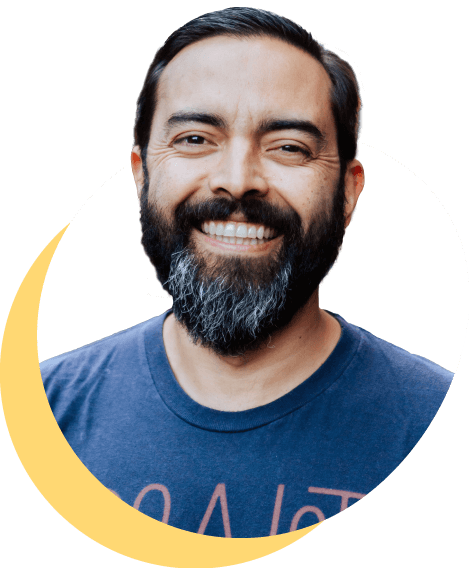
About Pat Flynn
After starting his first online business in 2008, it didn't take Pat long to realize just how important email marketing was to the equation of building a successful business. In fact, he's gotten to become so obsessed with email, that he became an advisor to an email marketing company, Kit, in 2014. Pat believes that your email list is one of your online business's most important assets, which is why he has been teaching entrepreneurs how to use email for over 15 years.
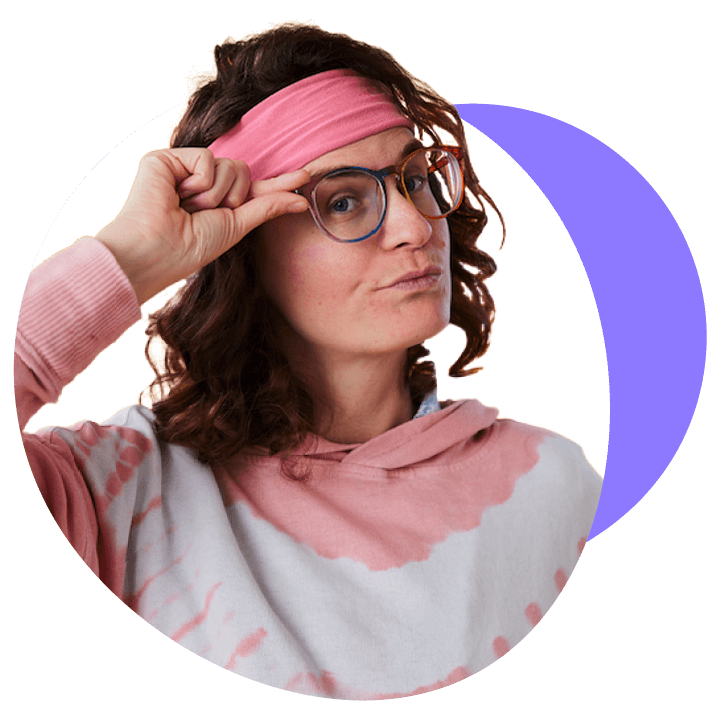
About Liz Wilcox
The Fresh Princess of Email Marketing, Liz Wilcox is an email strategist and keynote speaker showing small businesses how to build online relationships and make real money with emails. She’s best known for turning a $9 offer into multiple six-figures (without ads), and helping you untangle the email “knot” with her Fresh Steps Framework. She loves the 90s, headbands, and the beach.
Join the SPI Community to access this event
Save 16% with annual billing


SPI Community
$99
/ month
$83
/ month
Billed annually for $990
You have access to:
- Downloadable cheat sheets and templates
- Public events with Pat Flynn
- Q&A sessions with Team SPI
- Free 101 introductory courses
- Pat Flynn's book companion courses
- Full community forum
- Team SPI (priceless)
- Monthly beginner workshops (live and replays)
- All premium courses ($5,500+ value)
- Cohort course accelerators ($499 value each)
- Pat Flynn's office hours twice per month ($1,000 value)
The post Turn Your Email List Into Paying Customers appeared first on Smart Passive Income.
]]>What does it feel like to let go of a business you love, one you started with a close friend? Is selling the right move when you know your focus […]
The post SPI 917: We Sold Our Company… Here’s What No One Tells You (with Caleb Wojcik) appeared first on Smart Passive Income.
]]>What does it feel like to let go of a business you love, one you started with a close friend? Is selling the right move when you know your focus has shifted?
In this episode, we'll share a behind-the-scenes look at an especially meaningful exit. I’m joined by my friend, SPI CEO, and business partner Caleb Wojcik as we officially announce the sale of SwitchPod. [affiliate link]
That's right, the time has come to get out of the physical product space. Even though we had the business on autopilot, listen in to hear the lessons we're walking away with and why we think this pivot makes sense!
Caleb and I share the exact circumstances that informed our decision as we look back at how and why we created a camera tripod in the first place.
This is a business that began as a casual chat and ended up serving YouTubers and filmmakers around the world. From rough prototypes and flying out to China to crowdfunding success and beyond, we'll share everything leading up to the big sale.
If you've ever considered getting into physical products or want to prepare your business for a potential acquisition, don't miss this bittersweet session. Enjoy!
Today's Guest
Caleb Wojcik
Caleb Wojcik is a digital creator and entrepreneur. Starting in 2010, he's built a career in video production, physical product creation, and online courses. Caleb spent a decade running a video production company. He has helped clients enhance their online presence through YouTube, courses, and documentaries by focusing on simplifying complex processes and maximizing reach.
As CEO of Smart Passive Income, Caleb is dedicated to empowering entrepreneurs to start sustainable businesses. With his expertise in content creation and growing multiple income streams, he’s committed to expanding SPI’s mission of helping people build a business from idea to income that supports their ideal lifestyle.
- Follow Caleb on Twitter, Instagram, and YouTube
- Find out more at CalebWojcik.com
You'll Learn
- How we turned an idea into a top-quality video and photography tool
- The often overlooked costs of creating and selling a physical product
- Behind the scenes of our $400K crowdfunding success story
- Handling manufacturing, inventory, and retail partnerships
- How to pivot and prepare a business for a potential acquisition
- Why saying no to opportunities can help you find focus and success
Resources
- Find out more about SwitchPod [affiliate link]
- Subscribe to Unstuck—my weekly newsletter on what's working in business right now, delivered free, straight to your inbox
- Connect with me on X and Instagram
SPI 917: We Sold Our Company… Here’s What No One Tells You (with Caleb Wojcik)
Caleb Wojcik: So Pat, we sold SwitchPod.
Pat Flynn: Yeah, we sell SwitchPods. Every day, new customers on Amazon.
Caleb Wojcik: No, I don't mean like Shopify orders. I mean, like we sold all of SwitchPod.
Pat Flynn: Oh, that. Yeah. Let's talk about that. Let's talk about that. How's that for a hook? But yes, just to cut to the chase, Caleb and I sold SwitchPod. And if you don't know what SwitchPod is, it is a tripod slash invention.
I mean, we even had the patents to this thing. It was, A journey that started in 2017 and it is now 2026 and we can officially say we've sold SwitchPod. I mean, this is your first business you've sold, Caleb?
Caleb Wojcik: Yeah, I've never sold one before. I never sold a majority stake like this and stayed on as advisors like we're going to at all.
Yeah.
Pat Flynn: Yes. We're going to talk about today how this went down, where this came from, why did we sell it? Why didn't we take it to where we potentially thought this could go? But I want to take us back to, for those who don't know, like how this all started, it will be a nice little reflection for us too. And almost like this is a celebration episode for us for sure.
We're very happy and very stoked, but it's also bittersweet because this was our baby, you know, Caleb and I had a baby together and it had three legs.
Caleb Wojcik: Is that the name of the podcast? And it had three legs.
Pat Flynn: It had three legs. Yeah. And then later came the head of the baby and the mobile, the ball head.
Yeah. The mobile conversion.
Caleb Wojcik: Your analogy is falling apart.
Pat Flynn: I know it is. Can you bring us back, Caleb? Let's recall, like, where this idea even started.
Caleb Wojcik: Yeah, so the origin story is we were at VidSummit in LA in 2017, and it was towards the end of the weekend of the event of the conference. A lot of YouTubers, video creators, vloggers, things like that, and I don't know if you said it first or I said it first, but we were complaining about GorillaPods, like the bendy tripods with the legs that you have to, like, hold in the exact position and You know, Casey Neistat was starting to make it famous that that was how you vlogged.
If you were a vlogger, you got a GorillaPod, you bent it and you held your camera that way. And we're just like, there's got to be a better way. And then Richie Norton from Prouduct walked up, who you knew, I didn't know him really at all at that point. And he was like, well, let's make, a better one. And we're like, what are you talking about?
We're just complaining. Like, this is what, this is what you do as an entrepreneur. You just are like, this doesn't make sense. Someone should fix it. No, Richie was like, I help people make products. And so let's make something. So I really think it was at the end of that event. Cause I remember getting in your car, you had a Tesla at that point and you could draw on the screen.
And so we drew the worst finger drawing on your Tesla of like what this first switch pod could look like.
Pat Flynn: Yeah, like Microsoft Paint version of a tripod. And it was just literally like three legs, but it was the way that they like kind of the vision for us to be able to take those legs and make them one handle.
Caleb Wojcik: Yeah.
Pat Flynn: That was like the big idea.
Caleb Wojcik: Yeah.
Pat Flynn: And I could not stop thinking about it. I mean, that's how we all are when we get new business ideas. Like it's just takes over your life in a way. But like Caleb and I kept sharing new ideas and new ideas. Images and names for this. It wasn't named the SwitchPod back then.
We had like the SnakePod, I think.
Caleb Wojcik: CobraPod was one.
Pat Flynn: CobraPod.
Caleb Wojcik: Yeah, because we thought like it could have kind of like how snakes have their scales that kind of interlock and maybe that's how it bent in a certain way was we were looking at. Yeah.
Pat Flynn: Yeah, that was pretty cool. But eventually we came up with an idea and gave it to Richie and his team and it was Jace over there and our engineer.
Caleb Wojcik: Cole.
Pat Flynn: Cole who 3D. Put it into like a program and then got us a print version of this.
Caleb Wojcik: Started 3D printing versions of it.
Pat Flynn: We made like cardboard versions too, just so we can like hold it and know what the size was. But I think it really set in that this was something we were going to do once I got that first 3D printed version.
I was like, Oh man, this is sick.
Caleb Wojcik: Yeah, I think they were here in San Diego for Social Media Marketing World, maybe then like five, six months later, and they brought just the top of it and the way you could kind of open and close it and fidget with it. Your eyes lit up.
Pat Flynn: Yeah, it was really cool. And I was like, Oh, we're going to do this, aren't we?
You know, it took a long time to get to a point where we were ready to sell it, but I had so much fun in the process. And we talked about this a lot on previous episodes, going to events with those prototypes and handing them to YouTubers who would be our target customer. And we got so much value. Do you remember some of the people specifically that were like, reviewing that for us.
I know Roberto Blake was huge and giving us some feedback and advice.
Caleb Wojcik: Yeah. I mean, our first time we took physical prototypes, we had one metal one and two plastic ones. We went to VidCon in Anaheim.
Pat Flynn: That's right. VidCon.
Caleb Wojcik: Right? So that was 2018. That would have been the next year. Just anyone we saw, we would also just like kind of walk around, like you swing it open and close and like, see if anyone would come over.
Pat Flynn: They would react.
Caleb Wojcik: Yeah. Kind of like a butterfly knife or something, you're just kind of playing with it and like, people are like, wait, what is that? Or you would like, we would just walk up to people like, what do you think of this? What is this? How much would you pay for this? Like, what would you change?
Pat Flynn: That was our research.
Caleb Wojcik: Yeah. So just, you know, boots on the ground, getting feedback. And then shortly after that was Craft and Commerce, which we were speaking at and Casey Neistat was also speaking at, so we had, like, five or six minutes at the speaker dinner that he was at and Nathan introduced us and showed it to him.
And, you know, I have footage of him holding it and talking about it. He goes like, this is the SwitchPod. We've never used any of that, honestly. We didn't want to like take advantage of that, but he gave us three pieces of feedback. One was...
Pat Flynn: Make it black, right?
Caleb Wojcik: Yeah. One was, I think, make it smaller. And there was one other one I'm blanking on it, but.
We did all three of those things because Casey said to make those changes. So then we were at like our final prototyping phase a few months later and brought a few of those that cost thousands of dollars to make one of them.
Pat Flynn: Because they're handmade.
Caleb Wojcik: Yeah. So they were machined handmade out of aluminum at that point.
And we were at VidSummit, which is where the initial idea came from. And that's where Peter McKinnon was. So we were showing it to different people and we got a chance to show it to Peter. And that's how, you know, a couple months later when we launched on Kickstarter, he was able to, we custom made another one and mailed it to him.
Pat Flynn: The 1, 500 ones. We gave him like one of the first versions and we put, I remember making the box and putting the confetti in there or like whatever Easter type packaging in a little note. And I was just like, Hey, thank you for. Supporting the SwitchPod. Like, we didn't ask for anything in return, of course we were hoping he would promote it when the Kickstarter campaign came out in February of 2019, but he had seen it at VidSummit, he and his crew, like, loved it.
Caleb Wojcik: He was like, can I have this one? And I was like, I need it to take pictures of and to make the Kickstarter campaign, but I was like, we'll make you one. Yeah.
Pat Flynn: Yeah, so we made him one, sent it, and then his team reached out to us and was like, hey, good news, Peter wants to help out when you do your Kickstarter campaign.
So he's just going to take the one that you did and talk about it. And like, look out for that video. When are you going live? And we told him the date.
Caleb Wojcik: He's like, Oh, he was like, can I put out a video today? And I was like, can you wait a week? We're not quite ready yet.
Pat Flynn: That's right.
Caleb Wojcik: Cause he was like, I'll post a video today when he got it.
And I was like, can you wait until next week when our Kickstarter campaign goes live?
Pat Flynn: He dropped it on the day that the campaign.
Caleb Wojcik: Six hours after we launched the Kickstarter campaign.
Pat Flynn: And then it was soon after that, that we hit our a hundred thousand dollar goal in 11 hours or something crazy like that.
Caleb Wojcik: Yeah.
Pat Flynn: I remember that day I was at your house in your studio and we were just watching the numbers and it was crazy. Oh my gosh. It was so cool to see that happen. Now, a lot of people then were like, you're rich. Look at all this money you're making. We're like, no, the molds cost like $75,000. Like there's so much that went into making a physical product that I had never experienced before. The molds and you went to China.
Caleb Wojcik: Yep.
Pat Flynn: Wanna talk about that really quick?
Caleb Wojcik: Yeah, so between the Kickstarter campaign and when we actually shipped that first batch of them, I went to China with the product team, went to the factory, went to the packaging place, did final kind of QA on stuff, which I'm glad I did.
There was a small issue that we fixed there in person.
Pat Flynn: What was that issue?
Caleb Wojcik: It was just not smoothly opening and closing. It was like kind of grinding a little bit. So we adjusted the mold before they did the full batch. The like stuff you avoid, you know, go to China and make sure it works before they make 10,000 of 'em.
Pat Flynn: Right. So, right. Man, and then you almost got left in China or something.
Caleb Wojcik: Oh, there's two airports in Shanghai. I didn't know that there were two different ones. So my connecting flight was, you know, my first flight went to the domestic one and then there's the international airport. And yeah, so.
Pat Flynn: Yeah, that we'll save that story for another day, but you were stressing out.
Caleb Wojcik: Yeah. I mean, I didn't speak Mandarin to the taxi driver. I called TFN. They had left and gone to China at that point.
Pat Flynn: Wasn't Jen pregnant?
Caleb Wojcik: Yes.
Pat Flynn: So, there was like a worry that you wouldn't come home in time for like baby or something.
Caleb Wojcik: I mean, I made it back. It was okay.
Pat Flynn: You did.
Caleb Wojcik: But we shipped SwitchPod right when my first was born.
Around like the same week.
Pat Flynn: Oh, that's crazy. So, you had a baby with me and with Janice.
Caleb Wojcik: Yep.
Pat Flynn: Hahaha.
Caleb Wojcik: Mine have two legs. Yeah. Yeah.
Pat Flynn: Makes sense. Makes sense. And then we went on this PR tour in New York and we went and visited B&H. We sat in this conference room with like a really scary dude who like said some numbers.
Caleb Wojcik: It was just intimidating. We hadn't been in that situation before. We didn't know what numbers to have. We didn't know what our profit margin was or our MSRP.
Pat Flynn: Oh, we were learning as we were going. I mean, this is the story that I largely focus on in Lean Learning because it was literally us finding things out as we were going.
But I mean, it took off and then we visited MKBHD in his studio. We noticed that he started using it in some of his videos too. And then it was off to the races. I mean, getting it on Amazon was a little bit of a chore because Amazon is Amazon, but once it was there and we got the top ranking spot for SwitchPod, I mean, we were just, selling them every day kind of automatically.
And then you had twins. I had other business things going on. The Pokemon thing started to take off and we just didn't put a lot of additional time and effort into it. I mean, we added some more products, right? Like the ball head and the mobile adapter, which were just like white labeled versions of products that were already existed in China. Which were great. I think during COVID there was a company that bought like hundreds of them, like just the ball heads.
Caleb Wojcik: Just the ball head. Yeah. They bought like 200 of them across Canadian airports.
Pat Flynn: For CoVID scanning or something.
Caleb Wojcik: Scanning of like if people are sick.
Pat Flynn: Like had fevers or something.
Caleb Wojcik: Yeah.
Pat Flynn: Yeah. That was so random.
Caleb Wojcik: They searched the internet and they were like, this is the best ballhead and I want to buy them at wholesale from you for, I was like, okay, you can buy 200 of them.
That's fine.
Pat Flynn: And then we got into Best Buy for a brief moment, but it was during COVID, which is why sales were low. And they were like, your sales aren't good enough to stay. And we're like, but nobody could go in the stores.
Caleb Wojcik: Yeah. Yeah. So there was a lot of different things that happened with timing where, you know, we, we shipped our first ones at the end of 2019.
COVID hit literally five, six months later. In one way, that was a benefit because a lot of people were at home. They had expendable money because they weren't traveling and doing other things.
Pat Flynn: They wanted to create content.
Caleb Wojcik: And they wanted to create content. They wanted to be a YouTuber. They wanted to make social media stuff.
So there was a big uptick in 2020 and 2021, but the downside was the retail side of things. So we were in the process of being in Best Buy and being in other places. Potentially Target. Potentially other big box stores and international too. I was like starting to build those relationships. And a lot of stuff just got shut down.
Best Buy was like, we're not accepting any new products. We're only doing pickup at our stores. So there was just a lot of things timing wise that were good and bad for when we launched the product.
Pat Flynn: And then life got busy. I mean, the product continued to sell. I mean, it was fairly passive. How much, Caleb did most of the sort of quote unquote upkeep month over month?
Like how many hours were you putting in eventually when things stabilized?
Caleb Wojcik: Yeah. I mean, 2019, that was probably like a quarter to a half of my work time getting it launched, getting the first production done. Then going to like 2020, 2021, that was more like a 15, 20 hours a month kind of thing. It was like customer support, dealing with retailers, trying to expand stuff, social media, things like that.
And then 2021 to 2022 kind of put it on more of like autopilot a bit more. Not pushing it as hard and focusing on other stuff.
Pat Flynn: We had ideas of putting more time back into it once the world opened up again and we had more time and thought about it more. I mean, it was always there and we had discussed potentially creating like a smaller version. That was a big piece of feedback we got. They're like, we love this, but can you make a smaller version?
And we're like, I mean, we could, but that's a huge investment because of molds for it and all that kind of stuff.
We had some prototypes and some other ideas and stuff. But we never went down that route. Don't know, I didn't lose my love for the SwitchPod, but I just lost the energy to continue to kind of promote and invent new things on top of it. I don't know how you felt.
Caleb Wojcik: Yeah, I mean, we had other ideas of mic stands and things that are unique. Like, we were trying to think of other types of hardware that didn't have electronics in it that would help people create content.
And there were things that we prototyped or brainstormed about or tried. And it just kind of came down to not wanting to take a risk on those things. So we mainly just kept the main product and the accessories and left it at that. And, you know, there's a lot of things when you work, get into physical product, there's a lot more investment up front to do inventory runs and merchant stuff too.
But there's a lot of overhead costs. Like you got to be pretty confident that stuff's going to work out, which is why we kickstarted in the first place. You know, like you said, The Kickstarter campaign did like $415,000.
Pat Flynn: In 60 days.
Caleb Wojcik: After fees. You know, that was in the high 300 thousands. And then we spent like 300,000 of it like right away to get the molds made which are like the big metal things that you pour the liquid metal into to make the different shapes for all the pieces and then doing a huge run.
So anytime that we wanted to do a huge run, you know, you're talking 50,000-100,000 dollars all at once to go make 5,000 or 10,000 of these things and then You're paying to store them somewhere. There's just so much more overhead than courses and AdSense and all the like digital marketing type stuff that you're more familiar with and have been doing longer.
Pat Flynn: But it's like people buy it and they can use it immediately. That's what I was so different and what I loved so much about the SwitchPod was people bought it. First of all, the packaging was really nice. Everybody who was involved with that did a great job. Kaoney's in a photo and they were holding it up.
So it's like, Oh, a kid can hold this. It must be like, it's something that a person purchases. They screw it onto their camera and then they're immediately using it. And I know some people now, even seven years later who were like, that's my go to travel tripod. They're still using the same one they had.
It's strong. You can like stand on it.
Caleb Wojcik: Yeah. Unfortunately, we didn't do planned obsolescence. You know, like in theory, if you buy one, it should outlast your camera.
Pat Flynn: It should.
Caleb Wojcik: Because it's made of metal. You know, you might.
Pat Flynn: I mean, I know some people who've bought dozens for their crew, you know, that's like, this is the thing we need when we go out in the field, let's, let's grab one and use it. And then people have gifted it. You know, Daryl and we did a deal for VidSummit one year where we were a sponsor at that event, but he got a SwitchPod for every attendee, which was really awesome.
And we had like a, a VidSummit branded SwitchPod. Switch pod that was made. So there's I think a thousand or 2000 of those out there in the world. I don't know if you've seen, but I've seen people using the SwitchPod, like in the wild, like as just regular people.
Caleb Wojcik: At events or something?
Pat Flynn: At events, yeah. The the craziest one I saw was a baseball player using it while he was eating lunch in San Diego. And I went up to him, Trevor Bauer, who unfortunately a few weeks later got into some heat across the world with some not great text messages that were actually, anyway, just look up Trevor Bauer. He's innocent. I built this relationship with him and then I had to kind of remove everything because of the allegations that were all happening.
But anyway, he was using the SwitchPod. He's like, man, I'm a big fan of this thing. And I was like, yeah, I made it. And he's like, wait, what? You're Pat Flynn, like, I listen to your podcast, and, you know, I love your SwitchPod, and everywhere he went with the Dodgers, he was using the SwitchPod to film himself vlog, because he had, like, the best and most entertaining kind of MLB vlog that was out there.
So it was cool to see people use it. That's what I love about it. It did what we said it would do, you know, as opposed to courses and stuff. It's just like, we know this works, we've proven it and there are people who've gone through our stuff and it's worked, but you still have to do the work and you still have to believe in it.
And that's not easy for a lot of people. So I'm still doing physical products with like merch and stuff, but those are much, much easier. Like there's nothing with injection moldings or anything like that, but why don't you maybe lead into the sale and kind of us having discussions about that even before we found a buyer.
Caleb Wojcik: Yeah.
Pat Flynn: You and I have had discussions about, what do we do with this? Do we just let it coast or do we sell it? And, you know, of course we were probably, and we knew this, we were past the prime selling point. You know, if we sold in 2021, we could have done very, very well. Still happy with how everything turned out, but where were your feelings coming from as far as like finally letting go of it?
Caleb Wojcik: Yeah, I think we both, probably cared less about running a physical product business, as well as people honestly saw the success of small handheld tripods like that. And there were, there's competition, you know, that came out, you know.
Pat Flynn: There were, yeah.
Caleb Wojcik: Uh, MantisPod was definitely one where it like had way more features and, you know, like it had the backing of a company that makes equipment that like went all in on making something similar as a competitor to it.
Like when that came out, there was a lot of videos that were like MantisPod versus SwitchPod. Yeah. And so. I was like, I don't know if this is what I want to be doing and playing the physical product game. And so at that point, we probably should have looked for a buyer because like you said, sales were stronger, but more recently, just an opportunity came through you of someone that is into ecommerce and it does live and breathe this world and can take the brand and have it live on as opposed to having us just let it fizzle out.
Pat Flynn: Yeah. I knew that it would eventually get to this point and I was worried that it would fizzle out, although it was kind of leading there. So it's, it's nice that I came across an opportunity, a friend of mine who is in ecommerce and he was looking to purchase various ecommerce companies for his portfolio essentially, and then hopefully grow them.
And it's like, you know, we have always had the chance to put more time and effort into it to grow it. It's not anything that's like, Oh, well, this people are done with this. It's just, it just hasn't had the love and the time and the energy and the money and effort required to get it to that next level.
And hopefully this person can do that. And we are, like you said, in the beginning, we're still on as advisors because we have some shares in this company now that as a result, but, you know, we did get some cash up front for it and we, we've split that and, you know, we've, Kind of did our thing with it. What did we do with the patents too?
The patents are now owned by this person as well.
Caleb Wojcik: We transferred to them too. Yeah.
Pat Flynn: For the transfer, what other things off the top of your mind? I know there's like a huge list of things, but like when we do a sale like this, or if somebody were to do a sale like this, what are the things that we need to also think about that are going to be transferred over?
Caleb Wojcik: Yeah. I mean, there's a whole great book about this called Built to Sell. That's like how to grow a business that enables you to sell it. But for us, it was just knowing all your information, like knowing all your numbers, having historical stuff, because they ask all those things. So it's not just having a proper QuickBooks account that you've like kept up to date and doing your taxes, like they want to know your inventory, they want to know your cost per every item, how much does it cost, because they're going to want to go make more, like you just got to know your numbers, know your stuff.
So going into that prepared with all that information. You know, made it go faster.
Pat Flynn: Yeah. For sure. And you did a great job organizing all that. So that was easy. I mean, you just had it readily available. Other things to think about for selling is the list of customers that you have, you know, your email list, social media accounts, Shopify store, and any of those assets that come along with that.
You know, we've transferred over a lot of the images that you've taken, that we owned, that now they own, that they can kind of do what they want with. So it is a lot of stuff and it actually kind of went pretty quickly, relatively speaking compared to how I know other businesses have been sold. But overall, it took what, two months to go from initial chat to getting the money in our accounts.
Caleb Wojcik: Yeah.
Pat Flynn: Which is awesome. I mean, what a way to start 2026.
Caleb Wojcik: Yeah. And I also think that because we branded it as its own separate thing, both publicly and legally and stuff, that that really helped too. So, separate bank accounts, separate LLC. Separate brand name. It wasn't called like Pat and Caleb's tripod or something, you know, like that would have been harder to sell and an awful name, but those things helped too.
Just knowing that this is like a separate entity that someone else could purchase, it made it cleaner.
Pat Flynn: Kind of did build it to sell in a way, or at least use those principles so that the transfer.
Caleb Wojcik: Yeah, even from the beginning, making an LLC with our ownership percentages and all that stuff.
Pat Flynn: How are you feeling now that we're on the other end of this?
It's been two weeks since we've let go of our baby and it's doing its thing now. And you know, we haven't even had our first kind of advisor call yet. So it's nice again, that like Caleb said, we're still involved and we want this to succeed for this person, but why ultimately did we do this? I mean, yes, there was some money, but what has it done for you? Letting this go.
Caleb Wojcik: I think it's a combination of wanting what's best for that company and for that brand and the business that we put time and effort and energy and sweat into to get it off the ground. That we either don't want to do anymore or, or shouldn't focus or shouldn't. Mm-hmm . Or that we're not the best at.
Like, let someone else take it now, let someone else run with it. As well as just a focus thing of easy analogy of like a stove top. You have like four burners or something like that. You know, I feel like it's one less thing you have to keep checking that's not going to catch on fire, or you forget that, like, oh, I need to restart.
Pat Flynn: It's a great analogy.
Caleb Wojcik: So, you mentioned kids. I have three young kids that happened quickly over the span of 2019 to 2021. I mean, those are like businesses in a way, you know, so it's been a lot on my plate lately of that, but also I'm helping on the SPI side of things too, and you've spawned a whole nother business since COVID with Deep Pocket Monster, so it's just, there's other priorities and focuses, and if you have less of them, you can spend more time on the ones you have.
Pat Flynn: I love building businesses, but I also have known and have realized and have learned that in order for those businesses to grow and get the attention that they deserve, you kind of have to say no to some things, too. And sometimes those are things that you still love and enjoy, and as Stephen King would say, like, kill your darlings kind of thing, right?
And this is definitely one of those cases. Great for us because it opens up more time and space. And even though, like we were saying earlier, it was mostly automated, it's still there in our brain, taking up space and bandwidth and time. And overall, I think this puts an incredible bookend to the story that we've had and have documented for the last seven years from the videos that we have showing the prototype.
This was like pre Beard Pat at a desk in my old office showing off the prototypes. And we were just that story and how excited we were and I'm just very grateful that you and I have continued to partner on different things and still work together in different various kind of ways. I think that was part of the fun was doing it with you, but also it was just really neat to see it was a success.
Like we did it. We didn't make a gajillion dollars. But we also didn't make nothing. We made a lot of good money during and now after. And just, I'm grateful for the story that we can share and the lessons we can pass forward.
Caleb Wojcik: How has this been different from other businesses you've sold in the past? I know you've sold websites.
Pat Flynn: I've sold websites and like the security guard training business, the food truck thing. This was the thing that I've sold that I've been the most closest to because I, you know, I'm not passionate about security guards. I think they're great. If you're a security guard, I appreciate your work. Thank you.
But, you know, it wasn't like something I got my hands dirty with.
Caleb Wojcik: Yeah.
Pat Flynn: That was more being a resource, right? Just a helpful resource versus like, I made that thing.
Caleb Wojcik: Yeah.
Pat Flynn: And so that's what made it more difficult, but I think it's what made it just a better story overall. I feel really good. I feel really happy.
I feel like it's happened at the right time. Although, like I said, it could have happened earlier, but it's not even about the money. I think we gave it what it needed and now hopefully this new person can give it what it needs now. You know, it's off to college now.
Caleb Wojcik: My kids are not ready for college.
They're four and six,
Pat Flynn: Keoni, he's 16. He's basically ready. He basically looks like he's in college.
Caleb Wojcik: But this is probably what it would feel like if your kid moves out.
Pat Flynn: Yeah.
Caleb Wojcik: Yeah.
Pat Flynn: Especially if he had three legs. Anyway, thank you so much for listening in any final tips for anybody, Caleb listening, who either is in the business or has multiple businesses is thinking of about going down this route of selling what would be from your perspective, maybe the best tip that you have?
Caleb Wojcik: Trusting your gut, like when you know maybe you're done with something. I think everyone kind of lets things go too long. Relationships, you know, maybe it's a girlfriend or boyfriend or something and you're like, This is not going to work.
Pat Flynn: We love our wives, by the way.
Caleb Wojcik: But it's easier, it's easier to have it keep going than it is to like break up.
Pat Flynn: Yeah.
Caleb Wojcik: So that it can be similar with businesses. It can be similar with ideas or clients or customers or whatever it is. Usually like deep down, you know, okay, I should probably just do it now. It's going to be painful whenever, so I might as well do it now. Yeah. But in our case, it would have been more profitable to do it earlier when we saw the tea leaves of like, okay, maybe this isn't something we want to do for 10 more years. Let's try to sell it. And you know, that was another thing we didn't do is we didn't really put it up for sale.
Pat Flynn: We weren't active in doing this at all. This was just an opportunity that fell on my lap. And I was like, Hey, should we do it? Yeah, we talked about it. Okay.
Caleb Wojcik: Yeah.
Pat Flynn: What if we had those conversations that were more proactive back in 2021 to 2022.
We could have gotten maybe three or four more times than what we've gotten, but.
Caleb Wojcik: And then the person that took it on would have had a bit more momentum, maybe.
Pat Flynn: Right.
Caleb Wojcik: Yeah.
Pat Flynn: Right. So you got to let go to grow. That's what I like to say, but also follow your gut. That's a great one for sure. So thank you all for listening in.
I appreciate you for subscribing and listening to the podcast. We've got more episodes coming your way very soon, a lot of interviews with some amazing creators, ones that you may have never heard of before, who are doing amazing things that can help inspire you and help you understand what to do next.
So thank you so much. We'll see you on the next one.
The post SPI 917: We Sold Our Company… Here’s What No One Tells You (with Caleb Wojcik) appeared first on Smart Passive Income.
]]>2026 is your year. Launch your business with Shopify. FEATURED OFFER FROM OUR SPONSOR Shopify is a commerce platform that helps you sell online and in person. Entrepreneurs, retailers, and […]
The post Shopify appeared first on Smart Passive Income.
]]>2026 is your year. Launch your business with Shopify.
FEATURED OFFER FROM OUR SPONSOR
Shopify is a commerce platform that helps you sell online and in person. Entrepreneurs, retailers, and global brands use Shopify to make sales, run stores, and grow their businesses.
Get your first three days 100% free. Then pay $1 a month for your first three months.
Sponsored link
Ready to take your first step to your first sale?
Add your solution here: With Shopify, you can build a website in minutes with the online store editor. Use AI to generate custom store themes by describing your brand or products.
Or, choose from more than 900 pre-built industry themes that spark joy with dynamic scrolling and hover effects. Themes are mobile-friendly and customizable without coding. Join millions of people powering their business with Shopify.
With Shopify, you can:
- Create and customize your website
- Sell in multiple places, including web, mobile, social media, online marketplaces, brick-and-mortar locations, and pop-up shops
- Manage products, inventory, payments, and shipping
Start your business journey with a free trial.
Get your first three days 100% free.
Then pay $1 a month for your first three months.
Sponsored link
The post Shopify appeared first on Smart Passive Income.
]]>Being real, sharing your journey, creating consistently, and repurposing your content across multiple platforms are tips I share all the time. But what are the actual results you can get […]
The post SPI916: How Two Moms Went from Garage Dancing to 30,000 Paid Students (with the Shuffle Mamas) appeared first on Smart Passive Income.
]]>Being real, sharing your journey, creating consistently, and repurposing your content across multiple platforms are tips I share all the time. But what are the actual results you can get if you finally put yourself out there?
Today's episode shines a light on a perfect example of taking action daily. That's because I'm joined by the incredible Shuffle Mamas, Christina Reynolds and Anna Blanc, for an awesome behind-the-scenes look at their success story!
Christina and Anna are short-form masters who have grown a major business around their passion for shuffle dancing. Before everyone was talking about authenticity, these Kansas City mothers were already posting their journey as complete beginners, bringing people along for the ride as they developed their skills. Now, they share the joy with the tens of thousands of students enrolled in their dance courses.
This is a fantastic look at what can happen if you decide to go genuine instead of generic. The best part is that the Shuffle Mamas have never spent a dime on marketing. Instead, they produce high-converting content and leverage DM automation for quick sales.
This is truly what expert brand building looks like in 2026. Tune in to join us!
Today's Guest
Christina Reynolds and Anna Blanc
The Shuffle Mamas are two moms and neighbors, Anna (42) and Christina (39). In 2020, Christina asked Anna to join her in learning how to shuffle dance in her garage. Little did they know that invitation would spark both a sweet friendship and a thriving online business. Today, the Shuffle Mamas reach over 2 million followers across social media platforms, have created five digital shuffle dance courses, and host a private membership community for women. At the heart of it all is connection, and they’re still doing what they love most: finding joy by shuffle dancing in the garage together.
- Find out more at ShuffleMamas.com
- Follow the Shuffle Mamas on Instagram, TikTok, and YouTube
- Get to know the Shuffle Mamas and their community, and start your shuffle journey
You'll Learn
- The importance of bringing people along for your journey
- Leveraging the power of sharing your beginner story
- Why you only need to be one step ahead to help others
- Why authenticity and consistency are the key to brand building
- Overcoming fear of embarrassment and dealing with trolls
- Repurposing your content across multiple platforms
- Building a thriving business around short-form content
- Why DM automation is the shortcut to sales on socials
- Finding the messaging that resonates with your superfans
- Balancing family life with content creation and business
Resources
- Find out more about DM automation with ManyChat [affiliate link]
- Check out my Short Form Formula course to get big results with quick content
- Subscribe to Unstuck—my weekly newsletter on what's working in business right now, delivered free, straight to your inbox
- Connect with me on X and Instagram
SPI916: How Two Moms Went from Garage Dancing to 30,000 Paid Students (with the Shuffle Mamas)
Anna Blanc: We didn't realize that our people are on Instagram. And I think it was just a week or two after we jumped on Instagram, we were getting 20,000 followers a day. I mean, we were just like, what is happening?
Christina Reynolds: What's very cool is that to this day, we've never spent one single dollar on marketing. In the beginning months of us being on Instagram, pretty much every single one of our sales videos have gone viral our highest viewed video is like over 27 million views, so that's been where we focus on, is like producing viral content and that being a video that sells.
Anna Blanc: And it really, you'll find with everything in our entire story, we do everything in response to our community and what they're asking for. So it really was that, like, women paying attention and going, well, I see the joy. I see the fun. I see that you started with no skill here and you've actually learned something. Maybe I could do this. Can you help me?
Pat Flynn: Okay. This story is wild. So imagine this, it's 2020 with nothing to do. You decide to start learning how to dance with your neighbor, but not only do you dance and kind of try to figure it out. But you're also hitting record and posting it on TikTok. And then now fast forward six years later, Christina and Anna have an empire with millions of followers, tens of thousands of students who are learning how to dance.
What kind of dance? Shuffle dancing. This is an insane story. And we have Anna and Christina on today to talk about exactly how they got started. But more than that. What's their strategy? How do they get people from short online videos to now becoming a customer? What are their price points? We dive into their system and how it works today.
And I hope that after this, you're going to experience the joy that they feel every single day when they dance together and their millions of viewers too. And I really love this, so I hope you enjoy it. Here they are, Christina and Anna, the Shuffle Mamas.
All right, I have Christina and Anna here on the show.
Welcome, both of you.
Anna Blanc: Hi,
Pat Flynn: I'm so excited to dive into your origin story of Shuffle Mamas because it is so fun, it is so interesting, and you have a huge following. Just, first of all, congratulations on your success with what you've done. It's been amazing.
Christina Reynolds: Thank you so much.
Pat Flynn: So, Christina, maybe we'll start with you.
How did you two decide one day? I know you guys are neighbors. How did you decide to just one day start filming yourself dancing? How did that even start?
Christina Reynolds: Well, first of all, we're neighbors and we kind of met through these workouts in our neighborhood, my husband was leaving because it was 2020 during the pandemic, everything was shut down.
And that was kind of like where we started really, our lives started crossing paths. And I happened to be, you know, doomscrolling one day and saw Shuffle Dancing and was obsessed. I was like, I need to learn how to do this. It looks so cool. We're all just sitting around doing that thing. This is the best time to do something kind of scary, right? Like cut her own hair and get bangs. So I actually asked my son first and I was like, Hey, would you learn this with me? He was like, no, absolutely not. So she was the first person I was like, Hey Anna, would you wanna learn how to shuffle dance? And she said yes.
And she actually thought that it was ballroom dance.
Anna Blanc: I literally thought it was ballroom dancing.
Christina Reynolds: Yeah, but and why I would ask her to ballroom dance is like hilarious. But she's like, sure, I showed her a video and we actually have this video on Instagram kind of sharing like our very first steps ever after one of our workouts.
And it was, I think, shortly after when we started going, Hey, this is really fun. Let's get together twice a week. Like after our workouts, let's just try it in the garage. I was like, let's just record ourselves. But the number one reason actually that we actually started recording is the fact that we're dancing in a garage.
A garage with no mirrors, so we have no idea what we look like. So it was, first of all, what do we even look like? And then I was like, you know what, TikTok was like blowing up. I was like, I had no idea about the platform, you know, it was like fairly new. And I was like, let's just post these videos on here.
I don't know why I've always been in social media content creation. So I was like, let's just do it. Why not? And we pretty much immediately, like gain traction on Tik Tok.
Pat Flynn: That's crazy. So you guys weren't like experts at this dance style yet. You were kind of learning and sharing your progress along the way.
And what was it like to post the dancing even though you were still learning. Was there any fear related to that?
Anna Blanc: Oh, absolutely. Yeah. If you can't tell, Christina is the brave one and I am trailing behind like, okay. Oh, wait, we'll post it. But nobody I knew was on TikTok. We're like, uh, yeah, on the TikTok.
So I'm like, oh, no one will see it.
Pat Flynn: No one will see it. But then like, millions of views later, right?
Anna Blanc: I think part of what started looking so interesting to people or why we started gaining some traction was because we were showing our beginning shuffle steps. We were just obviously normal women who had zero dance background who were trying something new and all of those things in combination was kind of interesting.
I mean, in some point it might have been like rubbernecking on the highway, you know, like what is happening? We got lots of hate comments. We did. We did. TikTok is brutal.
Pat Flynn: Well, we'll get into that for sure. I want to ask about that, which those kinds of things can often stop people from posting, but you've obviously kept going.
And I remember I went back and I looked at your first TikTok in 2020. It was December 2020.
Anna Blanc: And I don't even know what it is.
Pat Flynn: The caption there, it said like your progress, like the text on the screen was just about your progress. So you were obviously newbies you. You even said newbies. We started learning with YouTube tutorials.
Then we got together once a week to learn new moves and create our own routines. So fun. Go for it. So that was your first post.
Christina Reynolds: Wow. Okay. You know more than we do. We've been posting every day for like almost six years now. So there's a lot of content out there.
Pat Flynn: Every day. Christina, how do you keep that up, going every single day. What drives you to keep going and no days off?
Christina Reynolds: I think in the beginning, like the first four years, when we were only on TikTok, it was just fun. And then I think being able to see that such quick growth and like such positive response, like, yeah, you get the few haters in there, but TikTok really was our platform in the beginning.
So it's, it's a little bit addicting. So I think I kind of like fed into the addiction of seeing the response and then wanting to create something else. And then. How do they respond to that? So.
Anna Blanc: And those were our first tastes of actually inspiring people to try something new and actually step out on their own.
And I think that really turned my fear around, in particular, seeing women going, well, you know, if you can try something, maybe I'll try it. They were actually following along in those kind of like step by step way that it just felt intuitive to post more and keep them right alongside us as we were learning.
Pat Flynn: That's cool. And on that note, how long from when you started to when you started like teaching it, you know, slowing down the moves, showing people how to do it, how long did that take till you got to that point?
Anna Blanc: Let's see, we started learning in 2020 and we made our first course in 2023, December, like literally at the end of 2023.
Christina Reynolds: Yeah.
Anna Blanc: And it really, like, you'll find with everything in our entire story, we do everything in response to our community and what they're asking for. So it really was that, like, women paying attention and going, well, I see the joy. I see the fun. I see that you started with no skill here and you've actually learned something.
Maybe I could do this. Can you help me? And so even just that first step of teaching moves and making an intro to shuffling course was an answer to that. Going like, yeah, we want to, as we're kind of figuring this out for ourselves, we wanna throw stepping stones behind us. Like, come with us. It's so fun. We believe in it with all of our hearts.
Come try it for yourself.
Christina Reynolds: Yeah.
Pat Flynn: It's such an inspiring story, especially 'cause you can literally see you just getting started in your garage like every once in a while. When your kids will come in and just kind of scooter around you while you're doing your thing. There was a video I saw where you guys were struggling with finding the downbeat with a video and you had like five or six takes and you shared it.
That's a moment that a lot of people would kind of leave out. But I think. You were ahead of the game in terms of what people are craving today, which is just realness, authenticity, just like this is life at home and come join us. But like you said, and Christina, you had mentioned this, like some of the trolls and the hater comments in there.
What kinds of things were people saying and what made you keep going anyway?
Christina Reynolds: Oh, well, thankfully, I think the fact that we do this as a partnership and within friendship, it makes it a lot easier to let those things roll off your shoulder, and I mean, to be honest, none of the comments were really that hurtful in a sense because these are people who don't know us, you know.
I think the meanest comment we ever got was, turn on the car and shut the garage door.
Pat Flynn: Oh my gosh.
Christina Reynolds: That was TikTok, but other ones are more like, this one looks awkward, or like, oh, you can tell that she had a big dinner last night. And to be honest, it's actually mostly men. Like, 99 percent of our mean comments are from men, unfortunately.
Anna Blanc: But what's fun is that women jump in. Like, we don't even need to say anything. They are defending us. They're like, yeah, go find something else.
Pat Flynn: That's what your fans will do. I love that. So you just brush that off, keep going, and just Have fun. It seems like four years later now you're still having fun.
Now I'm noticing that on TikTok you started in 2020 and then on Instagram you started in March of 2024. Why four years until you got started on Instagram?
Anna Blanc: We really didn't ever think about that. Jumping to another platform until the talk of TikTok shutting down as a whole thing in late 2024. Or no, late 2023 through late 2024.
So we were like, this might go away. Like, let's put our content somewhere else where women can find us. And we had no idea that that was actually the rocket fuel for the whole rest of us starting this as a business.
We didn't realize that our people are on Instagram. Like the middle aged woman who's looking for movement, who hates to run, who wants to find joy in their lives.
Those are our people and they are on Instagram. Yeah. We didn't realize that until we jumped on. And I think it was just a week or two after we jumped on Instagram, we were getting 20,000 followers a day. Yeah. A day. I mean, we were just like, what is happening?
Pat Flynn: Wow.
Anna Blanc: And that really was the start of all the rest for us.
Pat Flynn: That's crazy. You have 1.3 million subscribers or followers on Instagram now. So if you could go back. Do you wish you had just started on Instagram sooner?
Christina Reynolds: Oh, no, definitely not.
Pat Flynn: No, why not?
Christina Reynolds: I think we cut our teeth on TikTok. Instagram is only what it is because of TikTok. Instagram went really video heavy because TikTok was blowing up.
People were going viral on TikTok. People were actually exiting Instagram. In 2020, Instagram was still very, like, curated. Like, you'll see everywhere. Like, the millennial, like, brands are dying where it's like everything is beautiful, perfect, posed, and TikTok offered this real life, here's my acne, here's my love handles, here's all my insecurities, and I'm going to wear them loud and proud.
That was what TikTok was about, and that is actually what has influenced Instagram to be what it is today. So I don't think we would have even done as well on Instagram back then because we weren't curated. We weren't, we didn't go out and shoot our photos and are perfectly fashinable outfits So, like, our brand is very much authenticity, real life, not curated.
What you see is, for the most part, what you get, you know?
Pat Flynn: Yeah.
Christina Reynolds: So, I'm really thankful for TikTok, and we learned a lot from, I think, the younger generation and learned about just how to be that open, and we kind of gained confidence to be that way, whereas Instagram kind of had been set in stone, you must be perfect.
Pat Flynn: I love that. And I love that we're getting away from that now. I think AI's help push that a little bit because we're seeing all this perfect stuff coming out. And people just want it real, like you guys show, and it's great. Now, with so many videos that you have on all the platforms, you know, some of them do better than others.
Anna, maybe we'll start with you. Do you have or see any patterns with the videos that do better than the ones that don't?
Anna Blanc: I mean, it really is relatability. I know that's kind of the thing that everyone's talking about, but I think when someone can see themselves in your story a little bit, when they can find themselves in the post, then that one just does better.
I mean, even sometimes when we're just dancing with our kids, I mean, I'll dance with my youngest son, you know, it's just a couple of moves and someone, you know, will see it. It'll get high views from people going, oh, I've got kids and maybe I should start dancing with them, you know, just something that makes them feel like, oh, this is something that reminds me of my actual real life too.
Pat Flynn: Yeah.
Anna Blanc: Those seem to do better.
Pat Flynn: Christina, do you guys get into tactics and strategies with your videos? Like, okay, we need a really good hook, so let's start with this. Like, what kinds of things are you thinking about when you're crafting a video?
Christina Reynolds: Can I just jump on that last question? Because I do see different trends within different platforms.
Instagram, loves seing our families. Loves seeing our story.
Facebook doesn't care. They just want that 20 second dance with the song that they connect with and that will go viral. And then on TikTok, TikTok loves to see me and my son because there's a shock factor there. Cause there's not much of a following culture there. It's more of a what's on your for you page.
So whatever can just shock you in a moment, they're like into. YouTube also is very interesting because I think. That is kind of like, man, what will go viral, what will not go viral? You know what I mean? So that's kind of like the unknown for us because we're mainly in short form content world, but those are kind of like the general differences between platforms.
But back to your original question of like, how do we create content that hooks people? So after four years also of cutting our teeth on TikTok, we figured out our messaging, which is In a very cool way, we never sat down and thought, hey Anna, what is our messaging? It's just the majority of what our comments say.
Joy, family, your friendship. We've taken all of our cues from the responses of the people who watch, our viewers. So people love that, anything, so we have different genres. We have like, hey, we're going to talk about our friendship today. Or hey, this is going to be about us messing up today. This is us just like totally slaying some choreography to a highly trending song.
You know, this one's going to be showcasing our family, you know? So I, we do try to set our posting schedule where there's different days for different things. And then depending on analytics, we'll switch it up. Oh, this is a higher performing day. We're going to maybe save this piece of content for that.
And then everything that we do is like a month in advance. Everything's very planned out.
Pat Flynn: Yeah, that's great. So you have a content schedule and things laid out. So you're filmed one month ahead of now.
Christina Reynolds: Yeah, for the most part.
Pat Flynn: So that's where the daily comes from. You have this sort of bank. And so are there days where you're just like, yeah, we're busy.
We can't film today, but at least we have this bank of stuff.
Anna Blanc: Oh yeah, exactly.
Pat Flynn: Yeah, I love it. I love it. Anna, let's start with you. If you could only shuffle to one song for the rest of your life, what song would that be?
Anna Blanc: Oh my gosh, this is actually a really bad question for me because I don't care nearly as much as she does.
I'm like, you put on whatever.
Christina Reynolds: She's down. Always down.
Anna Blanc: Always down. So, I don't pick the songs. Christina picks the songs on it. I put on her playlist, I don't even know the names.
Pat Flynn: You're totally a marching band nerd, I could tell, because you just like, whatever the director says play, you just play it, and right, you were in a band, right?
Anna Blanc: Yes. Oh, a band nerd? Is that what he said? A band nerd for life. You can never escape it.
Pat Flynn: That's what I'm talking about. What did you play for an instrument?
Anna Blanc: I played flute.
Pat Flynn: Flute, okay. I played trumpet.
Anna Blanc: Oh, nice.
Pat Flynn: That's cool. And so, Christina, what would your song be since you're a DJ?
Christina Reynolds: That is so hard, because...
Anna Blanc: you have so many.
Christina Reynolds: One song? I don't know. I can't even choose. There's just too many.
Pat Flynn: How about today? What would you dance to right now?
Christina Reynolds: Probably Make Me Feel by Oscar K Med. The fact that I can even say that name right now off the top of my head.
Pat Flynn: I'll have to look that up.
Christina Reynolds: It's just very vibey. It's like a flow state type song.
Pat Flynn: I love that.
Christina Reynolds: It's not like, aaah. it's just vibey.
Pat Flynn: Tell me about the, the business part of this, right? You have this following and many people have large followings, but then they don't know how to take care of them and put them into something and nurture them and serve them even more. So what is the sort of customer journey, if you want to call it that, from follower to customer?
And do you kind of both work on that together or is one of you more like the business person to kind of take care of that? How does that work inside of your company?
Anna Blanc: We do both do that. She does more of the social media end of it, and I am more over email.
Pat Flynn: Okay.
Anna Blanc: And so we kind of divide and conquer in that way, but we're both thinking towards sales and doing marketing and all of it between us.
But yeah, we really just start with sales online. Like, yeah. We're using, we're using Manychat. We're using automations to send links all the time. All the time. And we are sending them to sales pages because I think it works because we have such. And then there's some low ticket items as well, like some really easy on ramps, with $29.99 courses are cheapest, and you can bundle the courses, and so it's pretty easy to jump into being a customer from like, oh man, I would love to do that.
Pat Flynn: Do you find that people watch a video and then they're almost immediately a customer? I mean, not everybody, obviously, but there's not as much of a nurture sequence needed or time needed. They kind of purchase more right away.
Christina Reynolds: Yeah, it's pretty immediate actually. What's very interesting and cool actually on our part is that to this day, we've never spent one single dollar on marketing.
Let's say in the beginning months of us being on Instagram, pretty much every single one of our sales videos have gone viral upward of like, our highest viewed video is like over 27 million views, so that's kind of been where we focus on, is like producing viral content and that being a video that sells.
Anna Blanc: And we focus on the messages that we wholeheartedly, like the things that have changed our lives. are what shapes our messaging. So it's not like we've had to work hard to create sales copy. We just talk about the things that have literally transformed each of our lives and our friendship. And when we talk about that, and we're, we provide an on ramp of come learn this and start to experience it for yourself.
It really has rung true to people as they're watching and, you know, It's been an easy on ramp for them to want to jump in with us.
Pat Flynn: That's amazing. So, a video, I'm imagining there's some shuffle dancing happening, which I love because it's just you can't take your eyes off of it, so that kind of works in your favor.
Give me an example of a message that you'd share in a video to then collect an email address, what might that look like?
Anna Blanc: It would be, you are not too old to learn something new. That is something that we do, we like foster learning with our kids, we put them through camps, we teach them sports, they go through music lessons, all of these things, and then somehow we hit 30 years old, and we just stop learning, and we start focusing on the learning of our kids, or funneling into other people.
But it's so rare to keep learning in your life, and I think that's a big one that really rings true with people, is you can learn something new. It's fun to learn something new. It's not hard. It's take the small step and that small step leads to another one. And before you know it, you've learned a new skill at 50 years old.
And so that's one that really hits people. Another one is connection, friendship, connection. Lots of people have started learning shuffle dancing with a friend because that was our story and we found so much joy in it. Joy is another one.
Christina Reynolds: Yes, that's a big one. Joy and fun. I would say our biggest viewed video, 27, like over 27 million views, is that joy, friendship.
I think that one did so well because it's a culmination of all of those things. Joy, friendship, and starting something new as moms. So that's kind of like, wow. Not everybody, but a lot of people were like, huh, that's interesting.
Pat Flynn: So they get connected. They see a version of themselves that they want to be with a friend or the joy that you're having and they want that too, what are you telling, in the video, a person to do to get them down the road?
Are you, you said you're using ManyChat, so what might the call to action be, for example?
Anna Blanc: So, we just literally deliver links to a course. We're like, if you want to find joy, if you hate running and you don't want to go to the gym either, you'd rather dance, comment yes, and we, through ManyChat, I mean, we send them a link to a sales page or to checkout, and that's how they kind of get into our email list, and we do further nurturing and further sales from that point on.
And more recently, we've started a community, which takes more nurturing is its own thing, but that's really an on ramp to our email list is that initial purchase, and then we begin more nurturing from there.
Christina Reynolds: Yeah. I would say, like, in terms of, you know, because you're saying, like, so you're not doing a lot of nurturing unto sales.
Something that we've learned is that. Well, for one, she's the email automation queen and the email queen, so, like, she is spending a lot of time nurturing our customers, the ones who have already purchased, who have already, like, taken a step to buy in, and so they're a little bit more committed to us, and then we're finding that, like, through Reels, a that, like, about 60 percent and up are going to non followers anyway, so there's not really a way to actually nurture them.
Like, you almost have to just be able to share your message, hook them in, give them an idea, and provide some sort of value or interest where they want to, like, hop on for the ride, right? And then stories as well as what she does as well. So she actually does a lot more of the nurturing. I'm a lot more of the just grabbing in leads.
And like the big net, you know what I mean, trying to bring them in, then she's captivating them with our literal nerdiness, and it's so embarrassing, but she does it, and it's fine, and it's great. So that's kind of like the system that we found that works the best.
Pat Flynn: I love that. It sounds almost like the Reels themselves is the nurture sequence, right? You're continually showing up on people's feeds, even if they aren't following. If they watch one of your videos, which they will, they see the next one and then they see the next one. And then over time, they've gotten like 20 videos from you. So by the time you have this call to action and they come across the one with the sales pitch in it, they're already sold at that point, which I love.
And that's where people are using social media now.
So, I see that video, I type yes in the comment section, I get a DM from you and a link to the sales page for a low ticket item, and then our journey kind of starts from there. Is that pretty much how it goes?
Anna Blanc: Yeah.
Pat Flynn: And how many total students have you had since you started? If you were to guess.
Christina Reynolds: About 30,000, close to 30,000.
Pat Flynn: 30,000 students?
Christina Reynolds: It was more than that. Well, I didn't disappoint you. I feel like it's because some people will buy multiple courses around 30,000. Yeah, it's not 30,000.
Pat Flynn: Like, what does that feel like to know that you've helped 30,000 people find joy and experience friendship and move around a little bit more than they would?
Anna Blanc: It's crazy. It is amazing. Yeah. It truly is amazing. I mean, we have not gotten over it. We regularly have tears in our eyes, and we've got a whole thread on Slack where we just put the stories, you know, and I'm seeing them over email and she's seeing them over Reels, we're just like, okay, sharing it with each other because we have not gotten over it.
It's been amazing. People have contacted us who are dancing through grief. Some of the worst things they've ever walked through and they've gone, you know what, maybe shuffling is a way that I can get into my body and start to process some of what I'm feeling. And that, to be a part of someone's life in that kind of a moment is such an honor and unbelievable.
We have a whole cross section of women who are new empty nesters who have decided they are going to shuffle through this transition of their lives and actually. Literally, learn something new and start to process what does life look like now, and now I'm a woman who's not afraid to learn something new.
Christina Reynolds: Yeah.
Anna Blanc: I love that theme. I mean, that is just, it really is touching.
Christina Reynolds: What's interesting is that there's actually like a little group of women who are either going through cancer right now or who are recently recovered or recently cancer free, so that as well, I think just the fact that we get to invite people into this safe space of having fun, finding joy in something as simple as just moving your body to music, I think that's what's so cool about it is it's actually so simple. We're not like teaching them some like secret sauce or like secret remedy to like your pain. It's like, let's just move together. You know? And we'll give you a few tools for you to start doing this on your own.
We ultimately want people to take what we give them and make it their own. We're just giving you like the little appetizer. Now go off and like scroll through TikTok and Instagram and find the things that inspire you and learn it, you know?
Pat Flynn: I love it. I wonder what it would have been like if it actually was ballroom dancing.
Would it go through the same path?
Christina Reynolds: That'd be fun if it was both of you guys ballroom dancing, that might have worked.
Anna Blanc: That is the alternate universe. We need to peek into.
Pat Flynn: There's a version of you both doing that, right?
Christina Reynolds: Yes, somewhere.
Pat Flynn: Ballroom shuffling or something like that.
Anna Blanc: It could have been a hit.
Christina Reynolds: Maybe it still will be.
Maybe it will be, less interest though.
Pat Flynn: How are your families responding to the success that you've both had? I know you each have husbands and kids and are they getting involved, are what's life like at home as a result of this taking off for both of you?
Christina Reynolds: It's awesome. My kids love to dance. Like, my daughter, you've probably seen her in a few videos, like, she just picks things up so much.
In our community, we have, like, live dance parties and practice sessions, and she jumps in with me, so it feels like shuffling has overflowed into my family. I'll let Anna speak for her own, and both of our husbands are in the entrepreneur world, so like, I get a lot of insight, I get to bounce ideas off of him, it definitely feels like this is a family, a Reynolds-Blanc family business, very much so, in the production and behind the scenes, and then family life too, because it just touches that non business, just family life.
Anna Blanc: Yeah, I think same. I think my kids watched me a lot, mostly as mom through their super early years, and then to watch me learn something new, and not just shuffling, but learning how to be a business owner has been a brand new experience, and watching us try things, you know, I've been open, I'll have business conversations with my husband over dinner, you know, they're around to hear it, and to watch us trying things, trying something else, pivoting, just that in the air, I think has been really healthy for our kids to get to experience.
I've loved that they've gotten that.
Pat Flynn: Amen to that. Same with my kids. Being involved and seeing it and knowing what's possible, it's incredible. So congratulations to both of you, just very inspiring. One last question, same question for both of you. Christina, maybe we'll start with you. And that is, you know, it took a lot of courage to get started and it's something that a lot of people would say is kind of embarrassing to put yourself out there and you did it with dancing.
A lot of people are considering doing it with their own version of that. What would you say to somebody to encourage them to give it a shot and to hit record, hit publish and go and give it a shot.
Christina Reynolds: Yeah. I think just go for it. Life is not very long. You know, we're only here for like, but a moment, you know, when you think about it and like what's the harm in trying something new and just seeing. You know, like my son is about to turn 15. I feel like he's getting to this stage in life where he's really trying to discover what he likes. And I'm just like, I want to push experience. Experience. Go experience something like he loves to draw. Draw. Let's find these different avenues for you to experience a different way of, you know, You know, ultimately storytelling, you know, and so I think life is too short to not try, you know, so I would say go for it and what's the worst that could happen?
Honestly, the more cringy you are, the better it is because the more unique you are, like that whole curated perfectionism is long gone. Nobody cares, nobody wants it, it doesn't sell, not really anymore, you know, so just do it.
Pat Flynn: How about you, Anna?
Christina Reynolds: So good, yeah.
Anna Blanc: I think there's just no shame in trying something.
There's just no shame in putting yourself out there. Oftentimes, the restrictions that we feel against actually doing that are restrictions that we're putting on ourselves, and other people are thinking about us far less than we think they are.
Christina Reynolds: That's so true.
Anna Blanc: And so, just taking risk. Stepping out. A little bit of courage leads to a little bit more courage.
That's kind of just how it works. So you don't have to wait till you feel so courageous. You can start scared and just move to the next little bit of courage that you find along the way. It can be breadcrumbs all along the way, but there's never regret in just stepping out and trying. I could see a lot of regret in just never giving it a go.
Christina Reynolds: Yeah.
Pat Flynn: Amazing. Thank you. And since we're talking to you, where can people go if they're listening to this to go and check out one of your courses? Obviously, Shuffle Mamas on all the platforms, but if they want to go check out a course, where would they go right now?
Anna Blanc: ShuffleMamas.com. We have all our courses and our community available right there.
Pat Flynn: There we go. Thank you both so much for this inspirational interview. Appreciate you. Continue doing what you're doing and just all the best to you.
Anna Blanc: Thank you so much, Pat. Thanks for having us.
Pat Flynn: I am inspired. I love this. The just kind of get started and see what happens vibe is the vibe that people are jiving with today.
No longer are people wanting this perfectly made thing or the thing that's perfectly tailored and leaves out the mistakes and the bad parts. No, people want real, authentic today. And the Shuffle Mamas are a perfect example of this. So congratulations again to Anna and Christina and I wish them incredible success from here, even more than they already have.
And I wish you success as well. And if you like success stories like this, make sure you hit subscribe because we got a lot more coming your way where I dive deep into people's businesses, how they are using social media. And short form video and things like that to drive success and actually connect those pieces together for you.
So hit that subscribe button, don't miss out. Thank you so much for listening to the podcast. I'll see you in the next one.
The post SPI916: How Two Moms Went from Garage Dancing to 30,000 Paid Students (with the Shuffle Mamas) appeared first on Smart Passive Income.
]]>If you're still running your business like it's 2025, you're missing out on massive opportunities. Nano niches, live stream shopping, and zero-click marketing are part of the next wave of […]
The post SPI 915: 2026 Marketing Trends You Better Not Miss appeared first on Smart Passive Income.
]]>If you're still running your business like it's 2025, you're missing out on massive opportunities. Nano niches, live stream shopping, and zero-click marketing are part of the next wave of strategies powering online growth.
You're still ahead of the curve if you tune in today, though. That's because, by the end of this episode, you'll know exactly where to focus your efforts, what you need to stop doing right now, and how to position yourself for big wins!
This all starts with understanding why online audiences behave so differently now. AI is dominating search results, while our sites are nowhere to be found on Google. With people feeling like they have less time than ever, convenient solutions stand out. That's why you have to offer value wherever your followers are.
Today, I'll dive into the key steps of building a comprehensive social media strategy that serves and scales on the spot. And you don't need to wait until you have something like 10,000 followers to start monetizing, either. In fact, sponsors are going all-in on working with niche influencers, and now's the best time to get a head start on the live stream selling tactic that's about to blow up.
From dos and don'ts to developing premium skills, I cover it all in this session. Join me to beat the crowd and master digital marketing in 2026!
You'll Learn
- The zero-click marketing strategy changing how we get discovered
- Why convenience is at a premium in today's online landscape
- How live stream shopping is becoming the next big sales hack
- The rise of nano influencers and high-engagement audiences
- Using your premium skills to stop creating generic content
- How I use AI and where I draw the line on generated content
- Your 2026 action plan to stay relevant and ahead of the curve
Resources
- Find out more about building your own community with Circle [affiliate link]
- Subscribe to Unstuck—my weekly newsletter on what's working in business right now, delivered free, straight to your inbox
- Connect with me on X and Instagram
SPI 915: 2026 Marketing Trends You Better Not Miss
Pat Flynn: We need to talk about 2026, because if you're still marketing and running your business like it's 2024, well, you're already behind. And I don't say that to scare you. I say that to wake you up to some incredible opportunities that are right in front of us. And here's what's happening right now. This might blow your mind.
26 percent of searches end without a single click, that's crazy. And you might think about your own search behavior and agree with that. And I agree with that too. A lot of times Google will tell us exactly what we're looking for without us even having to click on any links, which is great for us searching, but not great for us who are hoping to show up in search.
And this is why we're talking about this. That's just one thing. Instagram is seeing over 6.5 billion searches every single day. And things like live commerce. People buying stuff while watching live streams is about to explode. If you've caught up or have seen anything from Gary Vaynerchuk lately, you will know this to be true or at least something that he's talking very loudly about.
And he's hit or miss, but he's hit more than he's missed. And I do agree with this. Live streaming and people buying stuff while watching live streams, businesses aren't prepared for this. So, today I'm going to walk you through some of the trends that are likely to define business in 2026. Not just what's coming, but the psychology, the economics behind why these shifts are happening.
Because when you understand the why, you can get ahead of the what. So I'm hoping that by the end of this episode, you'll know exactly where to focus your efforts, what you need to stop doing immediately, and how to position yourself and your business ahead of the curve. So let's dive in first by talking about how the attention economy has completely shifted.
So this is gonna blow your mind. The way people consume information has fundamentally changed and most businesses are still playing by the old rules. Think about this, it used to be like when somebody searched for something on Google, they'd click through to a website. They'd read an article, maybe sign up for an email list.
And that whole journey, well, it's disappearing. The email list part of it is still very important, but now Google gives you the answer right at the top. ChatGPT tells you exactly what you need to know. Always double check, because sometimes it hallucinates. TikTok shows you a 60 second video that solves your problem.
People are getting what they need without ever leaving the platform they're on. And this is what I like to call zero click marketing. I've heard a few people say this before, and I like that. Zero click marketing. If you're not optimizing for zero click marketing, you're missing out on massive opportunities.
So here is what this means for you. Instead of trying to drive people to your website, you need to become the source that these platforms are pulling from. You need to create content that serves people immediately right where they are, and if you've been participating or had participated in our 30 day video challenge, short form video challenge, where you're publishing videos every day on YouTube and Instagram daily, it was really, really great.
Again, I cannot say this enough. I am proud of every single one of you who has participated in that. Whether you finished the 30 days or not, you did stuff that you didn't before, you took action, many people seeing results, a few people I know seeing videos go over a million views, and they, before that, hadn't even seen anything, or had just gotten started.
It's amazing what happens when you have a certain amount of time set aside to do a certain thing and you just kind of rinse and repeat and you get better and you get those reps in so super proud of each and every one of you just we're going to do more of those throughout the year whether they're short form video or maybe live video we'll see but just make sure you subscribe so you don't miss out.
But the whole idea here is that you're creating content that serves people immediately where they are. You're not asking them to leave unless they're getting something specific that they would offer an email address for, but you could serve them. You can build a relationship with them. You could show up where they are already. For example, instead of writing a blog post titled how podcast and Hoping people click through, you create a TikTok that shows the exact three steps in 60 seconds.
You become the answer and not the destination. Of course, you can't teach fully what you want to teach within those 60 seconds, but we're talking about getting attention here. And after you get that attention and you have that attention, you can now bring them into your ecosystem, right? Hey, this is how you get started. If you want more, go here.
And this isn't a trend. This is just the new reality. ChatGPT is handling over a billion searches every week right now. That is a billion with a B. Social commerce is growing 30 percent year over year. And the psychology here is simple, right? Convenience beats discovery. People don't want to go on a journey to find answers anymore, they want solutions and they want them now.
And when you understand these algorithms on TikTok, Instagram, YouTube, short form, long form, and you understand how you show up in front of people, you could get their attention from there. Titles and thumbnails on long form videos, the hook, literally the visual and the question, or what it is you're showing or talking about in the first one or two seconds in short form video.
That's how you could show up and be there where they are and then stop them from scrolling forward. So what does this mean you should stop doing? Stop obsessing over traditional SEO and link building. I'm not saying it's completely dead, it's definitely not. But the old playbook of create content, get backlinks.
Rank on Google is becoming less and less effective. Instead, focus on becoming the source that AI sites create comprehensive authoritative content that platforms can pull from and reference. And think of yourself as feeding the machine, not fighting it. It's not going to be something everybody will enjoy or love that we're in this situation, but this is just where we are.
Now let's talk about somehting that will be huge in 20226. Live commerce. This is where live streaming meets shopping, and it's creating a perfect storm for sales. I can speak to this because I have been a part of this already. Selling things like Pokemon cards live in front of a live audience on various platforms. I've sold merch live on various platforms. I go live every single week on my YouTube channel, Deep Pocket Monster, and last week at the time of this recording, we had 16,000 people watching concurrently, now it was a milestone livestream, we had just crossed 2 million subscribers, so there was a lot of hype and excitement and marketing leading into this, and it was awesome, 16,000 people watching live, many watching live on their mobile device, many watching live at home on their televisions, there is a lot to discover and think about here.
So picture this, you're watching someone on TikTok demonstrate a product in real time. Not a video that you search for, but it shows up because you have at some point shown interest in this product or your search history has shown that. And now there's a video popping up. They're answering questions in the chat.
They're showing you exactly how it works. In fact, you could even ask a question and they answer it and they show you. And you can buy it with literally one tap without ever leaving the stream. That is live commerce, and that is happening as we speak. Even on YouTube, we have merch for Deep Pocket Monster, and whenever I mention that merch, there's something we can do on the back end during that live stream to have a popover or a slider come out with that product when I talk about it. And we've seen hundreds of clicks and purchases as a result of this. Live commerce. It's happening. It's not just happening on TikTok. It's Instagram live shopping, YouTube, like I just said, and a bunch of emerging platforms are all jumping on this.
There is a product out there, an app called WhatNot, where people are selling everything from collectibles to shoes and other things, that has been around for a while, and there are hundreds of people who watch these live streams, eBay Live is a thing now, and here's why this works so well. Why these companies are spending millions of dollars to set themselves up like this.
Psychologically, it combines FOMO, right, the fear of missing out, with social proof and immediate gratification. You're watching other people in the chat get excited about the product. You can see it working in real time, and you can buy it now before the stream ends. Maybe with a deal that will go away as soon as the stream closes.
And from a macroeconomic perspective, this makes total sense too, right? Younger consumers, especially Gen Z and younger millennials, they prefer experience based shopping over traditional e commerce. They don't want to read the product descriptions and reviews. I definitely don't. You want to see it in action.
There's also a trust crisis happening right now in the world, right? People are skeptical of Super polished ads and perfect product photos. But when they see someone using a product live, answering real questions, showing the good and the bad, that builds trust real fast. So how might you implement this?
Start small. The cool thing is the barrier to entry is very low, but you want to start small. Do a weekly livestream where you demonstrate your product or services, right? It doesn't have to be a physical product, and it doesn't have to be fancy. Just turn on your phone, go live, show people what you're working on.
Show people what you've done for others. Show people how it works. Show people the back end of the membership that they might be getting access to. All that stuff. If you don't have your own products, you could also partner with brands as an affiliate and do live demonstrations. I've done that before as well.
Create exclusive live only offers. Give people a reason to show up and buy in the moment. And here is what's not working anymore, just to kind of contrast this, and what we need to stop doing. Static product pages without video, right? Traditional influencer posts that are way too polished. And that should be good news because that often would come with a budget.
Long sales funnels where you're trying to nurture people for weeks before they buy. That still works. We find that to work. But adding a live component on top of that during that nurture sequence so people can go, wait, let me see this in real time, in action. I have a question. Maybe I can get that question answered now instead of waiting for the next email a week from now.
People want to make decisions quickly now. They want to see. And they want to buy. I mean, think of QVC, right? QVC was around, and I think still is around, but it's kind of taken different forms and shapes. QVC worked so well because it was live shopping on a television, and people had to phone in. But you'd see the product being demonstrated, and that is something we can all do today.
You don't need a QVC account or anything like that to do it. And if you don't know what QVC is, You're probably pretty young.
Let's talk about how all of us have grown up a bit, and how the creator economy is growing up alongside us. It's maturing, and for years the advice was always go big, or go home, right, get millions of followers, become a mega influencer, land those huge brand deals, and that is actually something that we've always kind of wanted, and I think we've always known that that was going to be very difficult to achieve, and there are riches in the niches, but still, that's what we wanted, right, we wanted to grow and go big.
But actually, I would advise against that. What's working and what's getting people paid is going smaller, going more niche, nano niche. What's working right now are nano influencers, creators with 5,000 to 50,000 followers who have incredibly engaged communities. And these smaller creators are actually outperforming the mega ones in terms of things like engagement and conversion rates.
There's just a much better relationship that's able to be built. With a brand that's like that and its followers, right? The parasocial relationship, the feeling of knowing someone personally, even though you've never met. These are stronger in smaller communities. When you have 10,000 followers and you respond to comments personally, people feel like they know you.
But when you have 10 million followers, you're more like a celebrity, right? You're admired, but you're not relatable. That is the struggle for larger creators is to be relatable. I have found ways to solve that problem through live video and long form video. That has been really helpful for even though I'm technically now a celebrity in the Pokemon space with a channel with 2 million, another channel with 2.5 million. I get invited to these events as a celebrity. These longer form videos, storytelling, this kind of stuff does help with helping me stay more connected, even though I've grown quite large, but you have an advantage being smaller, having a smaller following. You can build a much stronger relationship faster.
And from an economic standpoint, this makes perfect sense for brands too, right? Higher engagement means better ROI. It's cheaper to work with 10 nano influencers than one mega influencer, and you often get better results. So if you can position yourself as the nano influencer in a space, especially as an affiliate or a partner with another company, and you could show that you have this loyalty with your brand, a lot of these companies who are paying for sponsorships are actually looking for people just like you.
Goldman Sachs just released a report saying that the creator economy is expected to double by 2027. But here is the key, it's not going to be driven by mega influencers anymore, it's going to be driven by more people finding their specific niche, And serving it really, really well. And hopefully that's you.
There's also been a shift from building audience first. I mean, we still believe in that, but you do that. Not by setting up your systems, not by showing up, but by solving problems immediately. I've talked about this before. I've written about it in my book, Superfans. Small, quick wins, right? You don't have to wait until you have 10,000 or 100,000 followers to start making money.
You can create tools, templates, microcourses, offer consultation calls. You can start monetizing with 500 or even just 100 engaged followers if you're solving the right problems. What is dead now, completely dead, is generic content creation. Because, like I've written about in Lean Learning, there's just so much information out there.
Not to mention the fact that AI can create it faster and cheaper than you can. And if that's the case, then don't create it. How can you create something that AI cannot? Tips, tools, little generic listicles, top 5 tips for better productivity. Like that just is a waste of time now, a waste of time to create, but also a waste of time to read.
But here's the thing, AI can't share your personal story of how you overcome burnout. AI cannot give your unique, Y-O-U-nique perspective on industry trends. The new rule is simple. If AI can replicate it, don't create it. Focus on only what you can do. I mean, that has always been the strategy, but it's so, so important now, more than ever.
Now, speaking of AI, let's talk about how to actually use it without losing your humanity. There's a lot of debate around AI with relation to AI video and AI audio and AI artwork. I'm very, very strong on not using that kind of stuff because it takes from people without credit. But AI as an assistant, oh man, yes.
A creative partner, oh absolutely. For ideation, 100%. The smart approach is to use AI as an assistant, not a replacement. Use AI for ideation, for first drafts, for research. But always include your own and others human oversight and refinement. I mean, I can't tell you how often I find mistakes in a lot of the answers at AI tools, not just ChatGPT, but others as well, that I find in there.
Right, you get to decide which of the output aligns with your brand and your audience's needs. There was recently a study that found that 55 employers who laid off workers to replace them now with AI, now regret that decision. Why? Because they realize that AI can handle information, but humans handle decisions.
AI can process data, but humans provide context and judgment. As AI seems to handle more routine type of tasks, human skills become more valuable, right? Not less. Storytelling, emotional intelligence, creativity, the ability to connect with other people. These are now our premium skills. Let me say all of that one more time, and I've, it's just amazing because I've been talking about this for years now.
Storytelling, emotional intelligence, creativity, the ability to connect with people, these are now premium skills. Now I've seen creators try to use AI to write their entire email newsletters, and the results, I mean they're fine, right? They're grammatically correct. But they're soulless. There's no personality, no unique perspective.
No reason for people to care. This is why I love creators like, immediately, my mind goes to a good friend of mine, Liz Wilcox. She's been on the show before. She was actually formerly on the show Survivor. But she helps people with building out their email funnels and helping people convert people from fans to customers and loyal, engaged followers.
And her personality just absolutely shines in everything she does. Even when I see her on video, right? She's got that nineties headband on and she's got an NSYNC poster behind her. And she's always been like that. So I love that. Shout out to Liz. And using AI to enhance your creativity, not replace it, let it help you research, brainstorm, create first drafts, but always add your voice, your perspective, your humanity.
Now, let's talk about platforms because the strategy here is changing too. What's working is multi platform native content. That means taking one core idea and packaging it specifically for each platform. So, you might write a LinkedIn article, create a TikTok video, and record a YouTube short, all based on the same core concept, but tailored to how people specifically consume content on each platform.
This is why I like Shorts, because TikToks, YouTube Shorts, Facebook Reels, instagram Reels, these are all things that could be using literally the same piece of content just uploaded natively. But then you can expand on it in a podcast. You can expand on it in a long form video. You can write about it and post it on LinkedIn.
The psychology here is that people consume differently depending on where they are. Now we don't want to say, Hey, I have this YouTube video. So if you're on LinkedIn, come away from LinkedIn and go over to the YouTube video. No, you're creating something in the way that they want to consume it. Cause they're on that platform already.
And on LinkedIn, people want more professional insights on TikTok. They want some more entertainment around it on YouTube. They want deeper education. Same message, different packaging. What's also working is a community first approach. Instead of just broadcasting to your audience, you're kind of in a way, facilitating conversations between your audience members.
You're creating spaces where your people can connect with each other. We. Here at SPI, I have been on the forefront of that and an example of that for six years now. 2020 is when we started building community because we knew this is where this was headed and this is where we are now. Now, it doesn't have to be a Circle community like what we have, although we do recommend creating a Circle community for the ultimate form of engagement and community building with the options to serve them in many different ways, but it might simply be a Facebook group or a Discord server.
Right, the platform doesn't matter much here with the community as much as the intention. You're not just building an audience, you're building a community. And this matters economically because community members have, in general, five times higher lifetime value than regular followers. We've seen this in our data.
People spending years with us in the community versus just paying one time for a course, which we don't sell those courses individually anymore. They're inside of our community. And when people feel connected to each other through your brand, they stick around longer and ultimately, yes, we'll spend more money with you.
So that's platform and community, but let's dive into the psychology of the 2026 consumer in general, what's happening in your customer's heads, because understanding this is crucial for your strategy. And it doesn't really matter where you're publishing or what you're doing. The psychology of the 2026 consumer is important to know.
So we are now in the what we call the trust economy. Buying cycles are longer. People are doing more research. They're more skeptical than ever. Now there's some things you can do to fast forward that, like we were talking about earlier, live shopping. That trust fast forwards really fast when they see the thing, when they see it in real time.
There's no fake ads or anything. They're literally there and seeing a person use this thing. Then great, quick trust. There's data showing that 73 percent of consumers say, they're basically financial worse off this year than last year. Cost of living pressures are real, there's uncertainty in the air. But here's the interesting thing, people are still spending money.
Especially Americans. There's just more money circulating now, more than ever. And the difference is how they're spending it. They're not impulse buying as much. They're not clicking buy now just because something looks cool. They're buying from people they trust, not just people they discover. So this is why I was saying earlier, a live stream, a live e commerce platform, having that be a part of a nurture sequence versus just like showing up and selling to random people.
No, you're showing up now to people who have already begun to build a relationship with you. That is where these things sort of cross over. So, your marketing needs to focus on relationship building over just quick conversations or generic content, right? You need to show up consistently, provide value, and build trust over time.
Now, value has changed as well. Value is not just the information anymore, right? It's connection, it's relatability, it's entertainment. And those three C's are always showing up, right? Consistency, clarity, and confidence. Especially as a personal brand, you need to be confident in what it is that you are saying.
And sometimes that comes with reps, repetition, showing up, putting yourself out there, going live, and learning how to do this, just by doing it. Not by reading about it or consuming a ton of information, but actually taking action. We've seen this. What happens when you take action? You start to see results.
You don't have to be perfect. In fact, again, as I was saying, perfect is out, real is in. There's also Something that I like to call the experience premium. People who are willing to pay more for experiences and conveniences. We're seeing this in the Pokemon space. People showing up to a live event, spending money and money on a plane ride, money on hotel, money on tickets to go and be with each other as a community.
We're seeing this in our space within our brand, within a specific sub segment of our email list, we have sold a live experience that's happening in March in San Diego to some people. People are paying extra for done for you solutions and for personalization, for personalized services, for live events, like I was saying, and workshops.
And the psychology here is time scarcity. People feel like they have less time than ever. So convenience becomes incredibly valuable. And if you could save somebody time or make their life easier, that is something that is worth paying for. So let's wrap this up with your action plan for this year. I know we are just here at the start of the year, so this is perfect timing.
Here's what you need to focus on in 2026. First, master one platform deeply. Yes, you can republish everywhere, but have one or two platforms, call that your home and learn about that. Dive into it. Experiment with it. Play with it. Have the ability for you to become the go to expert there, because if you do spend a majority of your time everywhere, then you are really nowhere.
That's number one. So what would you call your home platform where you can show up and get in front of people there? Not where can you pull people from, but where can you show up and become the go to expert, right? That's number one. Second, experiment with live commerce. Even if it's just a monthly live Q& A where you mention your products and services, just start getting comfortable with a real time interaction and sending people elsewhere, whether it's a product, an affiliate product, a lead magnet, if you will, if you are promoting to people who are more public facing.
So, live, you're going to hear me talk about live quite a bit from this point forward because that is something that we need to start getting comfortable with. Because again, the real time aspect, the fast forward of the trust building that can happen is so key. Third, build community, not just audience.
I'd much rather have a tight community of 1,000 people than an audience of 10 million people. Truly. Create spaces for your people to connect with each other, facilitate conversations, be the person who brings people together. Fourth, use AI as your assistant, but never let it replace your human judgment and creativity.
Let it help you work faster and smarter, but always add your unique perspective. And fifth, quadruple down on storytelling. It's the one thing that AI cannot replace authentically. Your stories, your experiences, your perspective. That is your competitive advantage. Stop chasing every new platform. Stop creating generic stuff.
Stop creating AI replicable content. Stop focusing on vanity metrics like follower count over actual engagement. And stop trying to be everything to everyone. Let me say that one more time. Stop trying to be everything to everyone. Because 2026 is not about having the newest technology or the biggest following.
It's about being the most human, the most helpful, and the most connected to your community. How might you get it so that when people talk about a particular topic within your community, your name is the one that pops up? Your name, your brand is the one that's recommended. The businesses that win, the brands that win, will be the ones that use technology to enhance human connection, not replace it.
They'll be the ones that understand that in a world full of artificial intelligence, authentic intelligence becomes incredibly valuable. So my challenge to you today is this, pick one thing from today's episode and implement it this week. Maybe it's going live for the first time, starting a small community, or just being more authentic in your content.
Take action. Because the future belongs to people who are willing to be real, to be helpful, and to show up consistently for their people. Thank you for listening. Make sure you hit that subscribe button. We got more great episodes of the podcast coming your way. Until then, keep rocking it.
The post SPI 915: 2026 Marketing Trends You Better Not Miss appeared first on Smart Passive Income.
]]>Everything has changed. That's my answer to the question of how the world of online business is today versus how it was when I started. Of course, that was in […]
The post SPI 914: Why Online Business Is So Different Now appeared first on Smart Passive Income.
]]>Everything has changed. That's my answer to the question of how the world of online business is today versus how it was when I started. Of course, that was in 2008. But my answer is actually the same if I were to compare right now to this time last year.
That's why we have a big change coming at SPI!
Listen in on today's session because I need to address the “passive income” elephant in the room. Don't get me wrong, not trading your time for money is still a valid goal to shoot for in business. That said, certain terms associated with this concept have developed a scammy connotation.
Again, everything has changed since I landed on Smart Passive Income as an SEO-optimized brand name. In fact, the very idea of generating traffic from search engines is a thing of the past.
The truth is also that, for some time, I've been focused less on helping you create passive income and more on giving you the tools to build a following of superfans. That's where it all begins, and that's your insurance against all the changes and trends to come.
So tune it to get a sneak peek at what's next!
You'll Learn
- Why everything has changed in online business
- How real connection has become a rare commodity
- Turning overwhelm into action with challenges
- Why most creators chase instant gratification
- Shifting beyond the passive income messaging
- An audience of superfans as business insurance
- Creating loyalty through community experiences
Resources
- Grab your copy of my book, Superfans, if you haven't already
- Subscribe to Unstuck—my weekly newsletter on what's working in business right now, delivered free, straight to your inbox
- Connect with me on X and Instagram
SPI 914: Say Goodbye to Passive Income in 2026
Pat Flynn: Everything has changed. Everything has changed. That is my answer to how is the world of online business today versus how it was when you got started. Well, that was 2008 and definitely things have changed. But I could say the same answer, everything has changed, if I were to compare today, 2026, to 2016, 10 years ago.
I could have the same answer for that same question comparing this year to last year. Things are changing very fast. There are concerns and a lot of discussions happening around AI, of course, and where that is headed. And I'm not going to spend a lot of time today talking about that and my thoughts on that.
I have pros and cons and there's of course pluses and minuses and things to weigh against each other when it comes to AI. I've always said that nothing will compete with the human stuff that we need more than ever, which is community, connection, we need relatability, we need proximity. And these are all things that matter when it comes to Not just online business, but just general happiness in life.
I feel like the state of the world is more of a unrest right now, and whether it's political, whether it's AI, whether it's just finances, things are definitely feeling a little uneasy. In and around the world, it seems. In the world, specifically of online business, there have been a lot of things that have been happening, a lot of news and headlines related to people that you and I know.
There've been some concerns and things brought up about my good friend and our good friend here on the channel or on the podcast, Amy Porterfield. There has been a little bit of content creator slash entrepreneur drama, which was really interesting. I haven't seen that in a very long time. That was something that I remember recognizing early on in the entrepreneurial space, there was a lot of finger pointing, there was a lot of drama, and that sort of went away.
Everybody kind of holed up and did their own thing. And more recently, this was especially after the announcement of Amy Porterfield closing down her course to then coach women. There were some people who were not very happy about that, or at least the way she went about doing that. I'm good friends with Amy.
I I haven't spoken to her since, but she's an amazing person, and we all make mistakes, I need to dig in a little bit deeper on exactly what's happening, and I'd love to chat with her as well, but that is just, again, supporting the idea that change is about us, change is happening, and there is some unrest here and there.
And I will eventually speak to what this means for us here at SPI, and me, and some of the things that we're thinking about to stay ahead of the curve, to better provide value to you, and that word value has changed over time. It used to mean giving you all the information you needed about everything, so that you could have access to whatever you need, and we found that that over time has become now overwhelming.
There is an analysis paralysis because of so much choice out there. So whittling down what is actually necessary has been very, very key to our continued success. We've demonstrated this with the podcast and the kinds of content. You've heard me tease about what the podcast is going to be like in the near future related to interviewing people about how they've grown their followings.
We have always been, I think on the forefront here at SPI about where things are going and we made that transition from just selling online courses and online courses only to then repositioning them and packaging them in a way where people could go through them together through our accelerators and with each other.
In cohort style programs inside of our SPI community. And there've been some incredibly loyal people in there who've been there ever since we launched that in 2020 and have continued to show up, have continued to take action. And it's been amazing to see their progress and success and see them grow.
Over time, some of our more recent courses, Short Form Video Formula inside of the community, the YouTube From Scratch course, some reshoots of other courses that were older that we wanted to bring to the new age, like the podcasting course, we thought about these in ways where we're like, what is the least amount of information we can share within them in order for people to get really incredible results? It's exactly why the YouTube course, YouTube From Scratch, is recorded and filmed and published the way it is. Short lessons, not too many of them, just a couple hours of stuff for you to go through to get started. YouTube is huge. We could have thrown 30 hours of content in front of you. But what would that have done that would have overwhelmed you? You wouldn't have gotten results quicker. It would have always felt like you were behind or that there were so much more to consume before you could take action. And as I've spoken about in my book, Lean Learning, learning happens and results happen from the actions that you take, not necessarily the preparation.
In fact, the preparation is only good up to a certain point, and then it's too much. It's unnecessary. You have to take action. We're seeing action being taken now in the 30 day short form video challenge, which is amazing. We are seeing a trend, and we wanted to jump on this of helping people through tiny actions and no, it's not a necessarily a tiny thing to film a video and publish it every single day for 30 days, but it is short form and it is relatively much easier and it's something that comes with very low risk, and it's something that can become a habit every day.
And we have seen incredible results. It is continuing to show us that what people need is some sort of container of which to just do certain actions and see certain results and to do it in a way of a 30 day challenge and see thousands of people participate is really inspiring for me, it's inspiring for us, and we haven't seen this kind of movement, we haven't seen this many people partake in something within our brand in a very long time.
We've always had action takers, we've always had people come into the community, go through the courses. Our accelerators are incredibly, incredibly well attended, and people are very likely to finish them. They're three times more likely to finish a course when they go through it in our accelerator format, which is amazing.
It's just, again, a testament to the way this information is presented, the methods by which you share that info, and the pacing of it. That has all been something that has been proven inside of the SPI community. But now with the challenge, it was the 100 Emails Challenge from way back in like 2015 that we did.
This was our public challenge where you could create an email list and get 100 subscribers in just 72 hours. I believe that challenge is still available. It's more automated now. It's evergreen. If you go to 100. The number, 100emails.com, you'll be able to go through that. And that's completely automated, it's dripped through email and it continues to serve people.
It never had the same characteristics as when we initially launched it and did so publicly. And this 30 day challenge has been really, really amazing. It also brings to light just how quickly people quit. This is something that is the state of the world today. People are so quick to quit. So quick to quit.
That's a mouthful, but it's absolutely true. People expect results right away. They want instant results and feedback, and in the world of business and content creation, there are ways to get that instant feedback. There are methods by which you could find answers sooner than later. But certain things are going to take time, they require consistency, they require repetition for you to understand what is working and what it's not.
And for other people to understand you. Because, remember, this is a people thing. You are serving an audience and that audience is made up of actual people. And so, connecting with them, DMing them, building relationships. And then serving them from there is always going to be, principally, the number one thing that we should always do.
The technology's changed, the platform's changed, but that principle will always remain the same. And that is, work, it takes effort, it requires courage, and that is something that a lot of people just seemingly don't have today. So, we need to find that courage. Or, if we are a creator and we're hoping that our audience takes action, we need to find ways to bring courage at our people. And this is why, again, small quick wins are really amazing.
Small quick wins. That's how you get people to start paying attention and then you can deliver more. That is a la Superfans, which is a great transition into where things are headed in the SPI brand because I remember when superfans came out, it was 2019, right before the pandemic. And I wrote it knowing where things were headed, but I had no idea things were going to get there this quickly.
Where is there? There is community, connection, the idea that a person becoming a customer is not the endgame. In fact, that is the beginning, because if you can build a loyal group of superfans, or as Kevin Kelly, the senior editor of Wired Magazine, who wrote an article called A Thousand True Fans, calls them true fans, you can build true fans and loyalty.
You don't need very many people to do some incredible things for your brand, for your business, for your life and for their lives too. And this is such a relief when I teach this on stage. And when I have conversations with people, they're like, I don't need a million subscribers. I don't need an email list of a hundred thousand.
I just need a thousand fans. And when you break it down, that's one fan a day for less than three years. If you imagine, I'm gonna paraphrase a lot of what Kevin Kelly said in his article, 1000 True Fans. And that is, if you have a thousand fans, and they're each paying you 100 a year, that's less than 10 a month for your art, for your craft, for your service, for whatever it is that you have to offer.
Maybe they're just that much of a fan that they want to support you through a Patreon type of model, or a Kickstarter campaign that you do. That's a six figure business, not including taxes. That is six figures, nonetheless, in revenue. And again, the comfort that I see in real time, the shoulders that come down and the relaxation that happens in real time when I talk to people and say, you just need a thousand true fans.
It's like, oh, that's doable. Maybe I'm not too niche, I just need to go out and find my people. I always reference Wojciech who is a Fire Science podcast host. He's one of our students and there are only like, I don't know, 1500 fire science people who call themselves that in the world. So immediately. You'd think, well, it would be pointless to start a podcast with just literally a cap of 1,500 people around the world who could potentially ever find you, let alone the percentage of them that will probably discover you and then listen to your show.
Well, if he had that mentality before he started the Fire Science show, he would have never found success. And even though he still has his job, the last time I spoke to him, he's making more money with sponsorship on his podcast than his day job. He is now. Rightly so, a celebrity in that space, because he's the one who has stepped up to bring people together and to bring all the names in in that space, people who know each other, and he's become the celebrity that everybody needs to speak to if they come into that space.
It's amazing. So Wojciech, keep it up. I love it. I love to hear that kind of stuff.
With SPI, I do want to address the elephant in the room, and that is the PI part of the program. of SPI, and that is the passive income part of this. As you may have maybe caught on to, over the last number of years, I'd say five to six years, we at SPI have been avoiding the full name of our brand. Even though it's still SmartPassiveIncome.com, we always say SPI. Our logo says SPI. It's the SPI community. Pat Flynn, founder of SPI. I don't say Smart Passive Income anymore. And the reason for that, that change was very intentional. It's because it became very clear that the passive income part of this, it's not impossible, but immediately it puts a story in a person's head that either A, this is just fake, like this is never going to happen.
And alongside that, a sense of this is just scummy stuff happening over here on this side of the internet, which is sad. And I know that's not our fault. This is the fault of those who have taken on that term and have, you know, used it and overused it and has associated it with things that are indeed and factually scammy and playing off of people's dreams and stuff.
The reason why I chose to use the words passive income back in 2008 when I started SmartPassiveIncome.com was because I was seeing it happen in real time with my architecture business and combined with some keyword research, it was a term that was heavily underutilized but had a lot of volume.
Man, it's even weird to say that out loud. That was very much a strategy back in the day. All the way through 2015, 2016, keyword research. And then choosing a domain name simply based on what are people looking up. I mean, it makes sense, right? What are people looking up? Well, then create a website about that and then connect the two together and boom, Google search engine optimization.
But search engine optimization has changed. Search engines have changed. People are finding answers now by prompting ChatGPT versus looking up a more general word on Google. Google, they're literally asking a specific question on ChatGPT and even on Google, even if you have the first search result, good luck getting a ton of traffic in many cases because it's still below the fold.
There's still already an answer that Google provides before you can provide it. So the idea of starting a website first for a business has changed. The idea that you can generate a ton of traffic automatically by just building a website and using keywords has changed. And we have changed. We do not associate ourselves as much with the passive income part of this. Now, when I've spoken about this with people, I say it's completely real. There's a lot of people who say it is completely fake. No, it is real. There are not just in my own life, but there are several, I mean, thousands of case studies of students of ours who now have built something that generates revenue for them without having to trade time to generate that revenue.
It's not a one for one thing like a nine to five job. They have spent a lot of time in the beginning investing that time up front to then reap the benefits later. And the passive income is real. But it's the last step in the process. So if you lead with passive income but say, Oh, well, okay, by the way, yes, passive income is real, but you're not going to see that for years.
That doesn't really help a person go, Oh, I'm comfortable learning from you and your brand because you were promising something, but then you're not giving it to me, or it's not possible, or it's going to be very difficult to go through because I'm busy, I don't have a lot of time, this is complicated, there's a lot of options, I've tried and it hasn't worked yet.
All those things get in the way of that promise of passive income. And there are many, many, many more ways to generate revenue that are not passive, that are absolutely fulfilling, that can change a person's life. Everything from building software, which yes, can be passive, but I mean, let's just be real.
It takes a lot of effort, not just to get a software up and running, but to manage it, and to upkeep it, and I've shared those stories along the way here on this podcast across over a thousand episodes almost, and blog posts about how hard building a software was, and the mistakes that I've made, and the fact that, yeah, it's not as passive as I thought it was going to be.
So that's the passive income part of this. So we've decided to move away from that, just in how we talk about the brand, we kind of turned it into like the IBM, you know, International Business Machine is what it was once known as, but it is now IBM. And it has worked. People are like, hey Pat, from SPI, SPI, SPI, it has a ring to it, we've used it, we've trained people, it is working.
But then when people ask, what does that stand for? Smart Passive Income. We don't want to focus on the passive income part of this anymore. I don't. I don't even want to focus on the building business part of this to lead with anymore. That is still absolutely the goal is to help you build a business to create revenue, generate revenue from the following that you're building, from the service that you're putting out there, from showing up in the content and the way that you are.
That is still absolutely the ultimate goal. But if we lead with that, then it can be very difficult for a person to grasp how to do that or even believe that it's possible. So, we are going to start talking about, and we've already started doing this, talking about the Top of Funnel stuff. Building a following. This is where the 30 Day Short Form Video Challenge has come about.
It is sort of our entryway into taking charge and really planting a flag in the ground saying we can help you build a following. We've always been able to do that, but we've always mixed it with, well, if you want to build a business, first you need a following. If you want to generate revenue, let's build your following.
No, no, no. Let's just focus on building your following and then we could take you from that following that you build into an email list and then serve that audience in the ways that we know how to do that and have courses and communities and we are able to take you after you build your following to do that.
But if you're just getting started leading with, let us help you build your dream business is not the tagline that's working anymore. Let us help you double the amount of followers you have on Instagram. It's, let us finally help you unlock monetization on YouTube and build those subscribers up. It's, let's repurpose your videos, since you already have them, on these other platforms and generate more revenue from ad revenues on the platform.
And then, take those followers and put them into an email list. That is what we are leading with now, and we're going to continue to do that. In fact, the 30 day challenge has been so successful, I want to do it again, and we're going to do it again. And we're going to do other challenges that are relevant and matter for today.
To help you build that following and build that trust. I imagine there might be a, I've really wanted to do this, a live stream challenge where you go live every day for seven days or something like that. It wouldn't be 30 days straight. It might be once a week for a month or whatever it might be. I'm still designing it in my head, but I think a live streaming challenge will be just as valuable, if not more valuable than the 30 day short form video challenge.
It'll help you learn how to get up there and tell stories, and make mistakes, and be okay with it, to build a loyal following and learn how to engage with people in real time. Something that I do every single week now in front of 8,000 people while I open Pokemon cards on Deep Pocket Monster, and something that I know that I can help people with.
And if I can help you go live and build a following and gain some confidence on camera, then that's going to help you in many, many ways. Even if you don't ever do anything with it entrepreneurially. You can take those same skills and apply them in your work. You take those same skills and apply them in whatever movement you want to make, an impact you want to make in the world on social media platforms that all allow Facebook, Instagram, TikTok.
They all offer the ability to go live. So that's just something that's in my head, but really the overall overarching theme here is no longer passive income. It is what I said earlier, it's Superfans. I've already written the book. It has well over a thousand reviews on Amazon, without ever having to really ask for them.
It is a book that I continue to get asked about, to then go on stage and speak. I get paid to speak about superfans. And the crazy thing is, I wrote this book in 2019. And then I moved on. And, of course, the pandemic happened, and I never really focused on the book after that. It is coming back. It's coming back because the principles and the things that I talk about in that book are now more relevant and more important than ever before.
Ever before. The idea of building community. How to not just grab a person's attention, but hold that attention and bring a person into your ecosystem. How to world build so that there's a connection between you and your audience, and a connection between your audience with each other. When you build for superfans, you are building for the future of your business.
No matter what happens with tech or AI or platforms. When you build superfans, you have an insurance plan for your work and ultimately your life and your livelihood. So that's where we're leaning. There's gonna be a number of different, I don't wanna say consequences, that's a negative term, but there are a number of different avenues that we're gonna use moving forward that we haven't used before.
We are going to talk about Superfans more. I do want to write another edition of it, because a lot has happened since 2019, especially in the world of community. We have the SPI community, we have now the Deep Pocket Monster community and the live events and the other things, like literally Deep Pocket Monster and the way that I approached that brand was just following everything that I wrote and talked about, the game plan coming out of Superfans.
I mean, everything, from the language that's used in the community to the live events and the quote unquote gigs that happen to bring not just me in front of people, but people with each other, there are superfans. The same kind of things that happen with SPI, getting people to do artwork and draw and send letters, is happening here at Deep Pocket Monster too.
And it can happen for your brand as well. I've done it now in the entertainment space with Pokemon, previously, and still, I still continue to get letters and thanks and drawings and gifts from teaching entrepreneurship. It doesn't matter. It's the connection, it's psychology, it's human psychology. And the things that are needed today in the world more than ever, and this is your potential advantage.
So, I want you to put on your seatbelts, hopefully if you are driving, they're already on, or in a car even. But if you are ready for this, I mean, hit that subscribe button if you haven't already, because we have a lot of amazing things coming your way, including, like I said earlier, a couple women next week who have built a brand in a surprising way, and it's going to blow your mind.
So make sure you hit subscribe because I want to share more, not just inspirational stories, you can get motivated. I'm going to ask specifics in terms of strategy, tactics, things that are applicable, because those are the things that I know you are working on right now, too. Superfans, baby. Superfans is where it's at.
And thank you for being here and listening. If you are indeed a superfan, you've listened to several of these episodes. I appreciate you so much. I am feeling so blessed to be now nearly a thousand episodes into this, having done this for nearly two decades now. It's quite wild how we got here. And if you're a new fan, I don't expect you to become a superfan overnight.
In fact, probably one of the most highlighted quotes, because, you know, if you have a book on Kindle, you can, as the author of that book, go in and see what are people highlighting. And that's such a cool feature. One of the quotes that is most highlighted out of that book is, people don't become fans the moment they find you. They become a fan from the moments that you create for them over time. So, thank you for your time, and we hope to spend more time with you, and we hope that one day you will become a superfan. I appreciate you. Thank you so much. Here's to the future, and your future, and your brand. Cheers.
The post SPI 914: Why Online Business Is So Different Now appeared first on Smart Passive Income.
]]>We're more connected than ever, yet something like getting coffee with a friend feels nostalgic. Playing videogames in the same room with another person feels nostalgic. This is a weird […]
The post SPI 913: Don’t Give Up Yet appeared first on Smart Passive Income.
]]>We're more connected than ever, yet something like getting coffee with a friend feels nostalgic. Playing videogames in the same room with another person feels nostalgic. This is a weird thing to say in an age where we have instant access to everything and everyone.
So how do we leverage our modern tools to combat disconnection and bring people together both online and in person?
In this episode, I share the story behind my Podfest keynote and the lessons learned from not having things go according to plan. I stepped outside my comfort zone, only to come out with an even deeper appreciation for community and in-person events on the other end. Listen in to hear how it all went down!
I'm also diving into some of the results I'm seeing from people currently participating in our 30-day video challenge. There are definitely interesting patterns emerging and some important dos and don'ts that separate people reaching milestones from those who are struggling.
So if you've been showing up and taking action without getting any wins, this session is for you. Yes, it's worth it to keep going. Tune in and don't give up!
You'll Learn
- The worst way creators sabotage themselves
- Finding the line between inspiration and comparison
- Lessons learned from my unplanned keynote speech
- Why live events are more important than ever
- Early results from participants in my 30-day video challenge
- Why having a formula for your content makes everything easier
- Experimenting to uncover your ideal format
Resources
- Subscribe to Unstuck—my weekly newsletter on what's working in business right now, delivered free, straight to your inbox
- Connect with me on X and Instagram
SPI 913: Don't Give Up Yet
Pat Flynn: There are two things I want to talk about today. One of which will be directly relevant to those of you who are doing short form videos right now. Very proud of the work that many of you are doing in the 30 day short form video challenge. I'm seeing it every single day on Instagram. I'm publishing with you and I'm seeing the comments.
I'm seeing a lot of people tell me that they are getting their stride for the first time, people thanking me for the challenge, but I mean, I appreciate the thank you, but you are the one who's taking action. And I think again, this just leads us to just the definition of what's working today. Not necessarily short form, although of course I do believe that that is what's working today, but more so the idea of what people need to get success.
It's not just information. I've spoken about this. I've wrote about it. You need action. You need accountability. You need implementation. So just think about that when it comes to your coaching, your offers, whatever it might be. Just selling information or even on the public side, sharing information. It needs to be positioned differently.
It needs to come with some action, and of course, accountability to go with it, and results, because that's what people want. And it's interesting, I'm noticing the same comments every day of people who are building that momentum, people who are discovering that they have this thing in themselves that they didn't have before, getting out of their own way, editing finally become easier around the day, 11, 12, 13 mark, and feeling proud of themselves, and you just needed somebody to create a time and space for you to do these things. So remember that with whatever it is that you're hoping to achieve or do, putting it in a little challenge and doing it with other people is great, but mentally it's just about you. You versus yourself more than anybody else.
Last week or a couple of weeks ago, you heard Brock Johnson here on the podcast. That was an amazing interview. If you're looking for tips, not just for short form on Instagram with Reels, but just in general, what's working today and what's not. And I want to recall the first part of that interview where I had asked Brock, what is the number one thing people are doing that would sabotage themselves right from the start?
And he mentioned right away, and I knew he was going to pull out this answer. It's comparison. Comparing yourself to other creators who have gone down a different path, who are doing a lot of the similar kinds of things you are. But then you believing that because you're doing the same things, you should get the same results at the same time.
You are on your own path, and that is what's important. You need to find what works for you, and that's gonna be different than what works for others. Now, Brock does clarify that it's important to get inspiration and pull sources of motivation from others. However, it's important for you to define that line between motivation, inspiration, and deflation.
The slowing down of momentum because you believe that you should have already at this point found results or not. And the 30 day challenge isn't even over yet. It's still going on as we speak. You can check it out on my Instagram, @PatFlynn. Every day I've been posting, offering some tips, offering some inspiration, and you can see the people commenting.
Day 10, done below. Day 11, done below. Every single post, people are making progress, and it's just so inspiring to see. But remember, my Should I Open It or Should I Keep It Sealed series, it didn't pop off until after Day 35 of that series, and preceding that, leading up to the Should I Open It or Should I Keep It Sealed series, the SIOIOSIKIS series, were several days of experimentation, figuring things out, finding my voice, learning how to edit, those kinds of things do not come right away and I always will use the analogy of fishing, you put the perfect bait out there and it still might not hit.
If you cast a few casts, what do you do? You cast more until you get that big one. And when you get that big one, oftentimes, especially if you're fishing for a largemouth bass, they come in schools, you keep casting in the same area because where there was one, there was maybe several, and you've sort of agitated that first bass and have caught it, and it agitates the other bass around that area, and it can agitate the algorithm in the same kind of way.
So just keep going. That's sort of the first message here, and I'll come back to the 30 day challenge and some of the things I'm seeing, some of the negative comments that I'm getting, and they're not directed toward me, they're mostly directed toward one's self. Like, this isn't working for me, I'm losing faith, those kinds of things.
I do want to address that. But I do want to talk about that second thing that may or may not be relevant to you in terms of who this is about, but it is important to share because it is just, how do I say this? It's a perfect example of the power of a community. And In many ways, the word family comes into this as well, and it comes into this because my immediate family is involved, but also the family of podcasters that I've gotten to know over the years and how supportive and generous they have been, and I want to give a shout out to Nick P. over at PodFest. This is an annual event that happens in Florida, PodFest, and it's one that I attended back in 2019, had a great Great time at, and then COVID hit. And then I just haven't gone to podcasting events since, but I was invited back. I was invited back to speak here in the beginning of 2026. And I was all set to go.
It was a deal that was made between myself and Nick and the crew over there because they had pushed out and helped promote my book, Lean Learning. And so I was like, you know what, in exchange for that, I'm going to come out there. I'm going to do a keynote. I'm going to do some panels and I'm going to sign autographs.
And, Lo and behold, my wife, April, gets very sick. In fact, at the time that I'm recording this, she is still kind of recovering. And it was sort of a version of this superflu that's going around, but she had this really, really, really bad experience with it this time around. Coughing incessantly, unable to get out of bed, this kind of thing.
It was pretty rough. And she's a trooper, she's hanging in there, and she's slowly on her road to recovery. And I appreciate all the thoughts and prayers, and I've seen them in the DMs, but I was very worried, not just for my wife, but for my responsibility to come to this event, and the commitment that I made to it, and to Nick, and to PodFest, and the attendees that were gonna show up there.
But I had to do what I had to do, you know, family first, always, and knowing this crowd was very family centric. I knew that the reply was going to be what it was, but I was still scared. And we spoke with Nick, and he said, Pat, you've got to take care of your family. Don't even worry about coming to PodFest, even though it is a week away, and we've planned everything around it.
We want you to be safe and take care of the family in the way you know you need to. And I almost broke down in tears when I heard that response because, of course, that's the response I wanted to hear. It came without any sort of negative, shame on you, how could you, this is gonna be hard for me, there was none of that.
None. And I know I made things a little difficult because we had to plan around certain things, we had to come up with a plan, cause I still wanted to show up, and I was still able to show up virtually, but that required talks with their tech team, and I mean, there was such a headache, I imagine, that I was able to produce for them.
They made me feel so good about that decision, which again, I knew it was the right decision, but being a people pleaser, maybe, by nature, somebody who wants to make everybody happy, somebody who hates to go back on a word, somebody who hates to not fulfill their promises, I was very worried. But Nick and Chris over there and the entire crew at PodFest, all the attendees, thank you so, so much.
For your generous response and for still allowing me to make an impact, I was able to perform a 45 minute keynote through Zoom. It was the opening keynote and it was done on Zoom and thankfully I have a lot of experience going live and I was able to make it entertaining and use multiple camera angles and hopefully make it still feel like I was actually in the room with them.
The most difficult part about that was I was able to see the audience but there was a little bit of a delay and so I had to turn the volume down on their end. So I had zero, zero audience feedback during that talk. If they were moving around, I didn't know if it was in response to something I said, or maybe something I shouldn't have said, or like there was no response.
And as a keynote speaker, I know how important it is to have that energy coming back to you on stage from the audience. And I was not able to get that yet. I still was able to power through. I still told the jokes, hoping people would laugh and all those kinds of things. And immediately after the talk, I saw an applause, I got several text messages from people who were there who said it was amazing.
In fact, one of the best virtual keynotes and sort of Zoom related things they've ever seen. And so I'm quite happy with how that went down. I still feel bad that I wasn't able to make it, but I am where I need to be. And I'm very, very grateful for the crew at PodFest. So thank you. And I would recommend all of you check out PodFest for 2027 because knock on wood, should everybody be healthy, I am planning to attend and offer another keynote and be a part of the event even more than I was planning to, so PodFest, P O D F E S T, check it out, I will be there 2027, or at least that is the plan, so hope to see you there. And these events are incredible, especially now, with how little connection we get online anymore, because we don't even know what's real.
I'm not going to dive into AI and AI videos and those kinds of things right now. We will save that for another conversation. But it has become very apparent that the in person stuff is going to be more important than ever. The live experiences. If you're not able to set up a live experience, then doing it virtually will be the next best thing.
And with Deep Pocket Monster, I do plan to double down on the live streams that we've been doing on that channel. We're seeing upwards of 7,000 to 8,000 people watching concurrently. Not to mention the tens of thousands of people who re watch those after the fact, but we are getting hordes of people, hordes of fans, hordes of families watching, and it's become a routine every single Monday.
4:30pm Pacific, 7:30pm Eastern, I'm live on Deep Pocket Monster, it's become a part of a person's week. It's the new Saturday morning cartoons, except it's Monday night card toons, pun intended. I'll have to use that, card toons, although it's hard to pronounce because people will think it's cartoons. Anyway, maybe I'll One day create an anime or some sort of animated version of our live show, but we'll see.
All that to say the live experiences are trending upward, are trending into something that people are craving, looking to do. There's a reason why concerts feel like signing up for classes. Has anybody else experienced this? Maybe it's just me because I'm close to some very popular bands and my family wants to go to concerts from very popular, very mainstream K pop groups, where signing up and getting a seat is like signing up for classes in college, or at least how it used to be for me. We used to have a thing at UC Berkeley called TeleBears, and you'd have to phone in your request. Could you imagine that? Phoning in, like calling, dial up your request for the classes that you wanted, and if it was busy, you had to call again.
And then it shifted onto online, Telebears, and we suffered the same fate of not getting into the classes we wanted to, or getting put on the waitlists, and all this stuff. It's the same thing with concerts these days. I mean, it's insane just how hard it is to get the seats that you wanted, or sometimes any seats in general.
I'm not going to dive into the expense required with that, because that has also become a trend that is not great.
So, I mean, there's a lot to this, obviously, and this is why I think the live stream component of what we're doing is great. If you've built any sort of following on Instagram, or TikTok, or Facebook, I would highly recommend experimenting every once in a while with going live on those platforms. Short Form, Vertical Video Platforms, with live streaming capabilities are an easy way to start to build true connections with your audience through that mode of content creation.
It's live, it's real, it is genuine, it is something that can connect with people. And no, you're not going to get the same amount of views with a live video as you would with potentially a short form video that's pre recorded or a long form video. That's not to say you can't outdo that, but the connection that can happen live, the real conversations, just seeing a human being on the other end somehow feels almost nostalgic today.
And that is a weird thing to say. That is a weird thing to say. Getting to go to coffee with somebody feels nostalgic. Playing a video game with somebody who's literally sitting next to you in the same room feels nostalgic. Everything is so disconnected. Even though we are more connected than ever, we have instant access to everything and everybody, there's this disconnection that comes with it.
And there is something about the proximity to other humans that I think is really important. So this was a sort of tangent that we've gone down.
I wanted to go back to the 30 day challenge and what I'm seeing from some audience members who are participating. Now, like I said before, there are many, many people who are seeing results that they've never seen before. And you just needed that time and space and in many ways, permission to just do the thing that you've wanted to do.
Such a huge lesson in psychology and taking action and getting out of your own way. However, there are a lot of people who are commenting, and I see this every day from different people, that they are losing faith, that they are losing momentum, that they don't think this is going to work. And I came out with a video on day 8, or maybe it was day 7 of this challenge that basically said if you are publishing and you've published every day, you are winning, it is working, you are doing exactly what you need to do.
The views might not be there, the likes might not be there, the engagement might not be there, but you are doing what needed to happen in order for any of that to even be possible. You are showing up. And by showing up and showing up consistently you will learn faster, you will have more opportunities and chances, just like throwing bait out there in the water.
Every day is a new cast, and lo and behold, some people who were complaining early on have now started to find success. However, we are pretty deep into this challenge now, and there are still people who have yet to see any results, and I have the same answer for you. You are publishing, therefore, you are winning.
Because you are doing the one thing that you can control over everything else. www. SmartPassiveIncome. com You are hitting record, and you are hitting publish. Count uploads, not views. It's a quote from Alex Ketchum, a good friend of mine in the Pokemon space. And you will see over time that that volume of viewership will go up almost proportionally to the volume of videos you're making.
And this is the beauty of short form, is it can be raw, it can be easy, it can be templated, my should I open it or should I keep it sealed series is the same every day. It's a different pack, it's a different result, it's different stuff happening, but it's the same formula. And that is what is contributing to, number one, in and of itself, the success, it's because it's the same formula and I'm tweaking it. I'm doing micro experiments. I am fine tuning as I go. But it's also easy for me to go into content creation, because I don't have to think about what am I going to film today. I might have to think about what pack I'm going to open, what pack of Pokemon I'm going to open, or pack of whatever.
But I don't have to think about the format. The format's already done. The formula is already there. The sound effects and the text on the screen is already in a master template that I can just copy and paste from. We are now 548 days straight into that, and it just keeps getting easier, and easier, and easier.
And the second part of this equation is, as a formula enters its way into the short form video sequences, that's a weird way to say it. What I mean is, when people catch your formula, when they see this structure to your video, and they enjoy it, they want more, they want the next day, they want the, what happens after this?
Or where do you go from here? This is why the Day 1 of Learning How to Play the Piano Challenge, for example, I know there's a few people doing something with musical instruments in this challenge. There's some people who are just sharing bits and pieces of their work, they're using this challenge as a way to share what's happening behind the scenes.
What it's really like to be a science engineer, day one, and they just go through their day, and they're kind of documenting it, and I'm seeing almost a first person POV, point of view, from their eyes, and I get to live in their shoes as a scientist for a day, and that's really interesting, and they're just turning the camera on for stuff they're already doing.
Obviously, you don't want to film where you're not allowed to, but it might be easier than you think. A lot of the people who have been complaining in the comments section of the 30 day video challenge, I have inspected their videos as well, and the number one thing I can say is hooks. Hooks, hooks, hooks, hooks.
Brock was talking about that. I've spoken about that before. We've had complete podcast episodes talking about hooks. The hook is the most important thing, and it's not just say what you're gonna say right at the top, very quickly. Right? It's, say it in a way that's easily digestible. There was one video I saw today from somebody who said he was losing hope, and I watched his latest shorts, and there was just this wall of text, and it was like, this is what happens when this, this, and this happens, and this happens, and then he's like reenacting it, but it was just way too long.
And you're forcing the audience member, who is literally scrolling with their thumbs, Just one. Next video. Boom. Next video. Until something catches their interest. And if you are forcing people to read before they have to understand, then it's not going to work. How can you visually capture people's attention without thought in the first moment?
And then how can you, in a way, almost trap them there until they have to figure out the answer? And I know that sounds bad. It's almost like, bait and switch. You're not switching. You are utilizing Human psychology and experimenting with different hooks to be able to grab hold of a person's attention, which is what you need to tell a story, to reveal something, to share a funny quote, or whatever it might be.
So hooks, hooks, hooks. Make it easy for the person who finds you for the first time to go, Oh, what's about to happen? Instead of, what does that even mean? I feel like a superpower that I've always had has been putting myself in the shoes of a follower or a fan or a viewer or a subscriber and almost understanding how they would react before I hit publish so that I can make changes and what I'm seeing in my sort of gut reaction with a lot of these shorts and these Instagram reels that I'm going to and reviewing and analyzing is two things.
Number one, there's just no energy, right? It almost feels like homework to you, to some of you. Like you're just going through the motions. I want you to have fun with this. If you're having fun with it and you're energized, it doesn't mean you need to be loud or over energetic in your personality, but you can kind of hear it in the tone of a person's voice.
Hey, today, I'm going to show you how to crochet this pattern that I found online, and we'll see how it turns out. Decent hook, you found a pattern, there's a reason for me to stick around to the end to see what it looks like. Great, you're doing the homework, but how can you bring your work, your energy, your style, your personality into it?
Maybe if you were more of a dry humor kind of person, you might say, look at this pattern, who would crochet this? Well, me, because I literally have nothing else to do. So let's see how this looks like. I, it's probably going to turn out like crap and then boom, this was better than I thought. Or maybe if you are an energetic person, right?
It might sound like, finally, I found the pattern I was looking for. Now the question is, is it going to look like this after I crochet it? Well, we'll find out. And then now you can crochet and talk and you know, again, bring your personality into it. I think that's what's important. The second thing I want to call out, other than a lack of your energy into your material, is just, you're just doing the same stuff everybody else is doing.
And I know there's a lot of people in the Pokemon space who follow me, and many of them are participating in this challenge. And more often than not, when I go to these channels who seem to be complaining, or losing faith, or losing momentum, you go to their channel, they're just literally opening a pack, there's nothing that would say this is different than the other hundreds if not thousands of people who are doing the same thing.
If you were one of the first to open a pack of Pokemon, great. I was not the first, but I was the first to put it into more of a show like format with a jingle and really leaning into the retention component of that, which is should I open it or should I keep it sealed, and we'll find out the answer at the end.
There's a lot of people out there doing the same thing as you.
And if it's not clear why this is different, whether in the words that you say clearly that make it different, or just your personality coming through, or the format and framework of it, then it's just going to blend in, and there's going to be no reason for people to engage, to follow, to watch. And if people aren't engaging, if they're not retaining in that video, then that platform, any platform, insert platform name here, will not push it out for you. Hooks, hooks, hooks. Practice. Try new things every day. The thing that might be silly and weird or uncomfortable for you may be the thing that separates you. On the long form side of things, I remember clearly I did something that was different and I was like, I have no idea how this is gonna be taken, but I'm gonna do it anyway because I want to see what happens.
And I was doing Pokemon opening videos with buying things on eBay, these mystery box videos. I was buying things on Etsy and sharing those things. And then one day I had this idea to do a little challenge video with my son throwing energy cards into a card holder on the opposite side of the screen.
Very much inspired by Dude Perfect. And there are trick shot challenges and stuff, and there was literally zero mention of any other cards other than the basic free energy cards that you get in every pack. But we built a story around it and a challenge, and that video took off. It was an experiment, and if it failed, I would've been like, oh yeah, of course that failed, but it didn't.
It skyrocketed. It saw a million views. It was the first video on our channel to see a million views. And then I combined the idea of a challenge and something with stakes involved with some of the other previous videos that were doing really well, like our binder collection purchase videos. And I said, what if I combine a challenge with a binder?
And I challenged myself to complete a binder or a set of Pokemon within a certain period of time. Boom. Now we are in our bread and butter of our channel. Our channel is now known for these challenges that happen. Tens of millions, actually no, hundreds of millions of views. And of course, the things that come along with that, the subscribership, the revenue, the awareness, the brand deals, the advertising.
All because I experimented. And I let taking action, I let hitting publish determine what my next steps were and tell me the answer, versus getting in my own head and ultimately getting in my own way. So hopefully this is a lesson for all of you, no matter if you are involved in the 30 Day Short Form Video Challenge or not.
Let publishing and the data that comes from that become your guide. And of course, the more you do that, The more data you'll get, the more understanding you'll have, the faster and quicker and more efficient you will become, and, as Brock Johnson says, the more views you will get as well, just as a byproduct of that.
Maybe not on the next video, or the next 10 videos, or even the next 50 videos, but it could just take that one to change everything. It's a very common story I hear in the Instagram world. When I talk to people and I go, like, what was the defining moment for you, and they're like, oh, it was this one video I created.
There was a fisherman that I followed who shared his story the other day of how his channel blew up. It was like the three year anniversary of a single video that he created in a cheap kayak where he caught this giant bass. To go back to the fishing analogy, this is an actual fishing story. And it was kind of chaotic because he was in this Small, tiny, cheap kayak.
And this bass was a big sort of 10, 11 pound bass, which is quite big for a large mouth bass. And it was chaotic. We weren't sure if he was gonna land it or not, and he did. And that video launched his entire channel after having already published several dozen. It was that one. And he had the camera on with something he was already doing anyway.
So a lot of lessons there as well. So I want to wish you all the best. Thank you so much. We have some great interviews with some creators coming up where I dig deep into how did they get their start? What worked? What was that video that changed everything? So make sure you hit subscribe because we've got a lot of that kind of content coming your way.
In the meantime, keep hitting record, keep hitting publish, and keep going. Cheers.
The post SPI 913: Don’t Give Up Yet appeared first on Smart Passive Income.
]]>