This RN used her research mindset to create a vital resource for parents-to-be
The post Success Story: Rebecca Dekker, Who’s Empowering Communities with Childbirth Resources appeared first on Smart Passive Income.
]]>Rebecca Dekker never planned to create her own business. Her business found her anyway.
In March 2012, while on maternity leave after her second baby was born, Rebecca was asked to speak about her birth experience to a group of resident physicians training to become family doctors. After a traumatic hospital birth with her first child, she’d had a home birth with number two.
Before the talk, the residents’ faculty advisor asked Rebecca if she could share any research to support the residents in their practice. So Rebecca sat down and typed up the research on a handful of common labor and delivery practices, created one-page handouts on each topic, and passed out copies at her talk.
The residents loved the handouts, and asked for more. Rebecca was invigorated. She also wondered if anyone was doing something similar online—taking the research on childbirth, summarizing it, and making it understandable. She envisioned a clearing house where people could find anything they wanted to know on the topic of childbirth.
“I Googled it, and there was nothing.”
Even Wikipedia was “really bad,” says Rebecca. “The articles on childbirth were pretty low quality. And the original research was basically inaccessible to the average consumer, at a cost of $30 or $40 per paper.”
“It basically meant that all of the world’s research was behind a paywall,” says Rebecca. “And if you were a parent who was really interested in research information, you couldn’t get it, and even if you could get it, you often didn’t understand it.”
Thankfully, Rebecca had a PhD, and deconstructing clinical research was her area of expertise. “It just made sense that I would create that thing.”
She told her husband, Dan, she was starting a blog, picked the domain name, created a WordPress site, and started posting.
At first, says Rebecca, “I was kind of nervous about it, so I didn’t even tell anybody.”
But after three or four posts, she finally shared the blog with friends and family on Facebook. Gradually, they started telling others—and then “it just went viral.”
Blog traffic was doubling each month, and people started giving Rebecca suggestions for what to write about next.
“From the very beginning, it was a very interactive experience because I was trying to learn this research. I was approaching it from a really open mind—I’m curious, I want to learn.”
Rebecca started running with the ideas her audience was feeding her. After reviewing the literature on a topic, she’d write up a summary with references and post the article for free on her blog.
“People loved it because nobody else had ever done that before with birth.”
From a Blog to a Business
At the same time, Rebecca noticed a larger trend of people wanting more agency over their health and medical care. “They were hungry for knowledge. And the same thing was happening in childbirth.”
Within a year, the blog was getting so much traffic that it started crashing. Rebecca saw that she needed to do “something to make it sustainable” and start generating income so the website could at least pay for itself. Working full-time with two little kids, her time was pretty valuable, too.
She hadn’t intended to create a business with her blog, but with her traffic and audience growing, she needed a plan. Dan has an MBA and had always wanted to start a business himself, but the two of them “had never been able to think of an idea” for one—”and a lot of what I needed to learn in order to run an online business was not taught in his programs.”
Thankfully, Rebecca is a self-described lifelong learner, so she dove in, checking out books from the library and looking up online business–focused podcasts.
In 2013, she found the SPI Podcast. Through Pat’s episodes—as well as some of the people Pat interviews on the show—Rebecca was able to “figure out the basics of how to build a business.”
“I just started at the very beginning, listening to every episode and giving myself an education in business. It felt like I was getting a free MBA from listening to him.”
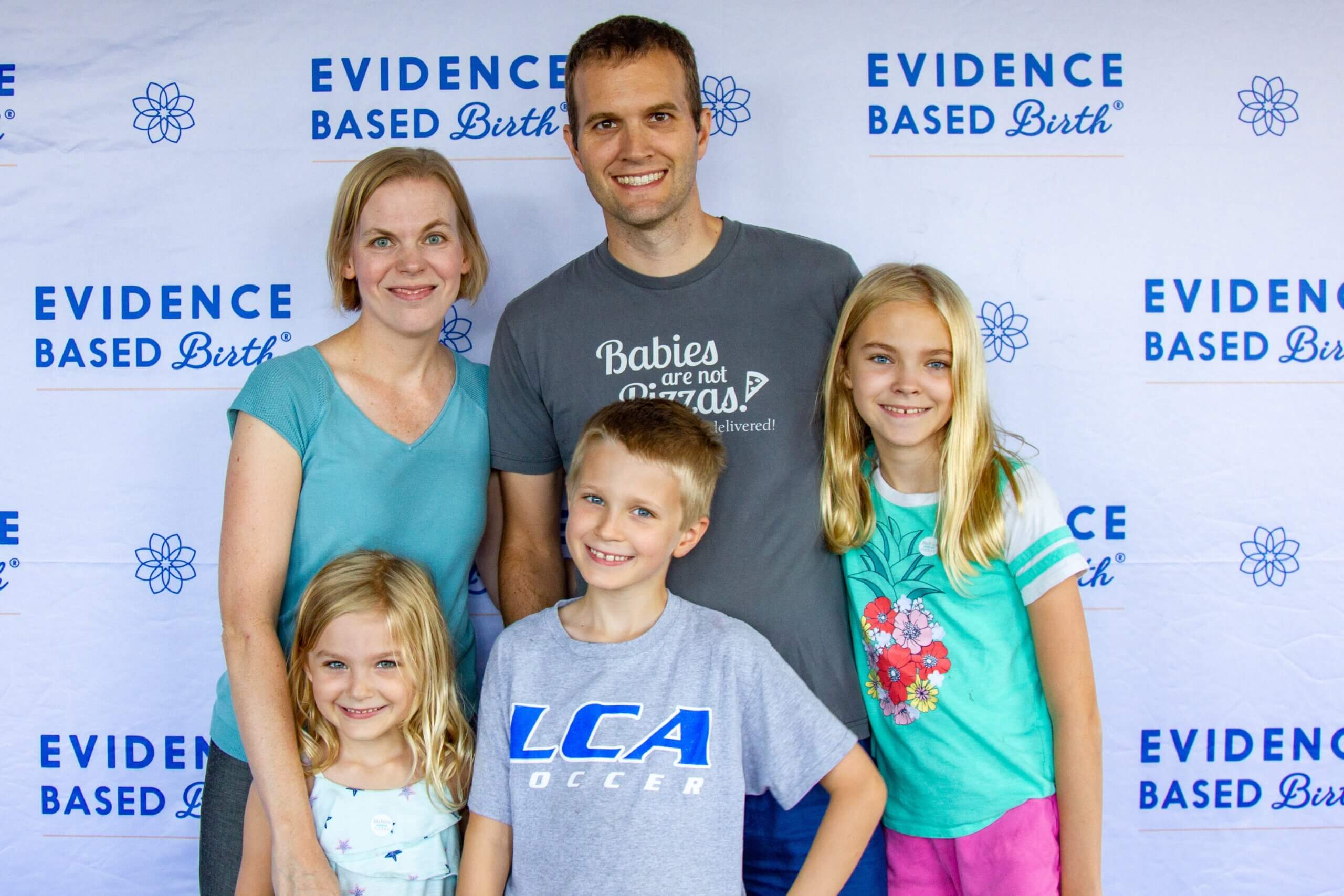
Armed with this new knowledge, she launched her first online class that fall, on a topic her audience had selected: “big” babies. “It’s actually quite rare to have a baby that’s too big to birth, but it’s a common fear in our culture,” says Rebecca.
Within the first couple of hours post-launch, she’d more than recouped her expenses—namely, a nice microphone, Camtasia screen-recording software, and the application fee to become an approved provider of nursing continuing education.
“I was just blown away by the response. But the reason I was able to sell so many tickets, of course, was because I’d already built an email list that summer.”
Flashback to 2012. Rebecca had been steadily building an audience on Facebook, in the era before the Facebook algorithm decided what people saw when they logged in and scrolled their feeds. As a result, Rebecca’s audience grew really quickly. But when the algorithm was implemented, all of a sudden it became much more difficult to be seen on the platform. The organic reach of Rebecca’s posts withered, and her audience growth “tanked.”
I have no way to communicate with these people, she thought. She realized she had to start an email list.
Rebecca jump-started her list by creating a lead magnet—a ten-page research article she created on American obstetrics in the 1950s—and within a week, 1,500 people had downloaded it.
Making the Leap
Early on, Rebecca saw the potential for her growing business, Evidence Based Birth®, to become her main focus. “I’m just putting a very small amount of my time into this, and it’s already grown like crazy,” she recalls thinking.
“What if I could do this full time?”
She was also inspired to make more of a difference in the maternity care system. But she had studied for years to become a professor, and she was on the tenure track with several grants. “I had been building this career in academia and I thought, I can’t leave that. Like, how do you give up that job? It’s so prestigious. It’s well-paying. It’s health insurance. It’s working with students, which I love. And I was doing research and I loved my research team.”
But in the fall of 2015, Rebecca experienced her “cliff’s edge moment,” an encounter with a superior that made her question her academic freedom and her ability to speak her mind on her blog. Although she was on track for tenure, she was still a few years away from it. She was also unhappy with the unsafe care she saw being provided to women giving birth at the hospital affiliated with her university.
“I felt like ethically, even though I loved my university, I love my coworkers, I love my job—eventually I realized I cannot work for this institution anymore, so I had to figure out an escape route.”
Forced to leap, Rebecca started crunching numbers and brainstorming a way out of her current track. The option she came up with was a membership program for Evidence Based Birth that would provide stable, recurring revenue and let her cut the cord.
At the time, Dan was a stay-at-home dad. They both knew that if Rebecca left her job they’d be all in with Evidence Based Birth.
It was go-time. They launched the membership in fall 2015, and locked down 125 members in the first week. It was an amazing start—but not enough to justify quitting her 9-to-5.
So a few months later, Rebecca and Dan sat down and calculated how many members it would take to cover 80 percent of her salary: just 100 more. In January 2016 they relaunched, and got their hundred members. Rebecca gave her notice in February, worked through June, and on July 1, “was free officially.”
Smooth sailing from there, right? Actually, says Rebecca, “It was pretty scary. Even though I knew things would probably be okay, it was still like jumping off a really tall diving board. We didn’t have health insurance, retirement, dental benefits—all those things you get when you’re employed, just vanished. And I couldn’t sleep the first couple of months.”
Thankfully, Rebecca also started feeling the benefits of the change right away. “Like the fact that I was home every day with my husband and all my kids and I wasn’t commuting to work.” She did feel sad—and a little guilty—about leaving behind her coworkers. “I felt like I was letting a lot of people down by leaving.”
“But in the end, they were all just happy for me.”
Now, the membership program that let Rebecca leave her day job has become a core element of the business. Members pay either monthly or annually for access to the entire library of one-pagers or “print-friendly PDFs” that they’ve created over the past few years. They also get access to a wider community via a website forum and private Facebook group with roughly 1,300 professionals from around the world, as well as monthly trainings.
The Impact of COVID-19
The COVID-19 pandemic in 2020 upended many aspects of our lives, and added another layer of concern to the experience of bringing new life into the world. To help address growing anxiety among expectant mothers in the “new normal,” Rebecca and her team started sending a weekly COVID-19 pregnancy email research update since the beginning of the pandemic in March 2020.
“From the very beginning that’s been my focus: how can I serve my audience? And obviously, I modeled that from Pat as well. He’s always asking, how can I serve?”
Rebecca says the weekly emails have been a great way to serve the Evidence Based Birth community in a difficult time—and as of mid-May 2020 the emails had helped grow the email list by another 12,000 subscribers. “It’s this great mutual relationship where the more we serve and provide people with what they need, the more people are drawn to what we’re doing.”
One COVID-related issue her team has been monitoring and reporting on via the weekly emails is how the pandemic has highlighted and exacerbated existing structural inequities. “One of the problems we have in this country is that Black women die at a three to four times higher rate during pregnancy and childbirth and postpartum because they're discriminated against,” says Rebecca, “and that's happening even more so during the pandemic. There’ve been several publicized maternal deaths of Black mothers dying from COVID-19, or from not being treated appropriately even though they didn't have COVID-19.”
The pandemic also made things a lot busier for the team, at least early on. In addition to starting the weekly emails, the team spent the first month of the outbreak converting their in-person and partially online birthing classes to 100 percent online. The upside is that now someone can take an Evidence Based Birth class from anywhere in the world.
“We’re reaching more people with our childbirth education than ever,” Rebecca says.
Her First Book
When one of Rebecca’s early employees suggested she write a book, Rebecca realized how it could be a great tool to grow her audience and help more people understand why “the system is so screwed up and what we can do to fix it.”
“One of the reasons I wrote the book is I really wanted to create change.” Despite the work she’d done so far, many hospitals and doctors still hadn’t changed their outdated or harmful practices. “And so even if a parent comes and reads all the articles for free on my website, they could still show up and be traumatized by the outdated care they receive.”
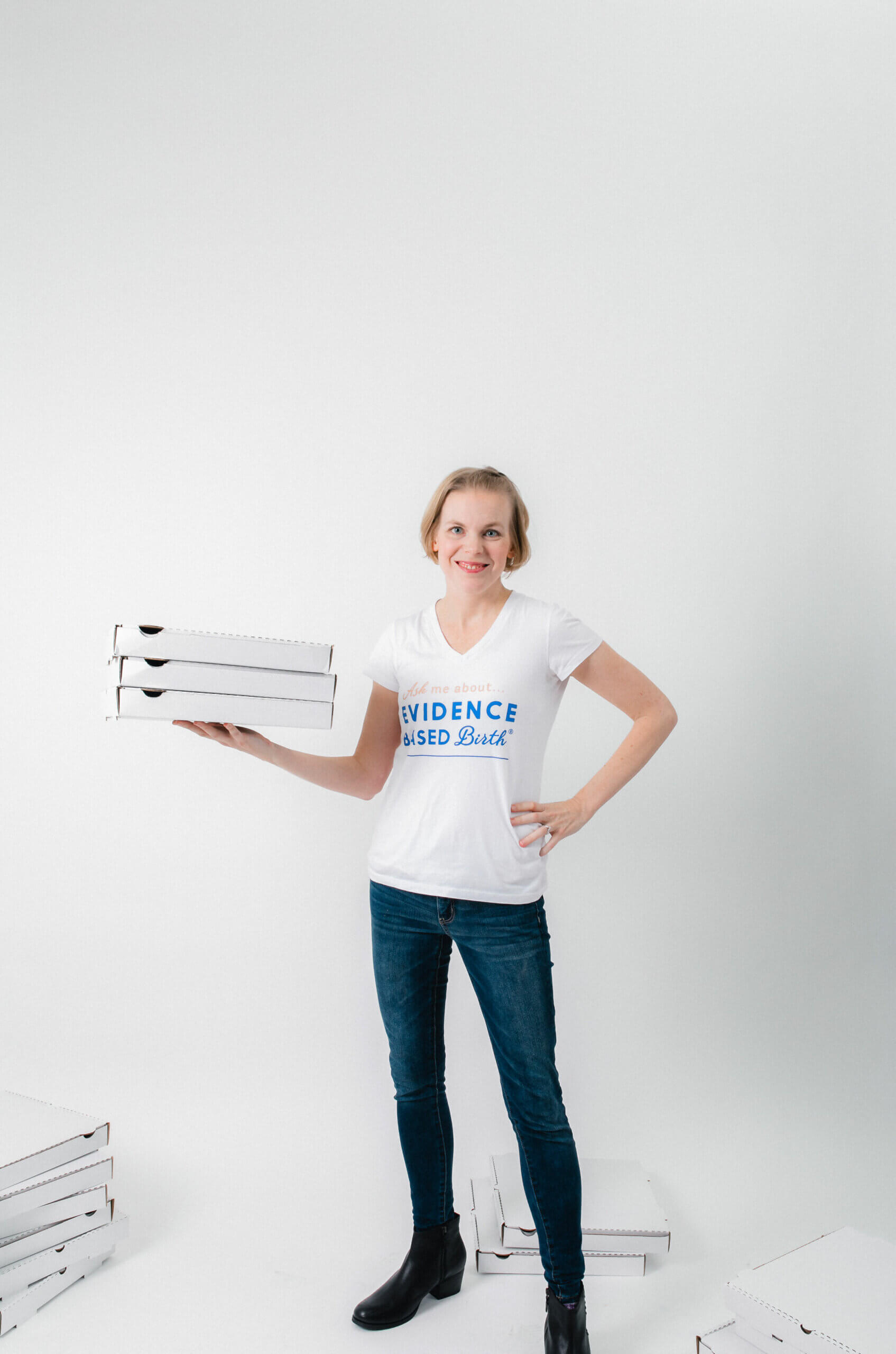
In 2017, Rebecca started writing, leaning heavily on Pat’s guidance on book writing. She also hired Azul Terronez, the book coach who was instrumental in helping Pat write Will It Fly?.
After the first draft was done, Rebecca shared the book with a few reviewers. But one of her readers’ feedback was like a splash of cold water to the face. “Rebecca,” she said, “this is not the book. It doesn’t speak to me.” The crux of the complaint was that the book revolved around science and case studies, and not Rebecca’s compelling personal birth stories. The reviewer encouraged Rebecca to recenter the book’s narrative around her own experience instead.
So Rebecca deleted a big chunk of the book and started over. “It was a pain, but I did it.” In 2019 she finished the book and self-published it with Azul’s help. She also hired an audio engineer to create an Audible version that she read herself.
At the end of the book, Rebecca inserted a note asking people to email her about their experience reading it. “I’ve gotten the most amazing emails from around the world of people who have been impacted by the story. And a lot of them are people inside the healthcare system.”
The book, called Babies Are Not Pizzas: They’re Born, Not Delivered, has been doing “pretty well” on Amazon and provides a nice chunk of passive income for the business. Although it cost more upfront to self-publish, Rebecca and her team get to keep more of the proceeds than if they’d found a traditional publisher. “The cool thing is that the book will support our business for many years to come,” says Rebecca. “As Azul so eloquently talks about, books have ‘long legs’—they last a long time.””
Rebecca has an outline and the start of the first chapter of a second book in the works, slated for publication in 2022.
Getting Lucky but Always Learning
As an online business owner, Rebecca knows that the process of learning and growing is nonstop. In terms of training opportunities, she’s moved beyond the entry level, and focuses mostly on advanced one-on-one or small-group options.
“A lot of the trainings for online business owners don’t necessarily apply to me because I already have a podcast, I already have a membership, I already do profit-first accounting, I already published a book . . . so the kind of professional development I need now is more one-on-one coaching.”
In addition to joining a mastermind group with some other bloggers, she’s a member of Shane and Jocelyn Sams’ Flip Your Life coaching program and has worked with Natalie Eckdahl of BizChix. She also listens to a few podcasts to learn new things and keep her business skills sharp (like SPI!), but she’s careful to limit her intake.
“There’s an endless flow of knowledge you could be gaining about online business. And I’ve learned it’s helpful to stick to a need-to-know basis. If I need to learn something, I go learn it. I don’t just listen for the sake of the thing.”
Rebecca’s drive to keep learning and improving coexists with the realization that she was lucky to build a successful business with Evidence Based Birth almost right away—“like hitting a home run on the first try,” something she knows is uncommon in the online business world.
“Most of my friends who are online entrepreneurs now had to go through several iterations before they found the right online business. I think most people in online business have to pivot several times before they find the correct niche for them.”
Rebecca also says she doesn’t think online business is for everyone. “It takes a lot of dedication, hard work, and perseverance. And what I’ve found is a lot of people, they may work hard, they may be dedicated, but at the end of the day, they get sick of it and they give up or they get discouraged.”
So what can a would-be online entrepreneur do to maximize their chances of success? Here are three of Rebecca’s best pieces of advice.
#1: Have Passion
“It has to be something you’re super passionate about. If you can’t stop thinking about it or writing about it or talking about it, that’s a good sign. One of the only reasons I was successful in this is because I was obsessed with the research on childbirth for years. I’m still at the point where I would like to spend my Friday nights reading research studies about these topics. If you’re not motivated to pursue a topic or niche, you’re going to, after a couple months, get bored and move on. So for me it was finding that deep personal connection with what I wanted to do.”
#2: Solve People’s Problems
“Is there a problem that needs solving? Are people looking for answers for something that’s really bothering them? In my case, it was pretty clear: childbirth care in many hospitals is about twenty to thirty years outdated. So there’s a big problem there that needs solving, and it’s something I was passionate about.”
#3: Produce Great Content
“Like they say, content is king. Creating content that people want to share and tell all their friends about is probably the most valuable thing you can do. And that’s how I got my start, creating really valuable content and giving it away for free, on a topic that people want solving, and on something that I couldn’t stop thinking about.”
About Rebecca
Rebecca Dekker and her husband, Dan, live in Lexington, Kentucky, with their three children, aged 6, 8, and 11. Rebecca is a registered nurse by training. She went to grad school at a young age and worked as an assistant nursing professor for about six years before leaving academia to work on her online business full time.
Rebecca is the author of the best-selling book Babies Are Not Pizzas: They’re Born, Not Delivered, and CEO of Evidence Based Birth®, which has ten team members, including: a graphic designer, audio video editor, instructor-program director, membership coordinator, communications director, research editor, personal assistant, and a CFO (who also happens to be Dan).
The post Success Story: Rebecca Dekker, Who’s Empowering Communities with Childbirth Resources appeared first on Smart Passive Income.
]]>Each month I publish a report of my income, expenses, and the activities that drive each. March 2016 was a busy month—let's get to the report!
The post My March 2016 Monthly Income Report appeared first on Smart Passive Income.
]]>Welcome to another monthly income report here on Smart Passive Income! I’ve been publishing these reports since I started monetizing websites back in 2008, but I’m happy to say that this report in particular is very special.
Why?
One, it’s the first report published on the newly redesigned SPI blog that went live last week. Two, we’re changing up the design of the report specifically, with a new look and a few exciting features.
Previously, my Monthly Income Reports included lessons learned and a list of my income sources. But now you’ll see a completely new look that features a spreadsheet style layout of the income, along with the percentage difference from the previous month and totals for various types of income sources.
I hope you like the new look and feel! As always, I will continue to include the knowledge and lessons I’ve picked up over the past month. Through my experience and experimentation, win or fail, I’m here to help you move forward with your online business too.
Thanks again for being here. Let’s get right into the good stuff…
Latest Goings-On in March
March was a very busy month due to preparation for the redesign of the blog. A lot of the team’s time and effort was spent on development and quality assurance. Plus, because this was a completely brand new WordPress theme, built from the ground up with special post-type designs for posts such as these income reports, podcast episodes, and SPI TV, a lot of new data fields had to be filled in with older content.
There are over 1,000 pieces of content in the archive here on SPI, so…yeah. A big time kudos goes out to the team for their attention to detail!
If you’re on this site for the first time in awhile, look around and see what’s new. Hit the “search” button in the navigation menu and check out what happens, poke around the podcast and SPI TV pages, and try to find some easter eggs if you can too.
Phase two of the redesign is coming next, which will include enhanced search functions, more updates to the income reports, and the addition of a few special pages, such as a page to highlight philanthropic efforts, as well as a page to highlight success stories of SPI readers and listeners. Plus more, of course.
More on that soon!
Thank you to those who have complimented the new design! A lot of effort went into it, so it’s great to hear the positive feedback. Of course, we’re always looking to improve, so we’re listening to all constructive feedback as we continue to make your experience on SPI the best one possible!
Smart Success with Chalene Johnson
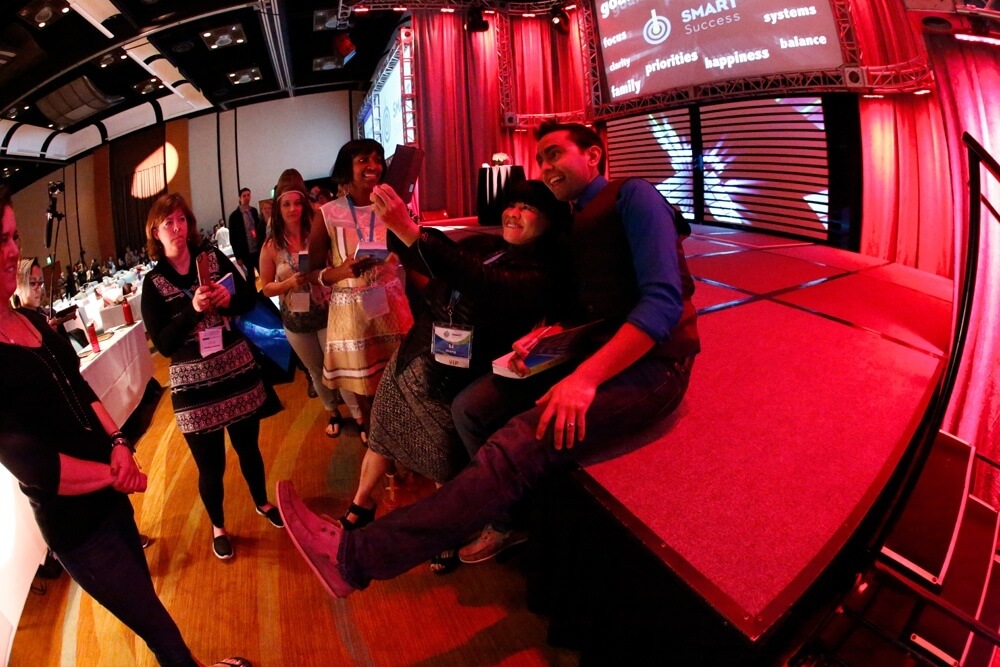
This March, I was invited once again to speak at one of my all-time favorite events, the Smart Success Live with Chalene Johnson.
Chalene was featured in Session #167 of The SPI Podcast for having some of the most raving fans ever, a key reason why I love speaking at her event. Her crowd is sensational, and the energy in the room is always something that fires me up for a great performance.
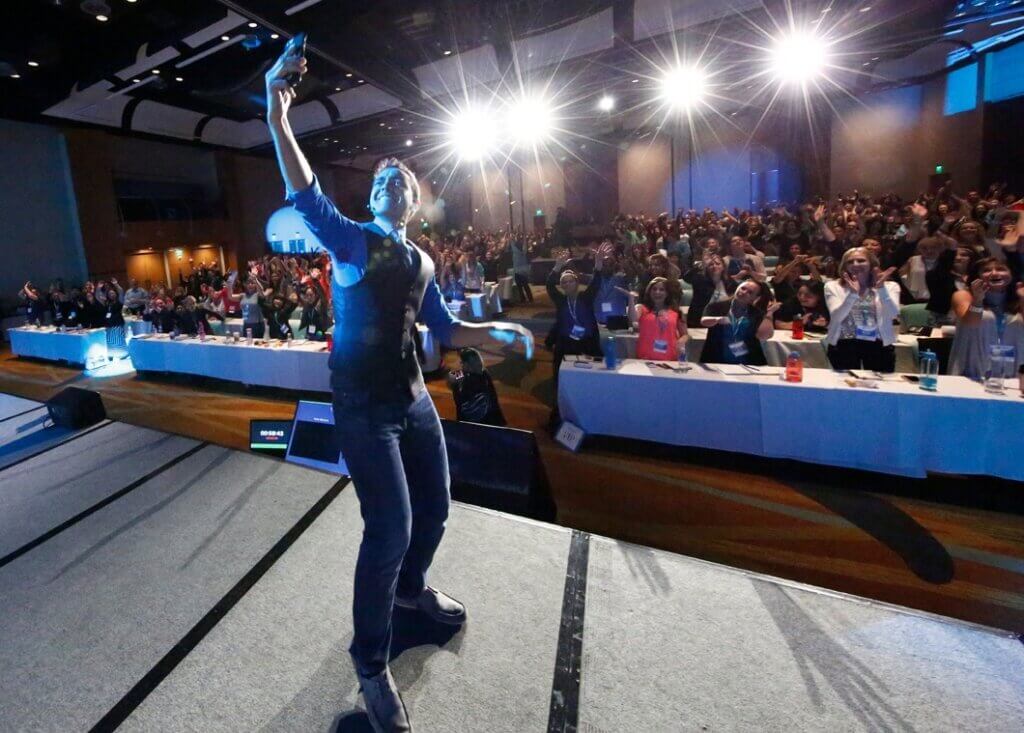
This particular presentation featured completely brand new material, a prospect that is always fun and exciting because you’re never quite sure how the crowd is going to react. What made it even more special was that it was my first test run of a presentation about my book, Will It Fly? This is important because I want to be able to present the book at live events in the future. [This link leads to Amazon. Full disclosure: I receive affiliate commission if you purchase from this link.]
This one was going to set the baseline.
I started the presentation discussing Pencils of Promise, a non-profit for-purpose organization that I’m connected to on multiple levels: I worked with them a couple of years ago to build schools in Ghana (thank you to those who donated to my 2014 birthday campaign!), and I’ve since become a member of the advisory board.
Chalene’s audience rallied together for my thirty-third birthday in 2015 to raise a total of over $20,000, which was just about enough to build an entirely new school. They gifted that on my behalf, so I wanted to start the presentation by thanking them in a big way. I shared some footage of my 2015 trip to Ghana, but I also included some special footage—a short clip directly from the children they helped, shouting “Thank you Chalene!” over and over again with huge smiles on their faces. Also, I thanked Nicole Walters (@NapturalNicole) for lighting the fire in Chalene’s community related to this cause. Thank you!
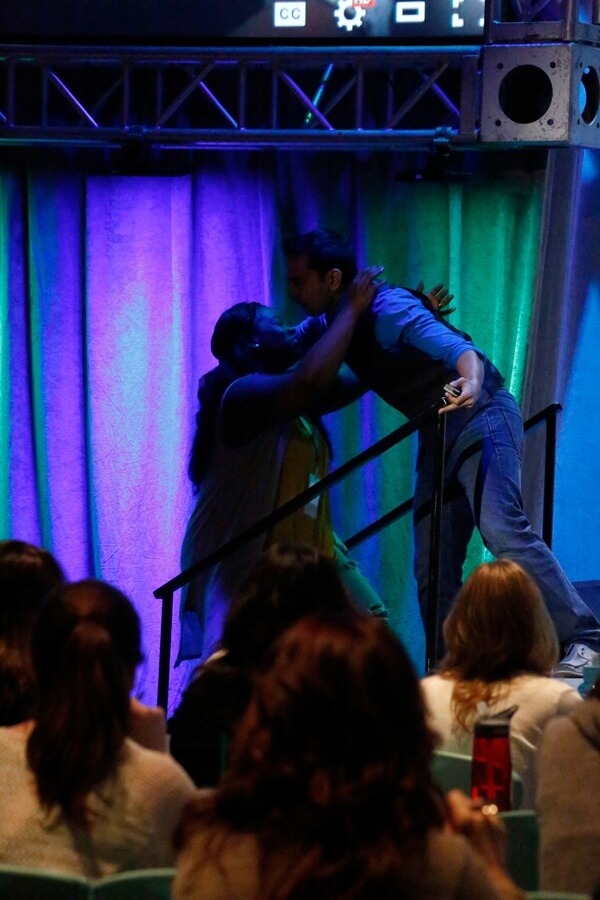
The presentation was awesome and was very well received, and the coolest and most humbling part of the entire thing happened afterward when more than two hundred VIPs, all of whom were gifted Will It Fly?, stood in line to have me sign their books and take pictures.
Thank you to all of Chalene’s amazing lifers! I appreciate each and every one of you for your support, energy, and what I know you’re doing to make positive change in this world.
Book Sales—How’s Will It Fly Doing?
For those of you who remember my February 2016 Income Report, it was a record month largely due to the launch of Will It Fly bringing in over $45k in earnings. But the big question was: How was that going to fare in March, a month after the launch was over and the excitement died down?
Well, as expected, sales dipped substantially, as well as rankings on Amazon. It still continues to rank relatively high for a book that’s no longer considered new in some of these categories, but we’re nowhere near the earnings we had in February.
With that said, the audiobook did finally launch, and sales have been coming in from that.
As a reminder, here are the totals in February:
- Paperback (6,323 copies): $31,679.19
- Kindle (9,351 copies): $13,403.95
- Total: $45,083.14
And in March? Here's the breakdown:
- Paperback (584 copies): $3,022.69
- Kindle (1,046 copies): $3,920.06
- Audiobook (1,072 copies): $7,696.96 (check when real earnings come in!)
- Total: $14,639.71
It’s not terrible, but compared to launch month, it’s about a 67 percent decrease. Like I said though, this is expected. The trick is to figure out how we keep these sales up long into the future. The true success of a book, I feel, is its longevity, which is why I wrote the book in the way that I did, but let’s see if it’ll continue to roll.
Only time will tell. As always, you’ll continually get updates in each month’s report, along with what I’m doing to try and continue to get exposure for the book.
More on the audiobook a little later in this post, because there was a big lesson I learned that I wish I could have been smarter about, but first let’s get to this month’s numbers…in the new format!
It should be self explanatory, but as you’ll see, the first column of numbers is this month’s earnings for that particular line item. The second column is the difference from the previous month, and the last column is the percentage difference.
Full Disclosure: Some of the items in the list below are affiliate links, which means that if you choose to make a purchase through that link, I will earn a commission. This commission comes at no additional cost to you. Please understand that I have experience with all of these companies, and I recommend them because they are helpful and useful, not because of the small commissions I make if you decide to buy something. Please do not spend any money on these products unless you feel you need them or that they will help you achieve your goals.
The Biggest Lesson I Learned in March
While the preparation for the redesign was happening, as well as Chalene’s event, I also had the launch of the audiobook for Will It Fly?, which was scheduled for release on March 21.
The launch went well, and I did push it out a bit, but not nearly as much as the physical and Kindle versions of the book. However, with all that being said, I did make a big mistake with the audiobook, something that could have been avoided with just a few extra hours of work.
You see, I could have recorded the audiobook myself with my own podcasting equipment. Instead, I decided to record in a professional studio here in San Diego. I did this for a few reasons:
- I wanted to get into the right mindset when recording the book. Driving to and entering a studio with a sound engineer would help me focus and really get into it.
- A sound engineer. I soon discovered that having an engineer there made it a lot easier. He assisted me from the other room, outside of the booth, catching little mistakes here and there, and guiding me through the recording process. He even gave me a few compliments and encouraged me when I did something well.
- I would be able to get it done much faster, especially related to the editing portion of the audiobook.
After recording nine hours of content, and then re-recording about an hour of it (the introduction and Chapter 1) because I wasn’t happy with the energy I had at the start, I was excited to get the final files in my hand and upload them to ACX.com.
Note: I’ll be doing a detailed “how to create an audiobook” tutorial in the near future with step-by-step details for you to follow if you’d like to get your book up on Audible.com.
Even though there were over nine hours of recorded audio, the final files that came back from the editor amounted to six hours and twenty-four minutes. That’s because there are a lot of things that get properly edited out, like mess-ups, coughs and sneezes, and anytime I would repeat a phrase to try and get the tone and rhythm right.
Unfortunately, the editor missed a few of them, and in the final version that was uploaded to Audible, there were a few instances where I repeated a phrase.
It’s nothing huge. Similar to a spelling error or grammar mistake, it doesn’t necessarily change the content or how valuable it is, but it’s something people notice and ultimately has an effect on your overall performance or brand. For most, it’s no biggie. But for some, it’s a sign that not enough time and attention was put into the final product.
And that’s exactly what happened. Because of the rush to meet the deadline, with the Audible review period sometimes taking as long as two weeks (they listen to it in-house too), I needed to get the files on ACX.com early enough to meet the March 21 deadline. And because of that, I didn’t give myself or my team enough time to do a completely thorough review of the files. This wasn’t the editor’s fault either. It was ours, and mainly mine. The editor even said that we should do one final detailed review to catch any last minute errors such as these. He even said these were common, and for whatever reason we didn’t take it seriously.
For those of you who picked up the audiobook version of Will It Fly? early and have noticed the repeat phrases, I apologize. I know this doesn’t take away from how valuable the book is, but I know it’s something you pay attention to, and you expect better of me. Yes, we all make mistakes, but as I try to transition from “scrappy entrepreneur” to more of a CEO of my business and company, this is one of those things that I should have spent a little extra time and care on. I’ve dedicated extra time on the blog content in terms of editorial, so there’s no reason I shouldn’t have given the audiobook the same thorough treatment.
Thanks for understanding, and if you have the earlier version of the audiobook (the one you can download now should be fully corrected), you can simply call Audible to have them replace the version you have in your library with the updated one. It’s these types of hiccups that make us better entrepreneurs though, and as long as you don’t make the same mistake twice, that’s what matters. You can be sure that during the next go-around with an audiobook, this mistake will not happen.
Cheers, thanks so much, and I look forward to sharing more helpful content with you here on the blog, on the podcast and on SPI TV!
The post My March 2016 Monthly Income Report appeared first on Smart Passive Income.
]]>