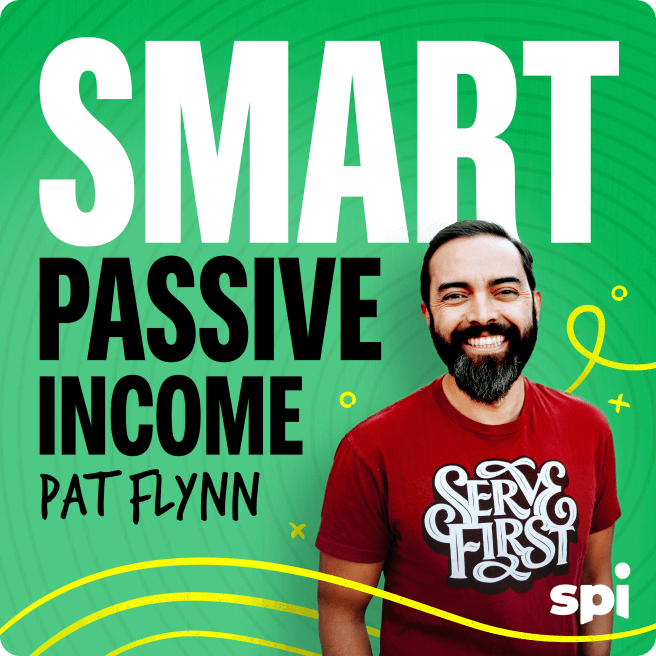


Fear is often the biggest thing holding us back. So how do we neutralize its power over us? What can we do to stop it from manifesting as procrastination and perfectionism? How do we come to terms with uncertainty and move toward success?
We tackle all that in this incredible episode with my guest, Dr. Corey Wilks, Psy.D. This session is an absolute masterclass on conquering fear and transforming your mindset!
Dr. Wilks is a clinical psychologist and entrepreneur specializing in helping creators reach their potential and build thriving businesses. Tune in because the tips and strategies shared here make for one of the most impactful interviews I’ve ever recorded!
This conversation is a deep dive into everything from defeating the Four Horsemen of Fear — failure, uncertainty, ridicule, and success — to using psychology to price your products and deal with trolls and haters.
My chat with Dr. Wilks will blow your mind and rewire it to help you reach your most ambitious goals, so don’t miss out. Listen in and enjoy!
Today’s Guest
Dr. Corey Wilks
Dr. Corey Wilks is a psychologist, coach, solopreneur, and writer for Psychology Today.
In 2020, he stopped practicing therapy to start his own business. Now, he uses his expertise to help creators reach their potential and build a values-aligned life and business.
He’s worked with some of the top creator communities, including Ali Abdaal’s Part-Time YouTuber Academy, David Perell’s Write of Passage, and Jay Clouse’s The Lab.
Beyond coaching and creating courses, he writes the Creator Alchemy newsletter, where he explores the psychology of human flourishing, building a values-aligned life, content creation, and online business.
- Find out more at CoreyWilksPsyD.com
- Subscribe to the Creator Alchemy newsletter
You’ll Learn
- The Four Horsemen of Fear — failure, uncertainty, ridicule, and success
- Why a lot of people are more afraid of succeeding than failing
- Overcoming perfectionism and procrastination
- Getting over the fear of charging your worth
- How to use psychology to price your products
- The comparison game and how to deal with trolls and haters
Resources
- Subscribe to Unstuck — my weekly newsletter on what’s working in business right now, delivered free, straight to your inbox
- Connect with Pat on Twitter and Instagram
SPI 683: A Masterclass on Your Mindset as a Creator with Corey Wilks
Corey Wilks: Fundamentally, we fear the unknown. Anything we’re ever afraid of, it’s, we’re, we’re afraid of what could happen. So by making the unknown known or at least knowable, we rob fear of its power over us. Because if I fail, I know for a fact this is my strategy to move forward. I know if people make fun of me or if I make the wrong decision or whatever. I know exactly how I will recover and move forward with my life. Once you have that peace, that fear no longer is powerful enough to stop you from moving forward.
Pat Flynn: You know, I talk about this all the time, how important it is to master your mindset, because if you don’t do that, none of the strategies, tactics, funnels, any of the stuff we talk about here on the show or stuff that you’re learning in courses or wherever, none of that’s gonna matter. You’ve got to master your mindset.
How do you get over the fear of putting something out there in the world? How do you understand why you are procrastinating and why you are a perfectionist? How to understand why you’re actually deep down, and you might not even know this, but actually afraid of succeeding, right? We are always fearing the unknown and the uncertain.
And today we’re gonna have a masterclass on how to really begin to understand what’s going on up in here in our brains, so we could actually do the things out there to best serve others. You gotta listen to this episode. This is a masterclass on your mindset with Corey Wilks. You gotta check him out.
Corey Wilks. CoreyWilksPsyD.com, and we will have all the show notes and links for you at the end. But this is episode 683 and it’s going to blow your mind and change your mind and help your mind. So I hope you don’t mind, but we’re about to dive in. Here we go.
Announcer: You’re listening to the Smart Passive Income Podcast, a proud member of the Entrepreneur Podcast Network, a show that’s all about working hard now, so you can sit back and reap the benefits later. And now your host, he wants to go on a real life treasure hunt one day, Pat Flynn.
Pat Flynn: Corey, welcome to the SPI Podcast. Thanks for being here, man.
Corey Wilks: Thanks for having me. I appreciate it.
Pat Flynn: You know, I, I’m excited. I know that you’ve been somebody who has followed SPI a little bit and, and especially in the beginning of your journey.
So I’m curious, like how, or when did SPI come into your world? What were you doing before that? Because I know you’re on your own now. You’re doing some amazing things, helping creators. We’re gonna get into a lot of the stuff that you help those creators with. But let’s go back to your origin story a little bit.
Tell me about it.
Corey Wilks: So I’m trained as a psychologist, right? Like I’m a licensed clinical psychologist. So I spent 12 years going through school, doing all that, and I was specializing, working with like physicians in a medical setting. And around 2020, I negotiated a remote telehealth position with my employer cuz we had, we had moved my girlfriend, she moved to get her PhD and two months into that new contract I got fired because they were like, look, your numbers are great, patients love you, coworkers love you, your model employee, like by the book. But we’re pulling everybody back into the clinic and this is 2020. Right, right. Like peak covid stuff. And they’re like, because you’re exclusively remote, you’re fired. Here’s your 30 days notice. So I had spent, you know, 12 years to do this and I couldn’t anymore because the way therapy licensure works, I can be anywhere in the world and do a remote session with you, but you as my patient, have to physically be in the state I’m licensed in.
Well, I was licensed in West Virginia, living in Kentucky. Right, so I couldn’t find another remote job out of West Virginia. I wasn’t willing to move back cuz we had just moved to Kentucky and in order for me to get license in Kentucky would’ve taken four to six months just because of, of, of how, you know, long the, the licensure process is.
So I was like, man, I’ve racked up, like I said, 12 years and like $200,000 in student debt to do this. And I literally, I can’t practice therapy anymore. What am I gonna do with my life? So I had kind of toyed around with the idea of entrepreneurship. But man, I grew up on like food stamps and public housing, right?
Like I grew up super poor, like church donations for, for Thanksgiving turkey, every now and then, right? Like that level of poverty. So I, I knew nothing about business. I knew no entrepreneurs. So around that time, cuz December 4th, 2020 was my last day as an employee and I just, I self-educated, I learned everything I could about building a business, copywriting, marketing, spinning up a landing, you know, a landing page website, all of that in the span of a couple months. And those first four months were, I, I made no money, right? Because I had no idea what I was doing. I just trying to figure it out. But through finding resources, like all the things you’ve created with all of your, your channels and things were super, super helpful.
And that’s why I reached out who originally we connected cuz just so much of a combination man of the tactical things you share and then just like you being a model of, Hey, this is possible. That level of inspiration was, was instrumental in my own journey as a creator and solopreneur. And then I just, I took a bunch of courses, I took writing courses, YouTube courses, you know, copywriting stuff, and just taught myself that.
So I, I took all of the training I’d learned as a psychologist, but I applied it to a different area. Right. And then I got into coaching. Coaching is almost like a four letter word in the therapy world because a lot of people have this stigma against coaching because, You know, anybody can call themselves a life coach, for example.
There are no regulations with that. You can’t call yourself a therapist without a license, but I had read an article by the America Psychological Association at this time. I got fired. And they were like, look, yes, coaching is the wild west. It is an unregulated field, but for people who have a mental health background, they should actually join this discipline to improve the quality of it and stand out.
So that’s what I did. I got some extra training to do coaching cuz one thing I learned with clinical psychology, like therapy, clinical psychology defines wellness as the absence of illness. But just because you’re not sick doesn’t mean you’re healthy. Right? So my job as a therapist was only to get people to be like what’s called subclinical, meaning they no longer worn a diagnosis.
But through coaching, I. It isn’t just about helping people survive, it’s legitimately about helping them thrive to flourish, to self-actualize. So that, I love doing therapy, but coaching and creating content and educating people is way more fulfilling for me because it allows me to build my life around freedom and, and helping people on my terms instead of having to deal with all the, the bureaucracy and, and dealing with insurance and all that other stuff.
So that’s a little bit about my own origin story.
Pat Flynn: Yeah, it’s cool. It’s so, it’s, it’s almost like. You know, maybe in the moment when you’re getting laid off or fired, it’s, it’s not feeling good. But looking back, I mean, would you consider this sort of a blessing in disguise, in fact, and and what have you now been able to do since the, since being fired?
Corey Wilks: At the time, it sucked. I felt betrayed. Right, right. But it, it was legitimately one of the best things that’s ever happened to me because it forced me out. Right. It forced me to recognize I was burned out anyway. It forced me to, cause I had dabbled with like writing on Medium a little bit. But it forced me to like to, to basically jump ahead five years of what I wanted to do, cuz I was going to do like a little side hustle thing and just, you know, kind of dip my toes in.
But all of a sudden it was like, I have to figure out a way to make writing viable. I have to find a way to make money with my knowledge. So it, it was, it was a great forcing function to learn all of that, right? So since then, you know, I, I write my newsletter, I write for Psychology Today on the psychology of human flourishing, fulfillment, and what gets in our way.
And I, you know, now I focus on helping creators and solopreneurs kind of reach their potential using psychology and things. So it was. It was definitely that inflection point in my life of no longer feeling burnout, being able to fully live a life of freedom and build a business aligned with my values rather than feeling trapped.
Pat Flynn: Well, congratulations on getting fired. Thanks. Love it. And you know, I’m curious, your expertise as a psychologist, now coming into the coaching field, I mean, this is, this is a huge advantage that you have, in fact, this background that, that you have. What are the things that you’ve taken from that background that directly apply to the coaching that you do now and and the people that you serve?
Corey Wilks: Yeah, so fundamental skills between therapy and coaching are the same. So things like asking open-ended questions to continue the conversation, right? So a close question would be, are you okay? That’s a yes or no question. Versus how are you feeling today? What’s going on? Well, how would you approach that?
What has, what have you tried before? That’s a very open-ended question. So it is super helpful in continuing a conversation so that you can help people develop insight into, you know, what they’re going through and what may help them kind of overcome their current obstacles. Building rapport, right? Like just being personable, like making people feel safe, like psychologically safe and comfortable.
Those are things that are very, very foundational for therapy that directly apply over to coaching, right? Because. The main reasons people hire a coach tend to come down to clarity, strategy, and accountability. So people tend, if they have clarity on what they’re on, what they need to do, they’re probably not gonna hire a coach cuz they know what they need to do.
So a lot of times people, they may be very insightful individuals, but they may have, cuz man, most of the time we get in our own way, like we are typically the biggest bottleneck in our own lives and businesses and our own like limiting beliefs or self-sabotaging behaviors, which we can get into if you want, but it’s usually us that is in our own way.
A coach in applying my background in psychology is all about helping them develop that clarity of what do you actually want to build? Where do you actually want to go? What’s actually holding you back, and how can you develop the strategies? The second part to overcome, right, and then the accountability.
I don’t hold people accountable. They hold themselves accountable to me. Right. Just the fact that, and, and this, you don’t have to hire a coach, right? You can just be like an accountability buddy, like a friend, right? The fact that you told somebody, think about going to the gym. If it’s just you working out, you may feel tired and not go to the gym, but if you told a friend you were gonna meet them there, well now you kind of have to, cuz you’re holding yourself accountable to somebody else.
And that’s really wh where a coach comes in. A lot of times, especially for like high performers, a lot of times they know what they need to do, there’s just some stumbling block. So the fact that they told you they’re going to do it, they typically do. So follow through is, is a real benefit with coaching.
Pat Flynn: That’s really cool. And you know, I know you help creators now, and a lot of creators are now figuring this out. They’re doing what you did in 2020 trying to learn the ropes. And I’m curious when you started in 2020, Is it interesting kind of doing self therapy on yourself, like having that practice and background, but then diving into your own psyche and figuring out how you got in your own way?
Did you get in your own way when you were beginning and and how?
Corey Wilks: Oh, I still do. Yeah, like that. Just, it just, How I get in my way evolves, right? I literally have on my desk that I look at every day. I have two post-it notes. One says You’re thinking too small, and the other says, stop over complicating it. Cuz they’re daily reminders to me that I am typically in my own way.
It isn’t all these other things. It is. I’m in my way in in, in some fashion. When it comes to creators, and not just beginner creators, especially beginner creators, but you know, more established creators also struggle with these, I call ’em the four horsemen of fear, and these are the most common limiting beliefs.
I consistently see hold people back because most people think lack of money or lack of resources or intelligence holds people back. Those typically aren’t actually what’s holding us back. So the first horseman is the fear of failure, right? This is the super common one. Everybody’s familiar with this, like, I, what if I am not good enough?
What if this doesn’t work out right? Super common. The second one is fear of uncertainty, which is, well, which direction should I go? Which, you know, which microphone should I buy? Which camera lens, which, you know, social media, you know, should I focus on right? The third is fear of ridicule. What will people think?
What will my friends and family say if I start a YouTube channel? What will the internet haters say if I tweet this right? We’re so afraid of that ridicule, that judgment that we never start, we stay small. But the fourth one is what trips up so many people and they don’t even realize it. And that is fear of success.
And you may think. Well, Corey, why would I be afraid to achieve the thing I claim to want? Right? The issue is for a lot of us, either we believe we don’t deserve success, or we believe that achieving success will change us in some way, that we will no longer recognize ourselves, right? So I’ve talked to guys before where they’re like, look man, I’ve been the underdog my entire life.
And he was like, what does a dog do if they catch the car? He was like, if I succeed, what if I become complacent? What if I become corrupted by power and influence because I become niche famous and people hang on my every word. What if it means I’ve peaked in life and there’s nothing beyond this, right?
So a lot of people are actually more afraid of succeeding than failing. And that’s one of those like pieces of clarity of like, what are you actually afraid of? What are you actually struggling with right now? Right, and usually the way that I, I walk creators through this is, it’s similar to how Tim Ferris talks about fear setting, but I call it fear inoculation.
Right? So like an inoculation like vaccine, you expose yourself to a little bit of the dangerous thing, so you develop a an immunity to it, right? I’m not that kind of doctor, but that’s my very basic understanding of how vaccines worked. I think that’s right. So with fear inoculation, I would say something like, let’s assume your worst case scenario happens.
Let’s assume you fail. With that assumption in place, what is your plan? How are you going to recover? What can you learn from it? To then apply to your next endeavor. If you succeed and you become corrupted, you know, by power and influence, what would you do? How would you develop humility? How would you surround yourself with other people who are successful, but maintain humility?
If you’ve peaked in life, how can you recognize that? Yes, you’re at the top of the first mountain, but you’re at the beginning of the mountain range. Now that you’ve achieved this modicum of success, you actually have opened your horizons to so much more that you are capable of achieving that you would’ve never thought possible without this first success.
So whatever that worst case scenario is, really think that through, because fundamentally, we fear the unknown. A, anything we’re ever afraid of, it’s, we’re, we’re afraid of what could happen. Cause we don’t know, don’t understand it. Exactly. So by making the unknown known or at least knowable, we rob fear of its power over us.
Because if I feel prepared of, well, if I fail, I know for a fact this is my strategy to move forward. I know if people make fun of me or if I make the wrong decision or whatever. I know exactly how I will recover and move forward with my life. Once you have that peace, that horseman, that fear no longer is powerful enough to stop you from moving forward.
Pat Flynn: That’s really good. What are the symptoms of fear that can be signals that then tell us, okay, we might actually be having these limiting beliefs? Cuz I think a lot, like a lot of people might. Not believe that they have a fear of success, for example, but are definitely behaving in the way that exemplifies that.
What are, what are some of the symptoms that we could look out for that might signal those things?
Corey Wilks: This is a great question. So yeah, most of the time people don’t like, come to me or, or talk about, oh, Corey, I, I have a fear of success. Right? Because tho those are pretty covert. More overt symptoms are typically self-sabotaging behaviors.
So a lot of people are like, well, Corey, I really struggle with procrastination, or I really struggle with perfectionism or imposter syndrome. So what do most people do? They, they Google all the, the productivity hacks and like, here’s how to overcome procrastination. And most of the time those things just don’t work because they’re treating the symptom and not the root cause is the psychologist be coming out.
So for most of us, perfectionism is a way for us to avoid the thing we’re actually afraid of. Okay. It’s, it’s a fear of avoidance tactic because most people are like, oh, am I profe, you know, I’m just a perfectionist. No, everybody has a high bar for quality for themselves. Everybody has high expectations of themselves.
Overall, perfectionism isn’t a high bar for quality. Perfectionism is you have an unrealistic expectation of your ability to execute, right? Because perfection is unattainable. Like, that’s just like we can agree like nothing is perfect, right? If perfection is unattainable, then perfectionism is expecting yourself to attain the unattainable.
So psychologists do the same called a functional analysis. It sounds fancy, it really isn’t. All it means is what function does this behavior serve? Perfectionism typically serves the function to avoid the thing you’re afraid of. So if I’m afraid of, of people making fun of me, or judging me or ridiculing me for putting up this YouTube video, then perfectionism kicks in and I constantly tinker and try to add a little bit more and change it a little bit, and I never actually hit publish because it isn’t that perfectionism is getting in my way. Perfectionism is actually helping me avoid facing that fear of ridicule. So again, doing that fear inoculation of like, well, what if people make fun of you? Well, I’ll just, I’ll make another one. The people I actually care about and are in my corner, they’re not going to make fun of me.
So all these people, you know, sending negative comments, they’re not truly in my audience. Their opinion is irrelevant. Moving on, hit publish. Right? Procrastination is the same thing. If you’re afraid of failing or if you’re afraid of succeeding, what procrastination does is it constantly helps you push the, the finish line.
It, he, it constantly helps you. Oh, I’ll just, I’m tired today. Oh, I got so many other things to do. And shiny object syndrome, that is serving a specific function. It isn’t just that you, you suck at executing. Right, because most procrastinators, when they have a deadline, they actually get things done, right?
Like they’re really good at doing a lot of work in a short amount of time if they have a deadline. So you, you, you don’t actually struggle with procrastination. Most of the time you’re actually afraid. So like for myself, anytime I, I find myself getting into the weeds or going down like a YouTube rabbit hole or, you know, just obsessing or pre-op optimizing, I ask myself, what am I afraid of right now?
Let me deal with that. And that, that, just that how, how might this be related to my fear? That is such a powerful clarifying question you can ask yourself on a day-to-day basis, cuz that really helps you get to the root of what your problem actually is and then you can develop strategies to start to overcome it.
Pat Flynn: Yeah. And I do wanna ask you what those strategies are. And you know, what comes to mind is like those of us who allow for procrastination to happen and perfectionism to happen, we, we are really good at being afraid. That’s, we’re allowing the, being afraid to happen. Right. And those are the, just the mechanisms that support that.
Right. So I think many people listening can then understand, okay, well yes, I, okay. I am scared of getting on stage and, and being ridiculed. I remember when I first started speaking on stage, I had visions of people like throwing rotten tomatoes at me, even though, like logic, they like, I literally thought that was gonna happen, but that’s so illogical.
But when we’re afraid and when, when we’re fearing things, oftentimes those emotions take over and logic goes all like out the window, right? So yes, I know there’s logic here. Okay, let’s, let’s think about the future. What’s the worst case scenario? It’s not as bad as you might think, but the emotion is so strong sometimes, or we’ve been so conditioned to be or behave a certain way.
How, how might we. Like, what’s the realistic expectation for how might we, and how much time it would take to, to distance ourselves from the person that we don’t wanna be.
Corey Wilks: One simple way to, to see life and, and any endeavor, any goal you have is to see life as a series of just skills and skill deficits.
So it isn’t that I’m, I’m terrible at public speaking, it’s that I haven’t practiced the skill of public speaking. Okay, because here’s the thing, man, right before we hit record, I immediately had to pee. And I had sweaty hands, right? I’ve been on, you know, plenty of podcasts. I’ve done public speaking. I love talking.
I, that’s what I, half of what I do for a living, right? But every single time before I quote, unquote go on stage, I immediately get nervous, right? That’s just, and, and, okay, and, and honestly, that’s what I consistently hear from people. It’s just that you don’t let it stop you, right? Because there, there are two things that, that I kind of think about.
One, what value do I potentially have to give to this audience? Their needs are more important than my insecurities, so that way I’m, I’m focusing on being selfless rather than selfish because a lot of times fear tends to be selfish. Anxiety tends to be selfish cuz we’re focusing on ourselves too much.
This is how I feel, this is what I’m nervous people are gonna think I’m dumb or I’m gonna stumble over my words. You may. So what? Right, because again, nobody’s perfect. Right? But if I focus on the audience and, and not the room, and how many people are there so much as, what do they need to hear? What value can I bring to the table that would benefit other people?
That, now, cuz think of it this way, a lot of people are like non-confrontational. They’re more introverted, they’re anxious just in social situations. So if you go to a restaurant and the, you know, the server gets your order wrong, maybe you, you suck at the skill of confrontation and, and communication so much.
You’re just like, oh, okay, thanks. And you just, you let it slide. But if your friend, if their order gets wrong, you’re like, Hey. This isn’t what they ordered. Like you immediately go into that like mama or Papa Bear mode to protect others. That is specifically because you switched from this selfish to selfless perspective.
You changed your perspective. You were no longer focusing on yourself, you were focusing on other people, and that all of a sudden, naturally makes us more courageous, purely because we’re no longer focusing on our own insecurities. That’s probably the biggest thing that I personally do. There’s another like little trick you can do that you know is sort of a hit or miss thing, but you can label the physiological sensations as excitement rather than anxiety.
That’s what I do. Okay. Because yeah, that’s, yeah, that’s, yeah. That’s one of those like IntroPsych concepts you learn. That’s a really simple one because physiologically, the symptoms are largely the same, right? You know, butterflies in your tummys, you’ve gotta pee. You’re kind of nervous, you shake a little bit.
That is the same if you’re super excited or if you’re super anxious. So just by telling yourself, I’m excited, it allows your brain to be like, oh, these physiological cessations are due to excitement, not anxiety. So now all of a sudden a lot of that anxiety goes away and instead you experience the positive emotion of excitement.
Pat Flynn: Yeah, that’s exactly what I do. So every time I speak on stage and I’ve spoken on hundreds of stages, I get really nervous and I, I have to pee and I do all these things and I, I start to like get sweaty palms, but I now know that that’s never gonna go away. I’ve just changed the story of what that actually means.
It means I’m excited. It means I get to rock the show and, and it’s like, the excitement is not, oh, I like, this could go bad. It’s this could go so well now, like I just changed what the purpose is. One thing that somebody told me one day specifically about speaking, but I think it relates to, to what you just said, is like, you remember when Oprah was like, you get a car, you get a car, you get a car, and she’s like, she comes out and gives everybody a car.
She’s like, if you approach your time on stage or your time on a podcast or you know, your guest spot that usually makes you nervous if you take it away from you and make it about them, and, and, and what you have to offer is like, imagine how Oprah felt before she did that, right? She probably was super excited for what the reaction was gonna be when that happened.
And it’s like if you consider what you have to offer, something that valuable. And yes, a car is a valuable thing, but so is knowledge and helping people and whatever. It’s like you’re gonna be stoked to go out there and do it, right? Like Oprah probably wasn’t like, oh no, I’m so nervous to get out there and gift everybody these cars.
Like, she was probably really excited about it. And we’ve had this meme that we’ve had for, you know, a couple decades now as a result. So I, I love this. It’s real. It’s, it’s some of the stuff, you know, we, we come here on the show and. We talk email strategies and funnels and all these kinds of things, and those are important, but if you don’t master your psyche or at least start to figure it out, then none of that’s really gonna matter.
I’d love for you to talk to the creator who has gotten over those mountains of fear with putting themselves out there, with getting on podcasts, getting on stages, et cetera, but I wanna talk to the person who’s starting to sell for the first time. There’s something that happens when a creator switches from free content platform, short form, long form, whatever it might be, to, oh, now I gotta ask people for money. How, how might you, or how do you coach a person who’s going through that process for the first time where you start to either back off or have a lack of confidence with the product that you are offering because now there’s money involved and it feels just more real.
Corey Wilks: Man, it’s like you do this for a living. You have such great questions.
Pat Flynn: So I am your avatar. Just, I’m remembering who I was 10 years ago, you know, or, or when did I start selling courses? 2017. So six years ago I was in that, that very same boat, so it wasn’t that long ago.
Corey Wilks: So a couple things. One of my friends, he’s, he’s a YouTuber.
He’s got. I don’t know, two, 300,000 subscribers within his niche. And he also runs a gym and he does a bunch of other things. So like he’s successful across multiple, you know, streams. And locally he hosted a marketing seminar and it was basically just like creating a content flywheel for people who were aspiring creators.
And he gave it away for free at first to just kind of beta test it. And of the 40 people who RSVP’d, I think like 12, showed up to a free event by somebody who makes a legit living from teaching these exact things, right? Of those 12 people who showed up, one dude left. Because he had a haircut appointment.
Half the people were on their phones not paying attention. And I talked to him afterward cuz we were friends and I was just like, dude, this is a great presentation. You know, you could charge so much for this. It was so valuable. And we started talking about how, how few people showed up and stayed till the end and actually paid attention.
And he was like, look man, people don’t value what is given away for free. And like that really changed my perspective on pricing because I do give most of my content away for free as far as like articles, my newsletter, things like that. But if you want people to take action and feel invested, right, that whole skin in the game concept, if you want people to feel invested, you are doing them a disservice by not charging sometimes.
Like, I know that may sound like some sleazy snake oil like salesman thing, but legitimately like think about the things that you’ve spent money on or a significant amount of money on. You’re probably attached to them. You probably applied yourself more to that course or to that thing because you inherently.
Value that more because you paid more for it. Right. Now, I’m not saying artificially inflate your prices. Right, but I kind of think about it a couple ways. One, there’s that you have to charge if you want people to take action, if you want people to take the content seriously and actually do it, if it’s a course or you know, whatever, you have to charge.
If, if there’s a better way to do it and, and to make it free and actually get people to take action, I would love to learn about it. I haven’t found that yet. The other thing is this is specific to service businesses, right? So service and products, right? Products, you need to charge because people actually, they take action.
But from a service perspective, your time is your most precious resource, right? You can never make more of it. You can never get it back. Once it’s gone, it’s gone, right? I’m a big Memento Morri fan from Stoicism, right? Like, remember, you will die using mortality as a motivator to live fully every day, right?
So my time is precious. So if I’m going to charge for my time, it’s like, well give or take, how much is an hour of my life worth? And obviously you can never put a true price tag on that, but. I think about it as what value can I give to my client relative to what can I reasonably charge for that value, right?
I’m a big fan of, you know, 10x and 100x. So if I can get you a hundred thousand dollars worth of ROI that you would easily pay 10 K four, maybe I’ll charge one K for cuz then it’s just like, it’s a complete no-brainer, right? That’s sort of how I personally think about pricing all of my things, services, products, whatever.
I legitimately want to aim for a 100 x ROI whether or not that’s feasible, so I combine it with me charging you makes you take it seriously. Makes you take action. I value my time and I know the value that I bring to the table. Now the the thing, cuz now more and more people are asking me like how to become coaches specifically.
And that’s usually a question like, well how do I get clients? How do I start charging for people? Right? And obviously you gotta go through your own limiting beliefs around money and pricing and things, and that’s definitely part of it. My advice to people specifically for services start off free, legit, just like DM people talk to people like don’t call dm, like actually get a, you know, build a relationship, but do it for free in order to get a testimonial, build up a couple testimonials, then start charging.
And and charge. Charge what you’re comfortable with. Charge less at first because again, you’re just practicing the skill. You’re practicing the skill of doing that service. You’re practicing the skill of doing a sales call, for example. You’re practicing the skill of just sharing your price with people and then over time, You will learn that people are willing to pay you for that thing and you’re just like, oh, people actually want to pay me to talk to me, to, to like learn from me.
That’s huge validation cuz we all have some insecurity around like our own self-worth to some degree. So that is really good validation of like, oh, 10 people paid me a hundred dollars an hour and now they’re paying me $150 an hour, whatever that number is right now, they’re paying me $500 an hour and just slowly get better.
Obviously, but also slowly, incrementally charge a little bit more because you’re giving people, you’re delivering better results and you just kind of slowly iterate and keep at it. And a similar thing goes with products, right? Create a product, create like a small product that takes you, you know, a handful of hours or a couple weeks to build.
Charge 15, 20 bucks for it, right? Like whatever it, this is just like, this is a validation exercise. My first product was a $19 like micro course, which is basically a Notion template that is like, step one, do this, step two, do that, and then people bought that and then I created a different course at a higher price point.
People bought that, right? It’s just, it’s, again, it’s a skill that you develop.
Pat Flynn: Yeah, I usually offer the same similar kind of advice, like start small and then you can grow big. And you know, I think a lot of us get really swayed by a lot of the media and, and, and even, you know, I’m, I’m guilty of this, like, Hey, look how well we did on this last campaign.
Like, you can do it too. Which, yes, but you know, I have this many years of experience underneath and, you know, yes, my courses and such. Try to fast forward that for people, but. Two final questions here. Corey, this has been really great. Thank you so much, and I look forward to pointing people toward your direction to get even more help here.
But number one, how do we stay focused on our own path when everybody else is sharing their path and we start to see things that we wish we were able to do, we start to compare ourselves. We start to wonder, well, why aren’t. I, there, they started after me and now like, they’re better than me and, and I’m, I’m not doing as well.
Like, what is wrong with me? And then I just stop. Right? This is a very common thing I see with a lot of, a lot of our people too. So let’s talk about the comparison game and, and how to work around that. Cuz this is an epidemic that’s becoming even more and more of a problem with. How much more video and social media is getting right in front of us sometimes without even asking.
Corey Wilks: So obviously, you know, the, the quote about how comparison is the thief of joy, right? Comparing yourself to others is virtually never beneficial. It’s just it isn’t right. We naturally do it cause we wanna see like where we are, like in the pecking order, but the pecking order doesn’t really exist online like it does in like caveman days.
Right. Or like the animal kingdom. It’s just, it’s, it’s very different, right? Because people can self-select and you become, you know, a niche of one. People love you for who you are, that kind of thing. Right. I was listening to, you know, your episode with Roberto, and y’all are talking about like Peter McKennon, how he just kind of does whatever he wants now, right?
He doesn’t compare himself to anybody necessarily. He’s just, he does him right? The way I think about it, so I’m a big fan of the idea of clarifying your core value. I know a lot of people like multiple values for different domains in life. I’m a simple guy. I like to just distill it down to one. And for me, a core value is the fundamental piece that, for you personally, a life well lived must be in alignment with.
So like, my core value is freedom, right? So both freedom to do certain things. Like to go out and be able to have, you know, cook lunch at noon with my girlfriend because I work from home. Or to be able to wear pajama pants all day. Right? I’m in pajama pants right now cause I love pajama pants. Love it. The, the freedom from having to deal with, you know, meetings, that could have been an email. So I say that to say shortly after, so December 2020 lost my job. Right. In January I had so I do Brazilian jiu-Jitsu, which is like the martial arts form of like wrestling or grappling. So bruises are super common. I had a bruise on my shin and it started hurting really bad to the point that I was like, oh, maybe I have like a hairline fracture.
I’ll just walk it off. It’s fine. I had just lost my health insurance. I’ll just walk it off. Cause you know, hashtag America. Yeah. So, it ended up my leg from like ankle to knee turned like this spider vein or spider web looking like red veins. I was like, oh, this isn’t a fracture. Went to the hospital and basically they’re like, yeah, this is a, a really bad infection.
It could have gotten into your blood or your bones, and if it has, you could die. But from, again, this is Covid. All the, the surgery beds, like the hospital beds were full. They couldn’t transfer me to surgery, so they put me on an IV drip that I was unresponsive to, didn’t do anything. After, I think 16 hours waiting, they finally transferred me to get prep for surgery. They quit the antibiotics. They were like, they’re not working. And I remember sitting in the, the hospital bed with no visitors cuz you know, this is after visitor hours with just a beeping machine and the occasional nurse checking my vitals for company.
The labs hadn’t come back yet. We didn’t know if I was gonna die or not. Obviously I didn’t. Spoiler alert cause I’m here, but, and I remember thinking in that hospital bed all alone thinking I could die. Like legitimately, like I’m facing my mortality. If this had been my last week alive, am I satisfied with how I spent my time?
And to me that is a much more powerful thought exercise than, well, what if you had a week to live? What if you had a month to live? Because if you can plan it out, you can party it up, go skydive, and go to Vegas, whatever, right? That isn’t particularly helpful. But if you can only look back in retrospect, that to me is much more powerful because if your answer is, No, I’m not satisfied with how I, if this are my last seven days, you immediately can pinpoint all the things you led into your life that you now can target to change for next week.
You can also target all the things if you say yes, of how I, if I go out today, I’m satisfied, obviously on one more time, but I spent my time doing work that is aligned with my values, that is fulfilling for me. That is intrinsically rewarding for me. That to me is a life well lived. So from that week onward, every week I ask myself that if this had been my last week alive, am I satisfied with how I spent my time?
And for me, that allows me to not play the comparison game. Those people aren’t gonna be with me on my deathbed. Right. Like, it, it isn’t about that. It’s am I doing work that resonates with me on a day-to-day basis, reaching my potential and having as positive of an impact on others as I can, because that is fulfilling for me, and that is a question I take with me forever.
Pat Flynn: Hmm. That is so good. This has definitely been a, a masterclass on the mindset, Corey. Thank you. The last thing I wanna touch on that is a very common issue that a lot of our listeners are dealing with or will have to deal with. Is the haters, the trolls. People out there when we’re publishing videos on YouTube, that comment that just eats you alive from the inside.
How do we be creators in today’s very public world and not be swayed and disrupted by other people in that way?
Corey Wilks: So there are two sort of quotes that I always remind myself of. One is a Nipsey Hussle quote that basically goes, you will never be criticized by somebody doing more than you. You will only ever be criticized by somebody doing less than you.
So anytime I get like a comment from like a hater, it’s always like, what do you do? Right? And it’s always somebody with like no YouTube follower or subscribers or, you know, zero followers on Twitter or the only thing they do is complain about the world. Right? So that is one, because I personally have never gotten like a hateful comment from somebody who’s actively building, who’s a legitimate creator or somebody who’s actually trying to make the world a better place.
It’s only people who are just swimming in their own negativity, right. The other thing that I personally do, anytime that criticism starts to creep in, it rarely does, but as you well know, like as you get bigger and bigger, you just, you naturally attract more people like that. Anytime I start to let that get to me and that fear of ridicule starts to come in.
I literally just, I reread Theodore Roosevelt’s, the Man in the Arena speech, or I watch the, the speech on YouTube and, and I’m not gonna paraphrase it, but basically it says, it is not the critic who counts. It is the the man or the person in the arena, meaning the person who puts themselves in their ideas out into the world with the intention of trying to make it a better place of trying to share who they are and their experiences to help others.
Those are the only people who matter. Because it is easy to criticize. It is way harder to actually be in the arena trying to affect change. So I always ask myself, is this person in the arena? No, I only care. About getting feedback, constructive feedback from people who are also in the arena, rather than the people who are just on the sidelines trying to find fault with everybody in the arena.
Pat Flynn: I gotta just put that on cuz that was excellent. Corey, thank you so much for this episode. I mean, this is gonna be really eye-opening for a lot of people and if. People want to continue to learn from you and subscribe to your newsletter of course, which is awesome. Where should they go to to check out?
Corey Wilks: Yeah, so CoreyWilksPsyD.com. All my stuff is there. CoreyWilksPsyD.com cuz my doctor is a Psy D. All my stuff is right there. It’s easiest place to find me. I’m Corey Wilks across all socials. Hit me up on Twitter. My dms are open. That’s it, dude.
Pat Flynn: So good. Thank you so much. This has been a blessing and thank you again for getting fired.
Corey Wilks: Thanks for having me, man. I’m down to come on anytime.
Pat Flynn: Appreciate it. Hey, I appreciate you. Thank you.
All right. I hope you enjoyed that conversation with Corey Wilks. Probably an episode that we’re gonna refer to back several times over because this will be, I mean, this, this is almost gonna be mandatory for, for people, especially if you’re just starting out as a creator or if you’re going through tough times right now.
Corey, thank you so much. Check out CoreyWilksPsyD.com. We’ll have all the show notes and stuff and the links and resources over at SmartPassiveIncome.com/session683. Again, SmartPassiveIncome.com/session683. And man, just absolute fire. So I hope you enjoy this, share it out, let me know what you think, and looking forward to seeing you in the next episode.
Till then, cheers, peace out. I’ll see you the next one. Peace.
Thank you so much for listening to the Smart Passive Income podcast at SmartPassiveIncome.com. I’m your host, Pat Flynn. Sound editing by Duncan Brown. Our senior producer is David Grabowski, and our executive producer is Matt Gartland. The Smart Passive Income Podcast is a production of SPI Media, and a proud member of the Entrepreneur Podcast Network. Catch you next week!